TLP:CLEAR · Disclosure is not limited.
Beirut strikes, Blue Line fire and Hormuz hazards amid talk of an imminent US‑Iran deal
Time window: Last 7 days · Audience: General analyst · Type: Situation report · DTG: 2026-06-14 13:12Z · Overall confidence: MEDIUM
BLUF
Hezbollah fire into northern Israel on 14 June and Israeli strikes on Beirut’s Dahiyeh the same day show the northern front remains hot despite active ceasefire diplomacy. A near‑term US‑Iran agreement is plausible, but internal Iranian pushback and continued attacks in the Strait of Hormuz keep escalation and maritime risk high.
Executive summary
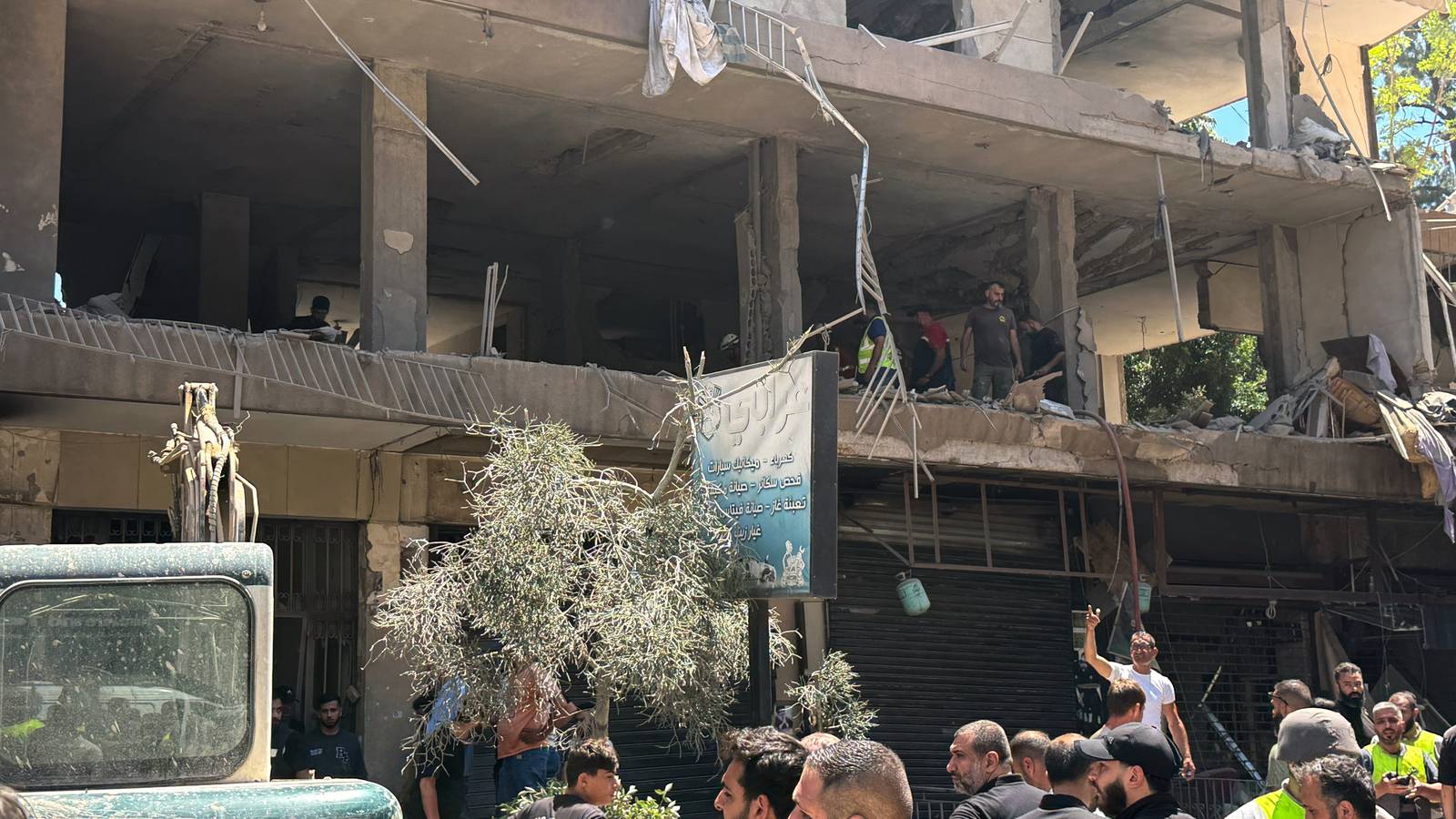
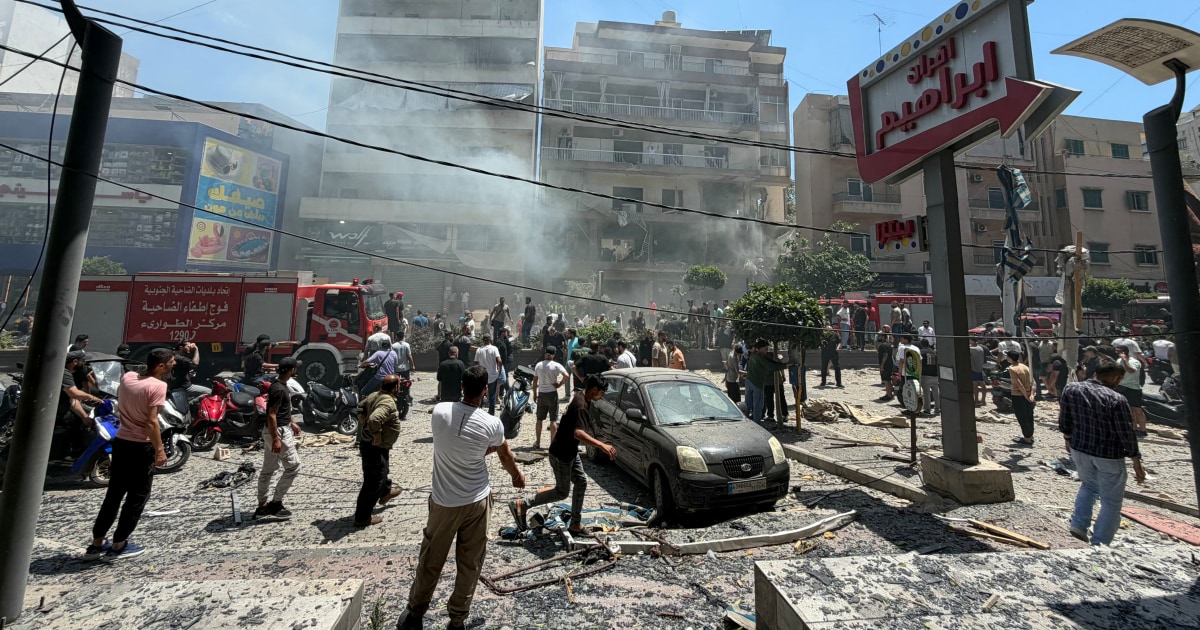
On 14 June, the IDF struck targets in Beirut’s southern suburbs after the Israeli military reported Hezbollah had launched three projectiles into northern Israel. Residents fled parts of Beirut as reporting pointed to two warplanes conducting the Dahiyeh strike. Civilian harm indicators in Lebanon remain severe, with hospitals damaged and health workers killed or injured, and displacement affecting both Lebanon and northern Israel. In Gaza, 65 NASA FIRMS thermal anomalies recorded over 13-14 June suggest continued combat activity. Parallel diplomacy gathered pace, with public predictions of a US‑Iran signing, a Pakistani claim of a final text, and Qatari mediators travelling to Tehran, offset by reports of Iranian hard‑liners seeking to block a breakthrough. At sea, a tanker was hit near the Strait of Hormuz along a U.S.‑coordinated corridor, seafarer deaths have accumulated, and the IMO and industry say security guarantees remain inadequate, even as some traffic resumes.
Change from previous assessment
New since the prior brief: on 14 June Hezbollah launched three projectiles into northern Israel and the IDF struck targets in Beirut’s Dahiyeh, with residents fleeing the southern suburbs. Reporting indicates evacuation and displacement orders in southern Lebanon alongside prior damage to hospitals and injuries to medical staff. Diplomacy accelerated, with public forecasts of a Sunday U.S.‑Iran signing, a Pakistani claim of a finalised text, and Qatari mediators travelling to Tehran, balanced by reporting of Iranian hard‑liners seeking to block a breakthrough. Maritime risk remained acute, including a tanker struck near the Strait of Hormuz along a U.S.‑coordinated corridor and cumulative seafarer fatalities. NASA logged 65 thermal detections in Gaza over 13-14 June, suggesting continued combat. Confidence in the persistence of northern hostilities is higher; expectations for a swift diplomatic resolution are tempered by internal Iranian dynamics. This is an update to the prior assessment with added events and refined confidence levels.
Key judgments
- Cross‑border fighting between the IDF and Hezbollah is very likely to persist at an elevated tempo in the near term, shown by Hezbollah firing three projectiles into northern Israel on 14 June and same‑day IDF strikes on Hezbollah targets in Beirut’s Dahiyeh. (Confidence: high · ASSESSED)
- I&W: Additional IDF airstrikes in Dahiyeh or elsewhere in Beirut reported by multiple outlets. (0-14 days)
- I&W: A two‑week halt in Hezbollah cross‑border launches accompanied by an absence of reported airspace violations in UNIFIL’s area of operations. (0-14 days)
- Civilian harm and displacement in Lebanon and northern Israel are likely to rise in the near term, given reports of residents fleeing Beirut’s southern suburbs, displacement exceeding one million in Lebanon, roughly 96,000 uprooted in northern Israel, damage to at least 17 hospitals including injuries to staff near Tyre, and WHO‑reported fatalities and injuries among health workers. (Confidence: medium · ASSESSED)
- I&W: New IDF evacuation warnings or expanded displacement orders in southern Lebanon, or further reports of hospital damage or staff casualties. (0-14 days)
- I&W: Public rescission of displacement orders and sustained return movements to affected Beirut neighbourhoods without new strike reports. (1-3 months)
- IDF combat operations in Gaza are very likely ongoing, indicated by 65 NASA FIRMS thermal detections over 13-14 June, while recognising thermal anomalies record heat sources rather than causes. (Confidence: medium · ASSESSED)
- I&W: Persistent FIRMS thermal detections across Gaza at or above recent levels over consecutive 2‑day windows. (0-14 days)
- I&W: Sustained drop to near‑zero FIRMS detections across Gaza for a week accompanied by official announcements of a halt to operations. (0-14 days)
- There is a roughly even chance an interim United States‑Iran agreement will be announced in the very near term, given public predictions of a Sunday signing by Donald Trump and Iran’s foreign minister, a Pakistani claim that a final text is agreed, and Qatari mediators travelling to Tehran, offset by reporting that Iranian hard‑liners want to kill any breakthrough. (Confidence: medium · ASSESSED)
- I&W: Joint U.S. and Iranian statements announcing a signed text or formal signing event. (0-14 days)
- I&W: Senior Iranian or U.S. officials publicly declare talks suspended or failed. (0-14 days)
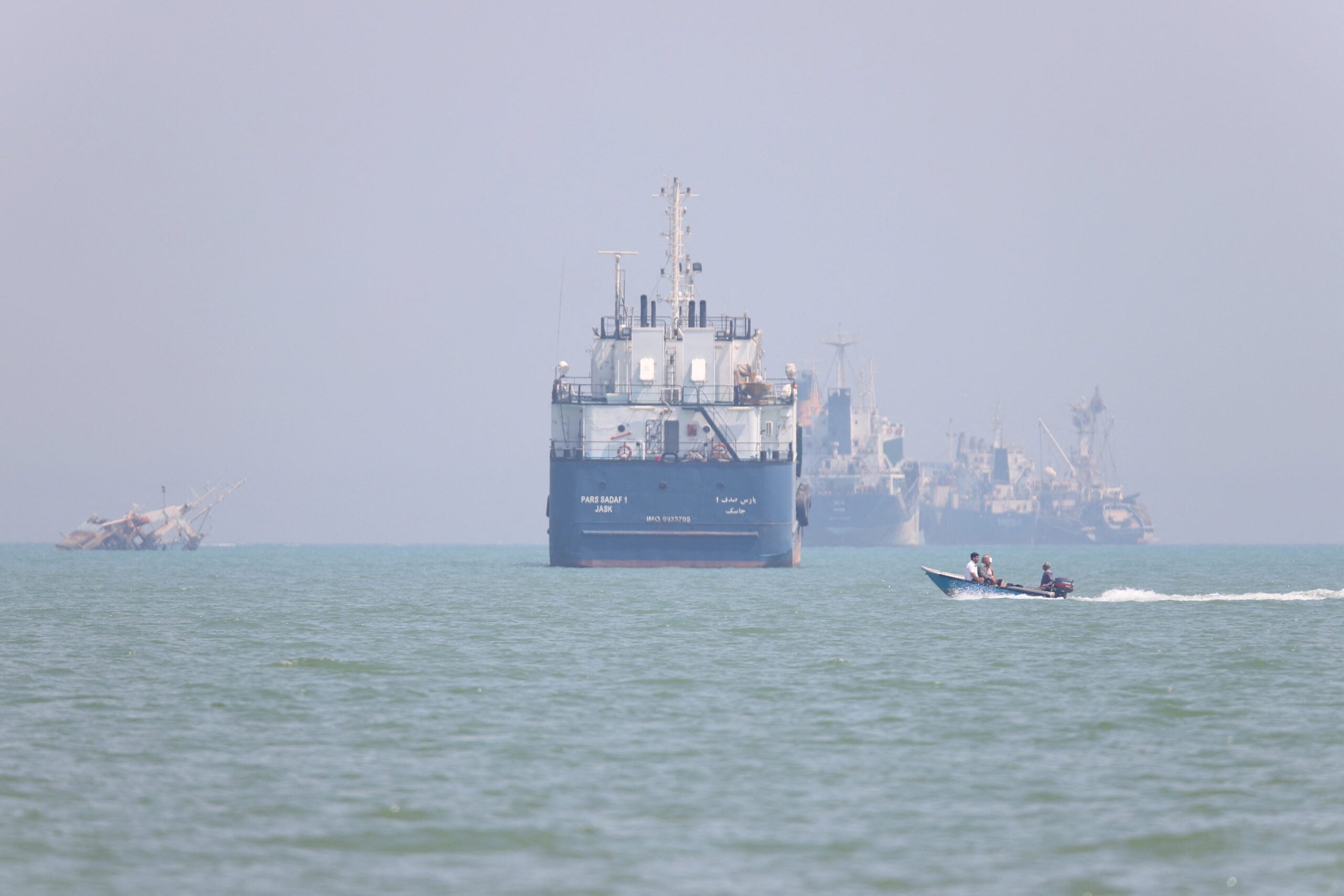
- Maritime risk in and around the Strait of Hormuz is very likely to remain high in the near term, evidenced by a tanker struck near the corridor, cumulative seafarer fatalities, U.S. reports of intercepting Iranian one‑way attack drones, and warnings from the IMO and industry that the strait lacks credible security guarantees, even as traffic has begun to pick up and CENTCOM says a transit corridor is open. (Confidence: high · ASSESSED)
- I&W: Another publicly reported vessel strike or official report of drone interceptions against shipping in or near the strait. (0-14 days)
- I&W: A sustained two‑week period with no reported attacks or drone interceptions and public statements easing risk by the IMO or leading industry bodies. (1-3 months)
Outlook & scenarios
Protracted tit‑for‑tat on the northern front (60%)
Hezbollah continues low‑volume projectile launches into northern Israel and the IDF responds with airstrikes along the Blue Line and periodic strikes in Beirut’s Dahiyeh. Civilian displacement persists in southern Lebanon and northern Israel, with additional evacuation warnings and sporadic strikes near medical facilities. Gaza combat indicators remain present but secondary to the northern theatre.
Interim US‑Iran deal cools Lebanon fighting, risks linger at sea (45%)
A signed interim U.S.‑Iran agreement reduces cross‑border fire as Tehran presses for an end to fighting in Lebanon. Hezbollah scales back launches and Israel curtails deep‑strike signalling in Beirut. Maritime traffic through Hormuz increases but remains risk‑managed, with industry and IMO caution prevailing pending demining and verified threat reduction.
Escalation trigger around Beirut (25%)
Another Dahiyeh strike, framed as retaliation for Hezbollah fire, crosses Tehran’s stated red lines and prompts an Israel‑Iran exchange. Hezbollah increases rockets and drone salvos, Israel expands strikes across Lebanon, and displacement surges. Shipping incidents in or near Hormuz rise as Iranian proxies or state units test the declared transit corridor.
Recommendations
- Maintain a continuous watch on northern Israel and Beirut for launch‑and‑strike cycles: fuse IDF statements on cross‑border fire with multi‑source reporting of Dahiyeh strikes to validate tempo and escalation thresholds.
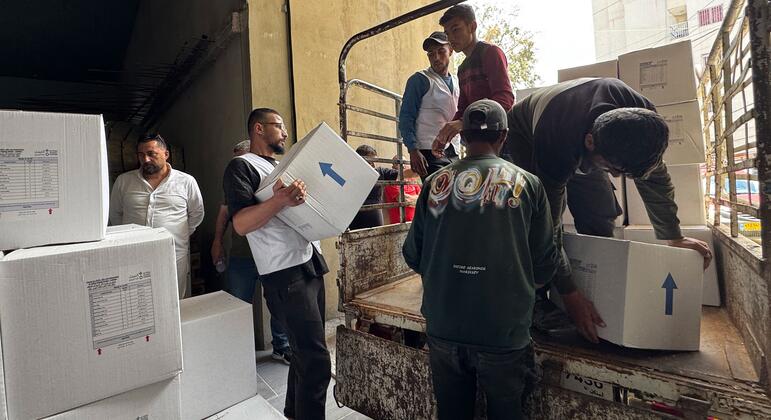
- Expand humanitarian impact tracking in Lebanon: log new evacuation orders and verified incidents affecting hospitals in Tyre and elsewhere; cross‑reference with WHO casualty figures for health workers to refine risk mapping for aid operations.
- Task daily exploitation of NASA FIRMS for Gaza with analytic caveats: integrate thermal anomaly trends with corroborating reporting before attributing causes, and flag sustained drops or spikes as operational tripwires.
- Stand up a Hormuz maritime risk dashboard: ingest UKMTO alerts, incident geolocation near the U.S.‑coordinated corridor, CENTCOM statements on drone interceptions, and industry or IMO advisories to support routing and insurance assessments.
- Build a diplomatic indicator set for the prospective U.S.‑Iran deal: track public statements by Donald Trump, Abbas Araghchi and Pakistani officials, and Qatari mediator travel, and prepare branch assessments on how any text references Lebanon’s front.
- Prepare contingency analysis for an escalation centred on Beirut: pre‑identify likely IDF target sets in Dahiyeh, historical Hezbollah launch areas, and potential civilian concentration points to anticipate protection needs and deconfliction messaging.
Confidence & uncertainty
Overall confidence is medium. Cross‑border fire and Beirut strikes are well supported by multiple major media reports and UN context, supporting high confidence that the northern front remains active. Humanitarian and displacement figures are credible but vary by source and timeframe, lowering confidence on trajectory. Gaza activity inferred from FIRMS is indicative but indirect. Maritime risk around Hormuz is supported by consistent reporting of incidents and authoritative warnings, though traffic flow assessments differ. The diplomatic outlook is plausible but depends on politically contested negotiations inside Iran.
Alternative analysis (red cell)
The evidence in this run is dominated by single‑day events and public political statements rather than multi‑source, time‑series corroboration. For the Lebanon border and Gaza, discrete strike and thermal detections show ongoing violence and impact but do not, by themselves, demonstrate a sustained upward trend in tempo or displacement. Similarly, the purported imminence of a U.S.‑Iran interim deal rests largely on political signaling and one‑off statements; rival domestic opinions within Iran and lack of a visible text weaken the case for an even‑odds near‑term signing. Finally, maritime incidents and warnings indicate elevated hazard, but concurrent reports of open corridors and active mitigation measures argue for a lower confidence in a prolonged, unmitigated collapse of safe transit.
Intelligence gaps
- [EEI 1.1 · PARTIAL] Number, type and geolocated coordinates of projectiles (rockets, mortars, anti-tank guided missiles) fired from Lebanon into Israel in the last 24/72 hours, including time-stamped launch and impact locations. Recommended collection: signals/intel
- [EEI 1.2 · UNCOVERED] Satellite or aerial imagery showing movement, concentration, or forward displacement of Hezbollah-associated military assets (armored vehicles, artillery pieces, mobile rocket launchers, logistics convoys) to positions within 0–10 km of the Israel-Lebanon border. Recommended collection: satellite/imagery
- [EEI 1.3 · UNCOVERED] Intercepted or captured Hezbollah command-and-control communications or orders explicitly directing cross-border operations or coordinated strikes with Palestinian groups (time-stamped messages, unit identifiers, orders to fire/move). Recommended collection: signals/intel
- [EEI 1.4 · PARTIAL] Observable changes in Israeli northern-front posture within Israel (numbers and types of reinforcements deployed to northern brigades, activation of reserves, air defense redeployments, evacuation orders or shelter alerts in northern towns), including timestamps and unit IDs where available. Recommended collection: human/intel
- [EEI 2.1 · UNCOVERED] Official or corroborated reports of IDF reservist mobilization and unit-level deployment orders (number of reservists called, named brigades/units ordered to deploy, deployment timelines). Recommended collection: open-source/media
- [EEI 2.2 · UNCOVERED] Satellite or ground imagery showing concentrations of IDF heavy equipment (tanks, infantry fighting vehicles, engineering vehicles), staging areas, field hospitals or forward supply dumps within X km of the Gaza border and at known crossing points. Recommended collection: satellite/imagery
- [EEI 2.3 · UNCOVERED] Change in strike patterns consistent with pre-ground-attack shaping: sustained high-frequency airstrikes on tunnel networks, command nodes, coastal launch sites, and known insurgent concentrations (strike counts, munition types, locations, times). Recommended collection: open-source/media
- [EEI 2.4 · UNCOVERED] Logistics indicators: verified convoys of fuel/ammunition entering staging areas, establishment of forward logistics or medical bases, or documented requisitioning orders for bulk combat supplies with timestamps and quantities. Recommended collection: human/intel
- [EEI 3.1 · PARTIAL] Number, participants and content of diplomatic contacts or negotiation sessions in the last 48 hours involving mediators (Egypt, Qatar, US, UN), including any proposed ceasefire text, prisoner/exchange lists, timelines or verification mechanisms. Recommended collection: diplomatic
- [EEI 3.2 · UNCOVERED] Public statements, press releases or verified communiqués from Hamas and other Gaza armed groups specifying acceptance, rejection, or conditions for a ceasefire (explicit conditions such as prisoner release lists, withdrawal terms, lifting of blockades), with timestamps and speaker attribution. Recommended collection: open-source/media
- [EEI 3.3 · PARTIAL] Humanitarian indicators relevant to ceasefire: establishment and operation of agreed humanitarian corridors/checkpoints, number of aid deliveries admitted, civilian evacuations completed, and NGO/hospital reports of access denials or safe-passage violations. Recommended collection: humanitarian/NGO reports
- [EEI 3.4 · PARTIAL] Operational evidence of a de facto pause: verified sustained reduction (e.g., ≥12 hours) in strikes or launches from either side in specific sectors, supported by strike/impact logs, radar tracks and incident reports. Recommended collection: open-source/media
Cited sources
[1] military.com · Israeli Military Strikes Beirut Suburbs in the Lead-up to Anticipated US-Iran Deal (A) · sha256:068c303f4b44 [2] NBC News · Israel continues strikes in Beirut’s southern suburbs (B) · sha256:41f960f761ef [3] aljazeera.com · Israel attacks southern Beirut after alleged Hezbollah drone fire (A) · sha256:7007d4c36750 [4] United Nations · More strikes impact Lebanon hospitals as humanitarian situation deteriorates (A) · sha256:585c86e34e1a [5] alhurra.com · حزب الله أمام أخطر أزمة في تاريخه | الحرة (B) · sha256:c43a1ed4115b [6] Wikipedia · Hezbollah–Israel conflict (2023–present) (B) · sha256:1801ac173050 [7] NASA · NASA FIRMS thermal detections — Gaza (2d) (A) · sha256:97135c86bb95 [8] gcaptain.com · Trump Says He’ll Sign Deal With Iran To Reopen Hormuz Sunday (B) · sha256:911bf843694b [9] United Nations · UN ‘encouraged’ by talk of possible US-Iran ceasefire deal (A) · sha256:7db395f01c47 [10] gcaptain.com · Tanker Attack Raises New Questions About U.S. ‘Secret Mission’ in Hormuz (B) · sha256:f094d4a28c94
Source content hashes were computed at collection time; the cited text is preserved unmodified for the life of this product.
Red cell review: PARTIAL DISSENT
TLP:CLEAR