TLP:CLEAR · Disclosure is not limited.
Bolivia: Blockades and Security Deployments Deepen Political Crisis
Time window: Last 1 day · Audience: General analyst · Type: Situation report · DTG: 2026-08-26 13:37Z · Overall confidence: HIGH
BLUF
As of 26 August 2026, it is very likely that Bolivia has experienced a sustained blockade campaign demanding President Rodrigo Paz's resignation, correcting the previous assessment that national protests remained unconfirmed. The immediate dispute centres on diesel pricing, with military and police deployments in Santa Cruz and Yapacaní. An imminent resignation or collapse of Paz's government remains unlikely, but confidence in that judgement is low.
Executive summary
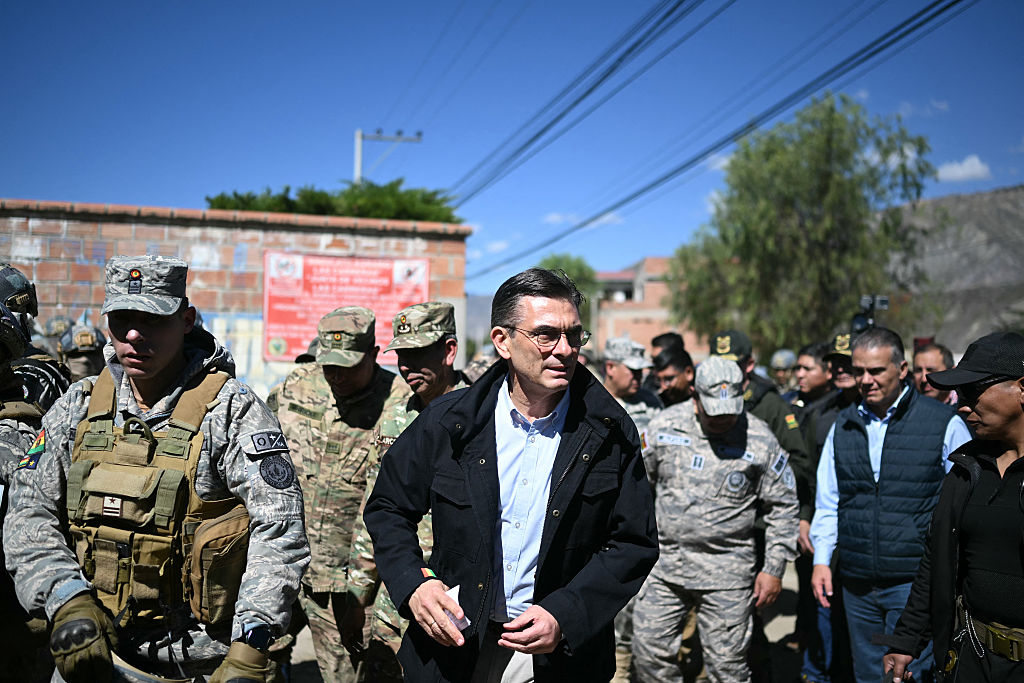
Social movements reportedly subjected Bolivia to 53 days of blockades demanding Paz's resignation. On 26 August, farmers in Yapacaní announced plans to block a main road, while police and military units kept the route open. The government had deployed forces in Santa Cruz on 25 August and sent personnel to Yapacaní after threats linked to the removal of diesel subsidies for large consumers. The immediate trigger is a 17 August decree setting a reference diesel price of 18 bolivianos per litre for industries, companies and other large consumers. Paz's failure to build a governing coalition, persistent fuel shortages, the Cerimedo-Beller scandal and reported growth in organised crime are likely to sustain pressure. The exact geographic coverage of current blockades and the extent of operational disruption remain uncertain.
Change from previous assessment
Since the 25 August 2026 brief, the assessment has shifted from insufficient evidence of nationwide protests and resignation demands to very likely evidence of a sustained blockade campaign demanding Paz's resignation. New reporting adds the 26 August Yapacaní mobilisation, the 25 August security deployment in Santa Cruz and Yapacaní, and a direct link between current threats and the diesel pricing decree. The judgement that government turnover alone does not establish imminent executive collapse is retained, but the wider crisis assessment now gives greater weight to fuel policy, security deployments, coalition failure and public-safety pressures.
Key judgments
- It is very likely that Bolivia has experienced a sustained blockade campaign demanding President Rodrigo Paz's resignation, including 53 days of reported blockades by social movements. The evidence is supported by high-confidence major-media reporting and a separate report of planned action by farmers in Yapacaní, although the exact national geographic coverage and current road closure status remain unresolved. (Confidence: high · REPORTED)
- I&W: CONFIRM if independent reporting identifies additional blockade locations or organisers outside Yapacaní and the Santa Cruz area. (0-14 days)
- I&W: BREAK if credible local reporting corrects the 53-day figure or states that the blockades did not demand Paz's resignation. (0-14 days)
- It is likely that the government's 17 August diesel pricing decree is the immediate trigger for current mobilisation in Santa Cruz and Yapacaní, and that the government is prioritising route control over accommodation of the protest demand. The assessment rests on reported threats over subsidy removal, force deployments on 25 August and the planned Yapacaní roadblock, with the deployment reporting carrying medium confidence. (Confidence: medium · ASSESSED)
- I&W: CONFIRM if further military or police deployments follow new diesel-related blockade threats, particularly along roads linking Santa Cruz and Yapacaní. (0-14 days)
- I&W: BREAK if the government withdraws the 18 bolivianos-per-litre reference price, reaches an arrangement with affected consumers, and keeps the main routes open for 14 consecutive days. (0-30 days)
- It is likely that Bolivia's political crisis will persist beyond the immediate road dispute because Paz's government has failed to build a governing coalition while fuel shortages, weak domestic energy production, the Cerimedo-Beller scandal and public-safety concerns continue. This judgement is partly supported by medium-confidence analyst commentary and a social-media report, so it does not establish that the scandal or organised crime is directing the blockades. (Confidence: medium · ASSESSED)
- I&W: CONFIRM if fuel shortages persist alongside continued blockade demands and Paz's government fails to announce a governing coalition or credible legislation. (0-3 months)
- I&W: BREAK if Paz's government forms a governing coalition and announces measures that address fuel shortages and the diesel dispute. (1-3 months)
- It is likely that organised crime will remain a compounding public-safety pressure during the political crisis, with Primeiro Comando da Capital and Comando Vermelho reported to have expanded their reach in Bolivia. The available reporting supports increased visibility of organised crime, but it does not show that either group is participating in the current protests. (Confidence: medium · ASSESSED)
- I&W: CONFIRM if new reporting links Primeiro Comando da Capital or Comando Vermelho activity to areas affected by blockades or to weakened security coverage. (0-3 months)
- I&W: BREAK if authoritative reporting finds no continuing expansion of organised crime activity in Bolivia and separates public-safety incidents from the protest movement. (1-3 months)
- It is unlikely that the reported blockades and security deployments will produce an immediate resignation or collapse of Paz's government. The government has demonstrated the capacity to deploy military and police units to Santa Cruz and Yapacaní, but confidence is low because the available reporting provides no direct evidence on Paz's political support, succession planning or the durability of state authority. (Confidence: low · ASSESSED)
- I&W: CONFIRM if Paz announces his resignation, a succession arrangement, or an inability to maintain government operations outside Santa Cruz and Yapacaní. (0-14 days)
- I&W: BREAK if the Yapacaní mobilisation does not produce a sustained closure, deployments remain in place and the resignation demand loses prominence in reporting. (0-30 days)
Outlook & scenarios
Prolonged blockades without immediate executive change (45%)
Likely. Social movements continue demanding Paz's resignation while farmers in Yapacaní and protesters in the Santa Cruz area sustain intermittent road action over diesel pricing. The government keeps military and police units near key routes. Disruption persists, but Paz remains in office.
Security-led containment and localised escalation (25%)
Likely. The government maintains or expands deployments around Santa Cruz and Yapacaní. Roads remain intermittently contested, and the diesel dispute becomes a broader challenge to government authority. The protest movement remains geographically uneven rather than fully national.
Negotiated diesel de-escalation (20%)
Roughly even chance. Paz's government adjusts the diesel policy or reaches an arrangement with affected large consumers. Blockade activity declines, security deployments recede and the immediate resignation demand loses momentum. The underlying coalition and energy problems remain unresolved.
Executive rupture (10%)
Unlikely but high impact. Blockades expand beyond the Santa Cruz and Yapacaní corridor, government authority weakens and Paz resigns or loses effective control of national decision-making. Organised crime concerns increase the pressure on already strained security institutions.
Recommendations
- Maintain a 12-hour collection cycle for Santa Cruz and Yapacaní over the next 14 days. Record announced blockades separately from confirmed road closures, the identity of organisers, force deployments and route status.
- Separate the retrospective 53-day blockade campaign from current operational reporting. Do not use the 53-day figure alone to infer that all major Bolivian routes are currently closed.
- Prioritise independent corroboration from the Bolivian government, the Ministry of Defence, police authorities, farmer organisations and local road-status reporting before raising confidence in a nationwide mobilisation assessment.
- Track the 18 bolivianos-per-litre diesel reference price as the central policy tripwire. Record any rescission, exemption, enforcement change or negotiated arrangement involving industries and other large consumers.
- Review the status of the reported 90-day state of exception before its stated period expires, focusing on whether deployments continue, expand or withdraw and whether emergency powers are used against blockade organisers.
- Update the Bolivia risk baseline to include the interaction between coalition failure, fuel shortages, low domestic energy production and organised crime. Keep the Cerimedo-Beller allegations as a separate reporting line until independently corroborated.
- Do not raise the probability of imminent executive collapse without direct evidence of Paz's resignation, a succession arrangement or an inability of the government to maintain operations outside Santa Cruz and Yapacaní.
Confidence & uncertainty
Overall confidence is high for the core facts of sustained blockade reporting, the 17 August diesel decree, the 25 August deployment to Santa Cruz and the movement of forces to Yapacaní. These points are supported by multiple high-confidence claims from major-media reporting, with separate reporting on the blockade campaign and government response. Confidence is lower on the exact geographical spread of current protests, the present condition of the Yapacaní route, the political effect of the Cerimedo-Beller scandal and the relationship between organised crime and the protest movement.
Intelligence gaps
- [EEI 1.1 · UNCOVERED] Official resignation letter or public statement from President Rodrigo Paz announcing intent to step down, with date/time and channels of release. Recommended collection: official statements/OSINT
- [EEI 1.2 · UNCOVERED] Number and identities of cabinet ministers or senior executive officials who have tendered resignations or publicly withdrawn support (names, offices, dates). Recommended collection: government sources/HUMINT
- [EEI 1.3 · UNCOVERED] Formal legislative actions filed and their sponsorship count (impeachment/ removal motions, dates filed, vote schedule, list of legislators publicly backing each action). Recommended collection: legislative records/OSINT
- [EEI 1.4 · UNCOVERED] Existence and content of signed negotiation outcomes or exit agreements between the presidency and opposition/protest leaders (meeting minutes, memoranda, signatories, deadlines). Recommended collection: HUMINT/diplomatic
- [EEI 2.1 · PARTIAL] Orders or directives from the Ministry of Defense or Interior authorizing deployment, use of lethal force, curfews, or emergency powers (document text, date/time, units named). Recommended collection: official statements/OSINT
- [EEI 2.2 · PARTIAL] Observed troop and police unit movements and concentrations at key urban areas, government buildings, or protest hotspots (unit identifiers, equipment observed, locations, timestamps). Recommended collection: satellite/imagery
- [EEI 2.3 · UNCOVERED] Public resignations, defections, or denouncements by senior military/police officers (names, ranks, dates, content of statements). Recommended collection: social media/HUMINT
- [EEI 2.4 · UNCOVERED] Verified incidents of security forces using live ammunition, heavy weapons, or armored vehicles against protesters (casualty numbers, weapon types, time/place, supporting media or hospital records). Recommended collection: medical/hospital reports & open source
- [EEI 3.1 · PARTIAL] Location, number, and estimated duration of active roadblocks on major highways and access routes (GPS coordinates, reported start times, groups controlling each blockade). Recommended collection: transport/logistics & social media
- [EEI 3.2 · UNCOVERED] Operational status of key transport nodes (international airports, major bus terminals, rail hubs, and border crossings), open, limited, closed, with timestamps. Recommended collection: transport authority updates/OSINT
- [EEI 3.3 · UNCOVERED] Size and frequency of street protests in major cities (estimated attendance counts, dates/times, trend compared to previous days). Recommended collection: social media/OSINT
- [EEI 3.4 · PARTIAL] Communications from named protest leaders or coalitions calling for escalation, general strike, or de-escalation (public messages, strikes announced, coordination instructions). Recommended collection: social media/HUMINT
- [EEI 4.1 · PARTIAL] Fuel supply status at major depots and petrol stations (days of supply remaining, deliveries canceled/delayed, outages reported by region). Recommended collection: logistics/industry reports
- [EEI 4.2 · UNCOVERED] Availability and price movements of staple foods in principal wholesale markets and supermarkets (stock levels, price changes percent, locations affected). Recommended collection: market/retail & OSINT
- [EEI 4.3 · UNCOVERED] Scope and duration of disruptions to public services (electricity outages, water supply interruptions, hospital service reductions) with affected areas and timestamps. Recommended collection: utility operators/OSINT
- [EEI 4.4 · UNCOVERED] Actions by foreign governments or international organizations: travel advisories, embassy evacuations, recognition/condemnation statements, sanctions or aid pledges (dates and content). Recommended collection: diplomatic channels/OSINT
Cited sources
[1] americasquarterly.org · Bolivia’s Post-MAS Transition Is at Risk (B) · sha256:0d43063d29cd [2] swissinfo.ch · Gobierno despliega a militares y policías ante amenaza de bloqueos en el este de Bolivia (A) · sha256:2d873aa6a37d [3] RTP Bolivia · #ElXqDeLasNoticias 🚨 Analistas políticos advierten una "crisis" en el gobierno del presidente Rodrigo Paz tras el escándalo Cerimedo-Beller y la persistente escasez de combustibles. | RTP Bolivia (E) · sha256:5a15b72a669a
Source content hashes were computed at collection time; the cited text is preserved unmodified for the life of this product.
TLP:CLEAR