TLP:CLEAR · Disclosure is not limited.
Bolivia: Diesel Shock Raises Blockade and State-Siege Risk
Time window: Last 1 day · Audience: General analyst · Type: Situation report · DTG: 2026-09-20 21:35Z · Overall confidence: HIGH
BLUF
President Rodrigo Paz's removal of Bolivia's last fuel subsidy has very likely intensified opposition to the IMF programme, despite a compensation package for nearly 2.9 million people. The immediate escalation window is the expiry of the transport-union truce on 10 October, while the IMF Executive Board has not yet approved the US$1.9 billion loan.
Executive summary
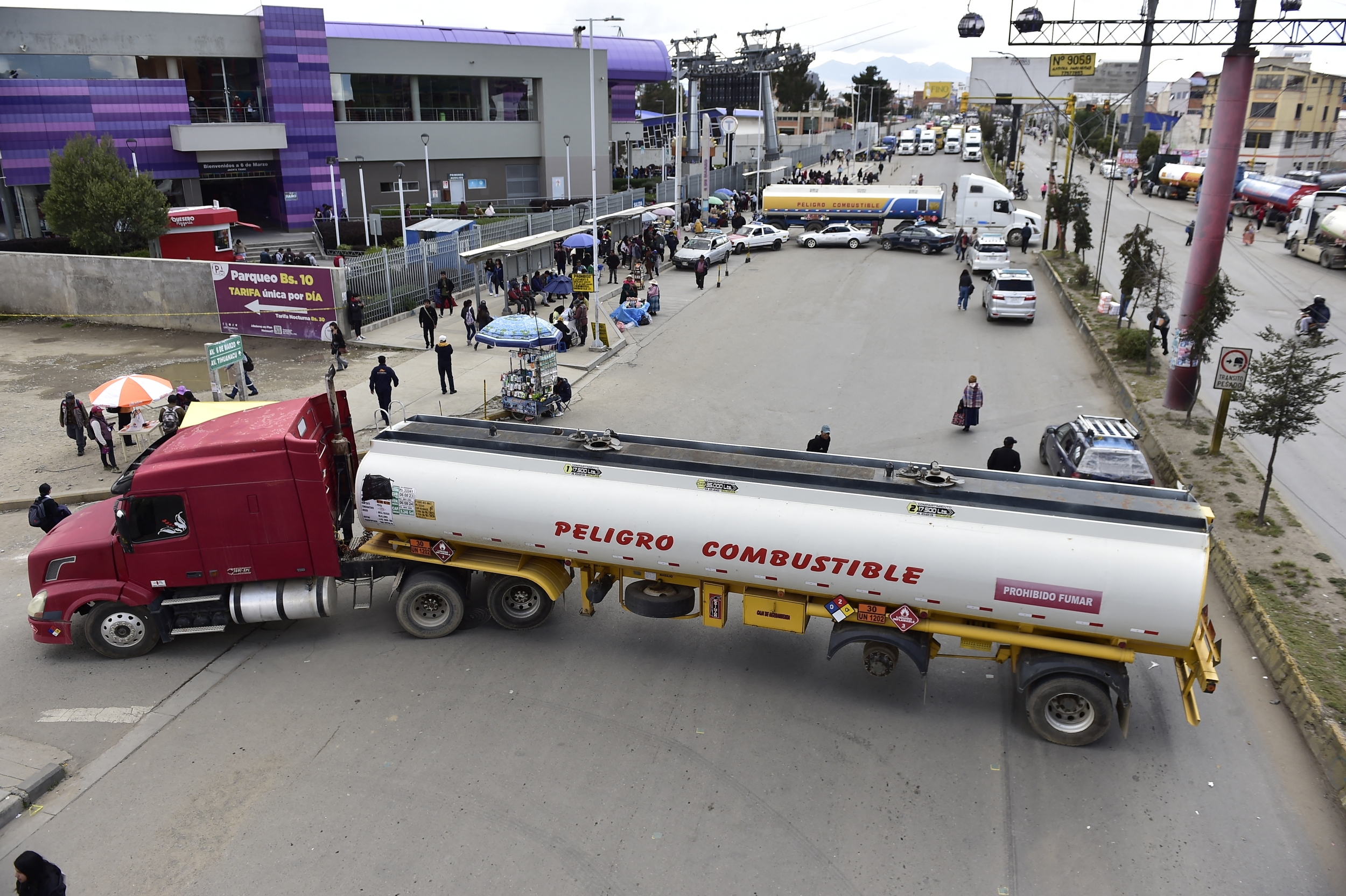
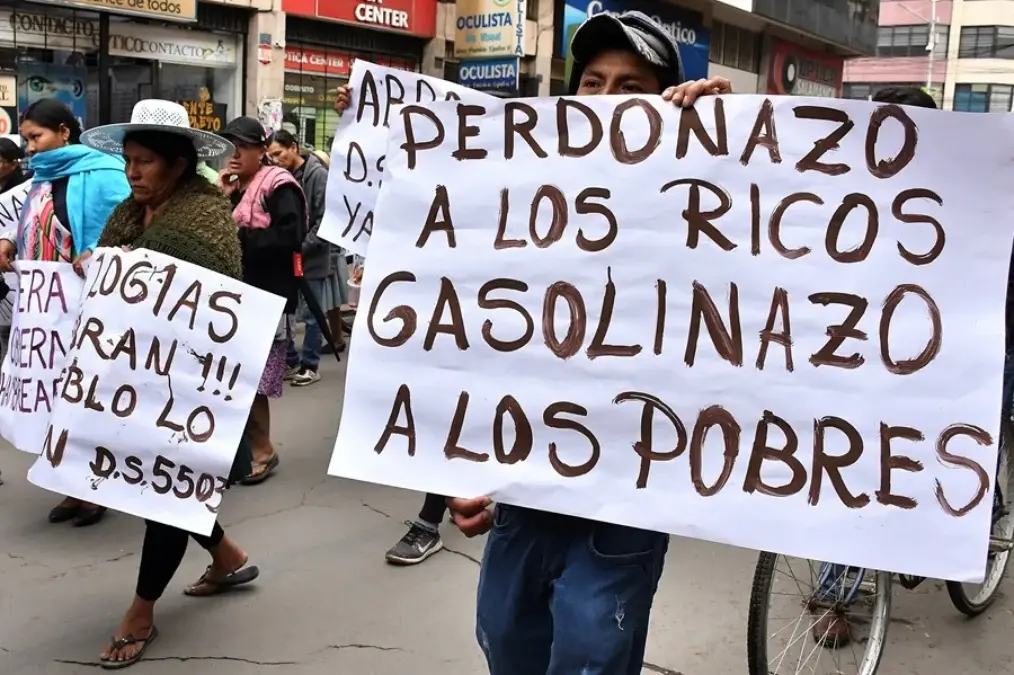
The Government of Bolivia has very likely implemented Supreme Decree 5716, raising diesel from Bs9.80 to Bs17.95 per litre and linking future prices to import costs. The Bolivian Workers' Central has rejected the IMF programme, while Evo Morales has warned of higher food prices and damage to small farmers. The legislature has extended a 90-day emergency measure, and government spokesman José Luis Gálvez has warned that authorities will use constitutional force and potentially declare a state of siege if blockades return. The provided claims establish mobilisation risk and specific escalation triggers, but they do not confirm that nationwide blockades have already resumed.
Change from previous assessment
Since the 19 September brief, the core assessment that fuel-subsidy removal and IMF-linked measures raise mobilisation risk is unchanged. This brief adds the Government of Bolivia's reported compensation package, confirms that the IMF Executive Board has not yet voted, identifies 10 October as the transport-union truce expiry, and records José Luis Gálvez's warning of constitutional force and a possible state of siege. Confidence in current nationwide blockade activity remains limited because the supplied claims document past mobilisation and future triggers, rather than a confirmed resumption.
Key judgments
- The Government of Bolivia has very likely eliminated the last fuel subsidy and implemented an initial diesel price of Bs17.95 per litre from 19 September, replacing the former fixed price with an import-cost-linked mechanism. Confidence is high for the boliviano price and policy change, but the reported US dollar equivalent remains unresolved, with accounts giving both US$1.63 and US$1.83 per litre. (Confidence: high · REPORTED)
- I&W: CONFIRM: Bolivian fuel notices and station prices continue to show diesel at Bs17.95 per litre, with subsequent adjustments tied to import costs. (0-14 days)
- I&W: BREAK: The Government of Bolivia rescinds Supreme Decree 5716 or restores a fixed subsidised diesel price. (0-30 days)
- Opposition pressure is likely to persist despite the Government of Bolivia's compensation package of about 874 million bolivianos and preferential loans of up to 800 million bolivianos. The Bolivian Workers' Central has rejected the IMF programme, Evo Morales has warned of food-price and small-farmer effects, and previous 2026 mobilisation provides a basis for renewed action; current nationwide blockades are not confirmed in the supplied claims. Confidence is medium because the forward-looking assessment rests partly on political statements and historical mobilisation rather than verified current road closures. (Confidence: medium · ASSESSED)
- I&W: CONFIRM: The Bolivian Workers' Central, transport unions, or other named organised groups announce fresh road blockades or coordinated demonstrations before or after the truce expires. (0-30 days)
- I&W: BREAK: Transport unions renew their truce beyond 10 October and publicly suspend blockade action. (0-30 days)
- The Paz government is likely to rely on emergency powers and security-force support to manage any returning blockades. Bolivia's legislature has extended the emergency measure for 90 days to prevent renewed road blockades, and José Luis Gálvez has publicly warned of constitutional force and a possible state of siege. Confidence is high for the existing legal posture and medium for actual use of force, which depends on whether blockades resume. (Confidence: medium · ASSESSED)
- I&W: CONFIRM: Bolivian authorities deploy military units alongside police to reopen roads or formally declare a state of siege after blockade activity. (0-30 days)
- I&W: BREAK: The Government of Bolivia manages renewed demonstrations without military support, a state-of-siege declaration, or additional emergency restrictions. (0-90 days)
- The US$1.9 billion IMF loan remains unresolved at the international level, despite very likely domestic legislative approval. The IMF Executive Board has not voted, with approval expected around 2 October and an initial disbursement of about US$250 million expected within days of approval. Confidence is medium because the timing and disbursement estimate rely on a single reported account. (Confidence: medium · REPORTED)
- I&W: CONFIRM: The IMF Executive Board votes on the Bolivia loan around 2 October and the first disbursement of about US$250 million follows within days. (0-14 days)
- I&W: BREAK: The Executive Board delays or rejects the loan, or no disbursement follows within the reported timeframe. (0-30 days)
Outlook & scenarios
Managed pressure without an immediate nationwide blockade (40%)
The most likely near-term path is continued protests and political denunciations without a confirmed nationwide blockade before the IMF decision. The compensation package and 90-day emergency measure contain road disruption through 2 October, while the Government of Bolivia maintains the diesel mechanism and seeks to preserve the transport truce until 10 October.
Blockade revival after 10 October (35%)
Transport unions allow the truce to expire and join opposition to the diesel measure and IMF programme. Road blockades return after 10 October, forcing the Paz government to choose between concessions and the emergency powers already authorised.
State-siege escalation (10%)
A low-probability, high-impact path is a rapid confrontation following renewed blockades. The Government of Bolivia declares a state of siege and uses constitutional force, producing a sharper break between the Paz government, organised labour, transport unions, and other social organisations.
IMF delay broadens the political contest (15%)
The IMF Executive Board delays or rejects the loan around 2 October. The Paz government then faces simultaneous pressure over the diesel price, the compensation package, and the credibility of its economic programme, giving opponents an additional basis for mobilisation before the transport truce expires.
Recommendations
- Prioritise daily collection on three dates and indicators: the IMF Executive Board decision around 2 October, transport-union activity before 10 October, and any Bolivian government order deploying military units to support police on roads.
- Treat Bs17.95 per litre as the verified diesel price. Record the US dollar equivalent as unresolved until the exchange rate used in the conflicting reports is established.
- Seek independent confirmation of current road conditions from Bolivian local media, transport unions, and government road authorities before assessing that nationwide blockades have resumed.
- Verify the identities and organisational roles of Josué Caricari and Aquilardo Caricari before attributing further statements to either individual.
- Keep the Bolivia assessment separate from unrelated geospatial data. The NASA FIRMS detections concern offshore Southern California, while the AISStream sample concerns Baja California coastal waters and does not establish disruption in Bolivia or Latin America.
- Prepare separate update lines for a managed protest scenario, a transport-led blockade scenario, and a state-of-siege scenario so that reporting on demonstrations is not conflated with confirmed road closures or government use of force.
Confidence & uncertainty
Overall confidence is high because the core policy facts are supported by multiple high-confidence claims from major media, including corroboration of the diesel price change, Supreme Decree 5716, the 90-day emergency extension, and organised opposition to the IMF programme. The main uncertainties concern the conflicting US dollar conversion, the identity and role of one reported spokesperson, the timing of the IMF disbursement, and whether nationwide blockades have actually resumed.
Intelligence gaps
- [EEI 1.1 · UNCOVERED] Official resignation letter or public statement from President Rodrigo Paz announcing intent to step down, with date/time and channels of release. Recommended collection: official statements/OSINT
- [EEI 1.2 · UNCOVERED] Number and identities of cabinet ministers or senior executive officials who have tendered resignations or publicly withdrawn support (names, offices, dates). Recommended collection: government sources/HUMINT
- [EEI 1.3 · UNCOVERED] Formal legislative actions filed and their sponsorship count (impeachment/ removal motions, dates filed, vote schedule, list of legislators publicly backing each action). Recommended collection: legislative records/OSINT
- [EEI 1.4 · UNCOVERED] Existence and content of signed negotiation outcomes or exit agreements between the presidency and opposition/protest leaders (meeting minutes, memoranda, signatories, deadlines). Recommended collection: HUMINT/diplomatic
- [EEI 2.1 · PARTIAL] Orders or directives from the Ministry of Defense or Interior authorizing deployment, use of lethal force, curfews, or emergency powers (document text, date/time, units named). Recommended collection: official statements/OSINT
- [EEI 2.2 · UNCOVERED] Observed troop and police unit movements and concentrations at key urban areas, government buildings, or protest hotspots (unit identifiers, equipment observed, locations, timestamps). Recommended collection: satellite/imagery
- [EEI 2.3 · UNCOVERED] Public resignations, defections, or denouncements by senior military/police officers (names, ranks, dates, content of statements). Recommended collection: social media/HUMINT
- [EEI 2.4 · UNCOVERED] Verified incidents of security forces using live ammunition, heavy weapons, or armored vehicles against protesters (casualty numbers, weapon types, time/place, supporting media or hospital records). Recommended collection: medical/hospital reports & open source
- [EEI 3.1 · PARTIAL] Location, number, and estimated duration of active roadblocks on major highways and access routes (GPS coordinates, reported start times, groups controlling each blockade). Recommended collection: transport/logistics & social media
- [EEI 3.2 · UNCOVERED] Operational status of key transport nodes (international airports, major bus terminals, rail hubs, and border crossings), open, limited, closed, with timestamps. Recommended collection: transport authority updates/OSINT
- [EEI 3.3 · PARTIAL] Size and frequency of street protests in major cities (estimated attendance counts, dates/times, trend compared to previous days). Recommended collection: social media/OSINT
- [EEI 3.4 · PARTIAL] Communications from named protest leaders or coalitions calling for escalation, general strike, or de-escalation (public messages, strikes announced, coordination instructions). Recommended collection: social media/HUMINT
- [EEI 4.1 · UNCOVERED] Fuel supply status at major depots and petrol stations (days of supply remaining, deliveries canceled/delayed, outages reported by region). Recommended collection: logistics/industry reports
- [EEI 4.2 · PARTIAL] Availability and price movements of staple foods in principal wholesale markets and supermarkets (stock levels, price changes percent, locations affected). Recommended collection: market/retail & OSINT
- [EEI 4.3 · UNCOVERED] Scope and duration of disruptions to public services (electricity outages, water supply interruptions, hospital service reductions) with affected areas and timestamps. Recommended collection: utility operators/OSINT
- [EEI 4.4 · PARTIAL] Actions by foreign governments or international organizations: travel advisories, embassy evacuations, recognition/condemnation statements, sanctions or aid pledges (dates and content). Recommended collection: diplomatic channels/OSINT
Cited sources
[1] Latin Times · Bolivia Ends Its Diesel Subsidy: What Higher Fuel Prices Mean for Blockades, Remittances and the Next 90 Days (B) · Sun Sep 20 2026 14:18:04 GMT+0000 (Coordinated Universal Time) · sha256:ffb9baf6a7b4 [2] teleSUR English · Social Protests Persist in Bolivia Amid Diesel Subsidy Removal - teleSUR English (B) · sha256:3b2e5e2d6be9
Source content hashes were computed at collection time; the cited text is preserved unmodified for the life of this product.
TLP:CLEAR