TLP:CLEAR · Disclosure is not limited.
Bolivia: Emergency Decree Halts Blockades as Cabinet Turnover Accelerates
Time window: Last 1 day · Audience: General analyst · Type: Situation report · DTG: 2026-07-09 12:43Z · Overall confidence: LOW
BLUF
La Paz ended 53 days of nationwide blockades demanding President Rodrigo Paz’s resignation by enacting a 90-day state of emergency, but ministerial churn and an estimated US$3 billion hit to the economy point to persistent political and economic risk. The latest cabinet departure, Tourism Minister Cinthya Yáñez, was confirmed on 9 July, while the Foreign Ministry assumes her portfolio pending a replacement.
Executive summary
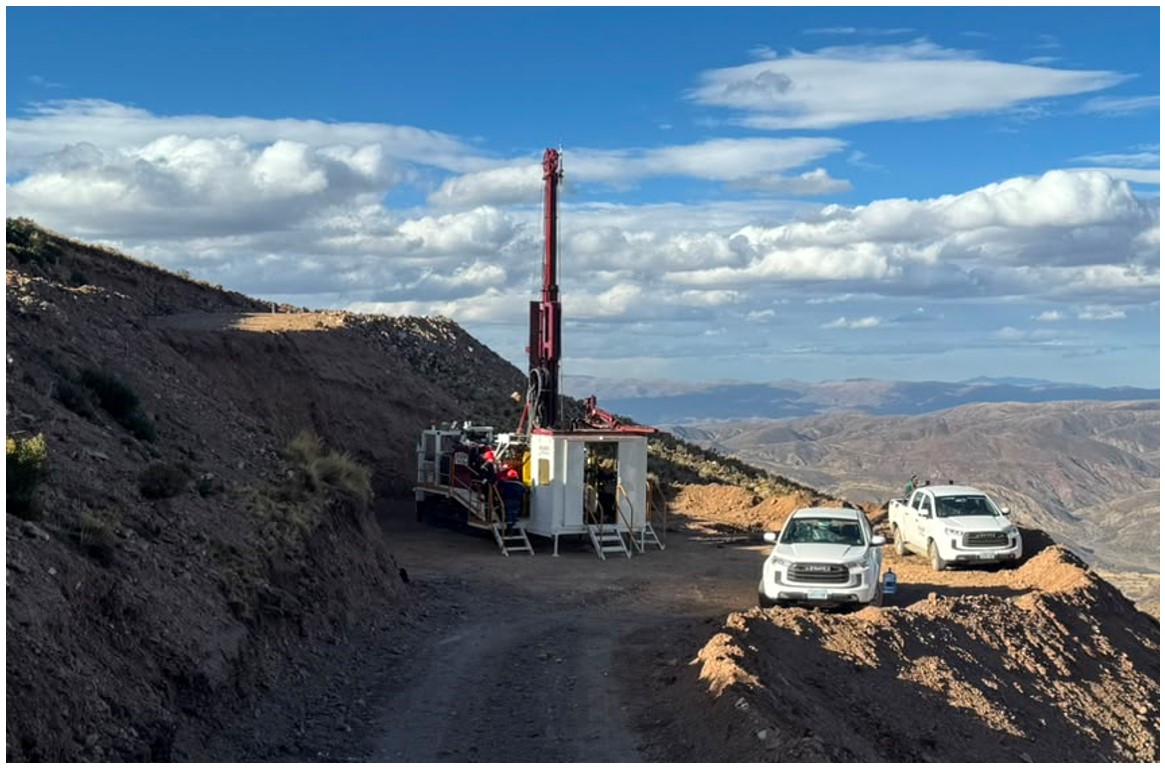
Bolivia has moved from prolonged disruption to coercive stabilisation. Reporting indicates the government lifted road blockades, which had demanded President Rodrigo Paz’s resignation, after enacting a 90-day state of emergency allowing military intervention and suspending some individual rights. The country endured 53 days of blockades that disrupted the economy, with losses estimated at about US$3 billion. Cabinet turnover has intensified: Tourism Minister Cinthya Yáñez resigned on 9 July, bringing recent departures to at least five in three months, while earlier resignations included Labour, Defence and Education ministers. The Foreign Ministry will temporarily manage the Tourism portfolio until a successor is named. Official messaging thanks Bolivians for defending democracy and highlights difficulties inherited from prior administrations. In parallel, authorities tout “economic reactivation,” and a Canadian-listed miner has launched a major drilling programme in southern Bolivia, suggesting selective sectoral resilience despite macro headwinds.
Change from previous assessment
Initial assessment of this topic. Unlike the prior cycle, this run includes multiple Bolivia-focused claims allowing updates: reporting that a 90-day state of emergency ended blockades, confirmation of Cinthya Yáñez’s resignation and temporary reassignment of her portfolio, references to at least five ministerial departures since May, June, and an estimated US$3 billion in blockade-related losses alongside official talk of “economic reactivation.” Confidence remains low given limited corroboration and some conflicting details.
Key judgments
- It is very likely the nationwide road blockades demanding President Rodrigo Paz’s resignation have been lifted after the government enacted a 90-day state of emergency authorising military intervention and the suspension of some individual rights, following 53 days of disruption. (Confidence: medium · REPORTED)
- I&W: Public confirmation that the state of emergency remains in force and security forces sustain reopened traffic on primary corridors such as El Alto, La Paz and Cochabamba, Santa Cruz. (0-14 days)
- I&W: Return of organised road blockades on Ruta 1 or at El Alto toll points reported by major Bolivian outlets. (0-14 days)
- It is likely cabinet instability is worsening, with at least five ministers departing in the last three months, most recently Sustainable Tourism Minister Cinthya Yáñez on 9 July 2026, whose resignation was confirmed by presidential spokesman José Luis Gálvez; recent exits also included Labour Minister Edgar Morales in May and Defence Minister Marcelo Salinas and Education Minister Beatriz García on 2 June. (Confidence: medium · REPORTED)
- I&W: Additional ministerial resignations or replacement decrees announced by the Presidency or José Luis Gálvez. (0-14 days)
- I&W: Thirty days without further cabinet changes and the formal appointment of Yáñez’s successor. (1-3 months)
- There is a roughly even chance the economy struggles to rebound quickly despite official talk of “economic reactivation” and resumed mining investment, given estimated losses of about US$3 billion from 53 days of blockades. (Confidence: low · ASSESSED)
- I&W: Eloro Resources reports on-schedule progress and the arrival of a third drill rig at Iska Iska, with 40,000 metres advancing toward plan. (1-3 months)
- I&W: Company communiqués or local reporting cite delays, security constraints, or cost overruns linked to lingering disruption. (0-14 days)
- It is likely the government is centralising control over the tourism portfolio to preserve continuity, with the Foreign Ministry temporarily managing the Ministry of Sustainable Tourism until a replacement is named; Yáñez’s request for a swift appointment and her claim of leaving an Emergency Action Plan point to near-term implementation gaps. (Confidence: low · ASSESSED)
- I&W: Foreign Ministry issues interim directives or budget approvals for tourism programmes, or designates an interim focal point. (0-14 days)
- I&W: Presidential announcement of a new Tourism Minister published in state channels. (0-14 days)
- The presidency is very likely pursuing a legitimacy narrative that frames the response as defending democracy and managing inherited problems, to justify emergency measures and cabinet churn. (Confidence: medium · ASSESSED)
- I&W: Repeated public statements by José Luis Gálvez or President Rodrigo Paz invoking defence of democracy and inherited difficulties. (0-14 days)
- I&W: A messaging shift toward concessions to protest leaders together with a formal curtailment or lifting of the state of emergency. (1-3 months)
Outlook & scenarios
Emergency stabilisation with fragile governance (50%)
The 90-day state of emergency remains in force, keeping highways open and deterring renewed road blockades. The Presidency appoints a replacement for Cinthya Yáñez and continues to rotate ministers under pressure. Authorities promote an “economic reactivation” narrative while selective investment, including the Iska Iska drilling campaign, proceeds. Political risk persists due to curtailed civil liberties and unresolved grievances.
Backlash and renewed mobilisation (30%)
Perceived overreach under emergency powers and slow delivery on sectoral recovery triggers renewed protests and attempts to re-establish road blockades demanding Rodrigo Paz’s resignation. Cabinet fissures widen as new resignations emerge. Economic losses extend beyond the estimated US$3 billion baseline, slowing the recovery trajectory.
Elite churn yields a negotiated reset (20%)
Mounting cabinet exits prompt a broader reshuffle and talks with opposition and civic stakeholders. The government narrows the scope of the emergency and announces targeted concessions. Public messaging shifts from crisis posture to a managed transition narrative, easing immediate tensions but leaving structural risks.
Recommendations
- Obtain and review the full legal text of the 90-day state of emergency, including geographic scope, powers granted, and any sunset or oversight provisions; track any amendments or extensions.
- Maintain a running ledger of cabinet changes since May 2026, recording dates, portfolios, stated reasons, and interim management arrangements; flag emerging patterns of turnover.
- Task collection to verify the operational status of key corridors previously blocked, with geolocated imagery and local press scans for El Alto, La Paz and Cochabamba, Santa Cruz routes.
- Monitor official channels for the appointment of a new Tourism Minister and any interim directives issued by the Foreign Ministry; assess risks to programme continuity and budget execution.
- Quantify recovery signals against the reported US$3 billion loss baseline by tracking freight flows, business chamber statements, and sector updates, noting divergences from the “economic reactivation” narrative.
- Follow Eloro Resources’ disclosures and local reporting on the Iska Iska drilling campaign for schedule adherence, rig deployments, and any security or permitting delays as proxies for operating conditions.
- Catalogue presidential and spokesman statements for repeated themes of “defending democracy” and “inherited difficulties,” and contrast with any signs of dialogue or de-escalation to anticipate shifts in strategy.
Confidence & uncertainty
Overall confidence is low because most Bolivia-specific items come from single or trade publications with medium reliability, and several threads rely on event-confirmation reporting without independent corroboration across multiple outlets. Key elements, such as the lifting of blockades via a 90-day state of emergency and the economic loss estimate, rest on medium-confidence sources, and some details draw on social media posts. There are also internal tensions in the claims about the scale and timing of ministerial departures and the pace of economic “reactivation,” which we reflect with cautious estimative language and lower confidence.
Alternative analysis (red cell)
Government statements that the blockades have been lifted may reflect a declarative policy posture rather than full, verifiable clearance—localized blockades or transport disruptions could persist. Reported ministerial departures are unevenly sourced and numerically inconsistent, so cabinet instability may be overstated. Economic-impact and centralisation claims rest on single estimates and government-origin administrative announcements; without independent sectoral data and documentary proof of authority transfers, a more cautious interpretation is warranted.
Intelligence gaps
- [EEI 1.1 · UNCOVERED] Official resignation letter or public statement from President Rodrigo Paz announcing intent to step down, with date/time and channels of release. Recommended collection: official statements/OSINT
- [EEI 1.2 · UNCOVERED] Number and identities of cabinet ministers or senior executive officials who have tendered resignations or publicly withdrawn support (names, offices, dates). Recommended collection: government sources/HUMINT
- [EEI 1.3 · UNCOVERED] Formal legislative actions filed and their sponsorship count (impeachment/ removal motions, dates filed, vote schedule, list of legislators publicly backing each action). Recommended collection: legislative records/OSINT
- [EEI 1.4 · UNCOVERED] Existence and content of signed negotiation outcomes or exit agreements between the presidency and opposition/protest leaders (meeting minutes, memoranda, signatories, deadlines). Recommended collection: HUMINT/diplomatic
- [EEI 2.1 · UNCOVERED] Orders or directives from the Ministry of Defense or Interior authorizing deployment, use of lethal force, curfews, or emergency powers (document text, date/time, units named). Recommended collection: official statements/OSINT
- [EEI 2.2 · UNCOVERED] Observed troop and police unit movements and concentrations at key urban areas, government buildings, or protest hotspots (unit identifiers, equipment observed, locations, timestamps). Recommended collection: satellite/imagery
- [EEI 2.3 · UNCOVERED] Public resignations, defections, or denouncements by senior military/police officers (names, ranks, dates, content of statements). Recommended collection: social media/HUMINT
- [EEI 2.4 · UNCOVERED] Verified incidents of security forces using live ammunition, heavy weapons, or armored vehicles against protesters (casualty numbers, weapon types, time/place, supporting media or hospital records). Recommended collection: medical/hospital reports & open source
- [EEI 3.1 · UNCOVERED] Location, number, and estimated duration of active roadblocks on major highways and access routes (GPS coordinates, reported start times, groups controlling each blockade). Recommended collection: transport/logistics & social media
- [EEI 3.2 · UNCOVERED] Operational status of key transport nodes (international airports, major bus terminals, rail hubs, and border crossings) — open, limited, closed — with timestamps. Recommended collection: transport authority updates/OSINT
- [EEI 3.3 · UNCOVERED] Size and frequency of street protests in major cities (estimated attendance counts, dates/times, trend compared to previous days). Recommended collection: social media/OSINT
- [EEI 3.4 · UNCOVERED] Communications from named protest leaders or coalitions calling for escalation, general strike, or de-escalation (public messages, strikes announced, coordination instructions). Recommended collection: social media/HUMINT
- [EEI 4.2 · UNCOVERED] Availability and price movements of staple foods in principal wholesale markets and supermarkets (stock levels, price changes percent, locations affected). Recommended collection: market/retail & OSINT
- [EEI 4.3 · PARTIAL] Scope and duration of disruptions to public services (electricity outages, water supply interruptions, hospital service reductions) with affected areas and timestamps. Recommended collection: utility operators/OSINT
Narrative divergence
**** (EMPHASIS): Both source types present the same basic facts (resignation confirmed and described as personal), but state outlets emphasize institutional continuity and cabinet turnover while independent outlets highlight the resignation's timing and irrevocability, indicating a difference in what each side chooses to make most salient rather than a substantive disagreement.
- State-aligned framing: State-controlled reporting (Xinhua) confirms Cinthya Yáñez's resignation, characterizes it as due to 'strictly personal reasons', notes it as the fourth ministerial departure in eight months, and stresses continuity by calling for a prompt successor and temporary management by the Ministry of Foreign Affairs.
- Independent framing: Independent reporting confirms Yáñez's resignation, also attributes it to 'strictly personal reasons', and emphasizes its finality by reporting she submitted an irrevocable resignation on July 9, 2023.
Cited sources
[1] streetwisereports.com · Explorer Launches Major Silver-Tin Drill Program at Bolivia Flagship (C) · sha256:aac238fc36f9 [2] People's Daily · Renuncia ministra de Turismo, cuarta baja en gabinete de Bolivia (A) · sha256:88ce5a6ac5c8 [3] correodelsur.com · Cinthya Yáñez renuncia al gabinete de Rodrigo Paz (A) · sha256:a149edfeb5e4 [4] Te Lo Cuenta Víctor Hugo · #Política| UN DURO GOLPE PARA PAZ: RENUNCIA SU MINISTRA DE TURISMO El presidente Rodrigo Paz perdió a una ministra. Cynthia Yáñez Eid presentó este miércoles su renuncia irrevocable al cargo de Ministra de Turismo Sostenible, Culturas, Folklore y Gastronomía, apenas 8 meses después de asumir en noviembre de 2025. En su carta, Yáñez aseguró que deja el cargo tras impulsar la promoción internacional de Bolivia, la construcción de la Marca País y la certificación de 72 establecimientos gastronómicos en Oruro y Sucre. Sin embargo, reconoció que los más de 50 días de bloqueos impidieron cumplir todos los objetivos y golpearon fuerte al turismo y la cultura. La ahora exministra pidió designar de inmediato a un reemplazante y dejó listo un "Plan de Acción de Emergencia" para reactivar los sectores afectados. #TeLoCuentaVictorHugo #Bolivia #paratiiiiiii #viral_viral_viral #FYP | Te Lo Cuenta Víctor Hugo (E) · sha256:b31ea7c53a23
Source content hashes were computed at collection time; the cited text is preserved unmodified for the life of this product.
Red cell review: PARTIAL DISSENT
TLP:CLEAR