TLP:CLEAR · Disclosure is not limited.
Bolivia: Fuel Mobilisation and Pressure on Paz Government
Time window: Last 1 day · Audience: General analyst · Type: Situation report · DTG: 2026-09-01 15:05Z · Overall confidence: MEDIUM
BLUF
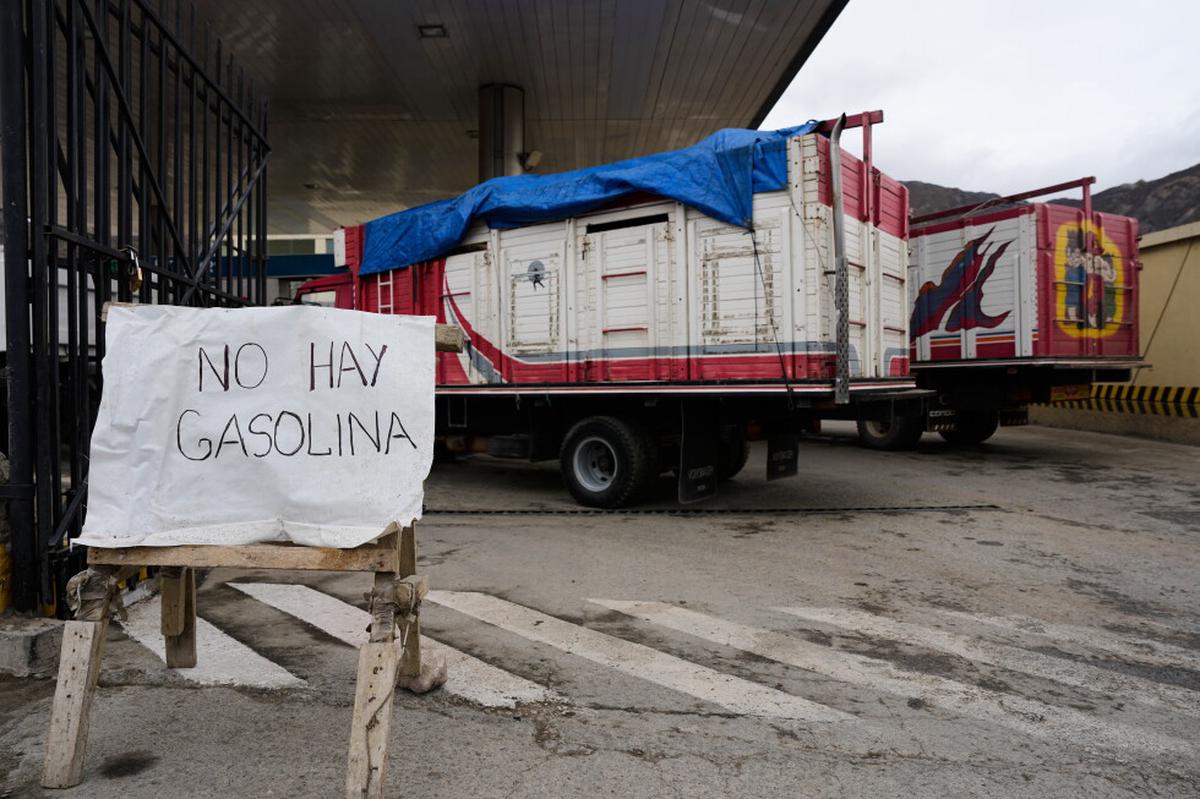
Bolivia's latest reporting supports planned protests and road blockades this week by farmers and unions, including coca growers aligned with former president Evo Morales, over diesel shortages and a fuel price increase. It does not establish that current actions are nationwide, active, or centred on President Rodrigo Paz's resignation. The resignation of police commander General Mirko Sokol and legal action involving him add pressure on the government before the state of exception ends on 20 September.
Executive summary
As of 1 September 2026, the reporting package has moved beyond earlier evidence of past unrest and now reports that farmers and unions have called protests and road blockades for the week beginning 31 August. The immediate demands concern diesel shortages and reversal of a fuel price increase. Unions previously held a 53-day protest demanding Paz's resignation and threaten to reactivate mobilisation after the state of exception ends on 20 September, but current reporting does not establish a nationwide resignation campaign. Political pressure is also rising around Sokol's resignation, complaints filed by Vice President Edman Lara, Sokol's failure to attend an initial prosecutorial summons, and the detention of former adviser Fernando Cerimedo. NASA FIRMS data do not provide usable corroboration of unrest in Bolivia because the package contains a disputed location attribution and the system records heat rather than cause.
Change from previous assessment
Since the 31 August prior brief, the assessment has changed from unlikely that the package substantiated current protests and blockades to likely that farmers and unions have called such actions for this week. Confidence in the broader nationwide resignation narrative remains low because current demands and geographic scope are still unclear. The brief adds a judgment on increased pressure around General Mirko Sokol's resignation and related legal action, and retains fuel shortages and fuel pricing as the most credible mobilisation triggers. The prior assessment that NASA FIRMS did not provide usable Bolivia corroboration is reinforced by the unresolved coordinate contradiction.
Key judgments
- It is likely that farmers and unions, including coca growers aligned with former president Evo Morales, have organised protests and road blockades in Bolivia for the week beginning 31 August over diesel shortages and the fuel price increase. This is a reported development from a single major-media account, so confidence is medium rather than high. (Confidence: medium · REPORTED)
- I&W: Confirm: Within 0-14 days, public statements by farmers, unions or coca growers are followed by named road closures in Bolivia. (0-14 days)
- I&W: Break: By 14 days, the announced groups cancel the week's calls and no road closures are recorded. (0-14 days)
- It is unlikely that the current week's planned actions constitute a nationwide campaign demanding President Rodrigo Paz's resignation. The reporting links the current calls to diesel shortages and the fuel price increase, while the 53-day union protest demanding Paz's resignation and the threat to reactivate mobilisation after 20 September describe earlier or future activity. Confidence is low because the package lacks independent corroboration of geographic scope and current demands. (Confidence: low · ASSESSED)
- I&W: Confirm: Within 0-14 days, unions explicitly add Paz's resignation to the current fuel demands and announce coordinated action across Bolivia. (0-14 days)
- I&W: Break: By 20 September, public demands remain limited to diesel availability and repeal of the fuel price increase, with no explicit call for Paz to resign. (0-14 days)
- It is likely that pressure on President Rodrigo Paz's government and friction within Bolivia's police leadership will remain elevated through 20 September. The government announced General Mirko Sokol's resignation, Government Minister Marco Antonio Oviedo said Paz accepted it, Vice President Edman Lara filed complaints against Sokol, and Sokol did not attend the first prosecutorial summons. Publicised audios also allegedly referred to police officers collecting funds to force Sokol's departure. The assessment is medium confidence because these developments come from one major-media report and the audio allegation is not independently corroborated. (Confidence: medium · ASSESSED)
- I&W: Confirm: By 20 September, the Bolivian government announces another senior police change or the Public Ministry records further action after Sokol's nonappearance. (0-14 days)
- I&W: Break: By 20 September, Sokol appears before the Public Ministry and no further official complaint or police leadership dispute is reported. (0-14 days)
- It is likely that diesel scarcity and the fuel price increase will remain the principal mobilisation triggers through 20 September. Bolivia is under a state of exception because of fuel shortages and the economic crisis, eastern producers recently suspended a blockade after reaching an agreement with the government while warning of renewed protest, and unions threaten to reactivate mobilisation when the state of exception ends. Confidence is medium because the evidence is drawn from one major-media source. (Confidence: medium · ASSESSED)
- I&W: Confirm: After 20 September, unions or farmers reactivate road blockades while citing diesel shortages or the fuel price increase. (1-3 months)
- I&W: Break: Within 0-14 days, the government agreement keeps eastern producers' road suspension in place and the announced unions withdraw their mobilisation calls. (0-14 days)
- It is very unlikely that the NASA FIRMS data in the current package corroborate protest activity in Bolivia. FIRMS recorded 25 thermal detections in Latin America over one day, with none assessed as high confidence, but the associated bounding box is in southern California and NASA cautions that thermal signatures record heat rather than cause. Confidence is medium because the package contains a direct geographic contradiction between the Latin America attribution and the stated coordinates. (Confidence: medium · ASSESSED)
- I&W: Confirm: Within 0-14 days, a new FIRMS query using Bolivian coordinates identifies thermal detections and a separate report attributes a heat source to protest activity. (0-14 days)
- I&W: Break: Within 0-14 days, verification keeps the detections inside the southern California and US-Mexico border bounding box and finds no Bolivia-coordinate data. (0-14 days)
Outlook & scenarios
Renewed fuel-led mobilisation (55%)
Roughly even chance. Farmers, unions and coca growers aligned with Evo Morales sustain this week's calls over diesel shortages and the fuel price increase. Unions reactivate mobilisation after the state of exception ends on 20 September, while eastern producers resume road action if their agreement with the government does not hold.
Limited disruption and temporary de-escalation (30%)
Unlikely. Eastern producers maintain their suspension after the government agreement, while national unions retain pressure at the level of threats and planned calls rather than sustained blockades. The immediate crisis remains politically damaging but does not develop into a verified nationwide campaign.
Explicit nationwide resignation campaign (15%)
Very unlikely. After 20 September, unions convert fuel grievances into an explicit demand for President Rodrigo Paz's resignation and sustain coordinated blockades across Bolivia. This scenario depends on the earlier 53-day resignation campaign becoming the dominant demand again, which current reporting does not establish.
Security-linked political rupture (5%)
Very unlikely, high-impact wildcard. Sokol's resignation, Lara's complaints, Sokol's failure to attend the first summons and the alleged police fundraising produce an open confrontation over police leadership that deepens the political crisis. This scenario rests partly on uncorroborated audio reporting.
Recommendations
- Prioritise verification of whether the protests and road blockades called for the week beginning 31 August are active. Record named road locations, start times, participating organisations and whether disruptions are isolated or coordinated across Bolivia.
- Separate current demands from the earlier resignation campaign in all reporting. Track whether farmers, unions and coca growers explicitly call for President Rodrigo Paz's resignation or focus on diesel availability and repeal of the fuel price increase.
- Maintain a daily watch on the 20 September end of the state of exception. Flag renewed mobilisation by unions and any resumption of the eastern producers' road blockade as separate developments.
- Track the police leadership dispute through official announcements, Public Ministry actions and Sokol's response to the complaints. Treat the reported audios as allegations until independently verified.
- Do not use the NASA FIRMS item as evidence of unrest in Bolivia until the coordinates are reconciled and a separate source establishes the cause of any detected heat.
Confidence & uncertainty
Overall confidence is medium. One major-media account provides direct reporting on the protest calls, fuel grievances, Sokol's resignation, legal actions and the state of exception, but the package lacks independent corroboration for the scale, timing and demands of current mobilisation. The unknown-reliability Google News item adds no clearly usable corroboration. NASA FIRMS is a high-reliability source for thermal observations, but its geographic attribution is conflicted and its data cannot establish cause.
Intelligence gaps
- [EEI 1.1 · UNCOVERED] Official resignation letter or public statement from President Rodrigo Paz announcing intent to step down, with date/time and channels of release. Recommended collection: official statements/OSINT
- [EEI 1.3 · UNCOVERED] Formal legislative actions filed and their sponsorship count (impeachment/ removal motions, dates filed, vote schedule, list of legislators publicly backing each action). Recommended collection: legislative records/OSINT
- [EEI 1.4 · PARTIAL] Existence and content of signed negotiation outcomes or exit agreements between the presidency and opposition/protest leaders (meeting minutes, memoranda, signatories, deadlines). Recommended collection: HUMINT/diplomatic
- [EEI 2.1 · UNCOVERED] Orders or directives from the Ministry of Defense or Interior authorizing deployment, use of lethal force, curfews, or emergency powers (document text, date/time, units named). Recommended collection: official statements/OSINT
- [EEI 2.2 · UNCOVERED] Observed troop and police unit movements and concentrations at key urban areas, government buildings, or protest hotspots (unit identifiers, equipment observed, locations, timestamps). Recommended collection: satellite/imagery
- [EEI 2.4 · UNCOVERED] Verified incidents of security forces using live ammunition, heavy weapons, or armored vehicles against protesters (casualty numbers, weapon types, time/place, supporting media or hospital records). Recommended collection: medical/hospital reports & open source
- [EEI 3.1 · PARTIAL] Location, number, and estimated duration of active roadblocks on major highways and access routes (GPS coordinates, reported start times, groups controlling each blockade). Recommended collection: transport/logistics & social media
- [EEI 3.2 · UNCOVERED] Operational status of key transport nodes (international airports, major bus terminals, rail hubs, and border crossings), open, limited, closed, with timestamps. Recommended collection: transport authority updates/OSINT
- [EEI 3.3 · PARTIAL] Size and frequency of street protests in major cities (estimated attendance counts, dates/times, trend compared to previous days). Recommended collection: social media/OSINT
- [EEI 4.1 · PARTIAL] Fuel supply status at major depots and petrol stations (days of supply remaining, deliveries canceled/delayed, outages reported by region). Recommended collection: logistics/industry reports
- [EEI 4.2 · UNCOVERED] Availability and price movements of staple foods in principal wholesale markets and supermarkets (stock levels, price changes percent, locations affected). Recommended collection: market/retail & OSINT
- [EEI 4.3 · UNCOVERED] Scope and duration of disruptions to public services (electricity outages, water supply interruptions, hospital service reductions) with affected areas and timestamps. Recommended collection: utility operators/OSINT
- [EEI 4.4 · UNCOVERED] Actions by foreign governments or international organizations: travel advisories, embassy evacuations, recognition/condemnation statements, sanctions or aid pledges (dates and content). Recommended collection: diplomatic channels/OSINT
Cited sources
[1] Cadena 3 · Crisis en Bolivia: Renuncia del comandante de la policía en medio de protestas sociales (B) · Mon Aug 31 2026 13:16:00 GMT+0000 (Coordinated Universal Time) · sha256:179b086f0d99 [2] NASA (FIRMS, LANCE/MODAPS) · NASA FIRMS thermal detections — Latin America (1d) (A) · sha256:c8a96d3f85da
Source content hashes were computed at collection time; the cited text is preserved unmodified for the life of this product.
TLP:CLEAR