TLP:CLEAR · Disclosure is not limited.
Bolivia: Gas Reserve Crisis and Unverified Political Allegations
Time window: Last 1 day · Audience: General analyst · Type: Situation report · DTG: 2026-11-13 22:34Z · Overall confidence: HIGH
BLUF
Bolivia’s reported gas reserves have fallen to 2.3 trillion cubic feet, their lowest level in two decades, while reduced Argentinian purchases add pressure on export revenues. The new reporting does not establish a nationwide blockade campaign or a transport-union demand for President Rodrigo Paz to resign; allegations against Evo Morales remain unverified in the supplied material.
Executive summary
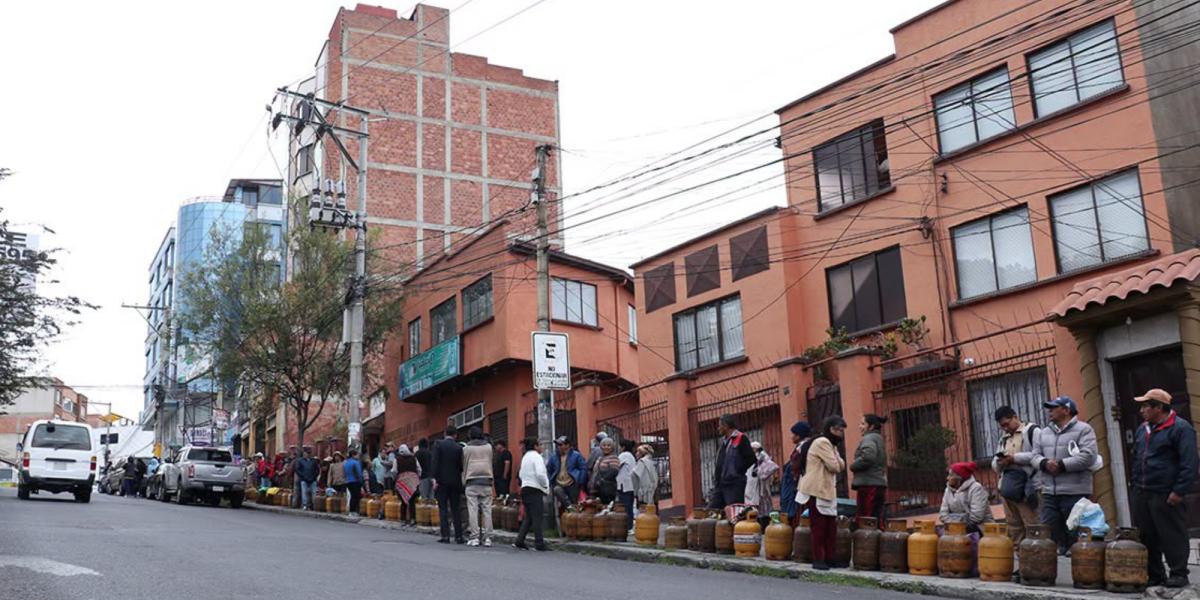
An El Economista report published on 13 November says a Bolivian government report put gas reserves at 2.3 trillion cubic feet, nearly one-sixth of the 13.45 trillion cubic feet reported in 2015. YPFB president Sebastián Daroca said Bolivia is likely to need gas imports from 2030, and the government has authorised private gas imports and urged Parliament to approve a new Hydrocarbons Law. The report also says Argentina reduced its gas purchases from Bolivia, contributing to fiscal pressure and lower dollar revenues. Separately, social-media reposts report government accusations that Evo Morales led a drug-trafficking cartel in Chapare and financed blockades. Those posts do not establish the allegations, the scale or location of any blockades, or a transport-union campaign against Paz.
Change from previous assessment
Since the 12 November brief, the supplied reporting has shifted from the Hotel Las Américas investigation to Bolivia’s gas reserves, supply outlook and government policy response. It adds a reported reserve estimate of 2.3 trillion cubic feet, the forecast of gas imports from 2030, and the October authorisation for private imports. Social-media reposts add allegations against Evo Morales, but do not resolve the prior reporting gap on nationwide blockades or a transport-union demand for Paz’s resignation.
Key judgments
- Bolivia is likely to face continued pressure to secure gas supply and export revenues: the government-reported reserve figure is 2.3 trillion cubic feet, YPFB president Sebastián Daroca described reserves as the lowest in 20 years, and the report says Argentina reduced its gas purchases. Daroca’s forecast that Bolivia will need to import gas from 2030 reinforces the supply concern, but the supplied reporting does not quantify how quickly reserves or export revenues will change. (Confidence: medium · ASSESSED)
- I&W: Confirm: YPFB or a subsequent government reserve release repeats or lowers the 2.3 trillion cubic feet estimate. (1-3 months)
- I&W: Break: an official reserve revision materially raises the estimate, or official reporting documents a sustained recovery in Argentinian gas purchases. (1-3 months)
- The Paz government is likely to pursue greater private-sector involvement in gas supply: it authorised private companies to import gas in October and has urged Parliament to approve a new Hydrocarbons Law to attract private investment. The supplied reporting does not show whether Parliament has acted or whether private imports have begun. (Confidence: medium · ASSESSED)
- I&W: Confirm: Parliament schedules or begins consideration of the new Hydrocarbons Law. (0-3 months)
- I&W: Break: the government withdraws the private-import authorisation or states that private imports will not proceed. (0-3 months)
- The supplied material does not establish a nationwide blockade campaign coordinated by Evo Morales or a transport-union demand for Paz’s resignation. The Bolivian government is reported to have accused Morales of financing blockades and leading a drug-trafficking cartel in Chapare, but those allegations appear in social-media reposts and are not independently substantiated here. (Confidence: low · ASSESSED)
- I&W: Break: a dated transport-union statement explicitly demands Paz’s resignation and identifies a coordinated blockade plan. (0-14 days)
- I&W: Break: independently verified reports identify specific blocked routes, locations and dates, with evidence linking organisers to Morales. (0-14 days)
Outlook & scenarios
Private supply measures advance (50%)
There is a roughly even chance that the Paz government advances its private-import policy and obtains parliamentary consideration of a new Hydrocarbons Law within the next three months. This would address access to supply, but would not itself reverse the reported reserve decline.
Legislative action stalls (35%)
It is plausible that Parliament does not advance the proposed law within three months. In that case, the government’s October authorisation for private gas imports remains the clearest reported policy response, while the reserve and export-revenue pressures remain unresolved.
Blockade allegations develop into verified mobilisation (15%)
A low-probability, high-impact scenario is that transport unions issue a coordinated demand for Paz’s resignation and verified road closures follow. That would change the current assessment, which is based on social-media reports of government allegations rather than route-level evidence of a national campaign.
Recommendations
- Treat the accusations against Evo Morales as allegations, not established fact. Seek an attributable government statement or filing, a direct response from Morales, and independent evidence before assessing responsibility for cartel activity or blockades.
- Track YPFB and Bolivian government releases for reserve estimates, methodology and any revised forecast for gas imports from 2030. Keep official figures separate from Daroca’s forecast.
- Monitor Parliament’s agenda and official notices on the proposed Hydrocarbons Law, private-import permits and any recorded import activity. Distinguish authorisation from completed imports.
- For protest reporting, require dated statements from named Bolivian transport unions and independently verified reports identifying blocked routes and locations before assessing the scale of mobilisation or a demand for Paz’s resignation.
Confidence & uncertainty
Overall confidence is high for the core reported reserve and policy facts: the major-media report attributes the reserve estimate to a government report and quotes YPFB president Sebastián Daroca, while also reporting the energy minister’s assessment and the government’s policy position. These details are corroborating elements within one major-media account, not independent media confirmation. Confidence is lower for forward-looking implications and low for the allegations concerning Evo Morales, which are represented here by social-media reposts without independent substantiation.
Intelligence gaps
- [EEI 1.1 · UNCOVERED] Official resignation letter or public statement from President Rodrigo Paz announcing intent to step down, with date/time and channels of release. Recommended collection: official statements/OSINT
- [EEI 1.2 · UNCOVERED] Number and identities of cabinet ministers or senior executive officials who have tendered resignations or publicly withdrawn support (names, offices, dates). Recommended collection: government sources/HUMINT
- [EEI 1.3 · UNCOVERED] Formal legislative actions filed and their sponsorship count (impeachment/ removal motions, dates filed, vote schedule, list of legislators publicly backing each action). Recommended collection: legislative records/OSINT
- [EEI 1.4 · UNCOVERED] Existence and content of signed negotiation outcomes or exit agreements between the presidency and opposition/protest leaders (meeting minutes, memoranda, signatories, deadlines). Recommended collection: HUMINT/diplomatic
- [EEI 2.1 · UNCOVERED] Orders or directives from the Ministry of Defense or Interior authorizing deployment, use of lethal force, curfews, or emergency powers (document text, date/time, units named). Recommended collection: official statements/OSINT
- [EEI 2.2 · UNCOVERED] Observed troop and police unit movements and concentrations at key urban areas, government buildings, or protest hotspots (unit identifiers, equipment observed, locations, timestamps). Recommended collection: satellite/imagery
- [EEI 2.3 · UNCOVERED] Public resignations, defections, or denouncements by senior military/police officers (names, ranks, dates, content of statements). Recommended collection: social media/HUMINT
- [EEI 2.4 · UNCOVERED] Verified incidents of security forces using live ammunition, heavy weapons, or armored vehicles against protesters (casualty numbers, weapon types, time/place, supporting media or hospital records). Recommended collection: medical/hospital reports & open source
- [EEI 3.1 · PARTIAL] Location, number, and estimated duration of active roadblocks on major highways and access routes (GPS coordinates, reported start times, groups controlling each blockade). Recommended collection: transport/logistics & social media
- [EEI 3.2 · UNCOVERED] Operational status of key transport nodes (international airports, major bus terminals, rail hubs, and border crossings), open, limited, closed, with timestamps. Recommended collection: transport authority updates/OSINT
- [EEI 3.3 · UNCOVERED] Size and frequency of street protests in major cities (estimated attendance counts, dates/times, trend compared to previous days). Recommended collection: social media/OSINT
- [EEI 3.4 · UNCOVERED] Communications from named protest leaders or coalitions calling for escalation, general strike, or de-escalation (public messages, strikes announced, coordination instructions). Recommended collection: social media/HUMINT
- [EEI 4.1 · UNCOVERED] Fuel supply status at major depots and petrol stations (days of supply remaining, deliveries canceled/delayed, outages reported by region). Recommended collection: logistics/industry reports
- [EEI 4.2 · UNCOVERED] Availability and price movements of staple foods in principal wholesale markets and supermarkets (stock levels, price changes percent, locations affected). Recommended collection: market/retail & OSINT
- [EEI 4.3 · UNCOVERED] Scope and duration of disruptions to public services (electricity outages, water supply interruptions, hospital service reductions) with affected areas and timestamps. Recommended collection: utility operators/OSINT
- [EEI 4.4 · UNCOVERED] Actions by foreign governments or international organizations: travel advisories, embassy evacuations, recognition/condemnation statements, sanctions or aid pledges (dates and content). Recommended collection: diplomatic channels/OSINT
Red cell review: CONCUR
TLP:CLEAR