TLP:CLEAR · Disclosure is not limited.
Bolivia: OAS Police Request Raises Political Tensions
Time window: Last 1 day · Audience: General analyst · Type: Situation report · DTG: 2026-09-13 19:03Z · Overall confidence: LOW
BLUF
Bolivia's political crisis is likely to persist as President Rodrigo Paz's government faces renewed attacks from Evo Morales over legitimacy, economic policy and an OAS police-support request. Morales characterises the request as a possible route for Southern Command personnel and foreign police to enter Bolivia, but the supplied record does not establish nationwide or currently active road blockades.
Executive summary
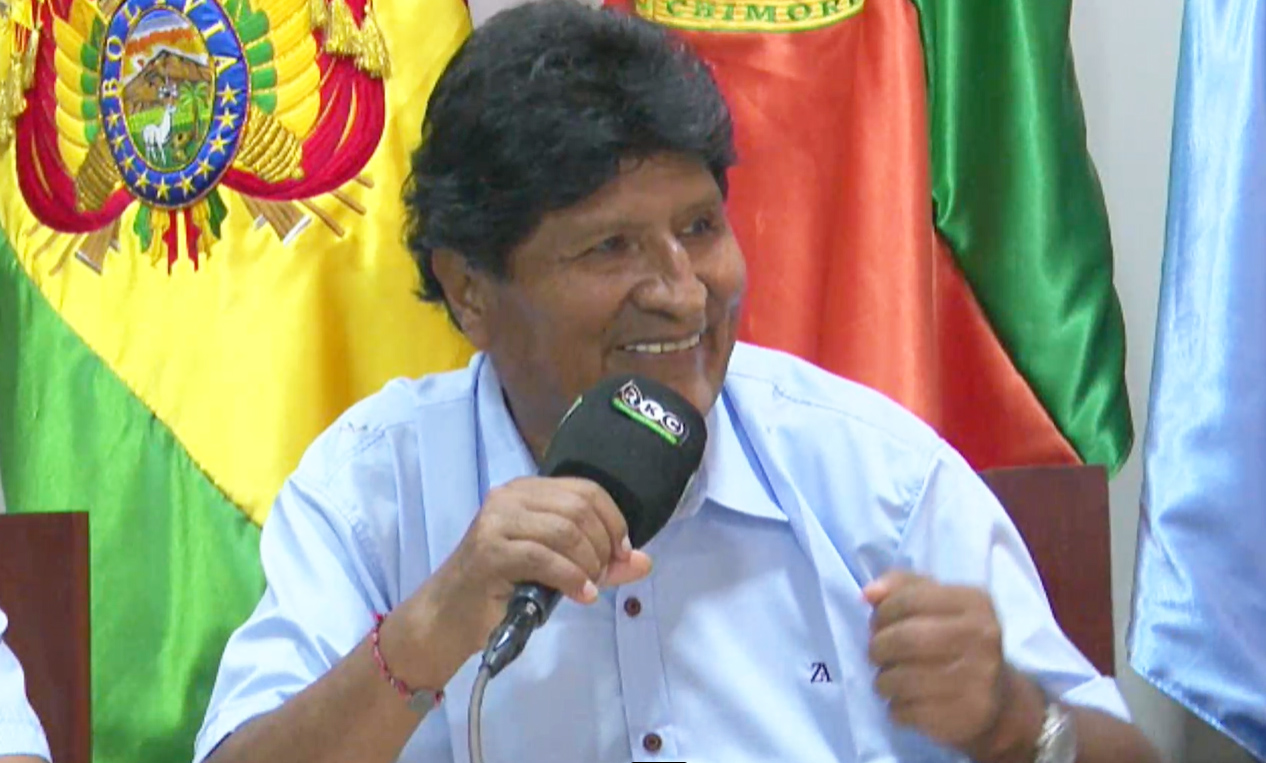
On 13 September, local reporting described Evo Morales as saying that Rodrigo Paz's government lacked popular support and direction. Morales also criticised the agreement with the IMF, warned that more than half of Bolivia's population could be in poverty by the end of 2026, and alleged cabinet disunity. The Government of Bolivia announced that it had requested OAS activation of a police network for public-order tasks, while Morales portrayed the request as potentially enabling the arrival of Southern Command personnel and foreign police. The competing accounts are unresolved. A low-confidence background report refers to mass protests and blockades in Bolivia, but the supplied record does not establish that these are nationwide or active on 13 September. NASA FIRMS and AISStream records are geographically mismatched or too limited to substantiate unrest in Bolivia.
Change from previous assessment
Since the 12 September brief, the assessment has shifted from the draft extension of the state of exception and prospective OAS engagement towards an active dispute over the scope of Bolivia's OAS request. New reporting adds Evo Morales's claims that the Rodrigo Paz government lacks popular support and cabinet direction, his criticism of the IMF agreement and subsidy policy, and the reported visit to the United States by Fernando Aramayo and Defence Minister Ernesto Justiniano. Confidence that protests and blockades are nationwide or active has not increased. The foreign-intervention allegation has been added as a competing scenario, not adopted as an established development.
Key judgments
- Bolivia's political crisis is likely to persist over the next 1-3 months, with Rodrigo Paz's government facing continued public attacks from Evo Morales over legitimacy, cabinet cohesion, the IMF agreement and subsidy policy. This is an assessed inference, not proof that nationwide protests are ongoing. The evidence rests mainly on one local-media account, while the only supplied claim describing mass protests and blockades is low-confidence background reporting. (Confidence: low · ASSESSED)
- I&W: Confirming indicator: within 0-14 days, Evo Morales issues another public attack or mobilisation call and independent reporting documents a new demonstration or road blockade directed against the Rodrigo Paz government. (0-14 days)
- I&W: Breaking indicator: within 0-14 days, the Government of Bolivia and independent reporting record no new demonstrations or blockades while public criticism from Morales subsides. (0-14 days)
- The OAS request is likely to remain publicly framed as police cooperation rather than a confirmed deployment of Southern Command personnel. The Government of Bolivia says it requested activation of an OAS police network for public-order tasks, whereas Evo Morales claims the request could enable Southern Command military personnel and foreign police to intervene. This contradiction is unresolved and lowers confidence. (Confidence: low · REPORTED)
- I&W: Confirming indicator: within 0-14 days, the OAS or the Government of Bolivia publishes a mandate limiting the activity to police-network support and public-order cooperation. (0-14 days)
- I&W: Breaking indicator: within 0-14 days, the OAS, the Government of Bolivia or Southern Command confirms the arrival or deployment of foreign military personnel in Bolivia. (0-14 days)
- Evo Morales is likely to continue challenging Rodrigo Paz's legitimacy and economic programme over the next 0-14 days, using claims of cabinet disunity, lack of popular support, poverty affecting more than half of Bolivians by year-end, and the removal of state subsidies from January. This is a low-confidence forward assessment based on a single local-media account and reflects Morales's assertions, not independently verified economic or cabinet conditions. (Confidence: low · ASSESSED)
- I&W: Confirming indicator: within 0-14 days, Morales issues another statement repeating the poverty, IMF, subsidy or cabinet-disunity themes. (0-14 days)
- I&W: Breaking indicator: within 0-14 days, Morales publicly withdraws these allegations or the Paz government releases independently corroborated evidence of cabinet unity and unchanged subsidy policy. (0-14 days)
- The supplied record does not establish that protests and road blockades are nationwide or active on 13 September. The only direct claim describing mass protests and blockades in Bolivia is low-confidence, undated background reporting, with no supplied route-level or locality-level corroboration. (Confidence: low · ASSESSED)
- I&W: Confirming indicator: within 0-14 days, two independent reports identify active road blockades or demonstrations in multiple Bolivian localities on the same date. (0-14 days)
- I&W: Breaking indicator: within 0-14 days, available reporting remains retrospective or undated and identifies no current road closure, demonstration or blockade in Bolivia. (0-14 days)
- The supplied NASA FIRMS and AISStream records are very unlikely to substantiate unrest, blockades or foreign security activity in Bolivia. NASA FIRMS reports 15 thermal detections, with zero high-confidence detections, inside a bounding box from 31.47,-119.82 to 36.47,-114.82. AISStream reports 13 vessels in a separate bounding box from 31.97,-119.32 to 35.97,-115.32 over roughly six seconds. The records show heat signatures and vessel positions, not their causes or political meaning, and the FIRMS geographic label conflicts with its coordinates. (Confidence: medium · ASSESSED)
- I&W: Confirming indicator: within 0-14 days, correctly scoped Bolivia queries produce geospatial detections that align with independently reported Bolivian incidents. (0-14 days)
- I&W: Breaking indicator: within 0-14 days, corrected coordinates remain outside Bolivia and no independent Bolivian incident reporting links the detections to protests, blockades or security activity. (0-14 days)
Outlook & scenarios
Continued political pressure with limited OAS police cooperation (50%)
This is the most likely path over the next 1-3 months. Rodrigo Paz's government continues seeking OAS police-network support, while Evo Morales sustains public criticism of Paz's legitimacy and IMF-linked subsidy policy. Political tension persists without supplied evidence of confirmed foreign military deployment.
Renewed or sustained blockades inside Bolivia (25%)
A less likely path is the reactivation or expansion of protests and road blockades in multiple Bolivian localities. This scenario would place additional pressure on Rodrigo Paz's government and increase the value of the OAS police-support request, but current evidence for nationwide activity is weak.
OAS request becomes a focus of foreign-intervention politics (20%)
Evo Morales's interpretation of the OAS request gains traction in Bolivia, with claims that Southern Command personnel and foreign police could enter the country becoming a central political issue. The scenario involves intensified political messaging rather than confirmed foreign deployment.
Confirmed foreign security deployment (5%)
This is a low-probability, high-impact wildcard. The OAS or the Government of Bolivia confirms a mandate or arrival involving foreign military personnel or police beyond the publicly described police-network support. Such confirmation would sharply widen the crisis beyond the current domestic political dispute.
Recommendations
- Obtain and authenticate the text of Bolivia's request to the OAS. Establish whether it refers only to the Inter-American police network, specifies any operational mandate, or mentions foreign personnel.
- Track statements by the Government of Bolivia, the OAS, Evo Morales and Southern Command separately. Record whether each statement reports an action, makes an allegation, or describes a policy intention.
- Build a daily incident log for Bolivian demonstrations and road blockades, recording the date, locality, route, reported organisers and stated demands. Do not describe activity as nationwide without same-day evidence from multiple Bolivian localities.
- Treat Morales's poverty, IMF and subsidy claims as political messaging until independently corroborated. Separate announced policy changes from claims about future subsidy removal in January.
- Exclude the supplied NASA FIRMS and AISStream records from the Bolivia unrest baseline unless the geographic queries are corrected and the outputs align with independent reporting from Bolivia.
- Maintain two contingency lines in future reporting: domestic policing and dialogue under OAS auspices, and escalation driven by claims of foreign security intervention. Elevate the second line only after an OAS, Bolivian government or Southern Command confirmation.
Confidence & uncertainty
Overall confidence is low because the main current reporting comes from one local-media account with medium source reliability, while the broader protests and blockades claim comes from a low-reliability, undated blog source. The OAS request has two conflicting characterisations, one from the Government of Bolivia and one from Evo Morales. NASA FIRMS is a reliable official system but its regional label conflicts with the supplied coordinates, and the AISStream sample is only roughly six seconds long. The record therefore supports the existence of political tension and an OAS-related dispute more securely than it supports nationwide, current blockades or any foreign security deployment.
Intelligence gaps
- [EEI 1.1 · UNCOVERED] Official resignation letter or public statement from President Rodrigo Paz announcing intent to step down, with date/time and channels of release. Recommended collection: official statements/OSINT
- [EEI 1.2 · PARTIAL] Number and identities of cabinet ministers or senior executive officials who have tendered resignations or publicly withdrawn support (names, offices, dates). Recommended collection: government sources/HUMINT
- [EEI 1.3 · UNCOVERED] Formal legislative actions filed and their sponsorship count (impeachment/ removal motions, dates filed, vote schedule, list of legislators publicly backing each action). Recommended collection: legislative records/OSINT
- [EEI 1.4 · UNCOVERED] Existence and content of signed negotiation outcomes or exit agreements between the presidency and opposition/protest leaders (meeting minutes, memoranda, signatories, deadlines). Recommended collection: HUMINT/diplomatic
- [EEI 2.1 · PARTIAL] Orders or directives from the Ministry of Defense or Interior authorizing deployment, use of lethal force, curfews, or emergency powers (document text, date/time, units named). Recommended collection: official statements/OSINT
- [EEI 2.2 · UNCOVERED] Observed troop and police unit movements and concentrations at key urban areas, government buildings, or protest hotspots (unit identifiers, equipment observed, locations, timestamps). Recommended collection: satellite/imagery
- [EEI 2.3 · UNCOVERED] Public resignations, defections, or denouncements by senior military/police officers (names, ranks, dates, content of statements). Recommended collection: social media/HUMINT
- [EEI 2.4 · UNCOVERED] Verified incidents of security forces using live ammunition, heavy weapons, or armored vehicles against protesters (casualty numbers, weapon types, time/place, supporting media or hospital records). Recommended collection: medical/hospital reports & open source
- [EEI 3.1 · PARTIAL] Location, number, and estimated duration of active roadblocks on major highways and access routes (GPS coordinates, reported start times, groups controlling each blockade). Recommended collection: transport/logistics & social media
- [EEI 3.2 · UNCOVERED] Operational status of key transport nodes (international airports, major bus terminals, rail hubs, and border crossings), open, limited, closed, with timestamps. Recommended collection: transport authority updates/OSINT
- [EEI 3.3 · PARTIAL] Size and frequency of street protests in major cities (estimated attendance counts, dates/times, trend compared to previous days). Recommended collection: social media/OSINT
- [EEI 3.4 · UNCOVERED] Communications from named protest leaders or coalitions calling for escalation, general strike, or de-escalation (public messages, strikes announced, coordination instructions). Recommended collection: social media/HUMINT
- [EEI 4.1 · UNCOVERED] Fuel supply status at major depots and petrol stations (days of supply remaining, deliveries canceled/delayed, outages reported by region). Recommended collection: logistics/industry reports
- [EEI 4.2 · UNCOVERED] Availability and price movements of staple foods in principal wholesale markets and supermarkets (stock levels, price changes percent, locations affected). Recommended collection: market/retail & OSINT
- [EEI 4.3 · UNCOVERED] Scope and duration of disruptions to public services (electricity outages, water supply interruptions, hospital service reductions) with affected areas and timestamps. Recommended collection: utility operators/OSINT
- [EEI 4.4 · PARTIAL] Actions by foreign governments or international organizations: travel advisories, embassy evacuations, recognition/condemnation statements, sanctions or aid pledges (dates and content). Recommended collection: diplomatic channels/OSINT
Cited sources
[1] Erbol (erbol.com.bo) · Para Evo Morales, Gobierno de Rodrigo Paz agoniza, sin respaldo popular ni rumbo (D) · Sun Sep 13 2026 14:53:31 GMT+0000 (Coordinated Universal Time) · sha256:7660c334f4b4 [2] International Viewpoint · Latin America: Patterns and Pendulum (D) · sha256:d8f4c307116e [3] NASA (Fire Information for Resource Management System, FIRMS) · NASA FIRMS thermal detections — Latin America (1d) (A) · sha256:1bb59d6fb157 [4] AISStream · AISStream vessel traffic — Latin America (13 vessels) (C) · sha256:5cae2808412d
Source content hashes were computed at collection time; the cited text is preserved unmodified for the life of this product.
TLP:CLEAR