TLP:CLEAR · Disclosure is not limited.
Bolivia: Protest Leader Detained as Blockades Ease; Heavy Toll Reported
Time window: Last 1 day · Audience: General analyst · Type: Situation report · DTG: 2026-07-07 12:12Z · Overall confidence: MEDIUM
BLUF
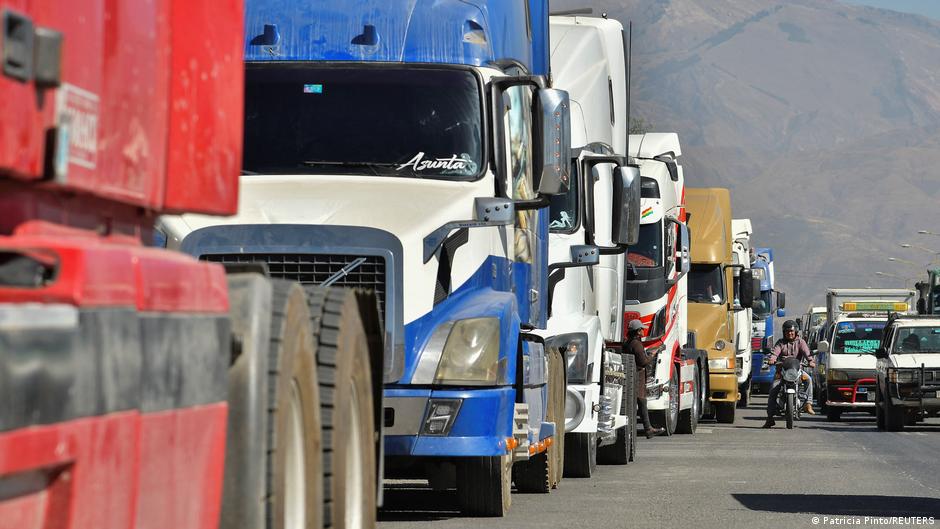
A Bolivian court ordered six months’ preventive detention for protest leader Vicente Salazar on 6 July after his arrest in El Alto, as authorities pursue terrorism and related charges. Reporting attributes at least 16 deaths and over 3 billion dollars in losses to the blockades, while a major miner says roads have largely reopened and a mid-July restart is planned, though relapse risk remains.
Executive summary
On 6 July 2026, a Bolivian court ordered six months of preventive detention for Vicente Salazar, who was arrested in El Alto and faces accusations including public instigation, criminal association, terrorism, and attacks against public services and transport. Reporting ties the protest wave and road blockades led by Salazar to at least 16 deaths, with 13 linked to delayed medical care, and to economic losses exceeding 3 billion dollars. A mining operator with assets at Don Mario reports that road blockades across Bolivia have largely been cleared, critical materials have arrived, and oxide processing is expected to begin in mid-July, signalling near-term logistical normalisation if calm holds.
Change from previous assessment
New reporting allows an initial structured assessment. Since the prior brief, which judged evidence on protest scale and trajectory as insufficient, major-media claims now document Vicente Salazar’s arrest and six-month preventive detention, specify the charges, and attribute substantial casualties and economic losses to the blockades. A company statement indicates blockades have largely cleared and sets a mid-July operational restart target, enabling a shift to medium confidence on near-term logistics while keeping caution on impact figures and the risk of relapse.
Key judgments
- Bolivian authorities very likely moved to neutralise the protest leadership by ordering six months of preventive detention for Vicente Salazar on 6 July, holding him at Chonchocoro after police detained him in El Alto, on accusations including public instigation, criminal association, terrorism, and attacks against public services and transport. (Confidence: high · REPORTED)
- I&W: Publication of the court’s written order confirming six-month preventive detention at Chonchocoro and the listed charges. (0-14 days)
- I&W: An appeals court modifies or revokes the preventive detention order. (0-14 days)
- Protest blockades led by Salazar very likely inflicted severe humanitarian and economic harm, including at least 16 deaths, 13 linked to delayed medical attention due to road closures, and economic losses exceeding 3 billion dollars. (Confidence: medium · REPORTED)
- I&W: Official release from Bolivian authorities confirming a blockade-related death toll at or above 16. (1-3 months)
- I&W: Credible revisions by authorities or courts that substantially lower the reported casualty or loss figures. (0-2 months)
- Nationwide road access has likely improved since early July, with a major miner reporting blockades largely cleared, critical materials delivered to Don Mario, and a mid-July oxide-processing restart expected. (Confidence: medium · REPORTED)
- I&W: Commencement of oxide ore processing at Don Mario on or near the stated mid-July timeline. (0-3 weeks)
- I&W: Fresh transport advisories or company notices citing renewed road closures that delay start-up beyond July. (0-6 weeks)
- Salazar’s preventive detention and terrorism-linked charges make it likely that centralised blockade coordination will diminish in the near term, though there is a roughly even chance of splinter actions reappearing if networks decentralise. (Confidence: medium · ASSESSED)
- I&W: Absence of sustained multi-route blockades through late July despite legal proceedings continuing against Salazar. (0-1 month)
- I&W: Coordinated, multi-corridor road closures claimed by Salazar’s associates or similar networks emerging within weeks. (0-1 month)
Outlook & scenarios
Managed de-escalation and logistics normalisation (60%)
Salazar remains in preventive detention, blockades stay down, and industrial operations such as Don Mario restart by mid-July. Casualty and loss figures hold without sharp upward revision, and overland transport stabilises through August.
Regroup and relapse (35%)
Protest networks reorganise despite Salazar’s detention. Blockades resume on key routes by late July, leading to new access-to-care incidents and forcing companies to delay restarts or reroute supplies.
Crackdown cascade (40%)
Authorities expand arrests beyond Salazar, limiting large-scale blockades but heightening polarisation. Street activity diminishes, yet sporadic, harder-to-predict disruptions occur, complicating route planning.
Recommendations
- Track the Salazar case daily via court and prosecutorial communications to detect any appeal or modification to preventive detention that could shift mobilisation dynamics.
- Maintain a rolling road-access picture for corridors serving Don Mario and other industrial nodes using police bulletins, local media, and partner reporting. Flag any closure within hours.
- Engage with Orvana/EMIPA to corroborate logistics normalisation and verify the mid-July oxide-processing start. Pre-plan contingency routes and inventory buffers if start-up slips.
- Establish a casualty and incident ledger specific to blockade-related access-to-care delays, anchored to official releases, to validate or challenge the reported toll of at least 16 deaths.
- Set tripwires for renewed disruptions: coordinated multi-route closures reported in the same 24-hour window, or public claims of action by Salazar-linked networks.
- Prepare a light-touch liaison plan for humanitarian passage where feasible, focused on medical transport routes that were previously impeded.
Confidence & uncertainty
Overall confidence is medium. Salazar’s arrest, the six-month preventive detention order, and the listed accusations are corroborated across multiple claims from major media. The humanitarian and economic impact figures are reported but not cross-validated by independent official tallies. The easing of blockades and imminent industrial restart derive primarily from a single company statement, which is reliable for its own operations but narrow in scope. These strengths and gaps support a medium confidence rating.
Alternative analysis (red cell)
Detention of a named leader and corporate statements of localized clearance do not establish broad national effects. The reporting is thin, contains single-source claims and timing/location contradictions (see contradiction_unaddressed), and lacks independent medical, economic, and organizational corroboration. Stronger, multi-source collection is required before asserting high or medium confidence that leadership was neutralized, that 16 deaths are fully attributable to blockades, that economic losses exceed $3 billion, or that nationwide access has meaningfully improved.
Intelligence gaps
- [EEI 1.1 · UNCOVERED] Official resignation letter or public statement from President Rodrigo Paz announcing intent to step down, with date/time and channels of release. Recommended collection: official statements/OSINT
- [EEI 1.2 · UNCOVERED] Number and identities of cabinet ministers or senior executive officials who have tendered resignations or publicly withdrawn support (names, offices, dates). Recommended collection: government sources/HUMINT
- [EEI 1.3 · UNCOVERED] Formal legislative actions filed and their sponsorship count (impeachment/ removal motions, dates filed, vote schedule, list of legislators publicly backing each action). Recommended collection: legislative records/OSINT
- [EEI 1.4 · UNCOVERED] Existence and content of signed negotiation outcomes or exit agreements between the presidency and opposition/protest leaders (meeting minutes, memoranda, signatories, deadlines). Recommended collection: HUMINT/diplomatic
- [EEI 2.1 · UNCOVERED] Orders or directives from the Ministry of Defense or Interior authorizing deployment, use of lethal force, curfews, or emergency powers (document text, date/time, units named). Recommended collection: official statements/OSINT
- [EEI 2.2 · UNCOVERED] Observed troop and police unit movements and concentrations at key urban areas, government buildings, or protest hotspots (unit identifiers, equipment observed, locations, timestamps). Recommended collection: satellite/imagery
- [EEI 2.3 · UNCOVERED] Public resignations, defections, or denouncements by senior military/police officers (names, ranks, dates, content of statements). Recommended collection: social media/HUMINT
- [EEI 2.4 · UNCOVERED] Verified incidents of security forces using live ammunition, heavy weapons, or armored vehicles against protesters (casualty numbers, weapon types, time/place, supporting media or hospital records). Recommended collection: medical/hospital reports & open source
- [EEI 3.1 · PARTIAL] Location, number, and estimated duration of active roadblocks on major highways and access routes (GPS coordinates, reported start times, groups controlling each blockade). Recommended collection: transport/logistics & social media
- [EEI 3.3 · PARTIAL] Size and frequency of street protests in major cities (estimated attendance counts, dates/times, trend compared to previous days). Recommended collection: social media/OSINT
- [EEI 3.4 · UNCOVERED] Communications from named protest leaders or coalitions calling for escalation, general strike, or de-escalation (public messages, strikes announced, coordination instructions). Recommended collection: social media/HUMINT
- [EEI 4.2 · UNCOVERED] Availability and price movements of staple foods in principal wholesale markets and supermarkets (stock levels, price changes percent, locations affected). Recommended collection: market/retail & OSINT
- [EEI 4.4 · PARTIAL] Actions by foreign governments or international organizations: travel advisories, embassy evacuations, recognition/condemnation statements, sanctions or aid pledges (dates and content). Recommended collection: diplomatic channels/OSINT
Cited sources
[1] dw.com · Prisión preventiva para líder de los bloqueos en Bolivia (A) · sha256:7162b8cda88e [2] Orvana Minerals Corp. · ORVANA PROVIDES LOGISTICS UPDATE AND OXIDE PROCESSING START-UP TIMELINE FOR DON MARIO – Company Announcement (A) · sha256:44776e2b13aa
Source content hashes were computed at collection time; the cited text is preserved unmodified for the life of this product.
Red cell review: PARTIAL DISSENT
TLP:CLEAR