TLP:CLEAR · Disclosure is not limited.
Bolivia: State of emergency empowers military to clear 50-day blockades as crisis deepens
Time window: Last 7 days · Audience: General analyst · Type: Situation report · DTG: 2026-06-21 06:12Z · Overall confidence: MEDIUM
BLUF
President Rodrigo Paz has declared a nationwide 90-day state of emergency and begun deploying soldiers to remove road blockades. Severe supply disruption and contested casualty figures after roughly 50 days of protests point to a protracted crisis; watch Congress’s 72-hour review and any move to detain Evo Morales.
Executive summary
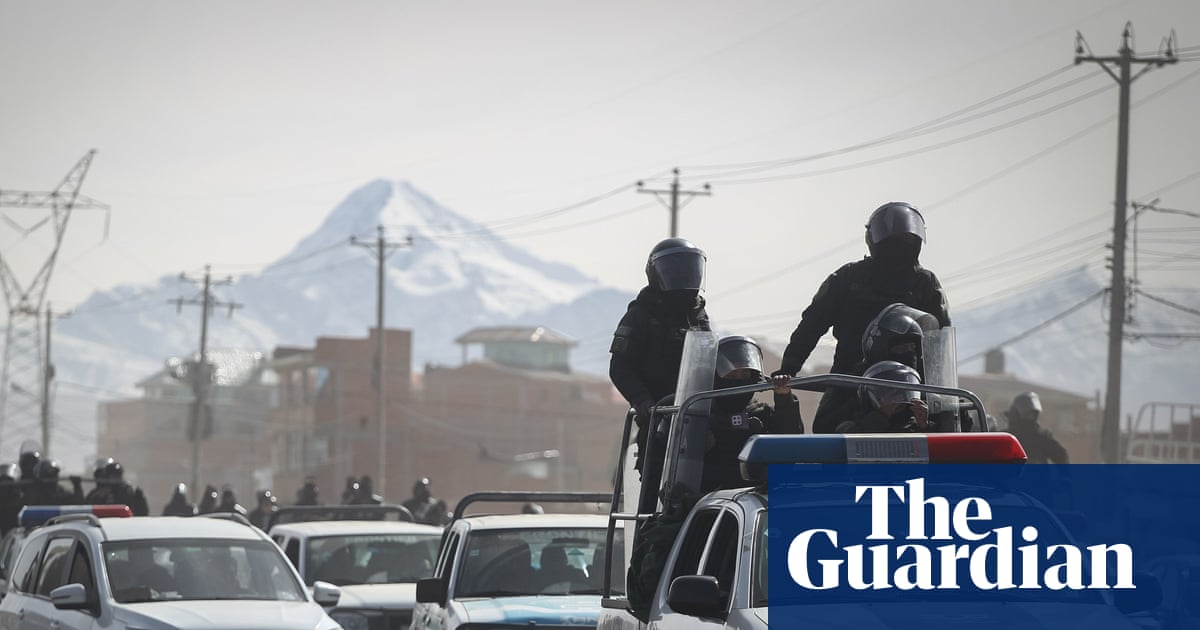
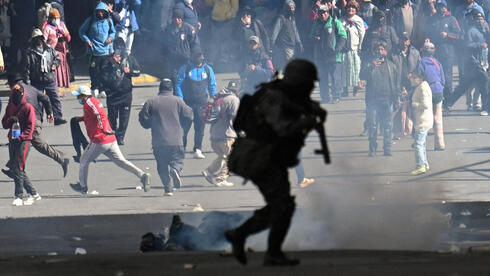
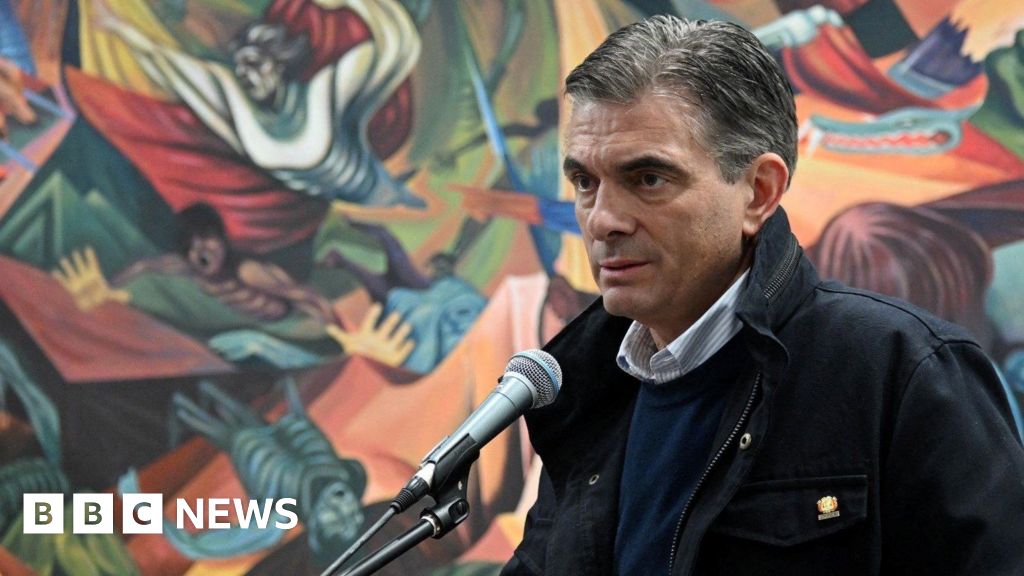
After weeks of anti-government protests triggered by the abrupt cut to long-standing fuel subsidies, President Rodrigo Paz declared a state of emergency on 20 June 2026, enabling wider military deployment to clear blockades and prohibiting the obstruction of streets and highways. The government says the measure aims to restore normality and ensure fuel supplies, and clearance operations with soldiers and bulldozers have begun. Protests and road closures over about 50 days have halted much economic activity, choked deliveries of fuel, food and medicines, and left La Paz isolated, with at least 365 arrests, 37 injuries and reported deaths ranging from at least 14 to at least 17. While Paz has struck agreements with some unions and a peasant union has called a truce, rural associations aligned with Evo Morales still control key routes. Paz accuses Morales of orchestrating the unrest, Morales is in hiding facing charges, and the interior minister has not ruled out an operation to capture him. Inflation at a 40-year high, fuel scarcity and dollar shortages are fuelling the mobilisation. Washington has signalled political and logistical support to Paz.
Key judgments
- The Paz government has almost certainly consolidated emergency powers for up to 90 days and started military-led clearance of road blockades nationwide, after declaring a state of emergency on 20 June 2026; the decree bans road obstruction, requires notification to Congress within 24 hours, and provides for a 72-hour congressional review. (Confidence: high · REPORTED)
- I&W: Executive transmits the emergency decree to Congress within 24 hours and Congress votes within the 72-hour window. (0-14 days)
- I&W: Sustained deployment of soldiers and bulldozers clearing blockades on approaches to La Paz. (0-14 days)
- Fifty days of blockades have almost certainly produced severe economic and humanitarian disruption, including acute shortages in major cities and La Paz being cut off, at least 365 arrests and 37 injuries, and at least 14 to 17 protest-linked deaths reported by authorities and rights groups. (Confidence: medium · REPORTED)
- I&W: Bolivia’s ombudsman issues an updated nationwide casualty and arrest tally aligning disparate figures. (0-14 days)
- I&W: Fuel tankers and food convoys resume regular deliveries into La Paz, with markets reopening at normal hours. (0-14 days)
- The protest front is likely to fragment in the near term, yielding patchy easing where unions have struck deals or called truces while rural associations aligned with Evo Morales retain leverage on key roads, prolonging instability over the next few weeks. (Confidence: medium · ASSESSED)
- I&W: Blockades are lifted and remain open on corridors covered by union agreements while new closures appear in rural zones aligned with Morales. (0-14 days)
- I&W: Joint statements by major unions and rural associations announcing a nationwide stand-down. (0-14 days)
- Political confrontation with Evo Morales is likely to intensify, with a realistic risk of a targeted operation against him that would trigger further unrest. (Confidence: medium · ASSESSED)
- I&W: Interior ministry or police announce warrants or operations against Morales or his close allies. (0-14 days)
- I&W: Government publicly rules out an arrest operation and opens mediated talks with Morales-aligned groups. (0-14 days)
- Underlying economic pressures are very likely to persist and fuel further mobilisation despite emergency measures, given inflation at a 40-year high, fuel scarcity, and dollar shortages driving union demands. (Confidence: medium · ASSESSED)
- I&W: Persistent queues at filling stations and reports of continued fuel and dollar shortages in major cities. (1-3 months)
- I&W: Government announces partial reinstatement of fuel subsidies or new foreign currency measures followed by union declarations standing down protests. (0-14 days)
- The United States is likely providing political backing and emergency logistics support to Paz, which may embolden security operations and stiffen government resolve. (Confidence: medium · ASSESSED)
- I&W: Publicised delivery or deployment of US-funded logistics or support assets for clearance or security operations. (0-14 days)
- I&W: Shift in US messaging to condition assistance on restraint and rights monitoring. (0-14 days)
Outlook & scenarios
Managed containment under emergency powers (60%)
Security forces keep main arteries into La Paz open and progressively clear other corridors while the decree remains in force. Union deals and a truce ease some closures, allowing fuel and food deliveries to resume in urban centres. Rural associations maintain intermittent closures, producing patchy normalisation and continued tension.
Arrest bid and crackdown (30%)
Authorities move to detain Evo Morales or key organisers. Clashes spike, casualties rise, and new blockades appear beyond prior hotspots. International scrutiny increases as emergency powers are extended to aggressive security sweeps.
Negotiated easing with selective concessions (25%)
The government opens structured talks with unions on wages and supply normalisation, offers targeted relief, and leverages the ability to lift the emergency early. Most blockades come down, though hardcore rural groups resist. The decree is curtailed ahead of 90 days.
Institutional check derails emergency powers (15%)
Congress declines to approve or narrows the emergency within 72 hours, forcing a rollback of military-led clearance. Protesters are emboldened, and negotiations restart from a weaker executive position.
Recommendations
- Maintain a live geospatial tracker of road closures and clearances into La Paz using verified imagery and official updates; annotate where soldiers and bulldozers are operating.
- Set a 72-hour watch on congressional procedures: confirm the presidential notification, track committee calendars, and capture the plenary vote outcome.
- Consolidate daily figures from Bolivia’s ombudsman’s office and hospital statements to reconcile casualty and arrest totals; flag any upward revisions.
- Monitor communications from the Bolivian Workers’ Confederation and the Túpac Katari peasant union for compliance with truce and lifting commitments; log any reversals.
- Task collection for indicators of moves against Evo Morales, including interior ministry briefings and police operations in areas where Morales-aligned associations control roads.
- Track fuel and staple availability in La Paz through retailer notices and delivery logs; correlate with convoy movements to assess whether supply normalisation is taking hold.
- Engage with US official readouts to clarify the scope and timing of promised emergency assistance and logistics support to Paz’s government; assess how this might affect security force posture.
Confidence & uncertainty
Overall confidence is medium because core developments are corroborated by multiple reliable outlets, including consistent reporting on the emergency decree, its scope, and military clearance operations. However, important elements remain contested or partly sourced, notably the exact protest death toll, differing time markers around the 50-day disruption, and forward-looking inferences about protest fragmentation and potential operations against Evo Morales. Some supportive context rests on medium-confidence or think tank reporting, which tempers confidence in the assessed trajectory.
Alternative analysis (red cell)
Reporting credibly documents that a state of emergency was declared and that protests have caused acute disruption and some localized clearances, but contradictions in casualty counts, reliance on a narrow set of related reports (including several claims tied to a single origin cluster), and absence of primary-source decree text or operational orders mean the stronger inferences in the brief (nationwide military clearance, precise death tolls, imminent capture operations, and U.S. logistical backing) are contestable. A sober alternative is that authorities have expanded legal authority and conducted localized clearances while the overall situation remains fluid and unevenly corroborated across sources.
Cited sources
[1] Jerusalem Post · Bolivia's Paz declares state of emergency over blockade crisis, paving way to deploy military (A) · sha256:c6440d9cf6ba [2] CNN · Bolivia’s president declares state of emergency over blockade crisis | CNN (A) · sha256:84828205f9e6 [3] aljazeera.com · Bolivia declares state of emergency amid blockade crisis (A) · sha256:961f4e3396b4 [4] ynetnews.com · Bolivia declares state of emergency after 50 days of anti-government blockades (B) · sha256:01102b0d3d55 [5] theguardian.com · Bolivian president declares state of emergency and deploys military to quell anti-government protests (A) · sha256:b361a12322ba [6] Los Angeles Times · Bolivia’s president declares a state of emergency as road blockades choke supplies - Los Angeles Times (A) · sha256:1274b57214e5 [7] elnuevodia.com · Presidente de Bolivia declara estado de excepción tras más de 50 días de protestas (A) · sha256:472fb8b5edcd [8] CNN · El presidente de Bolivia declara el estado de emergencia por la crisis nacional de bloqueos de carreteras (A) · sha256:75a970a70281 [9] bbc.com · Bolovian president declares state of emergency (A) · sha256:77d691991468 [10] Atlantic Council · The recent US-Venezuelan strike on Tren de Aragua’s leader will reverberate across Latin America (C) · sha256:8ea6d63d3e05
Source content hashes were computed at collection time; the cited text is preserved unmodified for the life of this product.
Red cell review: PARTIAL DISSENT
TLP:CLEAR