TLP:CLEAR · Disclosure is not limited.
Bolivia: State of Exception Extension and OAS Engagement
Time window: Last 1 day · Audience: General analyst · Type: Situation report · DTG: 2026-09-12 18:33Z · Overall confidence: HIGH
BLUF
Bolivia's political crisis is likely to persist into a new legal phase. A Chamber of Deputies committee approved a draft 90-day extension to President Rodrigo Paz's state of exception on 11 September, while the OAS is developing dialogue and police-capacity initiatives without setting a deployment date.
Executive summary
Reporting supports the existence of organised protests and road blockades in Bolivia during May and June by peasants, teachers and sectors led by former President Evo Morales, with demands for President Rodrigo Paz's resignation. President Paz's 20 June state of exception remains in force, and a Chamber of Deputies committee has approved a draft 90-day extension citing planned social-sector mobilisations and economic reactivation. The OAS has called for dialogue and an end to blockades, agreed with Bolivian authorities to deploy a police mission, and arranged a high-level political mission. The chronology and presidential attribution of some protest reporting remain unresolved. The supplied NASA FIRMS and AISStream records do not provide evidence of unrest in Bolivia because their coordinates place them off Southern California and Baja California.
Change from previous assessment
Since the 11 September brief, the assessment has shifted from an expectation that the crisis would persist beyond the original state-of-exception period to direct evidence that a Chamber of Deputies committee has approved a draft 90-day extension. The OAS assessment is also stronger: reporting now describes agreement on a police mission and arrangements for a high-level political mission, although neither deployment has a set date. A new low-confidence caveat has been added on the chronology and presidential attribution of the protest reporting. No prior judgement is retired. The current run does not independently refresh the earlier casualty or economic-loss findings.
Key judgments
- Bolivia's political crisis is likely to persist beyond the original 90-day state of exception. A Chamber of Deputies committee approved a draft 90-day extension on 11 September after citing planned social-sector mobilisations and economic reactivation, while President Rodrigo Paz's 20 June measure remains in force. This is an assessed inference because the extension remains a draft rather than an adopted measure. (Confidence: medium · ASSESSED)
- I&W: A full Chamber of Deputies vote or formal promulgation of the 90-day extension occurs. (0-14 days)
- I&W: The draft is rejected or withdrawn and Bolivian authorities announce the end of the state of exception without a replacement measure. (0-14 days)
- It is likely that peasants, teachers and sectors led by former President Evo Morales conducted protests and road blockades in Bolivia during May and June, with demands for Rodrigo Paz's resignation, but the supplied record does not establish that the activity was nationwide or still active on 12 September. This judgement is low confidence because another account describes a Parotani blockade in June 2025 under the Luis Arce government, creating an unresolved chronology and presidential-attribution conflict. (Confidence: low · ASSESSED)
- I&W: Two independent, dated reports identify May-June 2026 protest locations, organisers and demands consistent with the current account. (0-14 days)
- I&W: A dated official chronology shows that the reported blockades occurred in 2025 rather than May-June 2026, or identifies a different incumbent president during the events. (0-14 days)
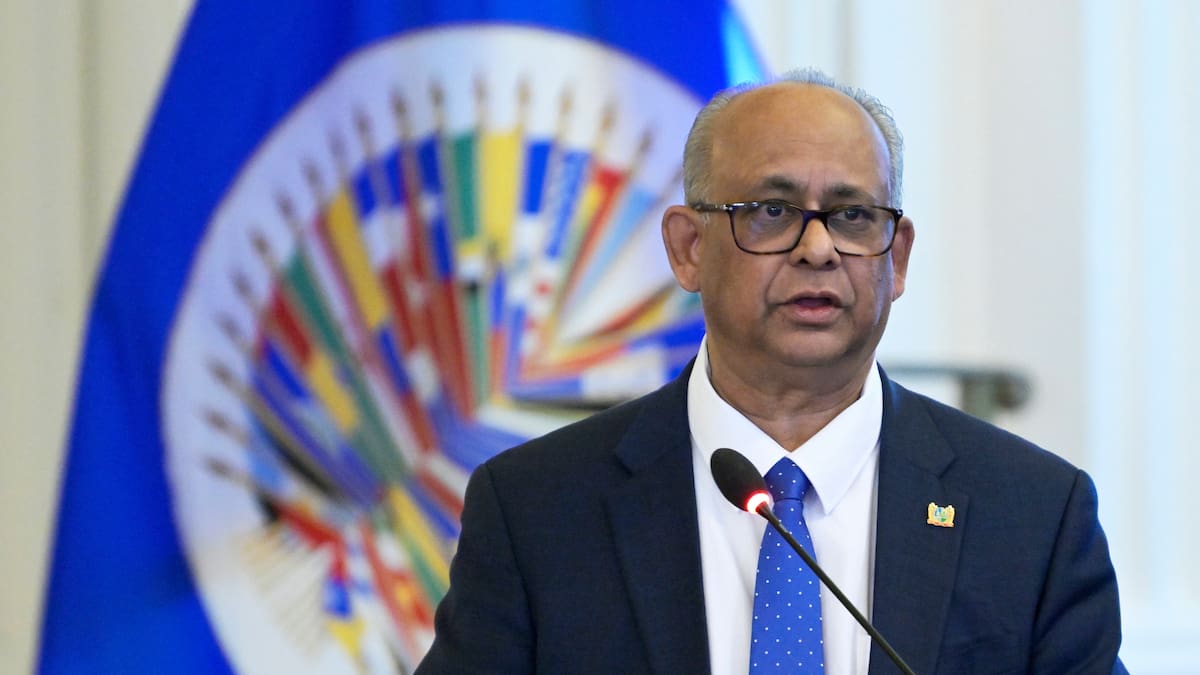
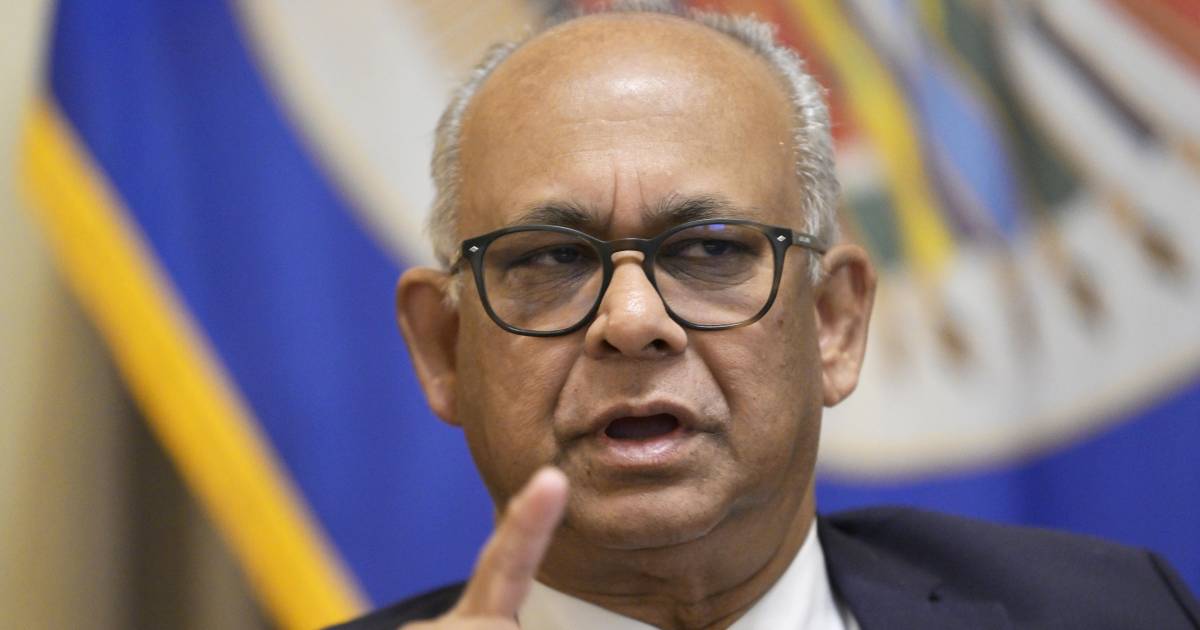
- The OAS is likely to become a more active channel for managing Bolivia's political crisis over the next several weeks. OAS Secretary General Albert Ramdin and Bolivian authorities agreed to deploy a police mission through the Inter-American Network for Police Development, while Ramdin arranged a high-level political mission with Presidency Minister Fernando Aramayo and Defence Minister Ernesto Justiniano. The OAS has also called on all Bolivian sectors to prioritise dialogue and refrain from blockades. The agreement is corroborated across local and major media, but no deployment date is set. (Confidence: medium · ASSESSED)
- I&W: The OAS or Bolivian authorities announce a date, mandate and named participants for the police mission or confirm the arrival of the high-level political mission. (0-14 days)
- I&W: The police mission is cancelled or replaced by unilateral security measures, with no OAS travel or deployment announcement. (1-3 months)
- It is very unlikely that the supplied NASA FIRMS and AISStream records substantiate unrest in Bolivia. NASA FIRMS recorded 25 thermal detections with no high-confidence classifications inside a bounding box whose coordinates place it in Southern California and Baja California, while AISStream recorded seven vessels in the same offshore area during an approximately six-second sample. The geographic mismatch is clear, although the NASA regional label conflicts with its coordinates and the AIS sample is short. (Confidence: high · ASSESSED)
- I&W: A repeat check confirms that the NASA and AISStream coordinates remain off Southern California and Baja California, with no Bolivia-targeted record in the same data. (0-14 days)
- I&W: A verified NASA or AISStream query centred on Bolivia produces data tied to protest locations. (0-14 days)
Outlook & scenarios
Legislative extension and sustained mobilisation (55%)
The most likely path is adoption of the Chamber of Deputies committee's draft 90-day extension, followed by continued political pressure from sectors that have demanded Rodrigo Paz's resignation. The state of exception and announced social-sector mobilisations remain the main drivers of the crisis.
OAS-facilitated dialogue and partial de-escalation (30%)
Bolivian authorities provide a date and mandate for the OAS police mission, the high-level political mission travels to Bolivia, and the OAS call for dialogue gains acceptance among relevant sectors. Road blockades then decline without requiring a broader extension of emergency powers.
High-impact confrontation over the extension (10%)
Protest sectors reject the extension as the Chamber of Deputies considers it, announced mobilisations expand into additional road blockades, and the OAS initiatives fail to secure dialogue. This low-probability, high-impact path would produce a sharper challenge to President Paz's authority and complicate the government's effort to maintain the state of exception.
Recommendations
- Track the Chamber of Deputies process daily. Record any plenary vote, promulgation, duration, legal basis and implementation instructions for the proposed 90-day extension.
- Build a dated attribution timeline for the May-June protests, the June 2025 Parotani account and the current state of exception. Seek Bolivian official records and independent reporting that identify the incumbent president, protest locations and organisers.
- Treat the OAS police mission as planned rather than deployed. Collect its announced date, mandate, personnel, locations and relationship to the separate high-level political mission.
- Exclude the current NASA FIRMS and AISStream records from assessments of unrest in Bolivia. Re-run remote-sensing and maritime collection using coordinates inside Bolivia before using either feed as an indicator.
- Issue a same-day update if formal extension of the state of exception coincides with verified reports of new road blockades or a public OAS mission schedule. This combination would distinguish legislative continuation from a dialogue-led de-escalation.
Confidence & uncertainty
Overall confidence is high for the immediate reported developments. The state of exception and the Chamber of Deputies committee's draft extension are supported by local and major media accounts, while the OAS dialogue call and mission arrangements are reported across multiple media sources. NASA provides reliable technical data that, together with the AISStream coordinates, clearly places the supplied remote-sensing and maritime observations outside Bolivia. The main uncertainties are whether the extension will pass, when the OAS police mission will deploy, which OAS body received the earlier high-level mission report, and how to reconcile the conflicting presidential attribution in the protest chronology.
Intelligence gaps
- [EEI 1.1 · UNCOVERED] Official resignation letter or public statement from President Rodrigo Paz announcing intent to step down, with date/time and channels of release. Recommended collection: official statements/OSINT
- [EEI 1.2 · UNCOVERED] Number and identities of cabinet ministers or senior executive officials who have tendered resignations or publicly withdrawn support (names, offices, dates). Recommended collection: government sources/HUMINT
- [EEI 1.3 · PARTIAL] Formal legislative actions filed and their sponsorship count (impeachment/ removal motions, dates filed, vote schedule, list of legislators publicly backing each action). Recommended collection: legislative records/OSINT
- [EEI 1.4 · UNCOVERED] Existence and content of signed negotiation outcomes or exit agreements between the presidency and opposition/protest leaders (meeting minutes, memoranda, signatories, deadlines). Recommended collection: HUMINT/diplomatic
- [EEI 2.1 · PARTIAL] Orders or directives from the Ministry of Defense or Interior authorizing deployment, use of lethal force, curfews, or emergency powers (document text, date/time, units named). Recommended collection: official statements/OSINT
- [EEI 2.2 · UNCOVERED] Observed troop and police unit movements and concentrations at key urban areas, government buildings, or protest hotspots (unit identifiers, equipment observed, locations, timestamps). Recommended collection: satellite/imagery
- [EEI 2.3 · UNCOVERED] Public resignations, defections, or denouncements by senior military/police officers (names, ranks, dates, content of statements). Recommended collection: social media/HUMINT
- [EEI 2.4 · UNCOVERED] Verified incidents of security forces using live ammunition, heavy weapons, or armored vehicles against protesters (casualty numbers, weapon types, time/place, supporting media or hospital records). Recommended collection: medical/hospital reports & open source
- [EEI 3.1 · PARTIAL] Location, number, and estimated duration of active roadblocks on major highways and access routes (GPS coordinates, reported start times, groups controlling each blockade). Recommended collection: transport/logistics & social media
- [EEI 3.2 · UNCOVERED] Operational status of key transport nodes (international airports, major bus terminals, rail hubs, and border crossings), open, limited, closed, with timestamps. Recommended collection: transport authority updates/OSINT
- [EEI 3.3 · PARTIAL] Size and frequency of street protests in major cities (estimated attendance counts, dates/times, trend compared to previous days). Recommended collection: social media/OSINT
- [EEI 3.4 · PARTIAL] Communications from named protest leaders or coalitions calling for escalation, general strike, or de-escalation (public messages, strikes announced, coordination instructions). Recommended collection: social media/HUMINT
- [EEI 4.1 · UNCOVERED] Fuel supply status at major depots and petrol stations (days of supply remaining, deliveries canceled/delayed, outages reported by region). Recommended collection: logistics/industry reports
- [EEI 4.2 · UNCOVERED] Availability and price movements of staple foods in principal wholesale markets and supermarkets (stock levels, price changes percent, locations affected). Recommended collection: market/retail & OSINT
- [EEI 4.3 · UNCOVERED] Scope and duration of disruptions to public services (electricity outages, water supply interruptions, hospital service reductions) with affected areas and timestamps. Recommended collection: utility operators/OSINT
- [EEI 4.4 · PARTIAL] Actions by foreign governments or international organizations: travel advisories, embassy evacuations, recognition/condemnation statements, sanctions or aid pledges (dates and content). Recommended collection: diplomatic channels/OSINT
TLP:CLEAR