TLP:CLEAR · Disclosure is not limited.
Central Sahel security: late June Burkina clashes, Mali attack signals, AES-ECOWAS dialogue
Time window: Last 7 days · Audience: General analyst · Type: Situation report · DTG: 2026-07-16 04:10Z · Overall confidence: MEDIUM
BLUF
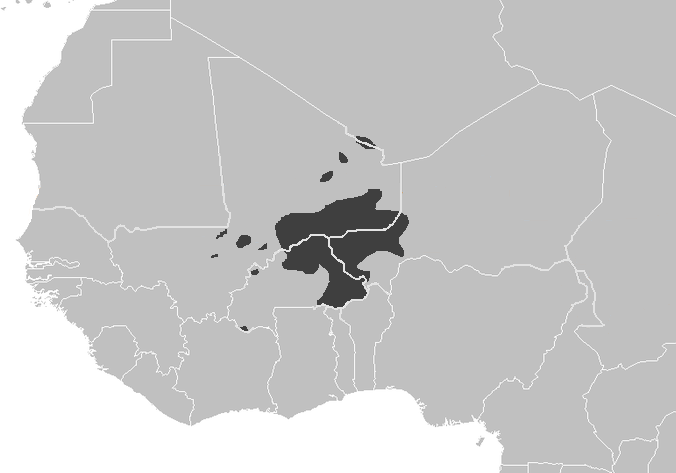
Militant operations remained active in Burkina Faso at end June and the UK condemned coordinated attacks in Mali, pointing to a sustained security threat in the central Sahel. The juntas in Mali, Niger and Burkina Faso continue to consolidate within the Alliance of Sahel States and remain outside ECOWAS even as a negotiation channel opens. Humanitarian pressures remain extreme and spillover risk to Ghana persists.
Executive summary
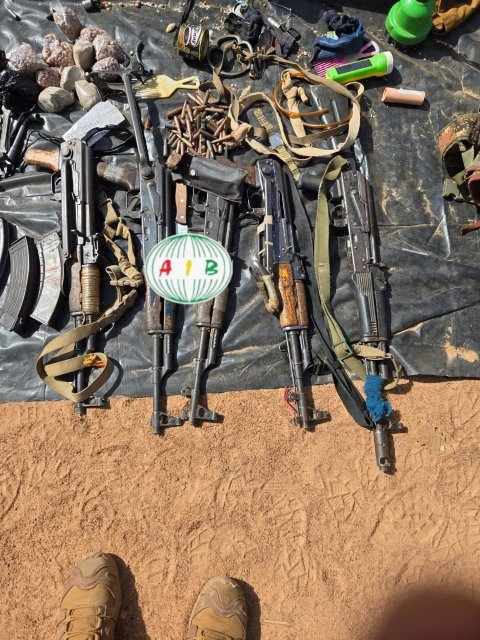
Local reporting from Burkina Faso details a late June surge in contact, including simultaneous attacks on the Solhan and Sebba detachments on 30 June, a 52nd Commando Infantry Regiment engagement at Daka on 29 June, and enemy scouts intercepted at Kassoum on 28 June. The UK publicly condemned recent coordinated attacks in Mali, characterising an alarming increase in insurgent sophistication and reach. Humanitarian needs remain severe across the Sahel, with approximately 6.8 million people displaced region-wide and at least 2 million displaced and 20,000 fatalities in Burkina Faso alone, though some reporting cites a lower regional displacement figure, reflecting baseline variance. Politically, Mali, Niger and Burkina Faso are embedding within the Alliance of Sahel States after announcing withdrawal from ECOWAS, while ECOWAS has appointed a Chief Negotiator and partners encourage work through UNOWAS to restore dialogue. Ghana continues to face jihadist spillover from Burkina Faso, with external partners signalling counter-terror support to Ghana and neighbouring littoral states.
Change from previous assessment
We maintain the core judgment that the security threat in the central Sahel remains acute, now grounded in specific late June Burkina Faso operations and an official UK condemnation of coordinated attacks in Mali. We sustain the outlook of AES strategic estrangement from ECOWAS but add greater specificity on the dialogue track via ECOWAS’s Chief Negotiator. We raise the prominence of littoral spillover to Ghana based on explicit reporting and note active partner assistance lines. We temper humanitarian confidence due to conflicting displacement baselines. Items previously noted without fresh reporting in this run are not advanced further.
Key judgments
- Very likely militant operations in Mali and Burkina Faso remained active and tactically coordinated in late June to early July, evidenced by UK condemnation of coordinated attacks in Mali and Burkina Faso reporting of simultaneous assaults on the Solhan and Sebba detachments on 30 June and multiple unit engagements near Daka and Kassoum. (Confidence: medium · ASSESSED)
- I&W: Local or official communiques report further simultaneous attacks on the Solhan and Sebba detachments. (0-14 days)
- I&W: A two-week lull in reported militant attacks around Solhan, Sebba, Daka, and Kassoum. (0-14 days)
- Likely cross-border threat pressure on Ghana’s northern frontier will persist in the near term, with Accra and partners signalling counter-terror support for Ghana and neighbouring Benin, Togo and Cote d’Ivoire. (Confidence: medium · ASSESSED)
- I&W: Ghanaian authorities announce a disrupted or foiled infiltration or attack attempt along the northern border districts. (0-3 months)
- I&W: Ghana publicly reduces the security alert posture for the northern border for at least one quarter. (1-3 months)
- Almost certainly humanitarian needs across the Sahel remain extreme, with roughly 6.8 million people displaced region-wide and at least 2 million displaced and 20,000 fatalities in Burkina Faso, although some reporting cites a lower regional displacement baseline, indicating measurement variance. (Confidence: medium · ASSESSED)
- I&W: UN or partner updates keep Sahel displacement totals above 6 million in successive reporting cycles. (1-3 months)
- I&W: A verified consolidated revision of Sahel displacement figures below 4 million across major reporting bodies. (1-3 months)
- Likely the Alliance of Sahel States will sustain strategic estrangement from ECOWAS and Western partners through the next quarter, even as a UNOWAS-linked dialogue channel develops. (Confidence: medium · ASSESSED)
- I&W: AES issues a communique announcing an integrated defence posture or joint security actions independent of ECOWAS. (1-3 months)
- I&W: ECOWAS Chief Negotiator publicises a signed roadmap with AES for reintegration or structured security coordination. (1-3 months)
- Likely governance risk from shrinking civic space persists in parts of West Africa and the Sahel, even as some elections proceed peacefully elsewhere. (Confidence: medium · ASSESSED)
- I&W: Official announcements or credible monitoring note opposition exclusion or bans in upcoming electoral processes in the region. (1-3 months)
- I&W: Authorities or ECOWAS announce inclusive dialogue measures and verified opposition participation commitments. (1-3 months)
Outlook & scenarios
Baseline: sustained insurgent tempo in Burkina Faso and Mali, AES remains outside ECOWAS (60%)
Over the next quarter, Burkina Faso continues to see recurring attacks and unit engagements around previously contested localities such as Solhan, Sebba, Daka and Kassoum, while Mali faces further coordinated operations. AES maintains distance from ECOWAS, with only limited dialogue via UNOWAS and the ECOWAS Chief Negotiator.
Limited rapprochement: dialogue yields modest AES, ECOWAS coordination without reintegration (30%)
Talks facilitated by UNOWAS and an ECOWAS Chief Negotiator produce narrow, functional arrangements on cross-border security coordination and humanitarian access, but AES states retain their confederation posture and do not rejoin ECOWAS in the near term.
Spillover flashpoint on Ghana’s northern border (20%)
Ghana experiences a high-profile cross-border incident originating from Burkina Faso, prompting rapid security deployments and accelerated disbursement of external counter-terror assistance targeted at Ghana and neighbouring littoral partners.
Recommendations
- Maintain a rolling incident map and timeline for Burkina Faso keyed to Solhan, Sebba, Daka, Kassoum, Tougou, Bangassogo, Goulougoutou and the Koogho, Mené corridor. Prioritise corroboration from official communiques and multiple local outlets before revising the threat baseline.
- Set a monitoring trigger for additional coordinated or simultaneous attacks on Burkinabé detachments or Malian garrisons; elevate analytic priority if two multi-pronged assaults occur within a fortnight.
- Track AES, ECOWAS interactions by following outputs from ECOWAS’s Chief Negotiator and UNOWAS. Flag any AES communiques on joint defence posture or exercises as near-term indicators of deeper strategic estrangement.
- Reconcile humanitarian baselines by maintaining a range that captures both the approximately 6.8 million displacement figure for the Sahel and lower alternative estimates; update planning assumptions only on the back of UN or government-verified revisions.
- Establish a Ghana northern-border watchlist of observable triggers: official statements on foiled infiltrations or arrests, alerts on border closures, and announcements of disbursed or new counter-terror support packages for Ghana and its neighbours.
Confidence & uncertainty
Overall confidence is medium. Several judgments rest on multiple corroborating sources of mixed reliability: UK Government statements provide high-reliability regional assessments, while Burkina Faso operational details come from local media with varying proximity but repeated, consistent reporting across several incidents. Humanitarian metrics have credible but conflicting baselines, and funding figures for Ghana differ across announcements, which lowers confidence on precise quantification. The political trajectory of AES versus ECOWAS is well-supported by formal announcements, though forward-looking implications remain inferential.
Alternative analysis (red cell)
The available reporting documents multiple discrete attacks and some high-level diplomatic signaling, but much of the tactical reporting is single-source (D1) and casualty/displacement figures are internally inconsistent (multiple F1/B1 entries). Therefore, while insecurity and humanitarian need are clearly serious, the evidence does not robustly support the stronger inferences of sustained cross-border tactical coordination, near-certain casualty/displacement magnitudes, or an inevitable, continued strategic estrangement without qualification; alternative outcomes (episodic/localized attacks, significant uncertainty in humanitarian totals, or conditional re-engagement by AES actors) remain plausible.
Intelligence gaps
- [EEI 1.2 · UNCOVERED] Observed movement and size of armed columns (vehicle counts, heavy weapons present) along approach routes to population centers or borders documented by imagery, local reporting, or border guards. Recommended collection: imagery/SATCOM
- [EEI 1.3 · UNCOVERED] Reports of occupation, administration, or imposition of checkpoints/taxes by armed groups in named towns, villages, markets, or on specified road segments. Recommended collection: OSINT (local media/social)
- [EEI 1.4 · UNCOVERED] Seizure or acquisition of heavy weapons or air-defense systems (mortars >81mm, artillery, armored vehicles, MANPADS) attributed to specific groups as evidenced by photos, captured weapons inventories, or weapons interdictions. Recommended collection: forensics/field reporting
- [EEI 2.1 · PARTIAL] Internal security force movements: redeployment of army units, garrison withdrawals, or mass troop movements toward/away from capitals and regional command posts. Recommended collection: imagery/SATCOM
- [EEI 2.2 · UNCOVERED] Detentions, public dismissals, resignations, or public statements by senior military, police, or government officials indicating factional splits (named individuals, ranks, units). Recommended collection: diplomatic/OSINT
- [EEI 3.1 · UNCOVERED] Interdictions or seizures at borders/markets of weapons, ammunition, fuel, or contraband (type/quantity, seizure location, alleged origin/destination). Recommended collection: border/customs
- [EEI 3.2 · UNCOVERED] Recorded movements of known smuggling routes and convoy volumes: counts of commercial/privately registered vehicles and informal river crossings on specific cross-border corridors. Recommended collection: ground/HUMINT
- [EEI 3.3 · PARTIAL] Monitored financial flows linked to illicit trade: large cash movements, changes in declared gold exports at named mines/ports, or arrests of money couriers with amounts and origins. Recommended collection: financial/forensics
- [EEI 3.4 · UNCOVERED] Observed changes at border security posts: closures, reductions in personnel, destroyed checkpoints, or documented agreements allowing free movement at named crossings. Recommended collection: imagery/OSINT
Cited sources
[1] UK Government · We remain concerned by the deteriorating security and humanitarian situation across West Africa and the Sahel: UK statement at the UN Security Council (A) · sha256:48c2c3fd8ffc [2] lefaso.net · Burkina: Plusieurs repaires terroristes nettoyés par les forces combattantes au cours du mois de juin 2026 (D) · sha256:3a0aa4f9775e [3] ng.shotoe.com · US VP Harris announces Ghana aid package on Africa tour (A) · sha256:2e94aae4050b [4] Wikipedia · Islamist insurgency in Burkina Faso (B) · sha256:37a360dc174c [5] Wikipedia · War in the Sahel (F) · sha256:4f05ef550323 [6] Wikipedia · Alliance of Sahel States (A) · sha256:54f03dd824e0
Source content hashes were computed at collection time; the cited text is preserved unmodified for the life of this product.
Red cell review: PARTIAL DISSENT
TLP:CLEAR