TLP:CLEAR · Disclosure is not limited.
China Expands Maritime Pressure Around Taiwan
Time window: Last 7 days · Audience: General analyst · Type: Situation report · DTG: 2026-08-25 18:12Z · Overall confidence: MEDIUM
BLUF
China is very likely normalising a persistent maritime and law-enforcement presence around and east of Taiwan, while Taiwan has intensified preparations for a possible attack. The immediate risk is a coercive quarantine-style episode or unsafe encounter, rather than a demonstrated imminent invasion. Confidence is medium because evidence of Chinese intent remains partly inferential.
Executive summary
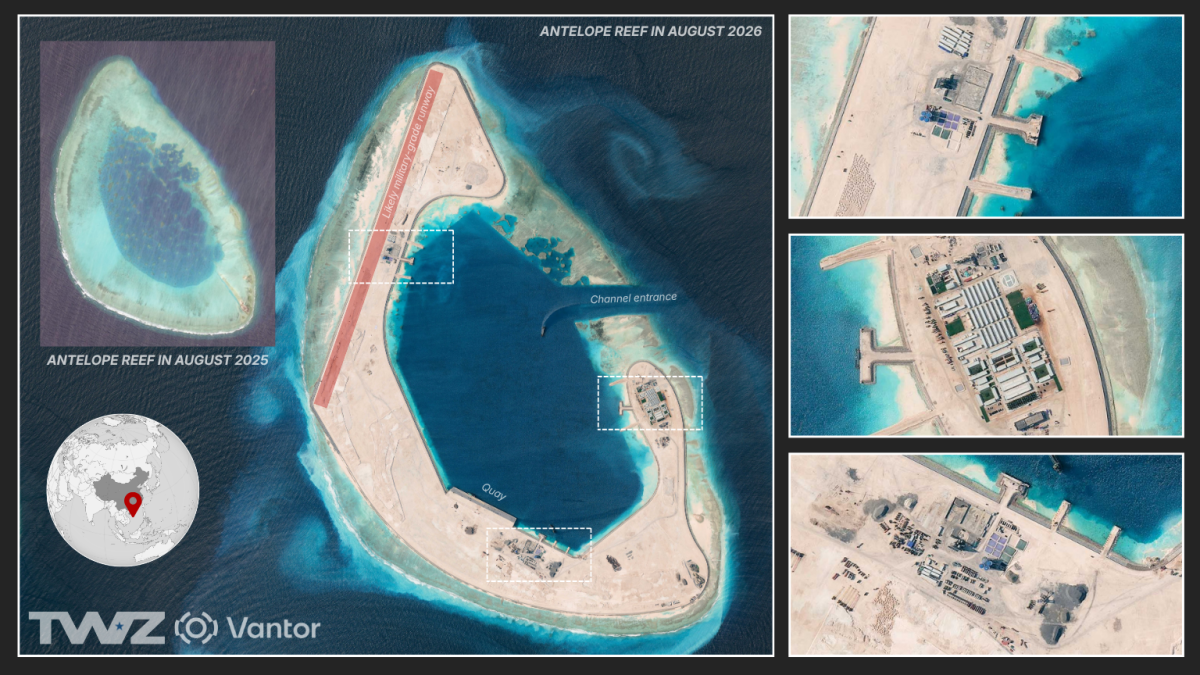
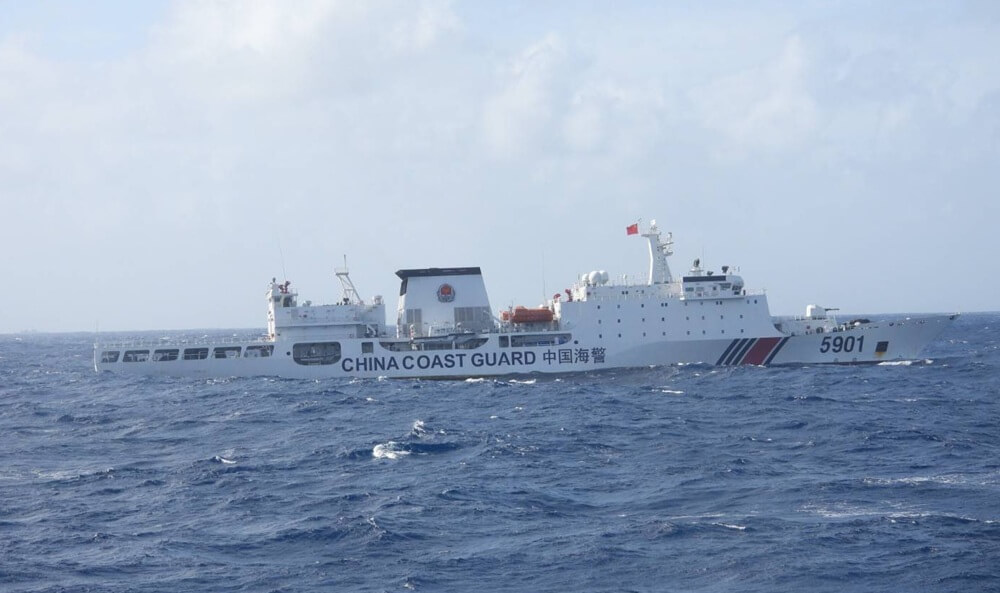
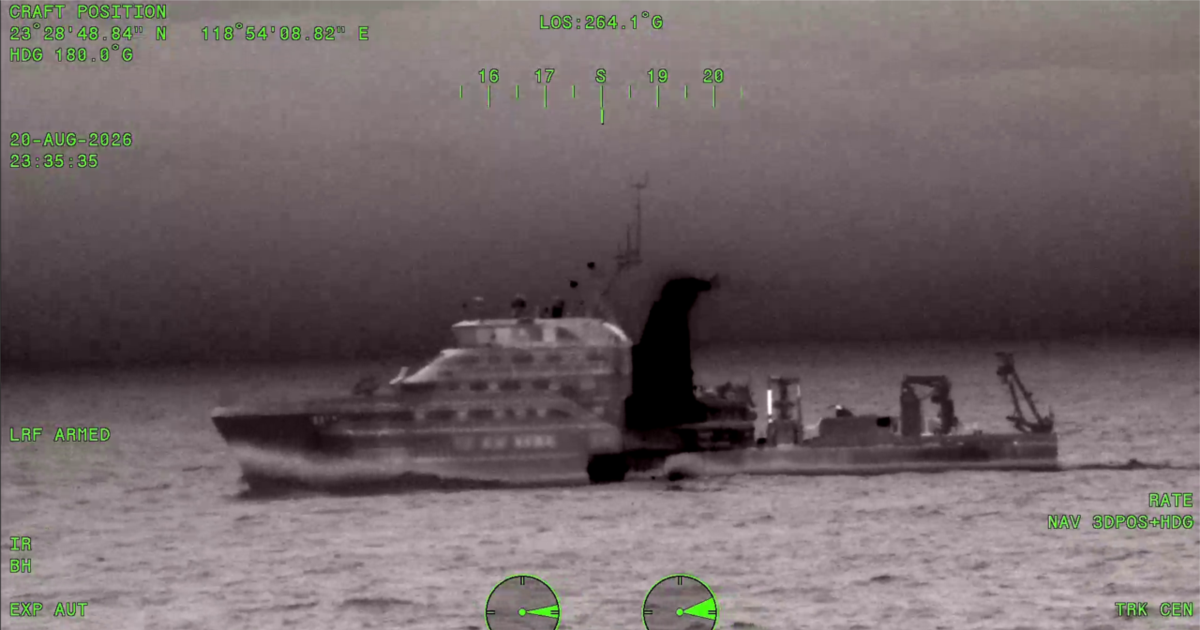
China's maritime pressure around Taiwan has increased alongside Taiwan's 5 to 14 August Han Kuang exercises and accelerated military preparations. Chinese ships have questioned nearly 200 commercial vessels in the Philippine Sea and demanded port-of-call and crew information, while China is also reported to be expanding its presence east of Taiwan. A US Navy P-8A Poseidon transit through the Taiwan Strait was closely monitored by the Chinese military. In the South China Sea, China completed the first construction phase at Antelope Reef on 11 August and a China Coast Guard vessel was seen at its quay. US, Philippine, Indian and Japanese responses are strengthening, raising deterrence but also increasing the frequency of encounters.
Key judgments
- China is very likely normalising a persistent maritime and law-enforcement presence around and east of Taiwan, with activity increasingly focused on asserting jurisdiction rather than conducting isolated exercises. The evidence includes regular People's Liberation Army activity around Taiwan since 2022, a sustained Chinese law-enforcement presence in the Philippine Sea, questioning of nearly 200 commercial vessels, demands for port-of-call and crew information, and reported efforts to establish jurisdiction east of Taiwan. This is an assessed inference from direct reporting and medium-confidence analytical reporting. (Confidence: medium · ASSESSED)
- I&W: Confirm: Chinese ships again question commercial vessels in the Philippine Sea or east of Taiwan and demand port-of-call or crew information. (0-14 days)
- I&W: Break: Chinese law-enforcement and research-vessel activity returns to isolated encounters without repeated questioning, information demands or a sustained presence. (1-3 months)
- A Chinese coercive quarantine or blockade-style test around Taiwan is likely, but not the most likely immediate outcome. The reported east-of-Taiwan presence, commercial-vessel questioning and jurisdictional demands are consistent with activity that would support such a contingency, but the reporting does not establish that Beijing has ordered a blockade. This judgment rests largely on single-source and medium-confidence reporting, so confidence is low. (Confidence: low · ASSESSED)
- I&W: Confirm: Chinese vessels impose repeated route, identity or cargo-reporting demands on commercial traffic east of Taiwan, or divert vessels from established routes. (0-14 days)
- I&W: Break: Chinese ships continue routine patrols without stopping, questioning or redirecting commercial vessels for at least one month. (1-3 months)
- China is very likely converting Antelope Reef into a more capable South China Sea outpost, although the military purpose of the reported construction is not yet confirmed. China completed the first construction phase on 11 August after dredging more than one million tons of sand to reclaim approximately 1,500 acres, a China Coast Guard vessel was seen at the quay, and preparations were reported for a 10,000-foot runway. The reported extension of People's Liberation Army radar and electronic surveillance coverage remains an assessment rather than a confirmed capability. (Confidence: medium · ASSESSED)
- I&W: Confirm: new reporting or imagery shows continued runway preparation, permanent facilities or regular China Coast Guard deployments at Antelope Reef. (0-14 days)
- I&W: Break: construction activity stops and the China Coast Guard vessel does not return to Antelope Reef during the next reporting cycle. (1-3 months)
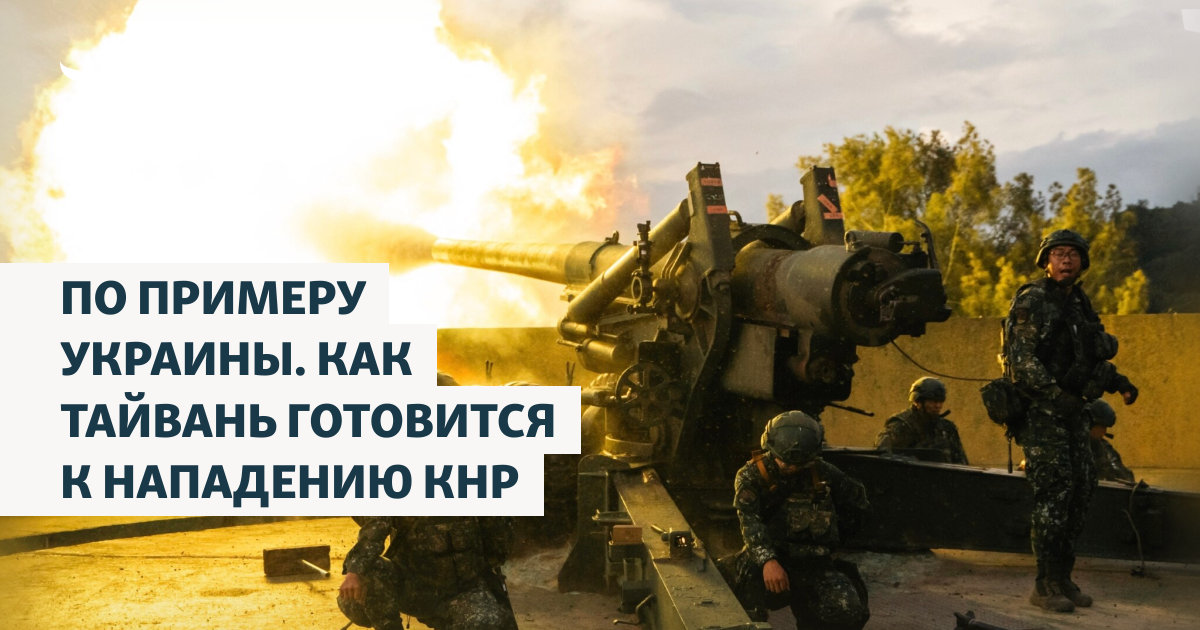
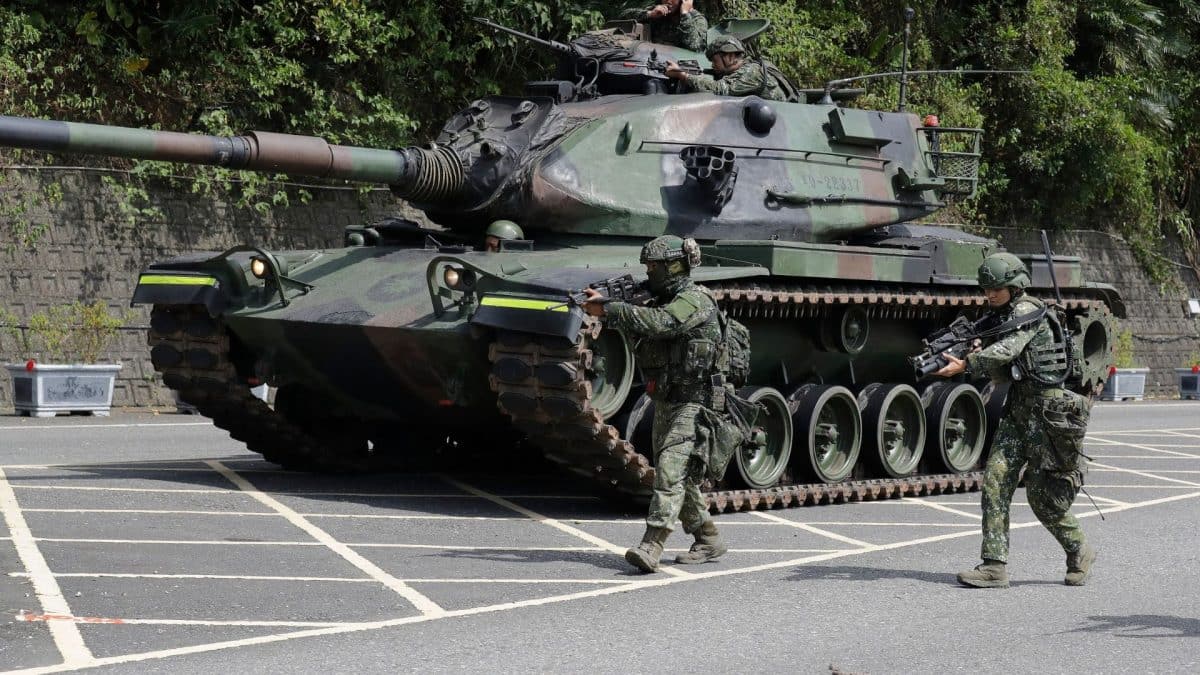
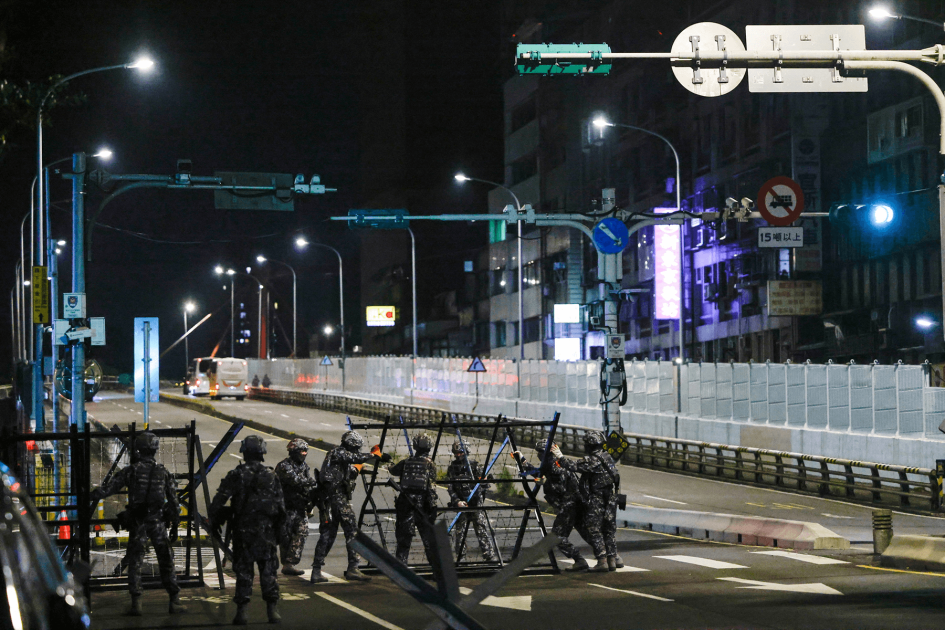
- Taiwan is very likely accelerating preparations for a possible Chinese attack, increasing the risk of reciprocal signalling and miscalculation. Taiwan conducted the 2026 Han Kuang exercises from 5 to 14 August with greater intensity, is accelerating armed-forces preparation, prioritises asymmetric warfare, is developing the Taiwan Shield air-defence system, and is creating underground reserves of fuel, food, medicines and artillery ammunition. The proposed 1.12 trillion Taiwan dollar defence budget for 2027 and President Lai Ching-te's pledge to reach 5 per cent of gross domestic product by 2030 indicate a longer-term preparation effort. (Confidence: medium · ASSESSED)
- I&W: Confirm: Taiwan announces implementation measures for the 1.12 trillion Taiwan dollar defence budget, Taiwan Shield, mobile fire points or underground strategic reserves. (1-3 months)
- I&W: Break: Taiwan reduces the scope of the announced asymmetric, air-defence or reserve programmes and does not sustain the higher level of military preparation. (1-3 months)
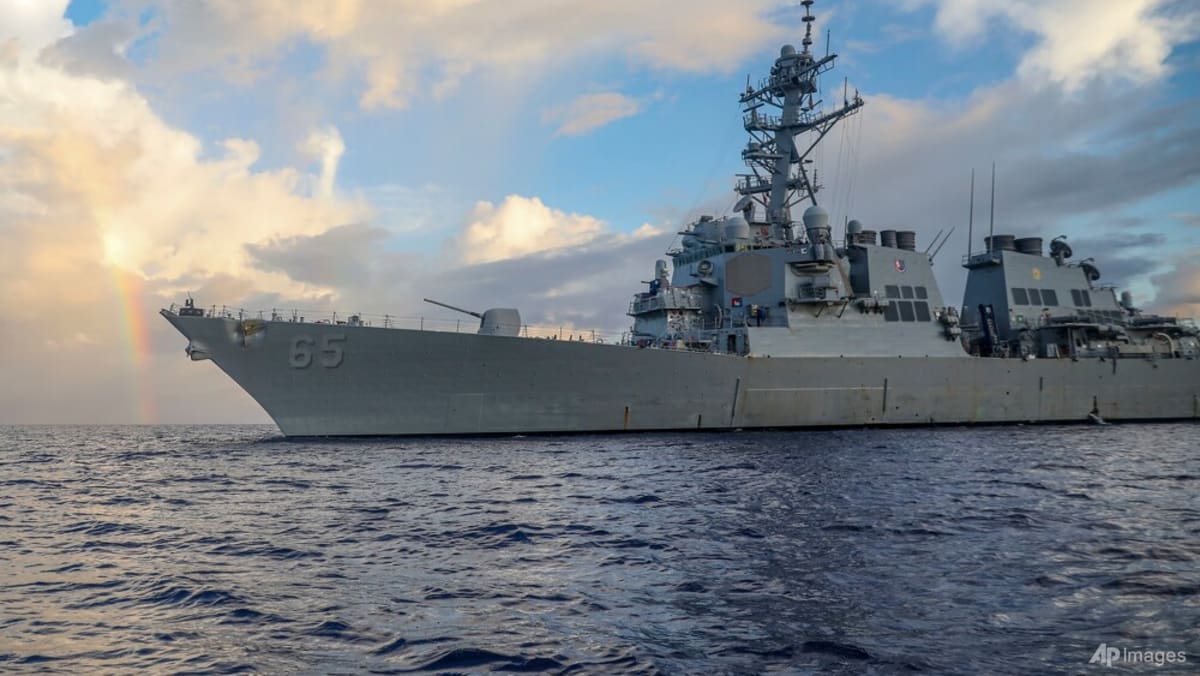
- US, Philippine, Indian and Japanese maritime cooperation is likely to expand in response to Chinese pressure, but it is unlikely to remove the risk of localised encounters. The United States announced joint Filipino-American coast guard patrols in the South China Sea, Elbridge Colby met Philippine President Ferdinand Marcos Jr. and described US engagement in the Indo-Pacific as stronger than before, while India and Japan agreed to strengthen naval cooperation and signed a maritime security agreement. The cooperation improves partner coordination but places more military and law-enforcement platforms in contested waters. (Confidence: medium · ASSESSED)
- I&W: Confirm: the first joint Filipino-American coast guard patrols occur in the South China Sea and India-Japan naval cooperation produces a new operational activity. (0-3 months)
- I&W: Break: announced patrols and naval cooperation remain statements without observable activity or are postponed indefinitely. (1-3 months)
Outlook & scenarios
Managed coercion and persistent monitoring (55%)
China sustains China Coast Guard, research-vessel and other law-enforcement activity around Taiwan and in the Philippine Sea without imposing a formal quarantine. Taiwan continues monitoring and defensive preparations. US, Philippine, Indian and Japanese patrols and naval cooperation expand, producing repeated but contained encounters.
Quarantine test and unsafe maritime encounter (25%)
Chinese ships repeatedly question or redirect commercial vessels east of Taiwan and demand port-of-call or crew information. A US Navy P-8A Poseidon transit or a joint Filipino-American coast guard patrol produces a close encounter with Chinese forces. The episode remains below sustained combat but disrupts commercial confidence and raises pressure on Washington and Taipei to respond.
South China Sea consolidation centred on Antelope Reef (25%)
China continues construction at Antelope Reef, maintains a China Coast Guard presence and advances runway preparation. Beijing links the outpost to stronger enforcement near Philippine positions, while the Philippines and United States increase coast guard activity. The main effect is a durable expansion of Chinese operational reach in the South China Sea rather than an immediate Taiwan crisis.
Wildcard: simultaneous pressure across both theatres (8%)
China combines jurisdictional activity east of Taiwan with a new confrontation involving Philippine positions or Antelope Reef. A collision, injury or detention involving a commercial or government vessel triggers rapid political escalation. The episode becomes a high-impact test of US, Philippine, Japanese and Taiwanese crisis management.
Recommendations
- Maintain a 14-day watchlist for Chinese Coast Guard, research and other law-enforcement vessels around Taiwan, east of Taiwan, the Philippine Sea and Antelope Reef. Record vessel names, locations, duration of presence, interactions with commercial traffic and any demands for port-of-call or crew information.
- Treat claims about a Chinese blockade or quarantine as an assessed possibility rather than an established policy. Require two independent reports before upgrading the assessment, with particular attention to repeated vessel diversions, route restrictions or compulsory reporting demands.
- Prioritise follow-up on Antelope Reef. Seek independent confirmation of continued dredging, runway preparation, permanent facilities and China Coast Guard deployments before assessing that the reef has acquired operational radar, air or military-support functions.
- Track whether Taiwan's proposed 1.12 trillion Taiwan dollar defence budget, Taiwan Shield, mobile fire points and underground reserves move from announced policy to implementation. Compare those developments with Chinese activity east of Taiwan.
- Monitor the first operational activity following the announced joint Filipino-American coast guard patrols and the India-Japan maritime security agreement. Assess each encounter separately and avoid treating all US, Philippine, Indian and Japanese activity as a single coordinated response.
- Prepare a short incident template for close encounters involving the US Navy P-8A Poseidon, Chinese ships, Taiwan Coast Guard vessels or Philippine and US coast guard patrols. Capture location, manoeuvres, communications, commercial disruption and the first public statements from each actor.
Confidence & uncertainty
Overall confidence is medium. Official reporting and high-reliability major-media reporting support the increased Chinese pressure around Taiwan, the August Han Kuang exercises, completion of the first Antelope Reef construction phase and expanded maritime cooperation involving the United States, Philippines, India and Japan. Confidence is reduced by medium-confidence assessments of Chinese blockade intent, the military purpose of Antelope Reef construction and the significance of commercial-vessel questioning. The underlying reporting also contains inconsistent dates for some older events and does not establish that Beijing has ordered an attack or formal quarantine.
Cited sources
[1] firstpost.com · Taiwan, South China Sea: Two sides of the same strategic coin in US-China rivalry (B) · sha256:7e40a534c53b [2] svoboda.org · По примеру Украины. Как Тайвань готовится к нападению КНР (B) · sha256:7f5cb971c45e [3] Japan Times · With eyes on blockade, China tests boosted presence east of Taiwan: study (A) · sha256:9d631239019a [4] voachinese.com · 台湾海巡船驱离逼近台湾澎湖限制水域的中国科考船 (A) · sha256:0dadbcdde3ff [5] twz.com · China’s Massive New Artificial Island In The South China Sea Emerges, Primed For Militarization (B) · sha256:3bedeea1cf9a [6] acleddata.com · China’s maritime presence around Taiwan is becoming the new normal (C) · sha256:79a61b095f6b [7] maritime-executive.com · Op-Ed: Elbridge Colby's S. China Sea Reassurance Deepens Manila's Trilemma (C) · sha256:1977ff65632b [8] channelnewsasia.com · Commentary: Should Asia be concerned that Washington dropped 'Indo' from the US Indo-Pacific Command? (B) · sha256:d8464dbe729c [9] Times of India · During Rajnath-Koizumi meet, India and Japan sign security pact to deepen maritime coordination; explore possibility of joint development in naval shipbuilding (A) · sha256:38dd41d47d70
Source content hashes were computed at collection time; the cited text is preserved unmodified for the life of this product.
TLP:CLEAR