TLP:CLEAR · Disclosure is not limited.
China's Maritime Pressure Around Taiwan: Situation Report
Time window: Last 7 days · Audience: General analyst · Type: Situation report · DTG: 2026-08-26 00:12Z · Overall confidence: MEDIUM
BLUF
China is very likely to sustain maritime and military pressure around Taiwan, including routine China Coast Guard activity east of the island. Taiwan is responding with stronger defence planning and anti-blockade preparations, while Japan's alignment is deepening and US regional signalling is less predictable.
Executive summary
Reporting indicates that China's military aircraft and coast guard ships operate around Taiwan on a near-daily basis, while China Coast Guard law-enforcement and inspection activity east of Taiwan has expanded since June 2026. A Chinese live-fire exercise east of Taiwan on 19 July and Taiwan's August Han Kuang anti-blockade activity indicate a sustained contest over access and jurisdiction. Taiwan proposed a record 2027 defence budget of T$1.12 trillion, while President Lai Ching-te reaffirmed resolve in Kinmen on 23 August. Japan is strengthening regional defence coordination, but reporting on US exercise plans and carrier movements introduces uncertainty. The South China Sea and Philippine Sea remain linked pressure points because of Chinese maritime assertions and their importance to regional trade and energy flows.
Key judgments
- China is very likely to sustain and expand military and maritime pressure around Taiwan, including near-daily military aircraft and China Coast Guard activity and routine law-enforcement operations east of Taiwan. The reported increase since June 2026 and the 19 July live-fire exercise support an expansion assessment, but the east-of-Taiwan chronology relies partly on medium-confidence think-tank reporting. (Confidence: medium · ASSESSED)
- I&W: CONFIRM: China Coast Guard vessels conduct additional routine inspection or law-enforcement patrols east of Taiwan, or China announces another live-fire exercise in the area. (0-14 days)
- I&W: BREAK: China Coast Guard operations east of Taiwan stop and no further military or maritime activity around Taiwan is reported during the next reporting cycle. (0-14 days)
- China is likely using the China Coast Guard and related maritime activity to test jurisdictional control east of Taiwan, an approach consistent with developing a blockade or quarantine option rather than demonstrating that Beijing has ordered one. The inference rests on reporting about routine inspections, increased presence and a live-fire exercise, much of it medium-confidence or single-source. (Confidence: medium · ASSESSED)
- I&W: CONFIRM: China Coast Guard personnel inspect commercial vessels east of Taiwan, issue transit instructions, or publish a jurisdictional basis for such actions. (0-14 days)
- I&W: BREAK: Chinese maritime activity remains limited to presence patrols with no inspections, transit controls or new exercises linked to access around Taiwan. (1-3 months)
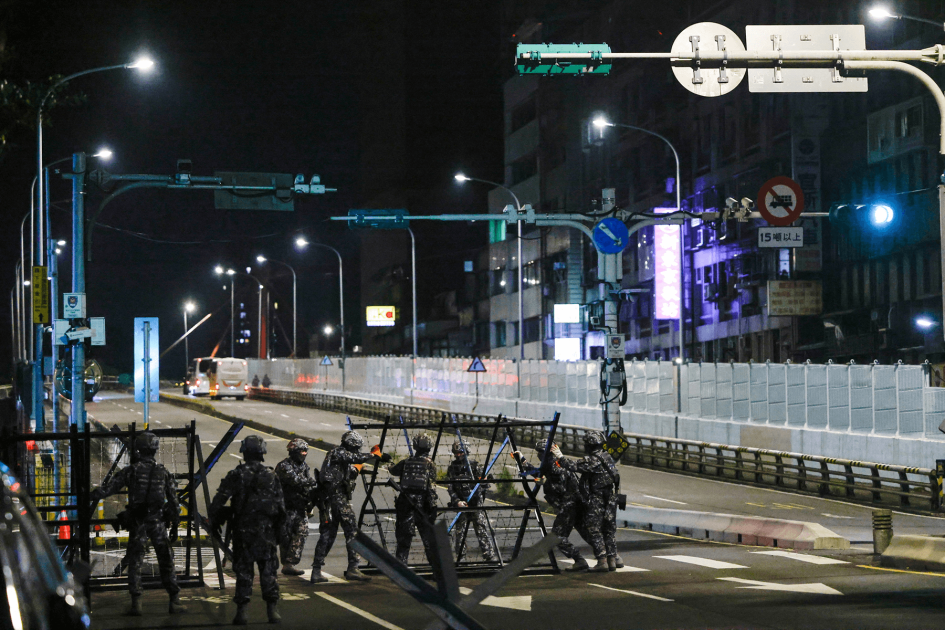
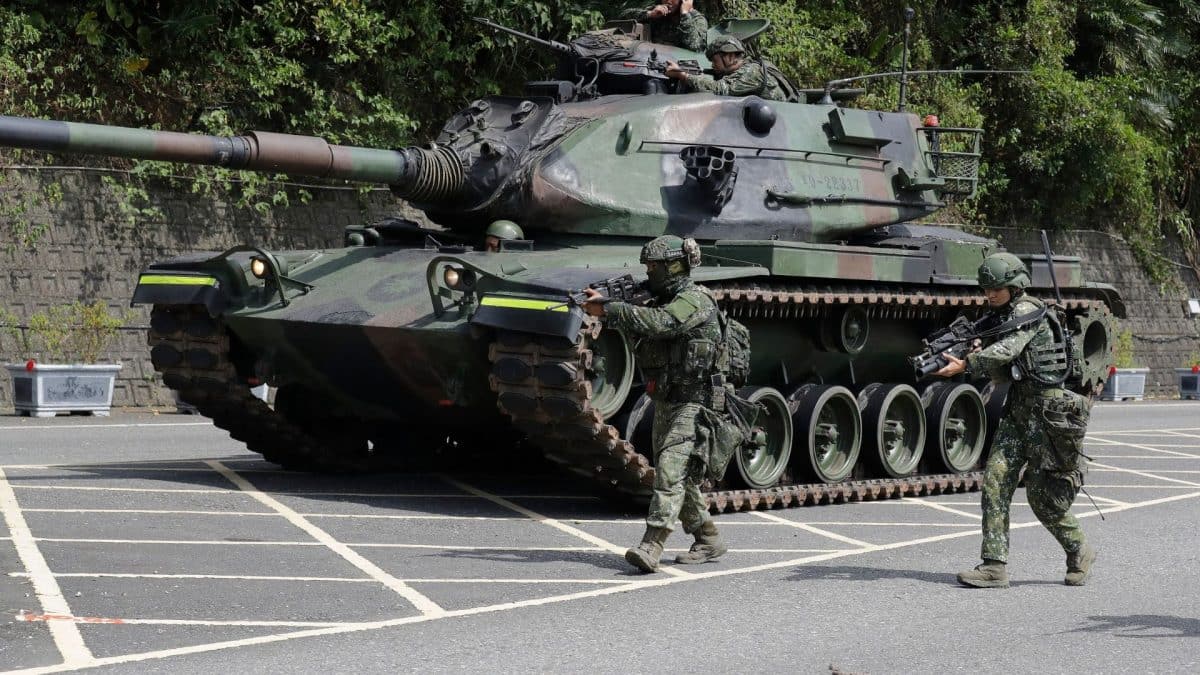
- Taiwan is very likely to continue raising defence capacity and signalling resolve against China. Taiwan proposed its largest-ever 2027 defence budget at T$1.12 trillion, or US$35 billion; Lai Ching-te pledged to raise defence spending to 5 per cent of GDP by 2030; and on 23 August in Kinmen he said peace can only be secured through strength. The August 2026 Han Kuang drills included a joint navy and coast guard anti-blockade exercise. Confidence is medium because the budget remains a proposal and the 5 per cent target and exercise detail rely on medium-confidence reporting. (Confidence: medium · ASSESSED)
- I&W: CONFIRM: Taiwan's legislature advances the T$1.12 trillion 2027 defence budget, or Taiwan announces further navy and coast guard anti-blockade activity. (1-3 months)
- I&W: BREAK: Taiwan withdraws the proposed budget increase, abandons the 5 per cent 2030 target, or publicly reduces the scope of anti-blockade preparations. (1-3 months)
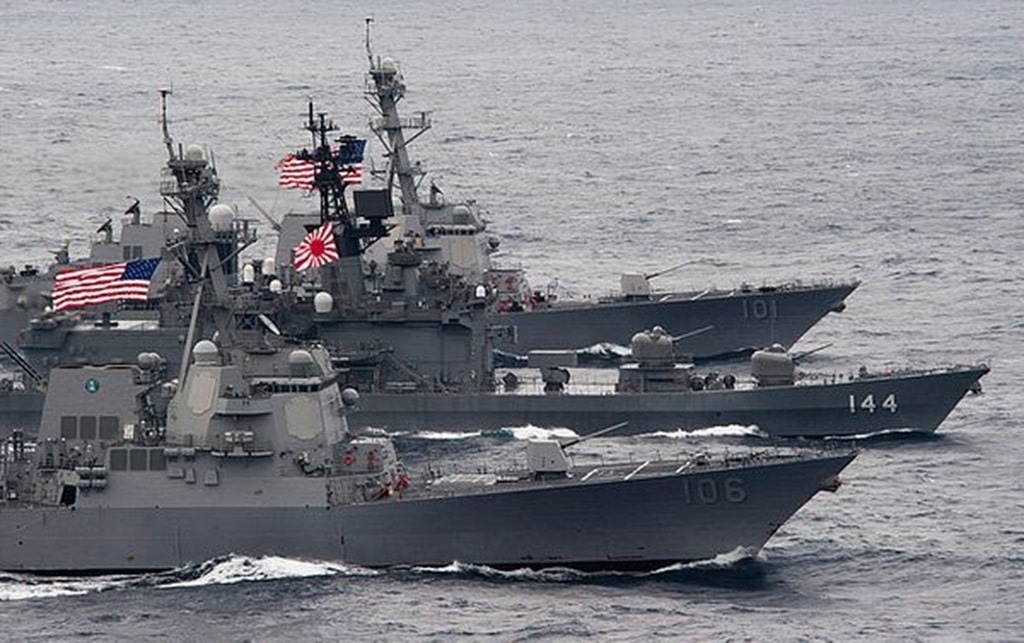
- Japan is likely to deepen defence alignment around the Taiwan and western Pacific security problem. Japanese leaders view Taiwan's security as linked to national survival, while Japan's defence pacts with Australia and other partners are assessed to make multilateral groupings more effective. Reported Japanese defence spending has reached US$62.2 billion, or about 1.4 per cent of GDP. This assessment uses strong major-media reporting on threat perceptions alongside medium-confidence reporting on spending and alliance development. (Confidence: medium · ASSESSED)
- I&W: CONFIRM: Japan announces a new defence arrangement with Australia, the Philippines or another regional partner, or publishes additional spending linked to Taiwan and western Pacific contingencies. (1-3 months)
- I&W: BREAK: Japan suspends planned defence cooperation or publicly separates its national security planning from developments around Taiwan. (1-3 months)
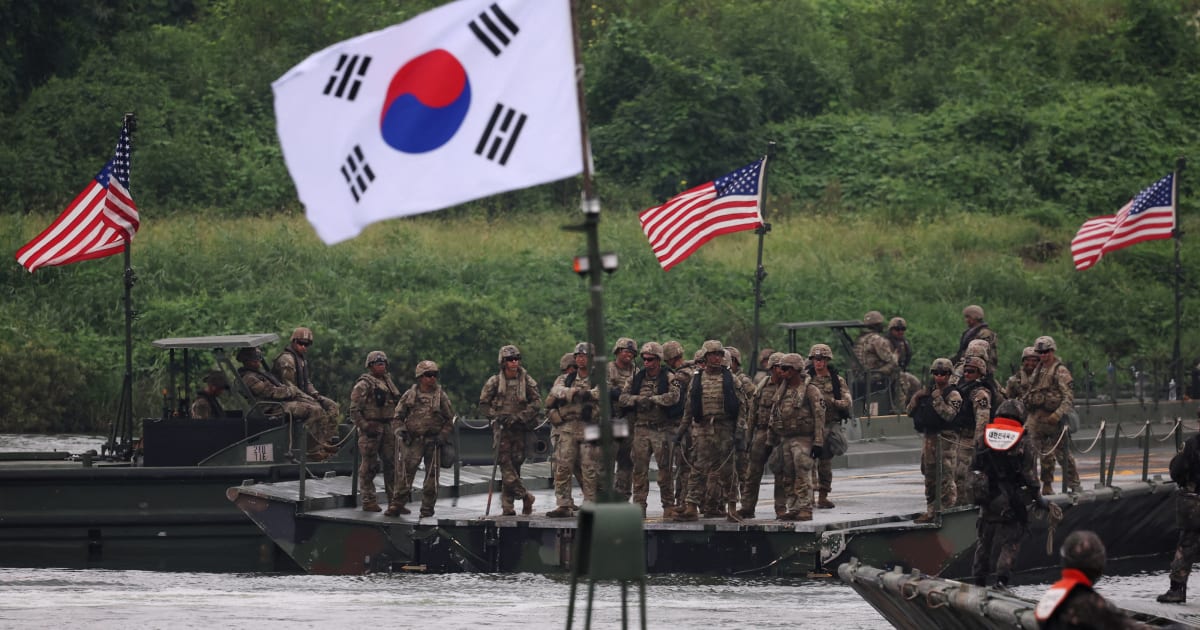
- US regional signalling is likely to remain uncertain in the near term. On 20 August, President Donald Trump posted that the United States would dramatically scale back joint military exercises with South Korean forces, while the USS George Washington was reported to be leaving the Pacific to replace the USS Abraham Lincoln in the Middle East. This is a low-confidence assessment based on two medium-confidence reports and does not establish a policy decision on Taiwan. (Confidence: low · ASSESSED)
- I&W: CONFIRM: US authorities announce reduced US-South Korean exercises or confirm the USS George Washington's movement from the Pacific to the Middle East. (0-14 days)
- I&W: BREAK: US-South Korean exercises proceed without the reported reduction and the USS George Washington remains assigned to the Pacific. (0-14 days)
- China is likely to extend maritime pressure into the Philippine Sea and South China Sea, although the breadth and timing of that activity remain uncertain. Reporting describes Chinese ships questioning nearly 200 commercial vessels and demanding ports of call and crew details in the Philippine Sea, alongside Chinese drills near Scarborough Shoal and a sustained law-enforcement presence. Confidence is low because the supporting claims are medium-confidence and several are undated. (Confidence: low · ASSESSED)
- I&W: CONFIRM: Chinese ships again question commercial vessels or demand voyage and crew information in the Philippine Sea, or China conducts another drill near Scarborough Shoal. (0-14 days)
- I&W: BREAK: no further Chinese questioning of commercial vessels, law-enforcement deployments or drills near Scarborough Shoal are reported during the next reporting cycle. (0-14 days)
Outlook & scenarios
Persistent grey-zone pressure (55%)
China likely maintains near-daily military aircraft and coast guard activity around Taiwan while continuing routine law-enforcement operations east of the island. Taiwan likely sustains higher defence spending and anti-blockade training. Japan likely continues strengthening regional defence links. No confirmed blockade or kinetic campaign emerges.
Intensified coercive testing (25%)
China likely adds inspections, transit instructions or other jurisdictional measures east of Taiwan and conducts another live-fire exercise. Taiwan likely responds with expanded navy and coast guard activity. The pattern increases the risk of a maritime incident without requiring a full blockade.
Managed stabilisation (12%)
China likely keeps a coast guard presence around Taiwan but reduces the frequency of live-fire activity and visible enforcement actions. Taiwan likely proceeds with its defence budget while avoiding new operational measures. Tensions remain elevated but do not intensify during the next one to three months.
Maritime confrontation (8%)
A maritime confrontation involving the China Coast Guard, Taiwan's coast guard or a commercial vessel is unlikely but high impact. A disabling incident or exchange near Taiwan, the Philippine Sea or Scarborough Shoal would place pressure on Japan and the United States to respond while increasing the risk of wider regional escalation.
Recommendations
- Maintain a 0-14 day watch on China Coast Guard patrols east of Taiwan. Record vessel locations, patrol duration, inspection activity, stated legal authorities and any interaction with commercial shipping.
- Separate China Coast Guard law-enforcement activity from PLA military activity in reporting. Treat inspections, transit instructions and demands for crew or port information as distinct indicators from live-fire exercises.
- Track the legislative status of Taiwan's T$1.12 trillion 2027 defence proposal and compare approved spending with Lai Ching-te's 5 per cent of GDP target for 2030.
- Monitor Taiwan's navy and coast guard exercises for changes in anti-blockade content, geographic scope or operational tempo, especially around Kinmen and the waters east of Taiwan.
- Review Japanese announcements involving Australia, the Philippines and other regional partners alongside any changes in US-South Korean exercises and Pacific carrier deployments.
- Use the low-confidence reports on wider Philippine Sea and South China Sea activity as collection leads rather than established facts. Seek dated vessel-position data and independent confirmation before assessing a regional expansion of Chinese enforcement activity.
Confidence & uncertainty
Overall confidence is medium. Multiple high-reliability major-media and official sources support the existence of sustained Chinese military and maritime activity around Taiwan, Taiwan's stronger defence signalling and Japan's security concerns. Confidence is lower for the precise east-of-Taiwan chronology, the interpretation of activity as preparation for blockade or quarantine, and the reported US posture changes because those points rely partly on medium or low-confidence think-tank reporting and single-source accounts. Several supporting entries also contain stale or inconsistent dates, limiting confidence in exact sequencing.
Cited sources
[1] firstpost.com · Taiwan, South China Sea: Two sides of the same strategic coin in US-China rivalry (B) · sha256:7e40a534c53b [2] bostonherald.com · Why Taiwan and the South China Sea matter to the US and the world (B) · sha256:4f8bad50daec [3] Japan Times · With eyes on blockade, China tests boosted presence east of Taiwan: study (A) · sha256:9d631239019a [4] acleddata.com · China’s maritime presence around Taiwan is becoming the new normal (C) · sha256:79a61b095f6b [5] asia.nikkei.com · Peace through strength, Taiwan president says on China battle anniversary (A) · sha256:1b50b750b4e2 [6] chiangraitimes.com · Japan Rewrites Security Strategy to Counter China’s Rise (B) · sha256:0bcd4d77ba93 [7] cfr.org · Trump’s South Korea Social Post Poses Risks for the United States (B) · sha256:dfce0bc78592
Source content hashes were computed at collection time; the cited text is preserved unmodified for the life of this product.
TLP:CLEAR