TLP:CLEAR · Disclosure is not limited.
China Sustains Maritime Pressure East of Taiwan
Time window: Last 7 days · Audience: General analyst · Type: Situation report · DTG: 2026-09-13 19:05Z · Overall confidence: HIGH
BLUF
China is very likely to maintain China Coast Guard activity east of Taiwan, where patrols have expanded in area and frequency and foreign commercial vessels have been questioned or reportedly inspected. An active blockade in the next 0-14 days remains very unlikely, but repeated inspections would provide Beijing with greater coercive leverage over maritime traffic.
Executive summary
During 6-13 September, reporting indicated that China Coast Guard patrols east of Taiwan continued under a Putuoshan-led formation and followed rotating deployments that began in June. Bloomberg calculated that the patrol area covered 27,100 square nautical miles, while Chinese state media reported inspections of 198 commercial vessels. Taiwan's Coast Guard Administration recorded 244 Chinese vessels around Taiwan in July, the highest monthly total reported. Taiwan responded with a proposed NTD145.7 billion supplementary defence budget, including NTD55.9 billion for uncrewed systems and NTD7.3 billion for ammunition replenishment, while a six-year drone budget became law on 10 September. Japan continued preparations relevant to a Taiwan contingency, including a planned defence hub at Kure. Reporting also recorded Chinese military activity around Huangyan Island and alleged dangerous flight manoeuvres in the South China Sea. The main uncertainties concern the chronology of China's patrol programme, the identity of the vessel escorting the research ship Xiang Yang Hong 03, and the limited value of a six-second AIS sample for assessing blockade effects.
Change from previous assessment
Since the 12 September brief, the core assessment of sustained Chinese maritime pressure east of Taiwan is unchanged in direction and is reinforced by the reported July record of 244 Chinese vessels and the 3 September Putuoshan-led patrol announcement. Confidence remains medium because the chronology of the patrol programme is still contested. The assessment now gives greater weight to Taiwan's NTD145.7 billion supplementary defence proposal, the six-year drone budget enacted on 10 September and Japan's Kure defence-hub preparations. A linked South China Sea pressure judgement has been added. The assessment that an active blockade is very unlikely in the next 0-14 days remains unchanged, with low confidence because the available AIS evidence remains too limited to measure maritime disruption.
Key judgments
- China is very likely to sustain a regularised China Coast Guard presence east of Taiwan over the next 0-14 days and likely over the next 1-3 months. The patrol pattern includes the Daishan and Baita cutters deployed from 1 June, a Putuoshan-led formation described as conducting regular law-enforcement patrols from 3 September, and rotating pairs reportedly relieved on 4 July, 4 August and 4 September. Confidence is medium because reporting differs on whether 1 June marked the start of the current programme or 3 September marked the start of a formalised phase. (Confidence: medium · ASSESSED)
- I&W: Confirm: a further China Coast Guard pair relieves the current east-of-Taiwan patrol, or the Putuoshan-led formation conducts another announced patrol. (0-14 days)
- I&W: Break: no China Coast Guard cutter or patrol formation is observed east of Taiwan during the next scheduled monthly rotation. (1-3 months)
- China is likely to use the east-of-Taiwan patrols to improve coercive maritime options, while an active blockade of Taiwan in the next 0-14 days remains very unlikely. The assessment rests on the combination of persistent patrols, a 27,100 square nautical mile operating area, reported questioning or inspection of 198 commercial vessels, and expert assessments that China is collecting operational data and normalising a permanent presence. The evidence does not establish a blockade: the available AIS observation covered approximately six seconds and detected only three vessels. Confidence is low because the intent assessment is inferential and the maritime data are sparse. (Confidence: low · ASSESSED)
- I&W: Confirm: China Coast Guard or other Chinese maritime authorities question or inspect additional foreign commercial vessels along Taiwan's Pacific coast, or sustained AIS data show diversions or congestion beyond the current six-second sample. (0-14 days)
- I&W: Break: normal commercial traffic persists without further questioning, inspection or observable diversion while the east-of-Taiwan patrols continue. (1-3 months)
- Taiwan is very likely to continue defence procurement and force-resilience measures over the next 1-3 months. The Executive Yuan proposed an NTD145.7 billion supplementary defence budget on 11 September, including NTD55.9 billion for uncrewed systems and NTD7.3 billion to replenish ammunition stocks, while a KMT-proposed six-year unmanned-systems budget became law on 10 September. Taiwan's 2027 defence budget also identified the Ching Tien I missile as in service and serial production and the Ching Tien II programme as under development, although no Ching Tien II service date has been announced. Confidence is medium because the budget and missile reporting derives mainly from think-tank reporting and the service status of Ching Tien II remains unresolved. (Confidence: medium · ASSESSED)
- I&W: Confirm: Taiwan publishes procurement or implementation milestones for the NTD55.9 billion uncrewed-systems allocation, the six-year drone programme or the Ching Tien II missile. (1-3 months)
- I&W: Break: the supplementary defence budget is withdrawn or materially reduced, or implementation of the six-year drone programme is suspended. (1-3 months)
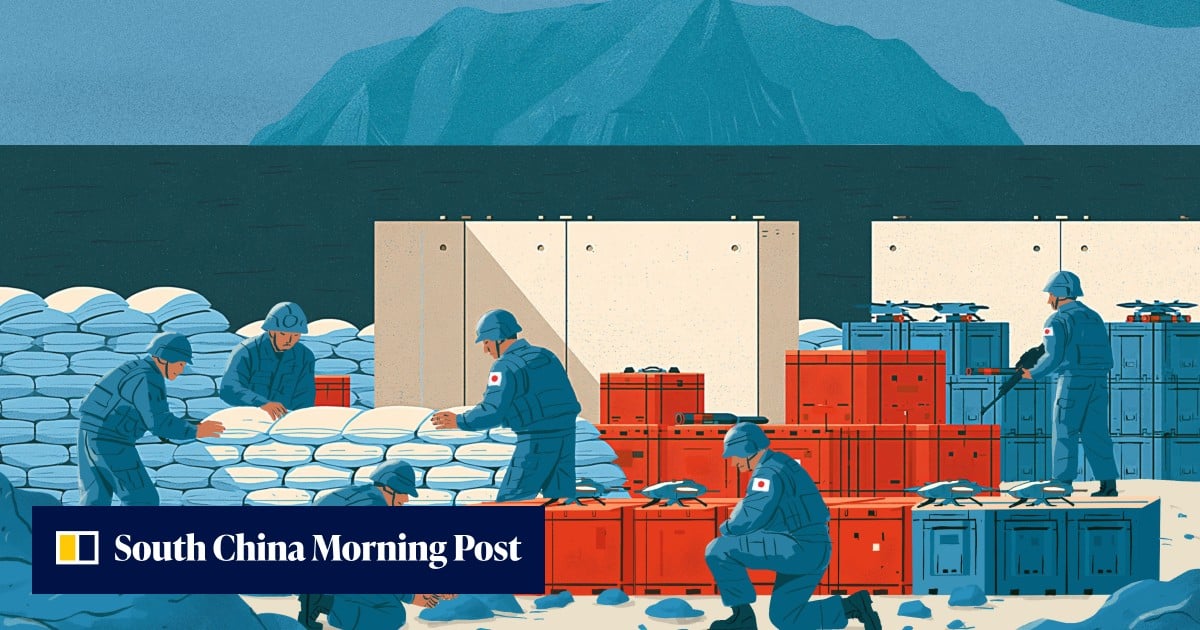
- Japan is likely to deepen practical preparations for a Taiwan contingency over the next 1-3 months. Tokyo's planned defence complex at Kure is intended to combine military facilities, logistics and defence production for a prolonged conflict, and Japan is in the fourth year of a wider defence build-up focused partly on defending Japan during a Taiwan crisis. Prime Minister Sanae Takaichi has also described a Taiwan contingency involving warships and force as potentially threatening Japan's survival. Confidence is medium because the evidence is concentrated in one major-media account and a previously reported political statement. (Confidence: medium · ASSESSED)
- I&W: Confirm: Japan announces construction, logistics or defence-production activity at Kure, or advances maritime-boundary negotiations with the Philippines. (1-3 months)
- I&W: Break: Tokyo suspends or abandons the planned Kure defence hub without announcing a replacement measure. (1-3 months)
- China is likely to sustain linked grey-zone pressure in the South China Sea alongside its activity around Taiwan over the next 0-14 days. The PLA Southern Theater Command announced a combat-readiness patrol around Huangyan Island on 2 September, while Taiwan's Ministry of Foreign Affairs reported dangerous Chinese flight manoeuvres that interfered with foreign aircraft. Confidence is medium because the reporting confirms the incidents but does not establish that they form a single coordinated campaign. (Confidence: medium · ASSESSED)
- I&W: Confirm: the PLA Southern Theater Command announces another patrol around Huangyan Island or Taiwan reports another dangerous manoeuvre against foreign aircraft. (0-14 days)
- I&W: Break: no additional patrol or dangerous flight manoeuvre is reported during the next two weeks. (0-14 days)
Outlook & scenarios
Continued maritime normalisation (55%)
This is the most likely outcome. China Coast Guard patrols continue east of Taiwan through rotating deployments, with occasional questioning of commercial vessels and continued Chinese claims that the activity is law enforcement. Taiwan maintains surveillance and implements the new defence and unmanned-systems programmes without a direct armed response.
Bounded coercive maritime incident (25%)
An unlikely but plausible outcome is repeated questioning or inspection of foreign commercial vessels along Taiwan's Pacific coast, followed by a diplomatic confrontation involving Taiwan, China and the US. The incident remains below the threshold of an active blockade, but it disrupts selected voyages and tests responses from Japan and the Philippines.
Temporary operational pause (15%)
An unlikely outcome is a short pause in east-of-Taiwan patrols or a reduction in the frequency of China Coast Guard deployments. China retains its maritime claims, while Taiwan continues its defence-budget and drone-programme measures. A pause would reduce immediate pressure but would not reverse the longer-term pattern of maritime activity.
Kinetic escalation (5%)
A very unlikely, high-impact wildcard is a dangerous encounter involving China Coast Guard or PLA forces near Taiwan, Huangyan Island or foreign aircraft, followed by an exchange of fire. The resulting crisis would place Japan's stated security concerns and Taiwan's new defence measures under immediate pressure.
Recommendations
- Maintain a daily watchlist of China Coast Guard activity east of Taiwan, including the Putuoshan-led formation, the Daishan and Baita cutters, vessel rotations, patrol area and distance from Taiwan's eastern coast.
- Set a specific escalation trigger for a second consecutive voyage involving questioning or inspection of foreign commercial vessels. Treat that development as evidence of a more established coercive-control practice, rather than relying on isolated AIS observations.
- Do not assess blockade effects from the existing six-second AIS sample. Establish a longer-duration traffic baseline and track confirmed diversions, congestion, port delays and additional inspections.
- Seek independent confirmation of the reported escort of Xiang Yang Hong 03 before attributing the activity to Chinese maritime militia. Keep China Coast Guard and maritime-militia attributions separate in reporting.
- Track Taiwan's NTD145.7 billion supplementary defence budget, the NTD55.9 billion uncrewed-systems allocation, the NTD7.3 billion ammunition allocation and the six-year drone programme for implementation milestones.
- Monitor Japan's Kure defence-hub programme and maritime-boundary discussions with the Philippines as indicators of practical regional preparation for a Taiwan contingency.
- Integrate reporting on east-of-Taiwan patrols with PLA activity around Huangyan Island and dangerous flight manoeuvres in the South China Sea, while preserving separate confidence assessments for each incident.
Confidence & uncertainty
Overall confidence is high because the core assessment of expanding Chinese maritime pressure is supported by multiple high-reliability sources, including Bloomberg reporting, major-media coverage, Taiwan's Coast Guard Administration and reporting from the Institute for the Study of War. The principal uncertainties are narrower: the chronology of the China Coast Guard patrol programme, the identity of the vessel escorting Xiang Yang Hong 03, the intent behind the patrols and the limited value of the available AIS sample for measuring blockade effects.
Intelligence gaps
- [EEI 1.1 · UNCOVERED] Concentration of PLA amphibious warfare vessels exceeding 15 ships in Fujian Province naval ports. Recommended collection: imagery/satellite
- [EEI 1.2 · UNCOVERED] Unplanned surge in encrypted communications traffic from PLA Eastern Theater Command headquarters. Recommended collection: SIGINT
- [EEI 1.3 · UNCOVERED] Movement of PLA airborne unit heavy equipment to airbases within 200km of Taiwan Strait. Recommended collection: imagery/satellite
- [EEI 2.1 · UNCOVERED] Daily aggregate count of PLA Air Force sorties within 30km of the median line. Recommended collection: radar
- [EEI 2.2 · UNCOVERED] Number of active PLA naval live-fire exercise zones in Taiwan Strait international waters. Recommended collection: SIGINT
- [EEI 2.3 · UNCOVERED] Positioning of PLA Type 055 destroyers west of 122°E longitude. Recommended collection: maritime/AIS
- [EEI 3.1 · UNCOVERED] Operational activation of Taiwan's Hsiung Feng III coastal defense missile systems. Recommended collection: SIGINT
- [EEI 3.2 · UNCOVERED] Increased cargo aircraft movements to Penghu Islands military installations. Recommended collection: air/ADS-B
Cited sources
[1] Vision Times · Beijing Steps Up Gray-Zone Operations Around Taiwan and the South China Sea - Vision Times (B) · Sat Sep 12 2026 03:04:41 GMT+0000 (Coordinated Universal Time) · sha256:f87568972361 [2] Bloomberg (republished by gCaptain) · China Expands Patrols of Taiwan’s Pacific Coast, Raising Maritime Tensions (A) · Mon Sep 07 2026 09:44:26 GMT+0000 (Coordinated Universal Time) · sha256:8cb868163c16 [3] Institute for the Study of War (ISW) · China & Taiwan Update, September 11, 2026 (B) · Fri Sep 11 2026 19:41:20 GMT+0000 (Coordinated Universal Time) · sha256:036fbc94a9aa [4] AISStream · AISStream vessel traffic — Taiwan (3 vessels) (B) · sha256:0adfcceb720f [5] South China Morning Post · In Focus | How Japan is digging in to deter – and withstand – a conflict over Taiwan (A) · Tue Sep 08 2026 22:00:06 GMT+0000 (Coordinated Universal Time) · sha256:cd6cb12020b2
Source content hashes were computed at collection time; the cited text is preserved unmodified for the life of this product.
TLP:CLEAR