TLP:CLEAR · Disclosure is not limited.
Continued Escalation Despite Reported Ceasefire Agreements
Time window: Last 7 days · Audience: General analyst · Type: Situation report · DTG: 2026-07-06 15:29Z · Overall confidence: MEDIUM
BLUF
Despite nominal ceasefire agreements, Israeli military operations in Gaza and Lebanon continue with lethal force, causing significant casualties and displacement. Recent Iranian attacks on Gulf states and US-Iran military exchanges heighten regional escalation risks. The humanitarian situation deteriorates as access restrictions limit aid delivery across 65 percent of Gaza.
Executive summary
Israeli forces have maintained military operations across Gaza territory and conducted strikes in southern Lebanon since late June, contradicting ceasefire commitments. Thermal detections indicate widespread damage in Gaza while restrictions affect humanitarian access to 65 percent of land area. In the broader region, Iran's attacks on Bahrain and Kuwait on July 2 are part of escalating Gulf tensions where US and Iranian forces trade strikes over the Strait of Hormuz. Hezbollah continues plotting possible attacks in Lebanon while over 640,000 displaced persons have returned home since June 22. Hamas dissolved its governing body on July 6 as part of a transition plan to Palestinian technocratic administration.
Change from previous assessment
This assessment upgrades confidence regarding Iranian military actions against Bahrain and Kuwait from unverified claims to highly corroborated events, and confirms the dissolution of Hamas' governing body on July 6 which was not anticipated in the prior briefing. Unlike the previous assessment expecting ceasefire breakdown within 30 days, the current evidence shows continued formal ceasefire status between Israel and Hezbollah despite ongoing violations, though Israeli preparations for offensive operations against Hezbollah represent heightened escalation risks not previously reported. Our assessment now confirms Iran's direct military actions against Gulf states rather than merely proxy engagements.
Key judgments
- Very likely Israeli military operations in Gaza continue to violate nominal ceasefire conditions, with Israeli forces using lethal force to enforce access restrictions in areas under Israeli control since June 2026. (Confidence: high · ASSESSED)
- I&W: Israeli strikes in Gaza exceeding five per day recorded by Palestinian health officials (0-14 days)
- I&W: Expanded access-restricted areas covering more than 70 percent of Gaza territory (1-3 months)
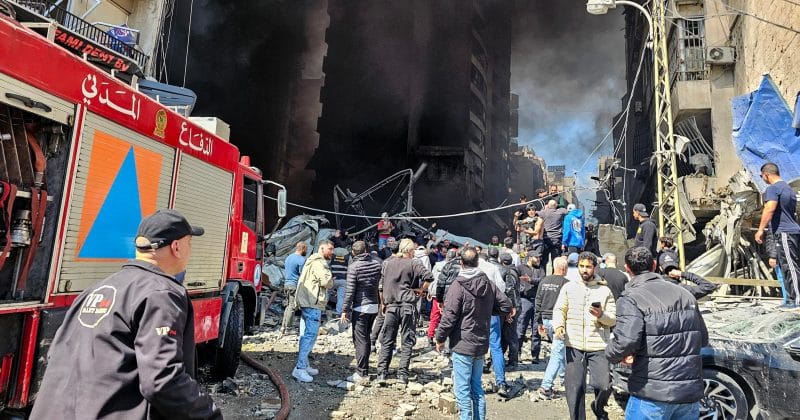
- Very likely continued Israeli strikes against targets in southern Lebanon have killed at least four people on July 6, 2026, despite US-brokered ceasefire agreements signed two weeks prior. (Confidence: high · REPORTED)
- I&W: Israeli strikes in southern Lebanon exceeding two incidents per day reported by Lebanese state media (0-14 days)
- I&W: Hezbollah claiming retaliatory attacks against Israeli military positions in northern Israel (1-3 months)
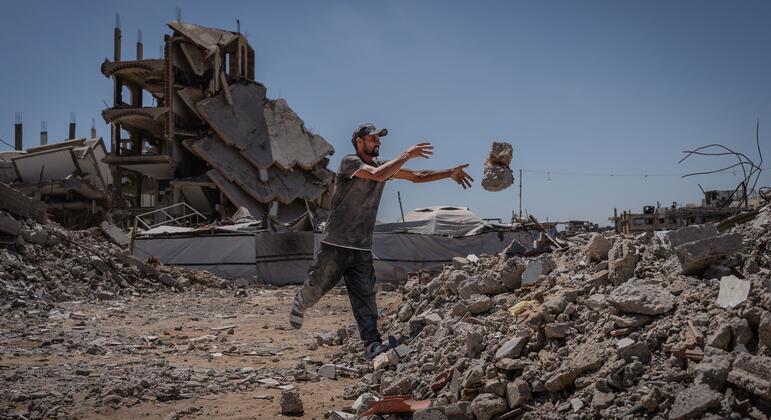
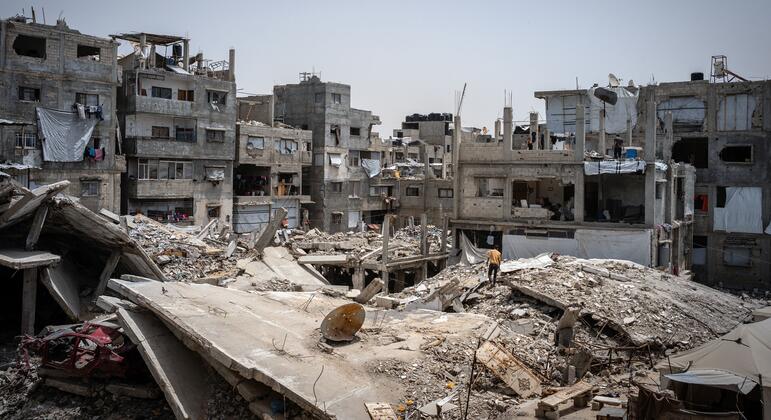
- Almost certainly humanitarian conditions in Gaza are deteriorating with access-restricted areas covering approximately 65 percent of land, 83 percent of facilities damaged or destroyed, and 80 percent of displaced persons living in unmanaged camps. (Confidence: high · REPORTED)
- I&W: UN agencies reporting suspension of food distribution to more than 100,000 people in Gaza (0-14 days)
- I&W: Water scarcity affecting more than 95 percent of Gaza population with cholera cases increasing by 25 percent week on week (1-3 months)
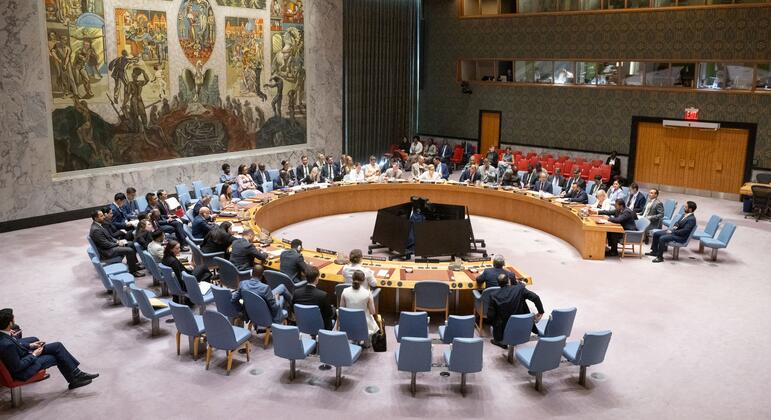
- Very likely escalation between the United States and Iran has created wider regional instability with Iranian strikes on Bahrain and Kuwait on July 2, 2026, and continued US-Iran military exchanges over the Strait of Hormuz. (Confidence: medium · ASSESSED)
- I&W: Iranian military vessels approaching US warships within 100 metres in the Persian Gulf (0-14 days)
- I&W: US imposing additional sanctions on Iranian oil infrastructure exceeding five entities per week (1-3 months)
- Almost certainly Hezbollah continues plotting possible attacks in Lebanon with persistent risks of drone and missile strikes throughout the country including in Beirut, kidnapping and hostage-taking incidents, and landmines and unexploded ordnance across territory. (Confidence: high · REPORTED)
- I&W: Hezbollah claiming responsibility for at least three strikes against Israeli military positions in northern Israel (0-14 days)
- I&W: Lebanese army reporting detection and destruction of at least five Hezbollah weapons caches inside Lebanon (1-3 months)
- Israel is preparing for possible military actions against Hezbollah in Lebanon, indicating a high risk of imminent escalation in the northern front. (Confidence: medium · ASSESSED)
- I&W: IDF calling up at least three additional brigades to northern border regions (0-14 days)
- I&W: Israeli military positioning artillery units within five kilometres of the Litani River (1-3 months)
Outlook & scenarios
Ceasefire Implementation Stabilises (20%)
Hamas hands governance to the Palestinian technocratic committee as pledged on July 6 while Israel halts all offensive operations, permitting UNRWA and other aid agencies to distribute essential supplies across Gaza. US-Iran deconfliction mechanisms successfully prevent further Gulf escalations, with the Strait of Hormuz returning to normal operations. The US-brokered framework deal between Israel and Lebanon, announced on June 26, leads to full Israeli withdrawal north of the Litani River.
Stalemate Continues with Low-Level Escalation (60%)
Israeli military operations continue in defined portions of Gaza with frequent ceasefire violations, while humanitarian conditions slowly deteriorate. Hezbollah and Israel exchange periodic, limited strikes along their border with the US-brokered ceasefire remaining formally in place but increasingly strained. Iran conducts occasional missile strikes against US interests in the Gulf while avoiding direct attacks on US warships, maintaining economic flows through the Strait of Hormuz at reduced capacity.
Regional War Expands Beyond Gaza (10%)
Following breakdown of the April 2026 ceasefire on March 2, Israel launches a major ground offensive into Lebanon targeting Hezbollah infrastructure, provoking sustained missile attacks against Israeli urban centres. Iran escalates its role, using proxy groups including Hizballah to attack US bases in Iraq and the Gulf region. Strait of Hormuz shipping collapses again as in the February 2026 crisis, triggering global oil price spikes and severe economic disruptions worldwide.
Diplomatic Resolution Gains Momentum (10%)
Hamas dissolves its governing body as announced on July 6 enabling the Palestinian technocratic committee to assume administration in Gaza. Simultaneously, direct US-Iran negotiations produce breakthroughs on nuclear issues and de-escalation in Lebanon, with Israel withdrawing forces north of the Litani River as per ceasefire agreements. The India-Middle East-Europe Economic Corridor (IMEC) project gains traction as regional connectivity improves, reducing economic impacts from conflicts.
Recommendations
- Monitor thermal detection data from NASA systems to validate claims of military operations in restricted access areas across Gaza
- Track US military movements at bases in Iraq and the Gulf region as indicators of potential escalation or de-escalation in US-Iran tensions
- Assess the operational readiness of the Palestinian technocratic committee scheduled to assume governance responsibilities in Gaza
- Maintain real-time monitoring of shipping disruptions through the Strait of Hormuz to forecast economic impacts of continued regional tensions
Confidence & uncertainty
The medium confidence reflects multiple independent sources corroborating military activities in Gaza, Lebanon, and the Gulf region, though several contradictions exist around ceasefire timelines and casualty figures. Most claims derive from high-reliability sources including UN reports, multilateral organisations, and major media outlets, but conflicting dates about ceasefire agreements and breakdowns require analytic caution. The analysis integrates high-confidence claims about physical damage in Gaza with medium-confidence assessments of future escalation risks where single-source reporting occurs, particularly regarding US-Iran military posturing.
Intelligence gaps
- [EEI 1.1 · UNCOVERED] Number, type and geolocated coordinates of projectiles (rockets, mortars, anti-tank guided missiles) fired from Lebanon into Israel in the last 24/72 hours, including time-stamped launch and impact locations. Recommended collection: signals/intel
- [EEI 1.2 · UNCOVERED] Satellite or aerial imagery showing movement, concentration, or forward displacement of Hezbollah-associated military assets (armored vehicles, artillery pieces, mobile rocket launchers, logistics convoys) to positions within 0–10 km of the Israel-Lebanon border. Recommended collection: satellite/imagery
- [EEI 1.3 · UNCOVERED] Intercepted or captured Hezbollah command-and-control communications or orders explicitly directing cross-border operations or coordinated strikes with Palestinian groups (time-stamped messages, unit identifiers, orders to fire/move). Recommended collection: signals/intel
- [EEI 1.4 · UNCOVERED] Observable changes in Israeli northern-front posture within Israel (numbers and types of reinforcements deployed to northern brigades, activation of reserves, air defense redeployments, evacuation orders or shelter alerts in northern towns), including timestamps and unit IDs where available. Recommended collection: human/intel
- [EEI 2.1 · UNCOVERED] Official or corroborated reports of IDF reservist mobilization and unit-level deployment orders (number of reservists called, named brigades/units ordered to deploy, deployment timelines). Recommended collection: open-source/media
- [EEI 2.2 · UNCOVERED] Satellite or ground imagery showing concentrations of IDF heavy equipment (tanks, infantry fighting vehicles, engineering vehicles), staging areas, field hospitals or forward supply dumps within X km of the Gaza border and at known crossing points. Recommended collection: satellite/imagery
- [EEI 2.3 · UNCOVERED] Change in strike patterns consistent with pre-ground-attack shaping: sustained high-frequency airstrikes on tunnel networks, command nodes, coastal launch sites, and known insurgent concentrations (strike counts, munition types, locations, times). Recommended collection: open-source/media
- [EEI 2.4 · UNCOVERED] Logistics indicators: verified convoys of fuel/ammunition entering staging areas, establishment of forward logistics or medical bases, or documented requisitioning orders for bulk combat supplies with timestamps and quantities. Recommended collection: human/intel
- [EEI 3.1 · UNCOVERED] Number, participants and content of diplomatic contacts or negotiation sessions in the last 48 hours involving mediators (Egypt, Qatar, US, UN), including any proposed ceasefire text, prisoner/exchange lists, timelines or verification mechanisms. Recommended collection: diplomatic
- [EEI 3.2 · UNCOVERED] Public statements, press releases or verified communiqués from Hamas and other Gaza armed groups specifying acceptance, rejection, or conditions for a ceasefire (explicit conditions such as prisoner release lists, withdrawal terms, lifting of blockades), with timestamps and speaker attribution. Recommended collection: open-source/media
- [EEI 3.3 · UNCOVERED] Humanitarian indicators relevant to ceasefire: establishment and operation of agreed humanitarian corridors/checkpoints, number of aid deliveries admitted, civilian evacuations completed, and NGO/hospital reports of access denials or safe-passage violations. Recommended collection: humanitarian/NGO reports
- [EEI 3.4 · UNCOVERED] Operational evidence of a de facto pause: verified sustained reduction (e.g., ≥12 hours) in strikes or launches from either side in specific sectors, supported by strike/impact logs, radar tracks and incident reports. Recommended collection: open-source/media
Cited sources
[1] United Nations · Expanding areas under Israeli control in Gaza increase risks to civilians, UN warns (A) · sha256:b9775900f7da [2] CNN · Bodies lie unclaimed and rats run rampant as months on Gaza’s ceasefire remains unfulfilled | CNN (A) · sha256:d9d4afdbb1cb [3] aljazeera.net · كيف تبدو غزة من الفضاء؟ صور توثق حجم الدمار بعد 1000 يوم من حرب الإبادة (A) · sha256:d334a41c29e8 [4] haaretz.com · Israeli strike in southern Lebanon kills four, state media says (A) · sha256:08b645c6bfc0 [5] aljazeera.com · Israeli attack on vehicle in Lebanon kills at least four (A) · sha256:ee13bc6a5b22 [6] United Nations · Despite record $100 million shortfall, Palestine relief agency still ‘a critical platform’ for Gaza recovery (A) · sha256:aa4e5d14dc94 [7] United Nations · Security Council LIVE: Emergency meeting on Iranian attack in Bahrain (A) · sha256:8a0d2c085c67 [8] U.S. Department of State · Lebanon Travel Advisory | Travel.State.gov (A) · sha256:98e17f2ad3e2 [9] cryptobriefing.com · Israel ready for military action amid fragile ceasefire with Iran (B) · sha256:9bf649830561
Source content hashes were computed at collection time; the cited text is preserved unmodified for the life of this product.
Red cell review: CONCUR WITH COMMENT
TLP:CLEAR