TLP:CLEAR · Disclosure is not limited.
Deteriorating ceasefire holding in Israel-Lebanon amid renewed Iran-Gulf tension
Time window: Last 7 days · Audience: General analyst · Type: Situation report · DTG: 2026-06-30 13:21Z · Overall confidence: MEDIUM
BLUF
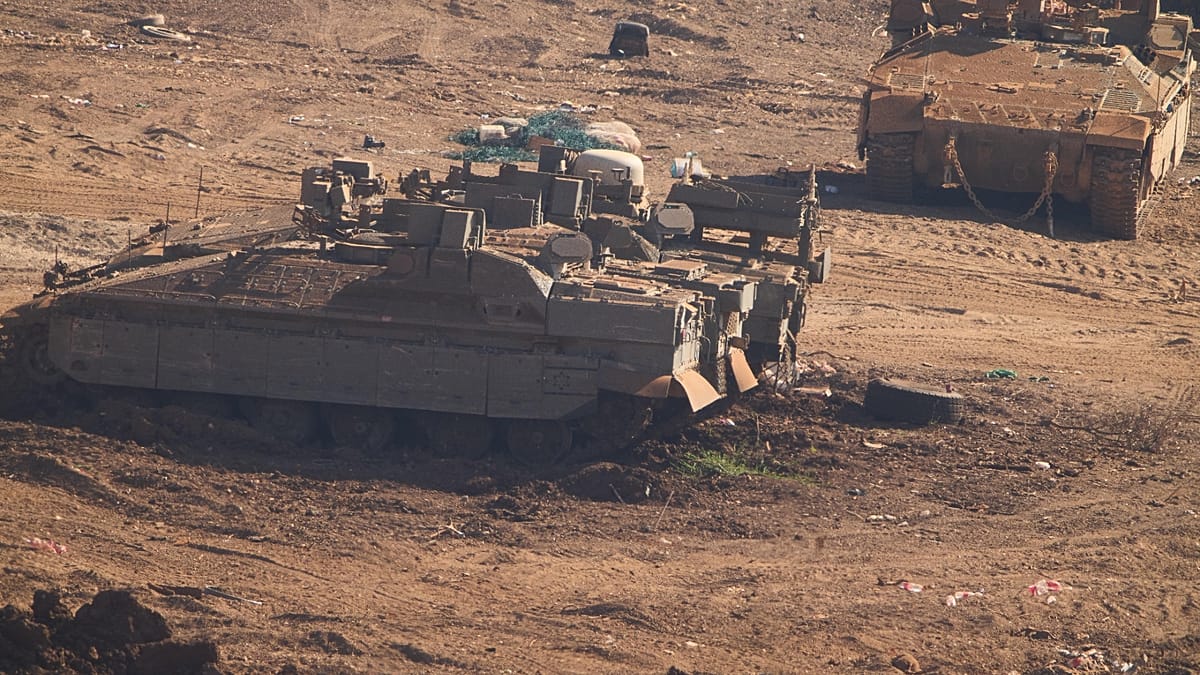
Israeli and Hezbollah forces continue reciprocal strikes despite ceasefire extensions, with Israeli military operations expanding in southern Lebanon as satellite imagery confirms extensive destruction within the 'Yellow Line' of demarcation. Iran tests the truce through attacks on Gulf states while US diplomatic efforts struggle to contain regional escalation.
Executive summary
Cross-border hostilities between Israel and Hezbollah persist despite multiple US-brokered ceasefire extensions, with recent Israeli strikes targeting Hezbollah infrastructure in Majdal Zoun and Nabatieh, and Hezbollah killing an Israeli soldier in Deir Siryan. Satellite imagery confirms significant damage within the expanded 'Yellow Line' security zone, where Israel has increased UN coordination requirements by 800 square meters. Iran's Revolutionary Guard claims responsibility for strikes on Bahrain and Kuwait, testing the ceasefire framework even as US diplomats attempt to consolidate gains through proposed Gaza reconstruction plans that do not require Hamas disarming.
Change from previous assessment
Ceasefire violations have accelerated since the prior brief, with new IDF operations targeting Hezbollah infrastructure in Majdal Zoun and Nabatieh, alongside Iranian Revolutionary Guard attacks on Bahrain and Kuwait that test regional stability. The US has delivered documentation regarding Gaza reconstruction that does not require Hamas disarmament, indicating a strategic shift in diplomatic approach.
Key judgments
- Israeli and Hezbollah forces are very likely to continue reciprocal military operations in southern Lebanon over the next 30 days as both sides accuse the other of ceasefire violations, with Israeli strikes targeting Hezbollah tunnels and command centres since June 21 and Hezbollah responses killing at least one Israeli soldier. (Confidence: high · REPORTED)
- I&W: IDF announces destruction of additional Hezbollah infrastructure in southern Lebanese villages within 0-7 days (0-7 days)
- I&W: Hezbollah releases video of rocket strike on Israeli military position within southern Lebanon within 0-14 days (0-14 days)
- Gaza's humanitarian conditions remain very likely to deteriorate further in the near term, with over 76,000 displaced persons sheltering in UNRWA facilities amid collapsed water systems and Israel's expansion of the 'Yellow Line' security zone, while satellite analysis confirms heavy damage to 46 of 54 towns within this boundary. (Confidence: high · REPORTED)
- I&W: UN reports reduction in water trucking deliveries below 50% of current levels within Gaza within 2-4 weeks (2-4 weeks)
- I&W: Confirmation of cholera cases exceeding 1,000 in Gaza within 30 days (30 days)
- The US-led ceasefire framework is very likely to unravel within the next 60 days without stronger security guarantees as Israeli officials have confirmed plans to maintain forces in southern Lebanon until Hezbollah disarms while the organisation rejects any agreement without full Israeli withdrawal. (Confidence: high · ASSESSED)
- I&W: Israeli Foreign Minister publicly states that peace agreement with Lebanon requires complete Hezbollah disarmament within 0-30 days (0-30 days)
- I&W: Hezbollah announces establishment of new armed resistance committees along Israeli border within 45 days (45 days)
- Iran is likely exploiting the Israel-Lebanon ceasefire to expand its influence through asymmetric attacks on Gulf states as evidenced by Revolutionary Guard claims of strikes against Bahrain and Kuwait, while simultaneously threatening to halt nuclear talks if US military action continues. (Confidence: high · REPORTED)
- I&W: Iranian-backed Houthi forces claim additional strike against commercial vessel in Red Sea within 7 days (7 days)
- I&W: Iranian military conducts live-fire exercises near Hormuz Strait within 30 days (30 days)
Outlook & scenarios
Stalemate with controlled violence (55%)
A protracted stalemate develops with Israeli forces maintaining presence in southern Lebanon security zones while conducting targeted operations against Hezbollah infrastructure, coupled with limited Hezbollah retaliation that avoids direct attacks on Israeli population centres. Periodic ceasefire violations continue but major escalation is avoided as both sides calculate that full conflict is too costly, with US and European mediators managing sporadic flare-ups through behind-the-scenes diplomacy throughout autumn 2026.
Escalation to regional conflict (25%)
A major incident - such as the killing of high-value Hezbollah personnel in Beirut or a significant attack on Israeli civilians - triggers large-scale cross-border operations in late summer 2026. Israel launches ground operations beyond existing security zones while Hezbollah fires thousands of rockets toward Israeli population centres, drawing in Iranian military support through proxies. The US responds with additional strikes against Iranian targets, creating a multi-front conflict that strains international shipping through the Strait of Hormuz and draws in additional regional actors.
Progress toward comprehensive settlement (15%)
After two months of tense negotiations, the US brokers a comprehensive agreement by late August 2026 with Israeli consent for phased withdrawal from most of southern Lebanon in exchange for Hezbollah disarming beyond the Litani River. Concurrently, Israel agrees to Gaza reconstruction under international oversight with Hamas transitioning to civilian governance. Iran enters serious negotiations with the US on nuclear limits that address regional security concerns, creating space for a broader regional security framework that improves maritime security in the Strait of Hormuz.
Sudden Israeli withdrawal (5%)
Facing domestic political pressure and sustained economic damage from prolonged conflict, Israel makes a sudden decision to withdraw from all southern Lebanon security zones by mid-July 2026. Hezbollah fails to maintain discipline, with splinter groups launching attacks that trigger retaliatory strikes, creating a dangerous power vacuum. Lebanon's army struggles to establish control, while Iran accelerates arms transfers to remaining Hezbollah units, creating conditions for renewed large-scale conflict by autumn 2026 despite temporary diplomatic gains.
Recommendations
- Request CENTCOM to provide immediate updates on Israeli force posture along the Lebanese border, with particular attention to infrastructure changes that would facilitate long-term occupation
- Direct DIA and National Geospatial-Intelligence Agency to conduct daily satellite monitoring of Israeli construction activity in southern Lebanon security zones and damage assessment within the 'Yellow Line' boundary
- Task CIA with developing contingency operations to track Iranian weapons transfers to Hezbollah in event of expanded Israeli withdrawal
- Recommend State Department coordinate urgent UN Security Council session to establish independent civilian casualty monitoring mechanism to replace self-reported figures from conflicting parties
Confidence & uncertainty
While numerous highly reliable sources corroborate Israeli military activity in Lebanon and Iranian attacks on Gulf targets, contradictions exist in ceasefire status reporting with Israeli government claims of non-withdrawal conflicting with diplomatic announcements of security handovers. Humanitarian data from Gaza remains fragmented with significant discrepancies between UNRWA and Gaza Health Ministry casualty figures, reflecting challenges in monitoring conditions under ongoing hostilities.
Intelligence gaps
- [EEI 1.1 · UNCOVERED] Number, type and geolocated coordinates of projectiles (rockets, mortars, anti-tank guided missiles) fired from Lebanon into Israel in the last 24/72 hours, including time-stamped launch and impact locations. Recommended collection: signals/intel
- [EEI 1.2 · UNCOVERED] Satellite or aerial imagery showing movement, concentration, or forward displacement of Hezbollah-associated military assets (armored vehicles, artillery pieces, mobile rocket launchers, logistics convoys) to positions within 0–10 km of the Israel-Lebanon border. Recommended collection: satellite/imagery
- [EEI 1.3 · UNCOVERED] Intercepted or captured Hezbollah command-and-control communications or orders explicitly directing cross-border operations or coordinated strikes with Palestinian groups (time-stamped messages, unit identifiers, orders to fire/move). Recommended collection: signals/intel
- [EEI 1.4 · PARTIAL] Observable changes in Israeli northern-front posture within Israel (numbers and types of reinforcements deployed to northern brigades, activation of reserves, air defense redeployments, evacuation orders or shelter alerts in northern towns), including timestamps and unit IDs where available. Recommended collection: human/intel
- [EEI 2.1 · UNCOVERED] Official or corroborated reports of IDF reservist mobilization and unit-level deployment orders (number of reservists called, named brigades/units ordered to deploy, deployment timelines). Recommended collection: open-source/media
- [EEI 2.2 · UNCOVERED] Satellite or ground imagery showing concentrations of IDF heavy equipment (tanks, infantry fighting vehicles, engineering vehicles), staging areas, field hospitals or forward supply dumps within X km of the Gaza border and at known crossing points. Recommended collection: satellite/imagery
- [EEI 2.3 · PARTIAL] Change in strike patterns consistent with pre-ground-attack shaping: sustained high-frequency airstrikes on tunnel networks, command nodes, coastal launch sites, and known insurgent concentrations (strike counts, munition types, locations, times). Recommended collection: open-source/media
- [EEI 2.4 · UNCOVERED] Logistics indicators: verified convoys of fuel/ammunition entering staging areas, establishment of forward logistics or medical bases, or documented requisitioning orders for bulk combat supplies with timestamps and quantities. Recommended collection: human/intel
- [EEI 3.1 · PARTIAL] Number, participants and content of diplomatic contacts or negotiation sessions in the last 48 hours involving mediators (Egypt, Qatar, US, UN), including any proposed ceasefire text, prisoner/exchange lists, timelines or verification mechanisms. Recommended collection: diplomatic
- [EEI 3.2 · UNCOVERED] Public statements, press releases or verified communiqués from Hamas and other Gaza armed groups specifying acceptance, rejection, or conditions for a ceasefire (explicit conditions such as prisoner release lists, withdrawal terms, lifting of blockades), with timestamps and speaker attribution. Recommended collection: open-source/media
- [EEI 3.3 · PARTIAL] Humanitarian indicators relevant to ceasefire: establishment and operation of agreed humanitarian corridors/checkpoints, number of aid deliveries admitted, civilian evacuations completed, and NGO/hospital reports of access denials or safe-passage violations. Recommended collection: humanitarian/NGO reports
Cited sources
[1] The Jerusalem Post · Why is Israel suddenly changing its military targeting strategy? - analysis (B) · sha256:2215127f0feb [2] Euronews · "لن ننسحب". إسرائيل: بقاؤنا في لبنان سيكون "طويل الأمد" وهدفنا التطبيع مع بيروت (B) · sha256:de396923d6f3 [3] aol.com · Iran live updates: US-Iran direct meeting not expected Tuesday, Qatari ministry says (B) · sha256:63f47876a014 [4] houstonpublicmedia.org · U.S. and Iran exchange strikes, underscoring the fragility of the ceasefire (A) · sha256:bf755d3053bf [5] gcaptain.com · Maersk Raises 2026 Earnings Outlook as Container Market Strength Continues (C) · sha256:210932671fd3 [6] United Nations · World News in Brief: Violence displaces thousands in Haiti and Lebanon, Gaza updates, UN food agency delivers in Ebola-stricken DR Congo (A) · sha256:37555cc35cb0 [7] bellingcat.com · Satellite Imagery Shows Ongoing Demolitions Across Southern Lebanon - bellingcat (B) · sha256:052733cd55f8 [8] United Nations · World News in Brief: Afghanistan airstrikes, rights violations in DR Congo, Gaza displacement (A) · sha256:149e3985f3b4 [9] haaretz.com · IDF drone strikes in Gaza kill four Palestinians, medical sources say; Young girl reportedly among dead (A) · sha256:2f893b22c198 [10] aljazeera.net · اتفاق في الأروقة وتحركات بالميدان. ماذا يحدث في جنوب لبنان؟ (A) · sha256:1949c33abf1a [11] maritime-executive.com · Shipping Through Hormuz Holds Steady, But Little Clarity on Peace Talks (B) · sha256:c4043294a9b5 [12] The Jerusalem Post · Live Updates: Latest from Israel, Iran, and Middle East | The Jerusalem Post (A) · sha256:291fde2ea496 [13] gcaptain.com · Hormuz Oil Transits Continue Though Attacks Make Owners Wary (B) · sha256:5a200fb1472e
Source content hashes were computed at collection time; the cited text is preserved unmodified for the life of this product.
TLP:CLEAR