TLP:CLEAR · Disclosure is not limited.
Escalating conflict in El Obeid and El Fasher: Mass atrocity risks and humanitarian deterioration
Time window: Last 7 days · Audience: General analyst · Type: Situation report · DTG: 2026-06-26 22:16Z · Overall confidence: MEDIUM
BLUF
The Rapid Support Forces are very likely preparing for a ground offensive against El Obeid, with UN warnings of imminent mass atrocities and increasing drone strikes causing severe humanitarian constraints. Political talks have resumed but show little prospect of preventing further escalation around key cities in the next fortnight, while child casualty data reveals drones as the primary cause of civilian harm.
Executive summary
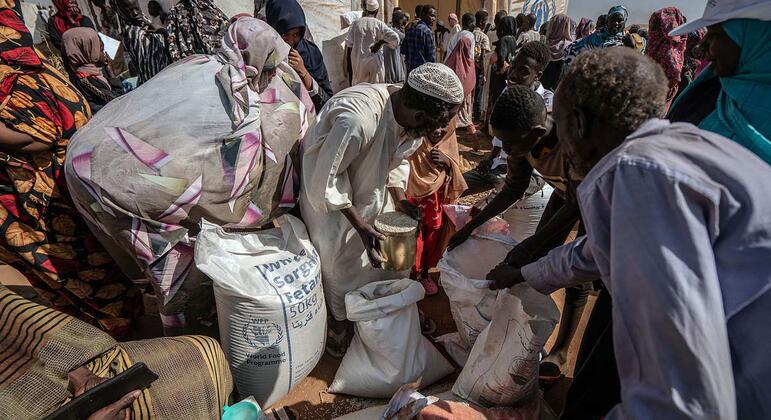
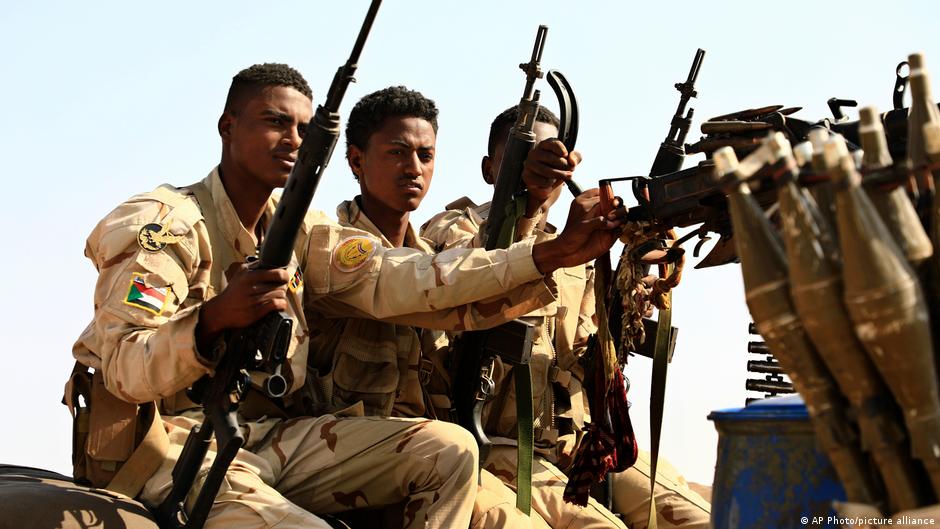
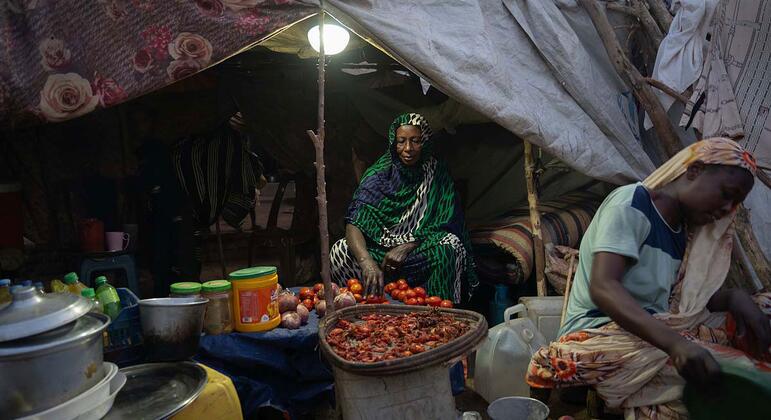
Civilians in Sudan face deteriorating humanitarian conditions with confirmed reports of more than 14 million displaced persons and child casualties predominantly linked to drone warfare. UN officials warn the situation in El Obeid has become increasingly concerning amid escalating hostilities, with the Security Council citing an imminent risk of mass atrocities. The Rapid Support Forces have expanded their presence around El Obeid while continuing drone operations across Kordofan region, despite renewed diplomatic engagement by the UN and regional powers.
Change from previous assessment
The assessment now incorporates new UN verification data showing nearly 80% of child casualties in early 2026 are drone-related, significantly refining previous understanding of civilian harm patterns. There is heightened specificity on atrocity risks with documented UN Security Council warnings of imminent mass atrocities in El Obeid rather than general genocide concerns. Confidence remains high in the impending ground offensive assessment as multiple new sources confirm RSF's expanded military presence around the city. The humanitarian assessment gains precision with specific infant mortality figures from Darfur and updated displacement numbers, while confidence in the diplomatic track has decreased to medium due to lack of concrete progress indicators despite resumed talks.
Key judgments
- It is very likely the Rapid Support Forces will mount a near-term ground offensive against El Obeid, where the Sudanese Armed Forces have maintained control since February 2025, raising severe atrocity risks for non-Arab civilians. (Confidence: high · ASSESSED)
- I&W: RSF armoured units observed massing within 15km of El Obeid's western perimeter (0-14 days)
- I&W: SAF begins systematic evacuation of heavy weaponry from urban strongpoints in El Obeid (0-7 days)
- Drone warfare has almost certainly escalated across Sudan since January 2026, constraining humanitarian access to El Obeid and likely to remain the primary cause of child casualties. (Confidence: high · REPORTED)
- I&W: UN documents 25+ drone incidents targeting healthcare facilities in Kordofan within seven consecutive days (0-14 days)
- I&W: Child casualty reports show sustained >75% attribution to drone attacks over 60-day period (30-60 days)
- Sudan's humanitarian situation almost certainly remains the world's worst, with the UN verifying more than 5,700 grave violations against children since 2023, including over 45,000 infant deaths from malnutrition in Darfur. (Confidence: high · REPORTED)
- I&W: UN reports fewer than 2 million people in El Obeid area with regular access to potable water (immediate)
- I&W: Integrated Food Security Phase Classification declares famine across North Kordofan region (30-60 days)
- Despite resumed political talks and regional rejection of military solutions, there is a roughly even chance of achieving only short-lived humanitarian truces in the next month, with little prospect for a durable cessation of hostilities while fighting intensifies around El Obeid. (Confidence: medium · ASSESSED)
- I&W: Quad countries jointly announce specific military restrictions as preconditions for continued negotiations (7-21 days)
- I&W: Either SAF or RSF announces withdrawal from talks citing lack of implementation of previous agreements (0-14 days)
- Fears are escalating for civilians in El Fasher as the Rapid Support Forces tighten their siege, with patterns suggesting intentional targeting of agricultural communities to induce starvation. (Confidence: high · ASSESSED)
- I&W: Satellite imagery shows systematic destruction of irrigation infrastructure in El Fasher agricultural belt (30-60 days)
- I&W: Humanitarian agencies report <25% of required food parcels reaching El Fasher over 30-day period (14-30 days)
Outlook & scenarios
El Obeid ground offensive with mass atrocity (45%)
The RSF launches a coordinated ground offensive against El Obeid with limited SAF resistance, resulting in mass displacement of 250,000+ civilians from the city. As SAF forces retreat toward the centre, RSF and allied Arab militias begin systematic targeting of non-Arab civilians, leading to UN-verified accounts of atrocities against Masalit communities by mid-July. Humanitarian access becomes near-impossible, triggering a famine declaration for the city within 60 days.
Diplomatic truce limiting urban warfare (20%)
Regional actors, led by Kenya and Saudi Arabia, successfully mediate a humanitarian truce that restricts ground combat in El Obeid while allowing humanitarian corridors. Fighting continues at the city's periphery but drone usage decreases dramatically in urban areas. The agreement lasts 45-60 days before collapsing when RSF demands access to SAF-controlled city infrastructure, but creates a crucial window for limited civilian evacuation and food distribution.
Drone-dominated urban siege (30%)
El Obeid becomes increasingly depopulated as both SAF and RSF intensify drone operations but avoid direct ground assaults that could result in heavy casualties. The city fractures into micro-zones where local defence committees attempt to negotiate separate arrangements with warring parties. Commercial activity collapses in Kordofan as businesses relocate to Khartoum or flee the country, while humanitarian organisations increasingly operate remotely with aid deliveries restricted to a few weekly convoys.
Genocidal campaign in Darfur (5%)
RSF forces in West Darfur accelerate systematic campaigns against Masalit and other non-Arab communities beyond the patterns noted in previous reporting, implementing coordinated attacks on displacement sites including El Geneina and Zalingei. The scale and coordination suggest command-level approval, triggering a genocide determination by international bodies by early August that forces Western nations to reconsider engagement with regional intermediaries, possibly fracturing the diplomatic effort entirely.
Recommendations
- Establish daily monitoring protocol for drone incident reports from UNMISS and UNAMID with emphasis on attacks within 1km of healthcare facilities and schools
- Produce detailed commander watchlist focusing on RSF elements operating in North Kordofan who may be implicated in potential war crimes during ground offensive preparations
- Track commercial vessel movements away from Port Sudan as indicator of commercial flight response to escalation risk, particularly container traffic handled by Evergreen Marine Corporation
- Coordinate with UK Foreign Office to assess whether their call for all parties to comply with international obligations has resulted in concrete changes in civilian protection practice on the ground
Confidence & uncertainty
The assessment confidence is medium based on strong corroboration from UN, UK government, and Sudanese official sources regarding military developments in El Obeid and the deteriorating humanitarian situation. However, there are inconsistencies in casualty figures and displacement estimates across reporting sources, with some discrepancies noted between major media outlets and UN verification mechanisms. The analysis also incorporates a single-source claim regarding RSF intentions toward agricultural communities in El Fasher, which remains uncorroborated.
Intelligence gaps
- [EEI 1.2 · PARTIAL] Changes in employment of heavy weapons and systems: documented use or emplacement of artillery, multiple-launch rocket systems, tanks, combat helicopters, and airstrikes at specific coordinates and times. Recommended collection: open-source/media
- [EEI 1.3 · UNCOVERED] Reports or intercepts of orders, operational directives or public statements from RSF/SAF commanders indicating planned offensives, ceasefire acceptance/rejection, defensive postures or orders to withdraw from named locations. Recommended collection: signals/communications intercepts
- [EEI 2.1 · PARTIAL] Counts and locations of newly displaced persons arriving at formal sites, informal camps, border crossings or collective centers (daily/weekly arrivals, site coordinates), including demographics (women, children, elderly) where available. Recommended collection: humanitarian/UN OCHA reports
- [EEI 2.2 · PARTIAL] Access impediments to humanitarian assistance: reported attacks on, blockages of, or denial of passage for named humanitarian convoys (dates, GPS locations, responsible actor if known) and closure status of specific routes. Recommended collection: human intelligence/field reporting
- [EEI 2.3 · PARTIAL] Functional status of medical infrastructure in named locations: number of operational hospitals/clinics, reported shortages of key medicines/blood, and hospital casualty/occupancy figures for the last 72 hours. Recommended collection: medical/health cluster reporting
- [EEI 3.1 · UNCOVERED] Detection of flights, ships or overland convoys delivering military materiel or foreign personnel to named airfields, ports or border crossings (flight/IMO numbers, manifests if available, timestamps, route origin/destination). Recommended collection: air-traffic / maritime / border customs
- [EEI 3.2 · UNCOVERED] Imagery or on-the-ground confirmation of foreign military personnel or private military contractor bases/forward operating elements at specified coordinates or compounds, including vehicle/weapon types observed. Recommended collection: imagery/satellite
- [EEI 3.3 · UNCOVERED] Financial and sanctions-relevant indicators: atypical large transfers, use of designated front companies, or shipments routed through third states linked to procurement of weapons or fuel for RSF or SAF (transaction dates, parties, amounts where obtainable). Recommended collection: financial intelligence
Cited sources
[1] United Nations · Sudan: Window is closing to prevent wider escalation in El Obeid (A) · sha256:c9c3c8d9275f [2] dw.com · Sudan: Fears of atrocities as RSF surrounds key city (A) · sha256:60500cee4ba2 [3] miragenews.com · UN Envoy Warns of Rising Risks in El Obeid Conflict (A) · sha256:0f04a5633312 [4] United Nations · Latest News (A) · sha256:d28824d23238 [5] Wikipedia · Darfur genocide (2023–present) (B) · sha256:da25d31cd28f [6] The Proxy Protocol · Sudan's Silent Siege: A City on the Brink (B) · sha256:10591682c882 [7] Los Angeles Times · Israel releases classified documents detailing 1976 Entebbe raid to free more than 100 hostages - Los Angeles Times (A) · sha256:9846a80eae0f
Source content hashes were computed at collection time; the cited text is preserved unmodified for the life of this product.
TLP:CLEAR