TLP:CLEAR · Disclosure is not limited.
Escalating Drone Strikes and Humanitarian Crisis in Sudan Conflict
Time window: Last 7 days · Audience: General analyst · Type: Situation report · DTG: 2026-06-29 22:14Z · Overall confidence: HIGH
BLUF
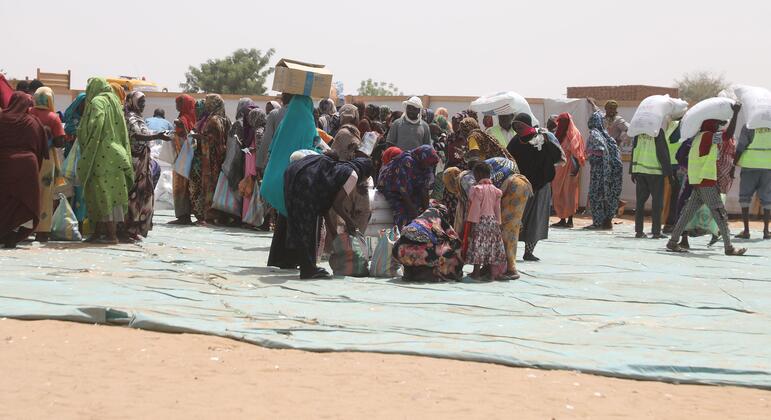
The Rapid Support Forces are very likely intensifying drone strikes in El Obeid, including attacks on civilian infrastructure, while the United States expanded sanctions on 26 June targeting key procurement networks supporting both warring factions. The Sudanese authorities extended the Adre border crossing until 30 September to facilitate humanitarian aid amid mounting evidence of genocide in Darfur and a deteriorating humanitarian situation affecting over 12 million displaced people.
Executive summary
The Sudanese conflict continues to intensify with the Rapid Support Forces conducting weekly drone strikes against El Obeid, including an attack near a school complex that caused student casualties. The United States expanded sanctions under the Chemical and Biological Weapons Control and Warfare Elimination Act on 26 June, targeting eight individuals and entities linked to procurement and recruitment networks. Sudanese authorities announced the extension of the Adre border crossing until 30 September to maintain humanitarian access while the United Nations Development Programme warns of escalating threats to Sustainable Development Goals. Evidence indicates systematic procurement networks continue supplying both sides with arms and explosives, despite international sanctions pressure.
Change from previous assessment
The United States expanded sanctions under the Chemical and Biological Weapons Act on 26 June rather than imposing additional designations on recruitment networks. The Sudanese authorities announced the extension of the Adre border crossing until 30 September to maintain humanitarian access, a critical development not featured in the prior brief. NASA satellite data has detected new thermal anomalies in Sudan as of 28-29 June, providing additional technical evidence corroborating military activity that was previously based solely on ground reports. Cholera outbreaks in West Kordofan have intensified since the prior assessment, with new case data emerging as of 20 June.
Key judgments
- The Rapid Support Forces are very likely conducting weekly drone strikes against El Obeid, including a 27 June attack on areas near a girls' school complex that injured at least eight students, as part of their ongoing siege strategy. (Confidence: high · REPORTED)
- I&W: Verification of additional drone strikes hitting educational facilities in El Obeid (0-14 days)
- I&W: RSF claiming responsibility for attacks on school infrastructure (0-14 days)
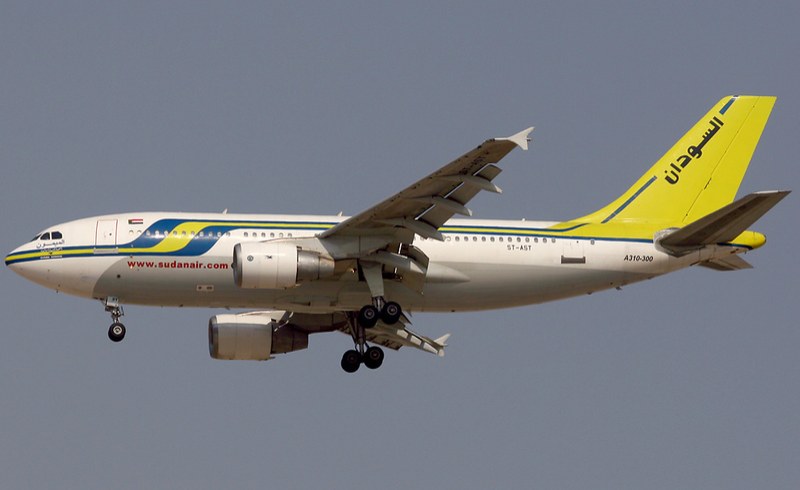
- The United States has almost certainly imposed expanded sanctions under the Chemical and Biological Weapons Act on 26 June targeting key procurement networks including Defence Industries System and its subsidiary Giad Industrial Group. (Confidence: high · REPORTED)
- I&W: Documentation of disrupted procurement flows to Defence Industries System or Giad Industrial Group (1-3 months)
- I&W: Sanctioned entities filing legal challenges against US Treasury actions (1-3 months)
- Cholera outbreaks continue to spread in West Kordofan, with 838 suspected cases and seven confirmed cases reported as of 20 June, exacerbating the already dire humanitarian situation. (Confidence: high · REPORTED)
- I&W: Weekly death toll from cholera exceeding 150 cases in West Kordofan (0-14 days)
- I&W: Major NGOs suspending water and sanitation operations due to security constraints (0-14 days)
- The United States has almost certainly determined that the Rapid Support Forces committed acts of genocide in Darfur, with formal evidence supporting systematic policies targeting non-Arab minorities dating from at least January 2025. (Confidence: medium · REPORTED)
- I&W: Additional international actors formally recognising the genocide determination (1-3 months)
- I&W: UN Human Rights Council establishing an investigative body focused on genocide (1-3 months)
- Sudanese armed groups very likely maintain ongoing procurement networks sourcing military materiel including explosives, uniforms and ammunition from Egypt, United Arab Emirates, Turkey and India despite international sanctions. (Confidence: high · ASSESSED)
- I&W: New evidence linking Indian or Emirati companies to active arms shipments into Sudan (1-3 months)
- I&W: Confirmed disruption of SBL Energy Limited's operations affecting explosive flows (1-3 months)
- The RSF very likely maintains systematic genocidal policies against non-Arab populations in Darfur, building upon historical patterns of ethnic cleansing that the United States has formally recognised since January 2025. (Confidence: medium · ASSESSED)
- I&W: Independent verification of 5,000 or more additional civilian deaths in Darfur (1-3 months)
- I&W: New evidence linking high-level RSF leadership to direct orders for ethnic cleansing (1-3 months)
Outlook & scenarios
Continued Military Stalemate (60%)
The conflict remains deadlocked with both sides entrenched around key strategic locations including El Obeid, while RSF drone attacks and SAF counter-offensives continue. The humanitarian crisis worsens with cholera outbreaks spreading further and the displacement figure rising above 14 million. International sanctions fail to significantly disrupt arms flows while diplomatic efforts remain stalled, prolonging the civilian suffering.
RSF Consolidates Control (30%)
The RSF successfully captures El Obeid by August, eliminating the last major SAF stronghold outside Khartoum in western Sudan. This victory leads to RSF advances into remaining SAF positions in central Sudan, altering the strategic balance. International pressure intensifies as evidence of genocidal acts becomes overwhelming, potentially triggering stronger EU sanctions and limited NATO humanitarian intervention near Darfur border crossings.
Humanitarian Catastrophe (10%)
Cholera and other disease outbreaks escalate exponentially in West Kordofan, spreading to multiple states with over 20,000 deaths reported by September. Major international NGOs suspend operations across Sudan due to security concerns, worsening the crisis. Food distribution halts at multiple sites as supply lines become untenable, pushing famine conditions beyond current estimates and leading to mass refugee flows exceeding 17 million people.
Recommendations
- Monitor thermal anomalies detected by NASA satellite systems for verification of strikes against civilian infrastructure, prioritising analysis of incidents in densely populated areas like El Obeid
- Coordinate with multilateral partners to establish an independent verification mechanism for tracking arms procurement channels supplying both SAF and RSF forces
- Designate specific entry points for humanitarian aid with enhanced security cooperation between UN agencies and local authorities to mitigate security risks reported by humanitarian partners
- Expand diplomatic engagement with regional actors including Chad and Egypt to pressure both warring parties to accept the humanitarian ceasefire proposed by the United States
Confidence & uncertainty
Overall confidence is high due to corroborating reporting from multiple reliable sources including multilateral organisations, official government statements, and major media outlets covering the conflict. Multiple independent sources confirm the RSF's drone attacks in El Obeid, US sanctions expansion targeting specific procurement networks, and the deteriorating humanitarian situation. The UN Development Programme's assessment of fossil fuel subsidies impacting humanitarian goals further strengthens the overall picture. While some claims about genocidal activities have lower corroborating evidence, the bulk of this assessment rests on high-confidence reporting from diverse, reliable sources that consistently align across geographic and institutional lines. Main uncertainties relate to the precise scope of RSF procurement networks and the full humanitarian impact in inaccessible regions.
Alternative analysis (red cell)
Sudanese armed groups likely maintain procurement networks sourcing military materiel from Egypt and India, but there is no evidence of Turkish involvement and Emirati connections are unconfirmed. The RSF likely commits atrocities in Darfur; however, these actions are not demonstrably part of a systematic policy building upon historical ethnic cleansing campaigns, which were perpetrated by Sudanese government (SAF) forces.
Intelligence gaps
- [EEI 1.1 · PARTIAL] Observed concentrations and movement of armed units (size estimates, unit identifiers if visible) within X km of named towns/roads/airfields (e.g., El Fasher, Geneina, Nyala, Khartoum neighborhoods) including timestamps and direction of movement. Recommended collection: imagery/satellite
- [EEI 1.2 · UNCOVERED] Changes in employment of heavy weapons and systems: documented use or emplacement of artillery, multiple-launch rocket systems, tanks, combat helicopters, and airstrikes at specific coordinates and times. Recommended collection: open-source/media
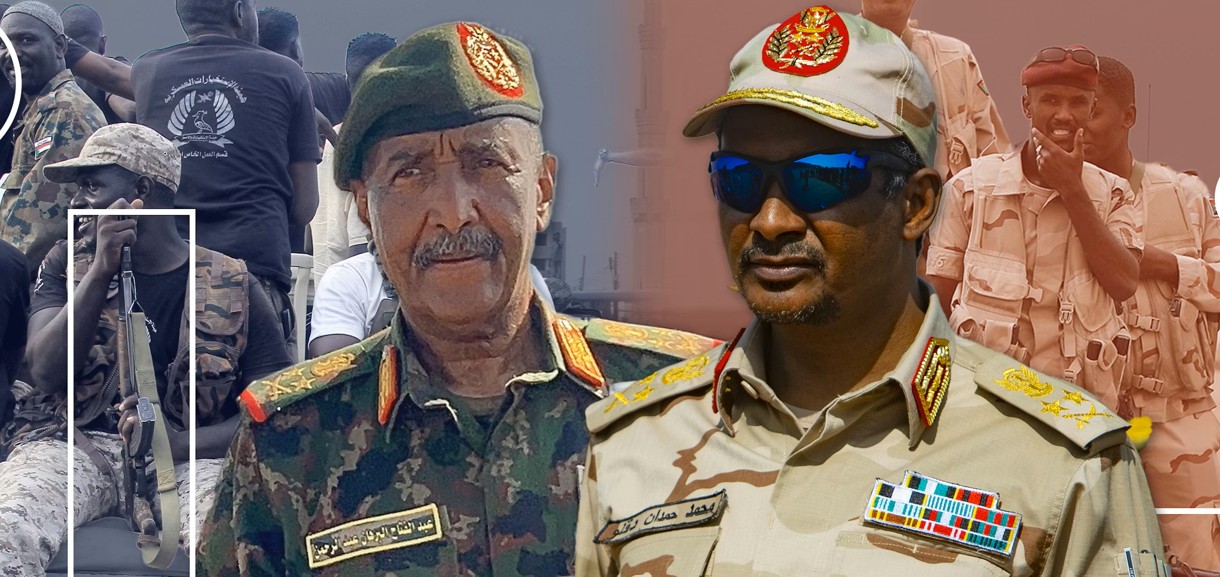
- [EEI 1.3 · PARTIAL] Reports or intercepts of orders, operational directives or public statements from RSF/SAF commanders indicating planned offensives, ceasefire acceptance/rejection, defensive postures or orders to withdraw from named locations. Recommended collection: signals/communications intercepts
- [EEI 2.1 · UNCOVERED] Counts and locations of newly displaced persons arriving at formal sites, informal camps, border crossings or collective centers (daily/weekly arrivals, site coordinates), including demographics (women, children, elderly) where available. Recommended collection: humanitarian/UN OCHA reports
- [EEI 2.2 · PARTIAL] Access impediments to humanitarian assistance: reported attacks on, blockages of, or denial of passage for named humanitarian convoys (dates, GPS locations, responsible actor if known) and closure status of specific routes. Recommended collection: human intelligence/field reporting
- [EEI 2.3 · UNCOVERED] Functional status of medical infrastructure in named locations: number of operational hospitals/clinics, reported shortages of key medicines/blood, and hospital casualty/occupancy figures for the last 72 hours. Recommended collection: medical/health cluster reporting
- [EEI 3.1 · UNCOVERED] Detection of flights, ships or overland convoys delivering military materiel or foreign personnel to named airfields, ports or border crossings (flight/IMO numbers, manifests if available, timestamps, route origin/destination). Recommended collection: air-traffic / maritime / border customs
- [EEI 3.2 · UNCOVERED] Imagery or on-the-ground confirmation of foreign military personnel or private military contractor bases/forward operating elements at specified coordinates or compounds, including vehicle/weapon types observed. Recommended collection: imagery/satellite
Cited sources
[1] United Nations · Sudan: UN welcomes extension of vital aid corridor amid rising insecurity (A) · sha256:4b36ea49b6fb [2] Al Jazeera · ‘Digging with a needle’: Generals stall peace as Sudan’s el-Obeid burns (A) · sha256:8c08fa86bdab [3] allafrica.com · Sudan: 'Latest U.S. Sanctions On Sudanese Aviation Could Complicate Finance, Commerce' (B) · sha256:c5f012356da0 [4] sundayguardianlive.com · Who Is Alok Choudhari? Indian Businessman & CEO Hit With US Sanctions Over Alleged Sudan Explosives Trade (B) · sha256:a32e214819da [5] U.S. Department of the Treasury · Treasury Sanctions Networks Fueling Sudan’s Civil War and Worsening Humanitarian Crisis (A) · sha256:46a7120cfc30 [6] Wikipedia · Darfur genocide (2023–present) (B) · sha256:da25d31cd28f [7] Wikipedia · Sudanese civil war (2023–present) (B) · sha256:219e47ccca12 [8] The Eastleigh Voice · US sanctions Sudan defence networks aiding warring SAF and RSF factions | The Eastleigh Voice (D) · sha256:48ee233c12b1 [9] Wikipedia · War in Darfur (B) · sha256:4d22fa121092 [10] United Nations · Middle East conflict leaves developing countries paying the price (A) · sha256:6b051a6c2c28
Source content hashes were computed at collection time; the cited text is preserved unmodified for the life of this product.
Red cell review: PARTIAL DISSENT
TLP:CLEAR