TLP:CLEAR · Disclosure is not limited.
Escalating Iran-US Conflict: Direct Strikes on Infrastructure and Strategic Avoidance of Israeli Front
Time window: Last 1 day · Audience: General analyst · Type: Situation report · DTG: 2026-07-17 16:41Z · Overall confidence: MEDIUM
BLUF
US military operations against Iran have expanded to include Iranian infrastructure and energy facilities, with strikes hitting bridges, airports, and port surveillance systems. Iran is deliberately avoiding direct confrontation with Israel while targeting US allies in Kuwait, Bahrain, and Qatar. Shipping disruptions in the Strait of Hormuz continue to intensify as Iran-linked tankers adopt evasive navigation patterns, though US forces maintain presence in the area.
Executive summary
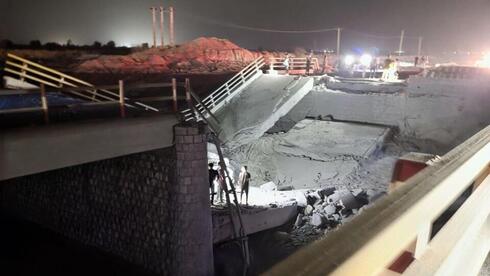
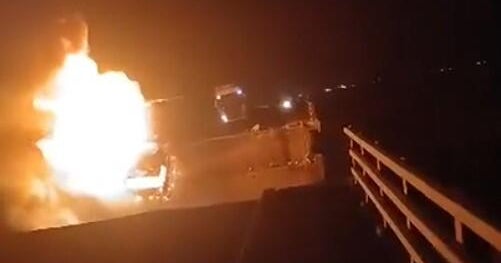
US military operations have escalated significantly with strikes against Iranian infrastructure including bridges in Bandar Khamir and Iranshahr Airport, while Iran has retaliated with attacks on Kuwaiti power and desalination facilities. US Marines boarded tankers in the Gulf of Oman as part of enforcement operations, with the Wen Yao vessel being intercepted on July 16. Iranian public dissatisfaction appears widespread according to confidential internal reports, with only 9% supporting the status quo. Despite the escalation, Iran continues to avoid direct military confrontation with Israel, focusing its attacks exclusively on US allies in the Gulf region while maintaining communication with Qatari officials.
Change from previous assessment
US military operations have directly struck Iranian bridges and airport infrastructure beyond previous targeting scope, with confirmed casualties in Bandar Khamir. Prior brief noted strikes reaching Tehran but lacked specific evidence of infrastructure damage. Iranian attacks have now hit Kuwaiti power facilities rather than just intercepting missiles. New evidence shows Iran actively managing escalation through selective targeting while avoiding Israel and maintaining diplomatic channels with Qatar. Prior brief's medium-confidence judgment about US inability to limit Iranian energy disruption has evolved to high-confidence evidence of infrastructure strikes expanding the scope of conflict.
Key judgments
- Iran is deliberately avoiding direct military confrontation with Israel while escalating attacks on US allies in Kuwait, Bahrain, and Qatar, as evidenced by Iranian strikes hitting Kuwaiti power and desalination infrastructure but no Israeli territory. (Confidence: high · ASSESSED)
- I&W: Iranian missile or drone attack strikes Israeli territory or military installation (0-14 days)
- I&W: Official statement from Tehran indicating change in policy toward Israel (0-30 days)
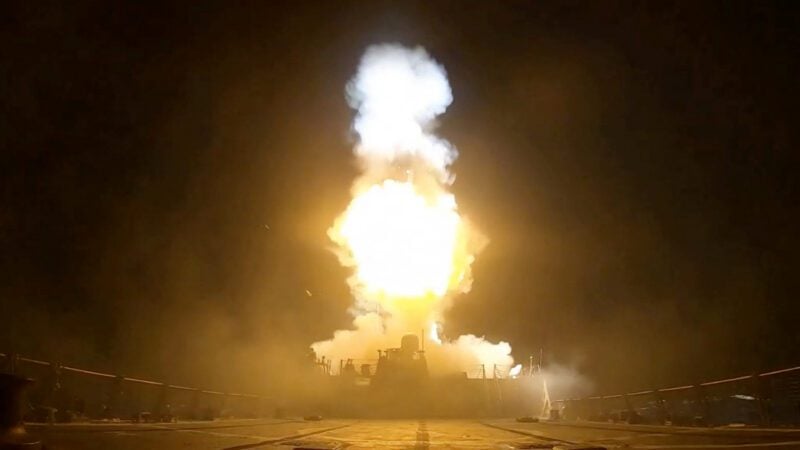
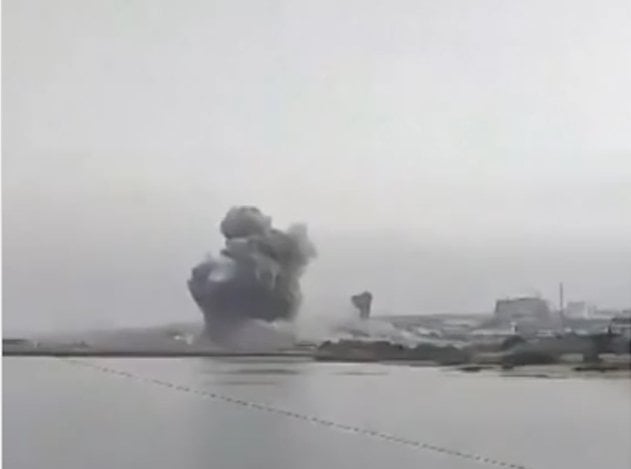
- US military operations against Iran have expanded to include critical infrastructure with strikes hitting bridges in Bandar Khamir, Iranshahr Airport, and port surveillance systems, representing a significant escalation beyond previous targeting of military assets. (Confidence: high · REPORTED)
- I&W: US strikes hit Iran's energy infrastructure including Kharg Island oil facilities (0-7 days)
- I&W: Iranian power grid or water system sustains significant damage from US strikes (0-14 days)
- Shipping disruption in the Strait of Hormuz has intensified with confirmed transits falling to eight vessels on July 16 as numerous Iran-linked tankers adopt evasive zig-zag navigation patterns to avoid US interception. (Confidence: high · REPORTED)
- I&W: Number of Strait of Hormuz transits falls below five vessels per day for three consecutive days (0-7 days)
- I&W: Iranian military vessels or mines successfully block commercial shipping passage (0-14 days)
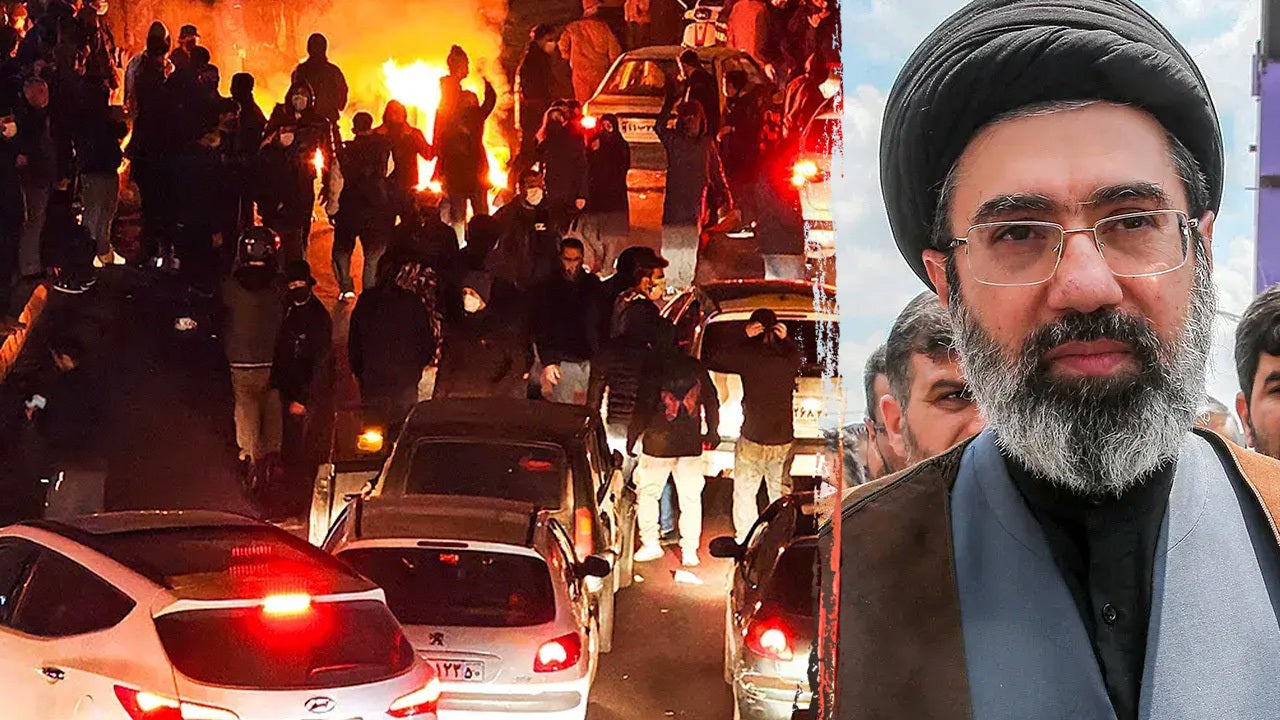
- Widespread public dissatisfaction with the Iranian government is creating vulnerability for the regime during the current military crisis, with confidential internal reports indicating only 9% of citizens support maintaining the status quo. (Confidence: medium · ASSESSED)
- I&W: New report shows increase in protest activity across multiple Iranian cities (1-4 weeks)
- I&W: Iranian government implements internet shutdown or increased security presence in major cities (0-14 days)
- Iran has directed Yemen's Houthis to prepare to close the Bab al-Mandeb strait if US strikes Iranian energy infrastructure, significantly expanding the potential geographic scope of the conflict beyond the Strait of Hormuz. (Confidence: high · REPORTED)
- I&W: Houthi forces announce closure of Bab al-Mandeb strait or attack ships transiting the waterway (0-7 days)
- I&W: US strikes confirmed against Iranian energy infrastructure facilities (0-7 days)
Outlook & scenarios
Contained Gulf Conflict (45%)
The conflict remains geographically confined to Gulf states with Iran continuing to avoid direct confrontation with Israel while US refrains from strikes against core Iranian energy infrastructure. Kuwaiti and Bahraini facilities experience repeated limited attacks but critical oil infrastructure remains operational, allowing crude exports to maintain 70-80% of pre-conflict levels through alternative routing.
Expanded Regional War (30%)
US strikes against Iranian energy infrastructure trigger Iranian retaliation targeting Saudi oil facilities directly, prompting Houthi closure of Bab al-Mandeb. Commercial shipping halts completely through both chokepoints, driving oil prices above $120 per barrel and forcing major economies to draw from strategic petroleum reserves as global logistics networks collapse.
Internal Iranian Instability (15%)
US military pressure combined with existing public dissatisfaction triggers significant domestic unrest in Iran, with protests spreading from Tehran to oil-producing regions. Regime security forces face challenges maintaining control, potentially leading to leadership changes or power struggles that temporarily pause Iranian military operations but increase long-term regional instability.
Diplomatic De-escalation (10%)
Qatari mediation efforts succeed as Iranian Foreign Minister Abbas Araghchi's visit to Doha yields a temporary ceasefire, freezing further US strikes and Iranian counterattacks. Both sides agree to indirect talks while maintaining military readiness, allowing shipping through the Strait of Hormuz to gradually return to 60-70% of normal levels within three weeks.
Recommendations
- Monitor Iranian military communications and diplomatic channels for indications of regime concerns about domestic stability during military operations, particularly messaging to security forces and economic officials
- Coordinate with regional partners to enhance security measures for critical energy infrastructure in Kuwait and Bahrain with immediate focus on power generation and desalination facilities
- Establish dedicated watchteam to track navigational anomalies of Iran-linked vessels in the Gulf of Oman and Arabian Sea, focusing on identification of previously unknown evasion tactics
- Assess humanitarian impact of reduced oil exports through Iran's port closures on neighbouring countries dependent on Iranian petroleum products, particularly Iraq and Syria
Confidence & uncertainty
Overall confidence is assessed as medium due to corroboration of military activity and shipping disruption claims across major media sources, while uncertainty remains regarding Iranian internal dynamics and true intent toward Israel. The primary evidence for military actions comes from multiple high-confidence media reports confirmed by CENTCOM statements and ship tracking data, though domestic political assessments rely on a single confidential report with limited verifiability. Key contradictions exist between Iranian official claims of successful targeting and Western reports of interception efficacy, creating gaps in assessment certainty regarding actual damage to infrastructure.
Intelligence gaps
- [EEI 1.1 · UNCOVERED] Detection and characterization of ballistic/cruise missile or rocket launches originating from Iranian territory or from Iran-controlled positions in Iraq/Syria (time, launch coordinates, missile type, flight trajectory/impact area). Recommended collection: satellite/imagery
- [EEI 1.2 · UNCOVERED] Movements and posture changes of Iran-backed proxy forces (Hezbollah units in Lebanon, militias in Syria/Iraq): concentrations of personnel, transport of rocket/artillery launchers, visible logistics build-up within operational range of Israel. Recommended collection: human/intel
- [EEI 1.3 · UNCOVERED] Israeli defensive and offensive posture changes: reservist call-ups, mobilization orders, sorties/airstrikes attributed to Israel, and domestic activation of missile-defense systems (locations and activation times). Recommended collection: open-source/media
- [EEI 1.4 · UNCOVERED] Evidence of pre-positioning or arming of naval mines, fast attack craft, or anti-ship missile systems in the Gulf of Oman, northern Arabian Sea, or off the Lebanese/Syrian coasts that could be used to interdict Israeli or allied shipping. Recommended collection: maritime/AIS
- [EEI 2.1 · UNCOVERED] Movements and tasking changes of external military assets: carrier strike groups, amphibious ready groups, expeditionary air wings, or ballistic-missile defense units into the Eastern Mediterranean, Persian Gulf, or Red Sea (vessel/aircraft IDs, routing, on-station times). Recommended collection: maritime/AIS
- [EEI 2.2 · UNCOVERED] Formal diplomatic/military actions: evacuation orders or embassy closures, public troop posture statements, bilateral/multilateral defense commitments announced, requests for overflight or basing rights in regional states. Recommended collection: diplomatic
- [EEI 2.3 · UNCOVERED] Changes to force protection or alert levels at foreign bases in the region (e.g., US bases in Kuwait, Qatar, UAE; Russian bases in Syria): activation of additional air defenses, curfews, or reinforcement shipments (personnel/equipment manifests). Recommended collection: signals/intel
- [EEI 3.1 · UNCOVERED] Incidents against commercial vessels: attacks, seizures, mine strikes, or forced rerouting of tankers and bulk carriers in the Strait of Hormuz, Bab al-Mandeb, Red Sea, or eastern Mediterranean (vessel names/IMO, location, damage/impairment). Recommended collection: maritime/AIS
- [EEI 3.2 · UNCOVERED] Changes in crude oil and refined product flows from key terminals (reported tanker loading delays, terminal closures, throughput volumes at Kharg, Mina al-Ahmadi, Ras Tanura, and major Gulf ports compared to baseline). Recommended collection: commercial/ports
- [EEI 3.3 · UNCOVERED] Market and insurance indicators: sudden spikes in war-risk or hull insurance premiums for Middle East routes, large moves in regional FX/stock indices, and notable changes in commodity futures (oil, freight rates) tied to regional risk perceptions. Recommended collection: financial/transactional
Cited sources
[1] gcaptain.com · US, Iran Each Attack Infrastructure in Risky Escalation (B) · sha256:b9c67f2f7073 [2] ynetnews.com · US expands Iran strikes, hitting airport, bridges and communications tower (A) · sha256:ff814907c01f [3] ynetnews.com · Iran’s calculated gamble: Keep Israel out, turn Hormuz into the battlefield (B) · sha256:caf5ac3ad6f2 [4] Jerusalem Post · Trump expected to expand Iran military campaign as Tehran warns of broader retaliation (B) · sha256:88f1b36ba8e3 [5] CBS News · Iran War Updates: Strait of Hormuz "back to the worst case scenario" amid escalating attacks, analyst says (A) · sha256:aeac1ed482cf [6] maritime-executive.com · U.S. Intensifies Attacks on Iranian Ports in Sixth Day of Bombing Campaign (B) · sha256:20f8e1c381bf [7] gcaptain.com · Iran-Linked Tankers U-Turn, Zig-Zag as US Enforces Blockade (A) · sha256:d77c878bc21a [8] foxnews.com · Leaked Iran report finds record public anger as regime focuses on holding power (B) · sha256:3f55a33dd592 [9] gcaptain.com · Suspected Pirates Seize Tanker Off Yemen Coast in Gulf of Aden, Sources Say (A) · sha256:8ad6579ea697 [10] marinelink.com · Trump risks making the same mistakes by threatening a new escalation of Iran's nuclear program (D) · sha256:719fa705e8f8
Source content hashes were computed at collection time; the cited text is preserved unmodified for the life of this product.
TLP:CLEAR