TLP:CLEAR · Disclosure is not limited.
Ethiopia and Eritrea: Badme fighting raises risk of wider war
Time window: Last 1 day · Audience: General analyst · Type: Situation report · DTG: 2026-11-28 22:37Z · Overall confidence: MEDIUM
BLUF
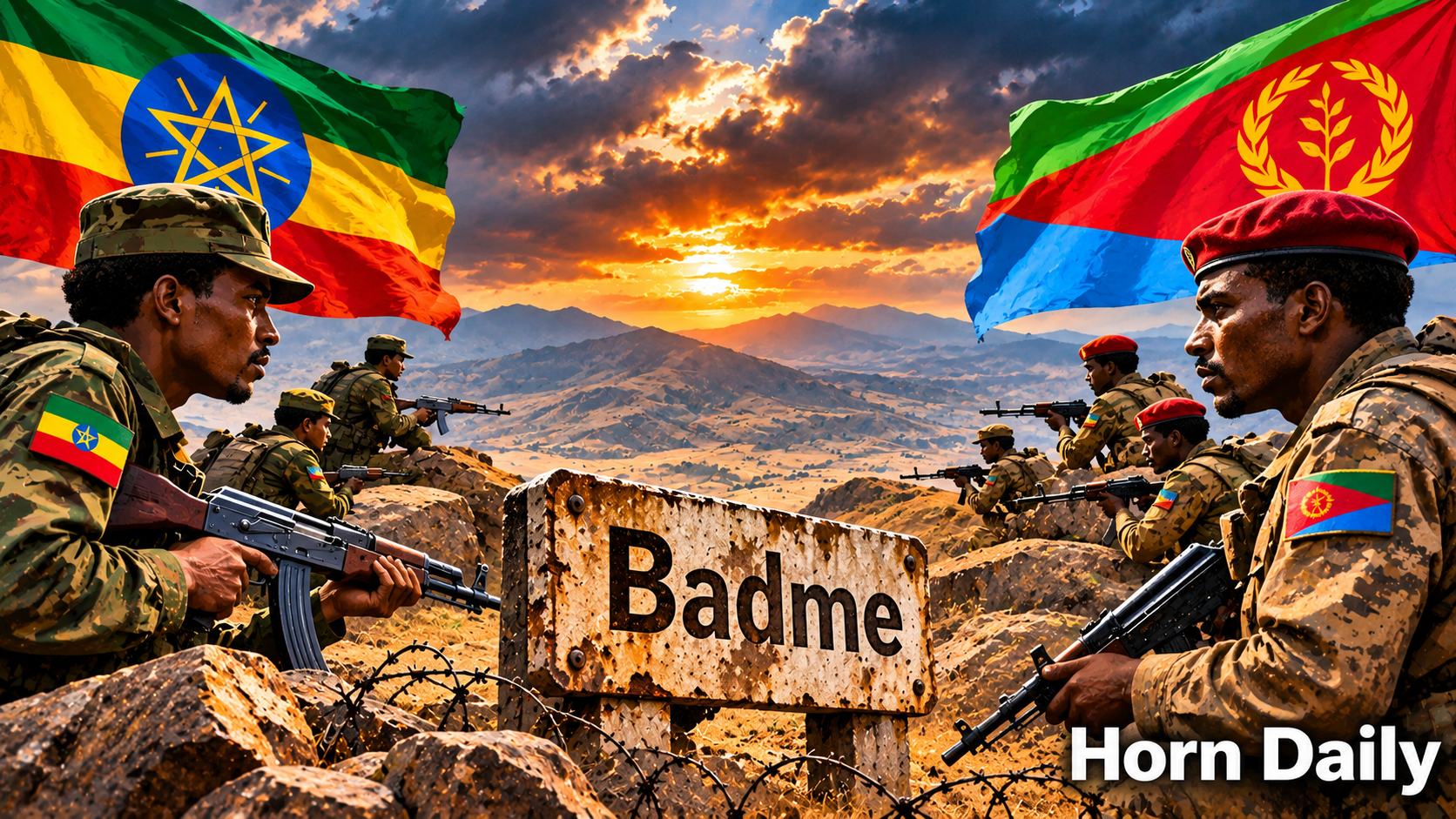
Reporting now supports that fighting occurred near Badme on 25 and 26 November, a change from the prior brief, which found no corroborated clashes. A full-scale Ethiopia-Eritrea war over the next 1-3 months remains a roughly even chance: the evidence of combat has strengthened, but direct engagement between the national armies and either government's intent to widen the fighting remain unconfirmed.
Executive summary
ACLED reported clashes near Badme and said the Ethiopian army and government-allied Tigray Peace Force took Gual Gemhalo after fighting with Eritrean Defence Forces and Tigray Defence Forces. Villagers near Badme told BBC Tigrinya that heavy weapons, air strikes and drones were used. Reuters reported exchanges of fire but said it could not independently establish whether the Ethiopian and Eritrean national armies had engaged directly. Abiy Ahmed has rejected claims that Ethiopia plans to invade Eritrea, while accusing Eritrea of arming groups hostile to his government. Eritrea says Ethiopia is preparing to seize Assab and has asked the UN Security Council to act. The reporting raises the risk of wider conflict, but does not establish a decision by either government to start a full-scale war.
Change from previous assessment
Since the 27 November brief, reporting has added ACLED accounts of clashes on 25 and 26 November near Badme, the reported capture of Gual Gemhalo after fighting involving four named forces, and villagers' accounts of heavy weapons, air strikes and drones. The assessment that fighting is occurring has therefore moved from uncorroborated to medium confidence. The roughly even chance of full-scale war over the next 1-3 months is retained, with low confidence: Reuters could not independently establish direct engagement between the Ethiopian and Eritrean national armies, and the new reporting does not establish either government's decision to widen the conflict.
Key judgments
- Fighting occurred near Badme on 25 and 26 November, but direct engagement between the Ethiopian and Eritrean national armies remains unconfirmed. ACLED reported clashes and the capture of Gual Gemhalo by the Ethiopian army and Tigray Peace Force after fighting with Eritrean Defence Forces and Tigray Defence Forces; villagers described heavy weapons, air strikes and drones. Reuters reported exchanges of fire but could not independently establish direct national-army engagement. (Confidence: medium · REPORTED)
- I&W: Confirm direct national-army engagement if ACLED or two independent news organisations identify Ethiopian and Eritrean regular units exchanging fire near Badme. (0-14 days)
- I&W: Break the reported Eritrean-regular-force attribution if ACLED corrects its account or independent reporting attributes the Badme fighting solely to Ethiopian and Tigrayan forces. (0-14 days)
- Ethiopia and Eritrea have increased their military presence along the shared border, but the available reporting does not establish force numbers or precise positions. A Reuters report citing conflict monitors and sources connected to rival Tigrayan factions described a buildup along the frontier. (Confidence: medium · REPORTED)
- I&W: Confirm a continuing buildup if satellite imagery or two independent reports show new formations, heavy equipment or logistics activity at identified border positions. (0-14 days)
- I&W: Break the assessment of a continuing buildup if reliable imagery or reporting documents force withdrawals from the identified border positions. (0-14 days)
- A full-scale Ethiopia-Eritrea war over the next 1-3 months remains a roughly even chance. Fighting near Badme and reported border deployments increase the risk, but direct national-army engagement is disputed and the available claims do not demonstrate that either government has decided to widen the conflict. (Confidence: low · ASSESSED)
- I&W: Raise the war estimate if repeated clashes between identified Ethiopian and Eritrean regular units coincide with announced mobilisation or heavy-weapon deployments beyond existing border positions. (0-14 days)
- I&W: Lower the war estimate if both governments announce and carry out force withdrawals from the border, accompanied by direct talks or a documented ceasefire arrangement. (1-3 months)
- Abiy Ahmed's non-invasion pledge sits alongside his threat that destruction would befall Eritrea's ruling party; Eritrea's government alleges that Ethiopia plans to seize Assab and has asked the UN Security Council to act. These statements show an accusatory and coercive public posture, but do not establish either government's decision to initiate war. (Confidence: medium · ASSESSED)
- I&W: Break the assessment that rhetoric alone does not demonstrate war intent if either government issues a specific operational order or announces mobilisation directed at the other. (0-14 days)
- I&W: Confirm that the public posture remains short of demonstrated war intent if Abiy renews his non-invasion pledge and Eritrea continues its UN complaint without verified mobilisation orders. (0-14 days)
Outlook & scenarios
Fighting remains concentrated near Badme (40%)
There is a roughly even chance that fighting remains concentrated around Badme and nearby settlements, with Ethiopian, Eritrean and Tigrayan forces involved in intermittent clashes but no sustained campaign between the two national armies. The main warning signs would be repeated incidents at Gual Gemhalo or Nafra without broader mobilisation.
Full-scale Ethiopia-Eritrea war (45%)
A full-scale war is a roughly even chance over the next 1-3 months. Repeated direct clashes between Ethiopian and Eritrean regular forces, followed by additional deployments or strikes beyond the Badme area, would mark a shift from the current reported fighting to sustained interstate conflict.
Rapid de-escalation (10%)
A rapid de-escalation is unlikely. It would require both governments to reduce forces near the border and pursue direct talks or a ceasefire, while fighting between Ethiopian federal forces and Tigrayan troops also subsides.
Multi-front expansion in Tigray (5%)
A wider, multi-front conflict involving sustained operations by the Ethiopian army, Tigray Peace Force, Eritrean Defence Forces and Tigray Defence Forces beyond the Badme area is very unlikely, but would have high impact. Reports of fighting spreading to additional named locations such as Geza-Tagaru and Sembelu would be an early warning.
Recommendations
- Maintain a daily incident map for Badme, Gual Gemhalo, Nafra, Geza-Tagaru and Sembelu. Record the reported units separately, distinguishing Ethiopian and Eritrean regular forces from the Tigray Peace Force and Tigray Defence Forces.
- Seek independent corroboration of unit identities, weapons use and casualty reports before describing the incidents as direct Ethiopia-Eritrea army clashes. Compare ACLED reporting with BBC Tigrinya accounts and available imagery.
- Track observable signs of mobilisation, including heavy equipment movements, logistics activity, force withdrawals, border closures and civilian evacuation notices. Use these indicators to update the 1-3 month war estimate.
- Treat Ethiopia's alleged plan to seize Assab and Eritrea's alleged support for groups hostile to Abiy's government as competing claims, not established explanations for the fighting.
- Review official Ethiopian and Eritrean statements and UN Security Council correspondence for changes from accusation and denial to specific operational orders, mobilisation announcements or direct negotiations.
Confidence & uncertainty
Overall confidence is medium because reporting from ACLED, villagers quoted by BBC Tigrinya and other news accounts supports fighting near Badme, while reports also describe increased border deployments and official statements from both governments. Confidence is lower on direct engagement between the national armies, the scale and location of deployments, and either government's intent, since the reporting is contested and no decision to widen the war is established. The provided claims do not substantiate the Rubio warning named in the topic framing, so this brief does not assess it.
Alternative analysis (red cell)
The available reporting supports a stronger reading than simple uncertainty about direct engagement: ACLED explicitly reported Ethiopian-Eritrean army clashes in claim f8f27d68-b5e6-409f-b4b5-b49e35109486, although Reuters could not independently verify them in claim 06b75c7b-5b87-47a8-bcd0-7c7c40a822f0. The fighting and reported deployments indicate elevated escalation risk, but the record does not substantiate a roughly even chance of full-scale interstate war because force levels, governmental intent, and the scope of national-army involvement remain unclear.
Intelligence gaps
- [EEI 1.2 · UNCOVERED] Military orders, mobilization notices, reserve call-ups, or official directives authorizing offensive or defensive operations. Recommended collection: official statements/local reporting
- [EEI 1.3 · UNCOVERED] Forward-positioning of fuel, ammunition, medical supplies, bridging equipment, or field headquarters near likely axes of advance. Recommended collection: satellite imagery/human reporting
- [EEI 2.2 · PARTIAL] Changes in command appointments, rules of engagement, force posture, or operational rhetoric by Ethiopian or Eritrean leadership. Recommended collection: government releases/intelligence reporting
- [EEI 3.1 · PARTIAL] US, African Union, Gulf, or neighboring-state mediation proposals, leader contacts, envoy travel, and requests for de-escalation. Recommended collection: diplomatic reporting
- [EEI 3.2 · PARTIAL] Public and private Ethiopian or Eritrean responses to Secretary Rubio's warning and other external pressure. Recommended collection: official statements/diplomatic reporting
- [EEI 3.4 · UNCOVERED] Border reopening or closure decisions, military hotlines, troop pullback commitments, and independently verified compliance with them. Recommended collection: official statements/field reporting
- [EEI 4.1 · UNCOVERED] Changes in shipping patterns, vessel advisories, port activity, or war-risk insurance premiums around Assab and nearby Red Sea routes. Recommended collection: maritime/AIS
- [EEI 4.2 · PARTIAL] Civilian evacuations, displacement flows, border-crossing surges, emergency mobilization, or disruptions to roads, airports, and communications. Recommended collection: humanitarian reporting/satellite imagery
- [EEI 4.3 · PARTIAL] Attacks or threats against ports, airfields, critical infrastructure, foreign personnel, or commercial shipping. Recommended collection: maritime/aviation/local reporting
- [EEI 4.4 · PARTIAL] Deployment of foreign naval or military forces, establishment of new access agreements, or changes in regional basing activity. Recommended collection: maritime/AIS/satellite imagery
Red cell review: PARTIAL DISSENT
TLP:CLEAR