TLP:CLEAR · Disclosure is not limited.
Ethiopia-Eritrea Border: Fighting Reports and Escalation Risk
Time window: Last 1 day · Audience: General analyst · Type: Situation report · DTG: 2026-11-16 18:07Z · Overall confidence: MEDIUM
BLUF
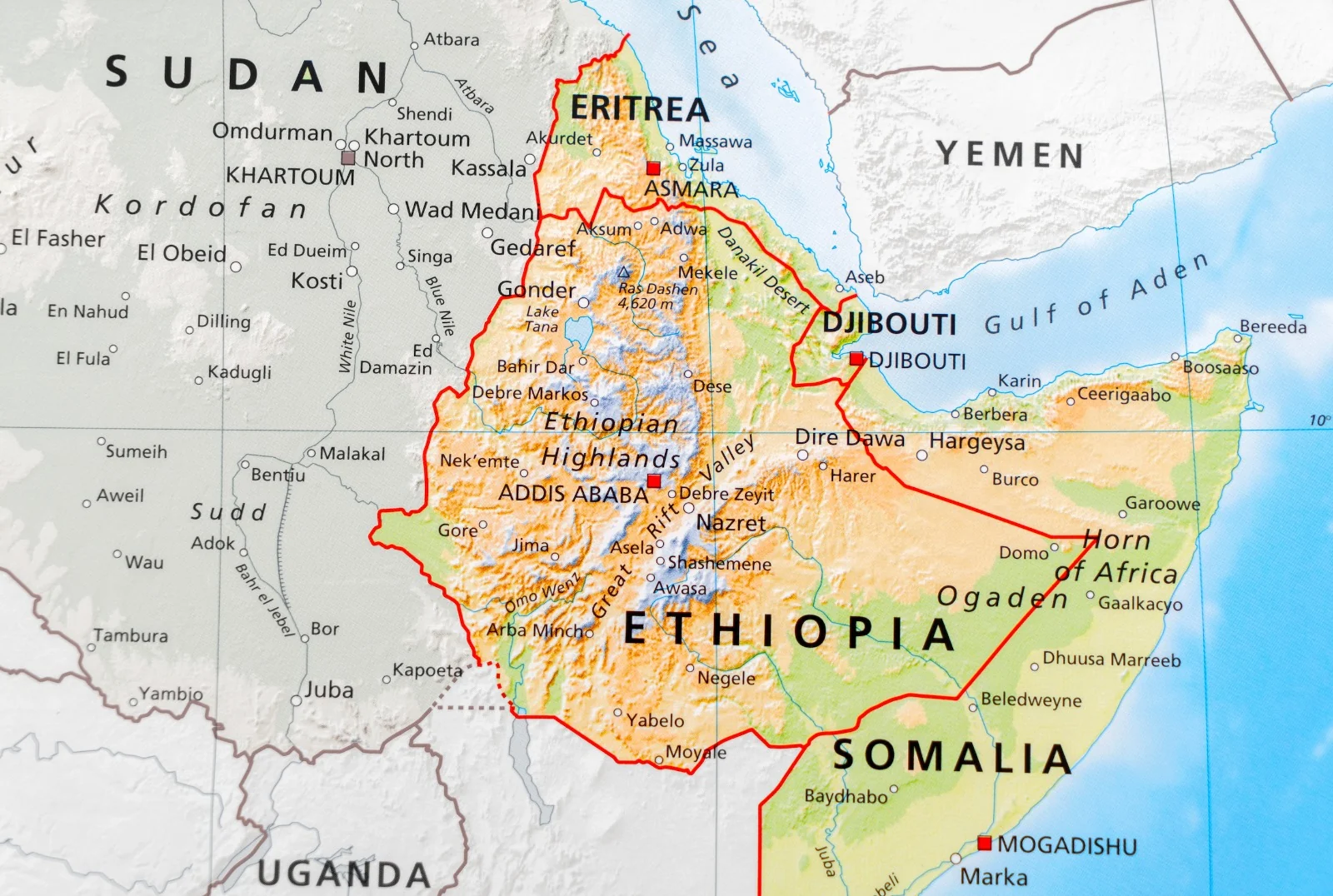
Limited clashes near Badme are reported, but the available reporting does not establish a large, quantified troop surge or sustained interstate campaign. Open war over the next 1-3 months is unlikely, with low confidence because detailed combat reporting is thin and accounts of Eritrea’s role conflict.
Executive summary
Ethiopian and Eritrean forces reportedly clashed near Badme, with accounts describing Ethiopian drone attacks and Eritrean artillery use. The detailed reporting comes through one trade-publication account, including an unnamed diplomatic source, and is not independently corroborated. Fighting between Ethiopian federal forces and the TPLF resumed in Tigray in September. Ethiopia’s accusations against Eritrea vary, and the reported October severing of diplomatic relations adds to the risk of miscalculation. A blog reports that US Secretary of State Marco Rubio called Prime Minister Abiy Ahmed to urge de-escalation; the contact is not independently confirmed in the available reporting.
Change from previous assessment
Since the 15 November brief, reporting has added claims of clashes near Badme, including Ethiopian drone attacks and Eritrean artillery use, and an Ethiopian advance that reportedly captured Sheraro on 3 November. This changes the assessment from no reporting of current direct combat to low-confidence reporting of limited Ethiopia-Eritrea clashes, but does not establish a broad troop surge or sustained campaign. The judgement that open war in the next 1-3 months is unlikely is retained at low confidence. A low-confidence judgement on reported US de-escalation contacts is added.
Key judgments
- Ethiopian and Eritrean forces reportedly clashed near Badme, but the scale and operational status of the fighting remain unverified. A trade-publication account citing Addis Standard describes intensified clashes, while an unnamed diplomatic source said it was aware of Ethiopian drone attacks and Eritrean heavy artillery use. These reports do not establish the size of any troop buildup. (Confidence: low · REPORTED)
- I&W: A second independent, dated account or geolocated imagery showing Ethiopian drone strikes or Eritrean artillery impacts near Badme would confirm direct exchanges. (0-14 days)
- I&W: An official denial accompanied by no independently verified strike or casualty reporting would weaken the assessment that direct clashes occurred. (0-14 days)
- Open Ethiopia-Eritrea war over the next 1-3 months is unlikely. Ethiopia has accused Eritrea of supporting the TPLF, crossing into Tigray and leading an offensive against federal forces; those accounts describe different Eritrean roles and are not independently verified. Reporting that the two states severed diplomatic relations raises the risk, but the available claims do not establish a sustained cross-border campaign or a large, quantified force mobilisation. (Confidence: low · ASSESSED)
- I&W: Independently verified Ethiopian or Eritrean cross-border attacks, or an official announcement of sustained operations against the other state, would break this judgement. (0-3 months)
- I&W: Verified force pullbacks accompanied by reciprocal Ethiopian and Eritrean de-escalation statements would confirm that open war remains unlikely. (0-3 months)
- Fighting between Ethiopian federal forces and the TPLF is likely to continue in the near term. Wire-service and major-media reporting says fighting resumed in Tigray in September 2026, but the available claims provide limited detail on current locations and the scale of engagements. (Confidence: medium · ASSESSED)
- I&W: Independent, dated reports of renewed clashes between Ethiopian federal forces and the TPLF in Tigray would confirm continued fighting. (0-14 days)
- I&W: A public ceasefire commitment followed by independently verified cessation of clashes would break this judgement. (0-1 month)
- US de-escalation contacts are reported but remain unconfirmed in the available reporting. A blog says Marco Rubio called Abiy Ahmed to urge de-escalation and that US Ambassador to the UN Mike Waltz met his Eritrean counterpart. The reporting is single-source and provides no official readout. (Confidence: low · REPORTED)
- I&W: A State Department or Ethiopian government readout confirming Rubio’s call would confirm the reported contact. (0-14 days)
- I&W: An official correction or denial of the reported call would break this judgement. (0-14 days)
Outlook & scenarios
Localised Tigray and border fighting continues (65%)
This is the most likely path. Tigray fighting persists and further limited exchanges near Badme are reported, while neither government begins a sustained campaign across the border. The distinction between TPLF activity and direct Ethiopian-Eritrean combat remains central to assessing escalation.
Diplomatic restraint limits escalation (25%)
An unlikely but plausible path is that Ethiopian and Eritrean officials avoid further military escalation and accept diplomatic restraint. US contact, if confirmed, and African Union calls for restraint would support this outcome; the reported US contact remains unverified.
Open Ethiopia-Eritrea conflict (8%)
A very unlikely, high-impact path is sustained fighting between Ethiopian federal forces and Eritrean forces, following further cross-border attacks or a misread military move. Commentary identifies Badme and the Bure Corridor, including Assab, as possible flashpoints, but the claims naming these locations are weakly sourced and do not establish operational plans.
Sudan dispute broadens regional confrontation (2%)
A very low-probability, high-impact wildcard is a new Ethiopia-Sudan border incident that draws additional regional actors into the dispute. The two governments have exchanged accusations about support for armed groups, but the available claims do not establish direct Sudanese-Ethiopian combat.
Recommendations
- Prioritise collection of dated, independently corroborated imagery and reporting around Badme. Record locations, strike evidence and any identifiable force movements before assessing the scale of a buildup.
- Separate TPLF-Ethiopian federal-force engagements from direct Ethiopian-Eritrean incidents in reporting and incident tracking. Do not treat Ethiopian accusations about Eritrean support or operations as verified events.
- Seek official confirmation of Rubio’s reported call with Abiy Ahmed and the reported meeting between Mike Waltz and his Eritrean counterpart before using either as evidence of active US de-escalation.
- Track Ethiopian and Eritrean public statements, African Union restraint calls and any verified cross-border attacks as indicators of whether the dispute is moving from diplomatic confrontation to sustained interstate conflict.
Confidence & uncertainty
Confidence is medium because wire-service and major-media reporting corroborates the resumption of fighting in Tigray, while the reporting on the Ethiopia-Eritrea dispute includes thin, single-publication accounts and an unnamed diplomatic source. The detailed claims of combat near Badme, the nature of Eritrea’s alleged role and the reported US contacts remain unverified or contested. The available claims provide no quantified evidence of a large troop buildup.
Alternative analysis (red cell)
The available evidence supports, at most, an unconfirmed report that Marco Rubio contacted Abiy Ahmed, as reflected in claim 27db6d50-2d43-4594-8144-d1ae7ad0f2ed. There is no ledger support for the alleged Mike Waltz meeting, so the broader assertion of US de-escalation contacts should not be treated as established even at the reporting level.
Intelligence gaps
- [EEI 1.2 · UNCOVERED] Military orders, mobilization notices, reserve call-ups, or official directives authorizing offensive or defensive operations. Recommended collection: official statements/local reporting
- [EEI 1.3 · PARTIAL] Forward-positioning of fuel, ammunition, medical supplies, bridging equipment, or field headquarters near likely axes of advance. Recommended collection: satellite imagery/human reporting
- [EEI 2.2 · PARTIAL] Changes in command appointments, rules of engagement, force posture, or operational rhetoric by Ethiopian or Eritrean leadership. Recommended collection: government releases/intelligence reporting
- [EEI 3.1 · PARTIAL] US, African Union, Gulf, or neighboring-state mediation proposals, leader contacts, envoy travel, and requests for de-escalation. Recommended collection: diplomatic reporting
- [EEI 3.2 · UNCOVERED] Public and private Ethiopian or Eritrean responses to Secretary Rubio's warning and other external pressure. Recommended collection: official statements/diplomatic reporting
- [EEI 3.4 · UNCOVERED] Border reopening or closure decisions, military hotlines, troop pullback commitments, and independently verified compliance with them. Recommended collection: official statements/field reporting
- [EEI 4.1 · UNCOVERED] Changes in shipping patterns, vessel advisories, port activity, or war-risk insurance premiums around Assab and nearby Red Sea routes. Recommended collection: maritime/AIS
- [EEI 4.2 · PARTIAL] Civilian evacuations, displacement flows, border-crossing surges, emergency mobilization, or disruptions to roads, airports, and communications. Recommended collection: humanitarian reporting/satellite imagery
- [EEI 4.3 · PARTIAL] Attacks or threats against ports, airfields, critical infrastructure, foreign personnel, or commercial shipping. Recommended collection: maritime/aviation/local reporting
- [EEI 4.4 · PARTIAL] Deployment of foreign naval or military forces, establishment of new access agreements, or changes in regional basing activity. Recommended collection: maritime/AIS/satellite imagery
Red cell review: PARTIAL DISSENT
TLP:CLEAR