TLP:CLEAR · Disclosure is not limited.
Ethiopia-Eritrea Border Risk: Tigray Fighting Raises Concern, but Bilateral Buildup Is Unverified
Time window: Last 1 day · Audience: General analyst · Type: Situation report · DTG: 2026-10-30 12:08Z · Overall confidence: HIGH
BLUF
The available evidence does not establish a two-sided Ethiopia-Eritrea troop surge or direct clashes. An Ethiopia-Eritrea war in the next 1-3 months is unlikely; the clearest near-term risk is continued fighting in Tigray near the Eritrean border, alongside worsening humanitarian pressures inside Ethiopia.
Executive summary
Reporting describes renewed fighting in Tigray, with the US Embassy in Addis Ababa placing fighting near the Eritrean border. This does not confirm direct Ethiopian-Eritrean combat: the claim of clashes at Assab comes from social media, and claims about Eritrea's alignment with Tigrayan forces are inconsistent. Marco Rubio's reported 17 October remark was a general warning against another war, not a documented assessment of specific troop movements. Separately, reporting confirms the handover of two Su-35 aircraft to Ethiopia, despite Abiy Ahmed's statement that twelve had been delivered. Ethiopia also faces serious civilian impacts from fighting in Tigray, an attack on a displacement camp in Amhara and violence near Moyale on the Kenyan border.
Change from previous assessment
Since the 29 October brief, reporting has strengthened the assessment of renewed Tigray fighting: rebels said they would continue after losing Mekelle, and new reporting describes significant humanitarian pressures. The Su-35 account is clearer: Rosoboronexport confirmed two aircraft, not the twelve Abiy announced. Reporting on the 29 October Turkey Camp attack and arrivals at Moyale adds a sharper picture of civilian harm from Ethiopia's internal conflicts. Rubio's sourced remark is a general warning against another war, not a verified warning about specific troop movements. The assessment that an Ethiopia-Eritrea war in the next 1-3 months is unlikely remains unchanged; the bilateral buildup remains unverified.
Key judgments
- An Ethiopia-Eritrea interstate war in the next 1-3 months is unlikely. Reporting establishes renewed fighting in Tigray near the Eritrean border, but does not establish a bilateral troop surge or direct engagement. The US Embassy in Addis Ababa said fighting was concentrated outside Mekelle and near Eritrea; the claim of Ethiopian-Eritrean clashes at Assab is social-media reporting, while a separate low-reliability account placed federal tanks moving towards Zalambessa. Claims that Eritrea backs Tigrayan forces add uncertainty rather than corroboration. Confidence is low because direct cross-border engagement and a two-sided buildup remain thinly sourced and unverified. (Confidence: low · ASSESSED)
- I&W: Confirmation: an official statement or a second independent, reliable report identifies Ethiopian and Eritrean units exchanging fire or moving towards one another at Zalambessa or Assab. (0-14 days)
- I&W: Break: subsequent US Embassy reporting locates fighting within Tigray, while no independent reporting confirms Eritrean force movements or direct cross-border engagement. (0-30 days)
- Renewed fighting in Tigray is likely to continue over the next 1-3 months, but the front line remains unsettled. A rebel alliance launched an offensive in September, Tigrayan rebels said they would continue fighting after losing control of Mekelle, and Crisis Group reported that TPLF units had regrouped. Accounts differ on territorial control, including the reported federal advance and the reported return of Tigray Defense Forces units to Abiy Addi and Werkamba. Confidence is medium: reporting from major media and conflict analysis supports continued fighting, while the battlefield picture relies partly on contested accounts. (Confidence: medium · ASSESSED)
- I&W: Confirmation: ACLED, major media or the US Embassy reports new clashes or military operations outside Mekelle, including around Zalambessa or the Tembien highlands. (0-30 days)
- I&W: Break: subsequent reporting from those sources records a sustained halt to fighting in Tigray and no new operations near the Eritrean border. (0-3 months)
- Ethiopia has received at least two Su-35 aircraft, not a confirmed delivery of twelve; Abiy Ahmed announced twelve, while Rosoboronexport confirmed handover of two and photographs showed aircraft bearing serials 2551 and 2552. Abiy also said Ethiopia would receive four S-400 batteries, but no delivery is reported. The aircraft transfer confirms a new capability, not an intention to use it against Eritrea. Confidence is medium because the two-aircraft handover has corroboration, while the reported total delivery conflicts with Abiy's statement. (Confidence: medium · ASSESSED)
- I&W: Confirmation: Rosoboronexport or dated imagery verifies delivery of Su-35 aircraft beyond the two bearing serials 2551 and 2552, or confirms delivery of an S-400 battery. (1-3 months)
- I&W: Break: Ethiopian or Russian statements clarify that two aircraft were delivered and the remaining Su-35s and all four S-400 batteries remain undelivered. (1-3 months)
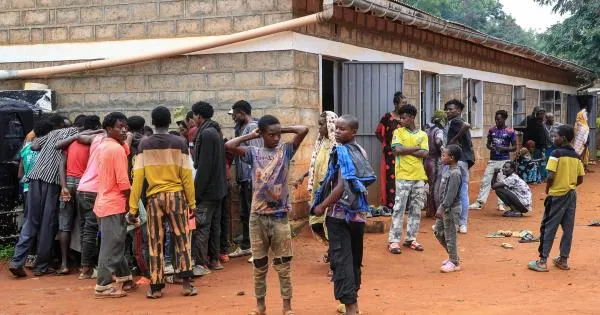
- Ethiopia's internal conflicts are already causing substantial civilian harm, separate from the unverified Ethiopia-Eritrea buildup. On 29 October, an attack on Turkey Camp in the Jari displacement site near Hayq killed at least 16 people and wounded 22; ACLED confirmed the attack episode but did not identify those responsible. Separately, UNHCR reported up to 50,000 people had crossed from Ethiopia into Kenya by 28 October amid violence around Moyale. Confidence is medium: the attack was confirmed by ACLED, but casualty details rely partly on local testimony, and the crossing estimate cites local authorities. (Confidence: medium · REPORTED)
- I&W: Confirmation: ACLED or local reporting verifies additional deaths, injuries or shelter damage at Turkey Camp, or UNHCR reports continued growth in arrivals from Ethiopia at Moyale. (0-14 days)
- I&W: Break: ACLED or other reporting revises the Turkey Camp casualty account downwards, or UNHCR reports that arrivals from Ethiopia at Moyale have stopped increasing. (0-30 days)
Outlook & scenarios
Tigray fighting continues without interstate war (55%)
Fighting between Ethiopian federal forces and Tigrayan forces continues, including near areas bordering Eritrea, but no independently confirmed Ethiopian-Eritrean engagement occurs. Reporting continues to describe the front line as fluid, and humanitarian pressure in Tigray remains acute.
Border-adjacent fighting raises incident risk (30%)
Tigray operations extend or intensify near Zalambessa and the Eritrean border. A localised incident or disputed allegation of cross-border fire raises tensions, while available reporting still falls short of confirming a sustained interstate campaign.
Internal conflicts ease and border concern recedes (10%)
Reporting records fewer clashes in Tigray and no verified Eritrean force movements. Attention shifts towards humanitarian needs and Ethiopia's separate internal security problems, including the violence reported at Moyale and the attack on Turkey Camp.
Wildcard: direct Ethiopia-Eritrea confrontation (5%)
An exchange between Ethiopian and Eritrean forces at a named border location, such as Zalambessa or Assab, turns the current dispute into direct interstate combat. Current reporting does not establish this trajectory; if confirmed, it would sharply raise the risk of a wider regional conflict.
Recommendations
- Do not describe a two-sided Ethiopia-Eritrea troop surge or direct clashes as established. Keep reported fighting in Tigray distinct from claims about Ethiopian-Eritrean forces at Assab or Zalambessa.
- Prioritise corroboration of military movements near the Eritrean border. Compare US Embassy security alerts with ACLED and major-media reporting, and record the named location, date and identified forces for each reported incident.
- Separate the two confirmed Su-35 deliveries from Abiy Ahmed's announcement of twelve. Track subsequent Rosoboronexport statements and dated imagery for further deliveries; treat the four S-400 batteries as planned unless a delivery is reported.
- Track civilian impacts separately from interstate-war indicators. Follow ACLED updates on Turkey Camp and UNHCR reporting on arrivals into Kenya, while retaining the current uncertainty over attack attribution and the crossing estimate.
Confidence & uncertainty
Overall confidence is high for the broad event picture: major-media reporting and institutional statements support renewed fighting in Tigray, the two-aircraft Su-35 handover, the Turkey Camp attack episode and increased arrivals into Kenya. The central allegation of a bilateral Ethiopia-Eritrea troop buildup or direct clashes remains low confidence. Direct-clash reporting is social-media-only, and claims about Eritrea's alignment with Tigrayan forces are inconsistent. The attack attribution and some casualty details also remain unresolved.
Alternative analysis (red cell)
The available evidence does not prove a sustained interstate war, but it supports a plausible near-term escalation more strongly than the judgment allows. Claim ce74378d-fc44-4c60-bbae-832167ea385b reports Ethiopian-Eritrean clashes, while claims 927ff434-02b3-4533-9479-1a7c42677e36 and 92e612d3-7b00-461d-ade2-f7850495d276 place fighting and reported force movements near the border. Taken together with claim 0528f8cd-b746-4a61-bf35-fb8036388064, the evidence is consistent with an emerging cross-border confrontation rather than only an unverified buildup.
Intelligence gaps
- [EEI 1.1 · PARTIAL] Verified changes in troop, armored vehicle, artillery, air-defense, or logistics deployments within designated border areas and around Assab. Recommended collection: commercial satellite imagery
- [EEI 1.2 · UNCOVERED] Military orders, mobilization notices, reserve call-ups, or official directives authorizing offensive or defensive operations. Recommended collection: official statements/local reporting
- [EEI 1.3 · UNCOVERED] Forward-positioning of fuel, ammunition, medical supplies, bridging equipment, or field headquarters near likely axes of advance. Recommended collection: satellite imagery/human reporting
- [EEI 1.4 · PARTIAL] Cross-border incidents involving artillery fire, airspace violations, armed patrols, raids, detentions, or reported casualties. Recommended collection: local media/social media
- [EEI 2.2 · PARTIAL] Changes in command appointments, rules of engagement, force posture, or operational rhetoric by Ethiopian or Eritrean leadership. Recommended collection: government releases/intelligence reporting
- [EEI 3.1 · PARTIAL] US, African Union, Gulf, or neighboring-state mediation proposals, leader contacts, envoy travel, and requests for de-escalation. Recommended collection: diplomatic reporting
- [EEI 3.2 · PARTIAL] Public and private Ethiopian or Eritrean responses to Secretary Rubio's warning and other external pressure. Recommended collection: official statements/diplomatic reporting
- [EEI 3.4 · PARTIAL] Border reopening or closure decisions, military hotlines, troop pullback commitments, and independently verified compliance with them. Recommended collection: official statements/field reporting
- [EEI 4.1 · UNCOVERED] Changes in shipping patterns, vessel advisories, port activity, or war-risk insurance premiums around Assab and nearby Red Sea routes. Recommended collection: maritime/AIS
- [EEI 4.3 · PARTIAL] Attacks or threats against ports, airfields, critical infrastructure, foreign personnel, or commercial shipping. Recommended collection: maritime/aviation/local reporting
- [EEI 4.4 · UNCOVERED] Deployment of foreign naval or military forces, establishment of new access agreements, or changes in regional basing activity. Recommended collection: maritime/AIS/satellite imagery
Red cell review: PARTIAL DISSENT
TLP:CLEAR