TLP:CLEAR · Disclosure is not limited.
Ethiopia-Eritrea: Border-war risk remains unverified
Time window: Last 1 day · Audience: General analyst · Type: Situation report · DTG: 2026-10-27 10:37Z · Overall confidence: HIGH
BLUF
The supplied reporting does not establish a large troop build-up on the Ethiopia-Eritrea border: the direct claim of troops clashing is undated social-media reporting without named units, numbers or a precise location. Deliberate interstate war in the next 1-3 months is unlikely, but localised clashes remain a concern; Egypt's support for Eritrean sovereignty and the disputed killings in Oromia add to the regional and domestic tensions to monitor.
Executive summary
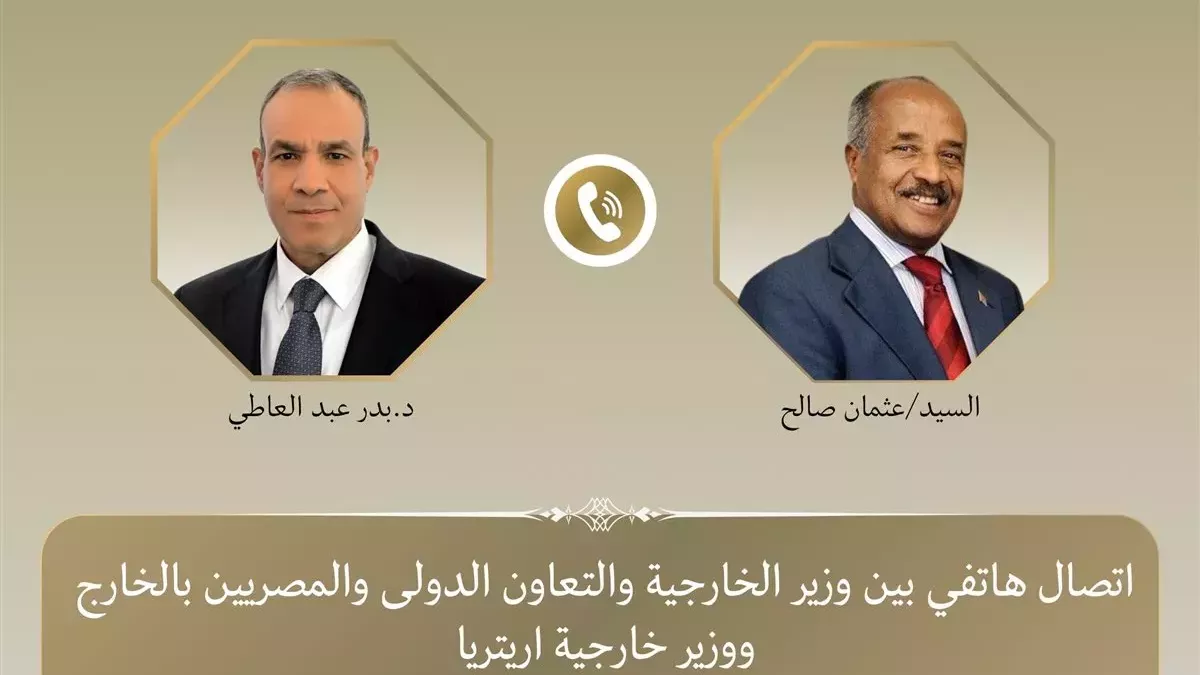
Abiy Ahmed described Red Sea access as an existential concern for Ethiopia on 24 October. The US readout of Marco Rubio's 14 October call with Abiy urged respect for neighbours' sovereignty and avoidance of cross-border incursions; Rubio also said on 17 October that the world did not need another war. On 26 October, Egyptian Foreign Minister Badr Abdelatty spoke with Eritrean Foreign Minister Osman Sale, and Egypt affirmed support for Eritrean sovereignty and the view that Red Sea security is the responsibility of littoral states. Claims of Ethiopian-Eritrean clashes and Eritrean support for Tigrayan forces remain unverified. Separately, church officials reported at least 60 people killed in two attacks in Oromia on 20 and 24 October; accounts of responsibility conflict.
Change from previous assessment
Since the 26 October brief, the material adds the 26 October Egypt-Eritrea foreign-minister call and reports of at least 60 people killed in Oromia on 20 and 24 October, with responsibility disputed. It also includes a direct but undated social-media claim of Ethiopia-Eritrea troop clashes; this does not provide reliable confirmation of a large border build-up. The prior assessment that Eritrean activity in Tigray and suspected Ethiopian strikes remain unresolved is unchanged, and no prior judgment is retired.
Key judgments
- A deliberate Ethiopia-Eritrea interstate war in the next 1-3 months is unlikely; a localised clash is more likely than sustained war, but the scale and location of the reported military activity are not established. The direct claim of troops clashing is an undated social-media post, while another undated post describes Ethiopia's conflict as expanding internationally. This thin and conflicting reporting leaves confidence low. (Confidence: low · ASSESSED)
- I&W: Confirm: a dated Ethiopian or Eritrean statement, or independent reporting, identifies deployed formations and numbers at Bure or another named location on the shared border. (0-14 days)
- I&W: Break: both governments publish verifiable stand-down or withdrawal orders, followed by independent reporting of no border clashes for 30 days. (0-30 days)
- Ethiopia's stated pursuit of Red Sea access is likely to sustain friction with Eritrea, but an Ethiopian plan to seize Assab is not established. Abiy's 24 October statement and the Ethiopia-Somaliland memorandum of understanding support the stated access objective. Claims directly linking the Bure Corridor and Assab to a coming war come from low-reliability social-media posts, so confidence in that specific flashpoint assessment is medium. (Confidence: medium · ASSESSED)
- I&W: Confirm: an Ethiopian government statement or signed agreement names Assab or the Bure Corridor and specifies a planned access or operational arrangement. (1-3 months)
- I&W: Break: Ethiopian officials publicly reaffirm commercial or diplomatic access as their approach and explicitly disavow a territorial claim to Assab. (1-3 months)
- Egypt's 26 October public support for Eritrean sovereignty is likely to strengthen Eritrea's diplomatic position, but it does not establish Egyptian military alignment. The reported ministerial call also addressed Red Sea governance, while Rubio's earlier statements called for restraint and respect for neighbouring states' sovereignty. The statements are reported by media sources, but no concrete joint security commitment is reported; confidence is medium. (Confidence: medium · ASSESSED)
- I&W: Confirm: a subsequent Egyptian-Eritrean communique announces a joint security measure or explicitly links support for Eritrea to the Ethiopia dispute. (0-30 days)
- I&W: Break: Egypt issues a public statement withdrawing its support for Eritrea's territorial position or endorsing Ethiopia's position on access. (0-30 days)
- At least 60 people were reported killed in two Oromia attacks: 14 in Merti Woreda on 20 October and 46 in Sherka Woreda on 24 October. Church accounts also report more than 20 people seriously injured and 20 homes burned. Responsibility remains disputed: Oromiya officials blamed an alliance that includes the Oromo Liberation Army, while a source linked to the alliance accused the regional government. No immediate claim of responsibility was reported. Major-media and wire-service coverage repeats the church account, but the competing attributions are not independently resolved; confidence is medium. (Confidence: medium · REPORTED)
- I&W: Confirm: independent on-site reporting verifies the deaths in Merti and Sherka and the reported casualty total. (0-30 days)
- I&W: Break: a published investigation with supporting evidence identifies the perpetrators, or independently verified reporting revises the total below 60. (1-3 months)
Outlook & scenarios
Managed tension and diplomatic signalling (62%)
The more likely course over the next 1-3 months is continued disagreement over sovereignty and Red Sea access without sustained interstate fighting. Egypt's statements on Eritrean sovereignty and Red Sea governance, alongside Rubio's calls for restraint, remain diplomatic signals. Current reporting does not confirm a large-scale border deployment.
Localised border or Tigray-related incident (30%)
A localised clash is more likely than sustained interstate war if reports of rising Ethiopia-Eritrea border tension reflect actual military activity. The current claims do not identify units, numbers or a precise clash site, and Eritrean backing for Tigrayan forces remains unverified.
Bure Corridor or Assab confrontation (8%)
A confrontation involving the Bure Corridor or Assab that broadens into interstate fighting is unlikely but would have high impact. The claims connecting these locations to a wider war and trade consequences rest on low-confidence social-media reporting, not verified operational indicators.
Recommendations
- Keep the reported troop clash and any claim of a border build-up at low confidence until two independent, attributable sources establish dates, locations, units and numbers.
- Verify the reported Eritrean approach to the UN Security Council and seek the original statements from Ethiopia and Eritrea on any border deployments, particularly claims involving the Bure Corridor or Assab.
- Track follow-up statements from Egypt and Eritrea. Distinguish public support for sovereignty and littoral-state governance from an announced security or military commitment.
- Keep the church-reported Oromia casualty figures separate from claims about responsibility. Seek independent verification of the 20 October deaths in Merti and the 24 October deaths in Sherka before treating either accusation as established.
Confidence & uncertainty
The headline confidence is high for the reported events in the collection, with major-media and wire-service coverage repeating the church's account of at least 60 deaths in Oromia. Those reports converge on what the church reported, rather than providing independent on-site verification. Confidence in the border-war assessment is lower: the direct clash and Eritrean-support claims are undated social-media reports, and the specific Bure Corridor and Assab warning is low reliability. Responsibility for the Oromia attacks also remains contested.
Intelligence gaps
- [EEI 1.1 · PARTIAL] Verified changes in troop, armored vehicle, artillery, air-defense, or logistics deployments within designated border areas and around Assab. Recommended collection: commercial satellite imagery
- [EEI 1.2 · UNCOVERED] Military orders, mobilization notices, reserve call-ups, or official directives authorizing offensive or defensive operations. Recommended collection: official statements/local reporting
- [EEI 1.3 · UNCOVERED] Forward-positioning of fuel, ammunition, medical supplies, bridging equipment, or field headquarters near likely axes of advance. Recommended collection: satellite imagery/human reporting
- [EEI 1.4 · PARTIAL] Cross-border incidents involving artillery fire, airspace violations, armed patrols, raids, detentions, or reported casualties. Recommended collection: local media/social media
- [EEI 2.2 · PARTIAL] Changes in command appointments, rules of engagement, force posture, or operational rhetoric by Ethiopian or Eritrean leadership. Recommended collection: government releases/intelligence reporting
- [EEI 2.3 · PARTIAL] Movement or arming of aligned forces in Tigray, Afar, Amhara, or border-adjacent areas. Recommended collection: local reporting/human sources
- [EEI 2.4 · UNCOVERED] Specific incidents or policy decisions publicly identified by either side as a red line, casus belli, or justification for military action. Recommended collection: official statements/media monitoring
- [EEI 3.2 · PARTIAL] Public and private Ethiopian or Eritrean responses to Secretary Rubio's warning and other external pressure. Recommended collection: official statements/diplomatic reporting
- [EEI 3.3 · UNCOVERED] Evidence of foreign arms deliveries, military advisers, intelligence support, or expanded security cooperation with either government. Recommended collection: trade data/satellite imagery/diplomatic reporting
- [EEI 3.4 · UNCOVERED] Border reopening or closure decisions, military hotlines, troop pullback commitments, and independently verified compliance with them. Recommended collection: official statements/field reporting
- [EEI 4.1 · UNCOVERED] Changes in shipping patterns, vessel advisories, port activity, or war-risk insurance premiums around Assab and nearby Red Sea routes. Recommended collection: maritime/AIS
- [EEI 4.2 · UNCOVERED] Civilian evacuations, displacement flows, border-crossing surges, emergency mobilization, or disruptions to roads, airports, and communications. Recommended collection: humanitarian reporting/satellite imagery
- [EEI 4.3 · UNCOVERED] Attacks or threats against ports, airfields, critical infrastructure, foreign personnel, or commercial shipping. Recommended collection: maritime/aviation/local reporting
Red cell review: CONCUR WITH COMMENT
TLP:CLEAR