TLP:CLEAR · Disclosure is not limited.
Ethiopia-Eritrea Tensions: Moyale Fighting and Unverified Border Claims
Time window: Last 1 day · Audience: General analyst · Type: Situation report · DTG: 2026-10-23 09:06Z · Overall confidence: LOW
BLUF
The clearest new development is fighting in Moyale on the Kenya-Ethiopia border, with hundreds of Ethiopians reported to have fled into Kenya. The supplied claims do not establish troop buildups or direct clashes on the Ethiopia-Eritrea border, and do not substantiate the reported warning by Marco Rubio.
Executive summary
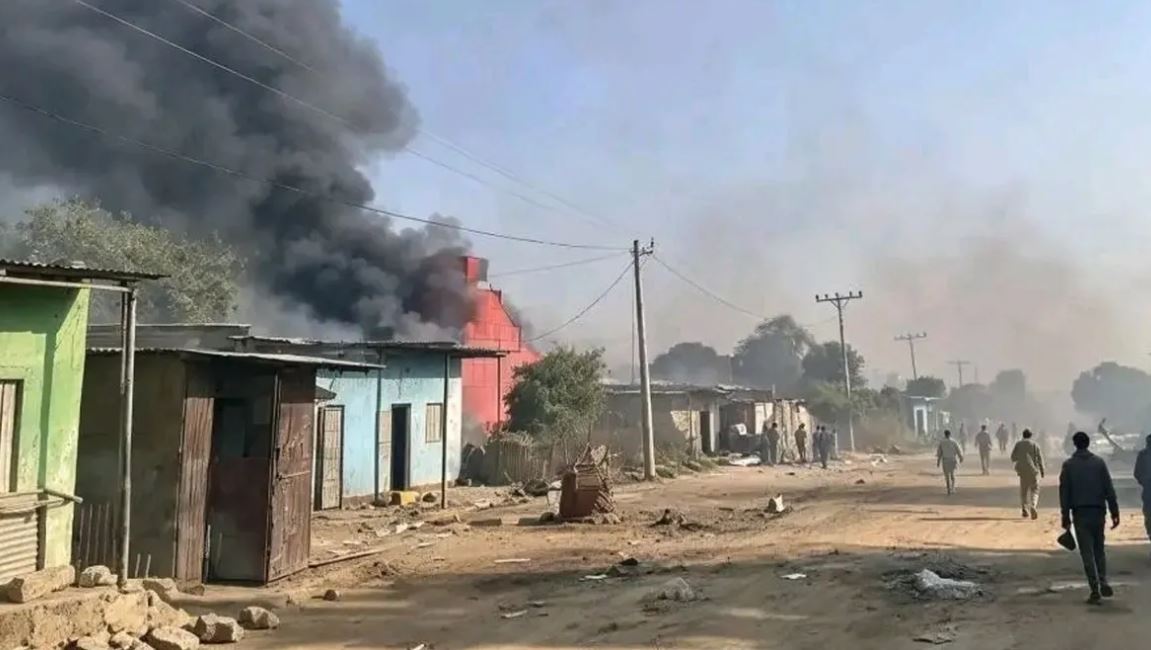
Major-media reporting says fighting broke out in Moyale between 21 and 22 October 2026 and that hundreds of Ethiopians, mostly women and children, fled to Kenya. Residents reported gunfire on the Ethiopian side; the cause remains unclear, and the outbreak date differs by one day across reports. The Kenyan Red Cross is assessing needs, and an official said no camp was ready to receive the displaced. The Moyale reporting places the fighting hundreds of kilometres from the conflict in Tigray. Separate claims of Ethiopia-Eritrea troop clashes and rising tensions around Assab rely on blogs or social media and are not independently corroborated in the supplied material. The claims also do not substantiate the topic description's reference to a warning by US Secretary of State Marco Rubio.
Change from previous assessment
The prior brief focused on an acute reported standoff around Zalambessa. This brief adds reports of fighting in Moyale and hundreds of Ethiopians fleeing into Kenya, shifting the immediate humanitarian focus to the Kenya-Ethiopia border. The current claims do not independently substantiate the prior brief's Zalambessa account, an Eritrean incursion, a troop buildup on the shared border or the Rubio warning. The assessment of Ethiopia-Eritrea escalation remains low confidence, while Moyale displacement is a new reporting priority.
Key judgments
- Fighting occurred in Moyale on the Ethiopian side of the Kenya-Ethiopia border between 21 and 22 October 2026, and hundreds of Ethiopians, mostly women and children, fled into Kenya. Kenyan officials and the Red Cross reported the arrivals, residents reported gunfire, and the fighting's cause remains unknown. The start date is uncertain by one day. (Confidence: medium · REPORTED)
- I&W: Confirm: The Kenyan Red Cross or Marsabit County officials publish an updated count that records additional arrivals from Moyale. (0-14 days)
- I&W: Break: The Kenyan Red Cross or county officials correct the reported arrivals or state that no displacement from the fighting occurred. (0-14 days)
- An Ethiopia-Eritrea state-on-state clash in the next 1-3 months is unlikely on the evidence supplied. The claim of troops clashing near Assab comes from social media, while other low-proximity claims describe Tigray as raising border tensions or Eritrea as backing Tigray factions. The reporting on Moyale places that fighting on the Kenya-Ethiopia border, hundreds of kilometres from the Tigray conflict, and says its cause is unknown. None of the supplied claims independently establishes Ethiopian and Eritrean forces in contact on their shared border. (Confidence: low · ASSESSED)
- I&W: Confirm: Independent reporting or official statements identify Ethiopian and Eritrean formations at the same named site on their shared border, with a dated account of troop contact or an exchange of fire. (0-14 days)
- I&W: Break: The sources behind the reported Ethiopia-Eritrea troop clash retract the claim or correct its location to a site outside the shared border. (0-14 days)
- Kenyan responders are likely to face short-term shelter and needs-assessment pressure in Moyale. The Red Cross is assessing those affected, Ibray John said no camp was ready, and many displaced people were staying with relatives or other residents in villages on the Kenyan side. (Confidence: medium · ASSESSED)
- I&W: Confirm: The Kenyan Red Cross reports unmet shelter needs or identifies displaced people without a place to stay. (0-14 days)
- I&W: Break: The Kenyan Red Cross or county officials report that displaced people have adequate shelter and that no unmet immediate needs remain. (0-14 days)
Outlook & scenarios
Moyale fighting remains localised (55%)
Roughly even chance that fighting remains centred on Moyale and the main near-term effect is continued displacement into Kenya. The cause is still unconfirmed, so this scenario does not assign responsibility to Tigray, Eritrea or another actor.
Instability within Ethiopia widens (30%)
Unlikely but plausible that reports of TPLF-led forces retreating in Tigray, armed groups in Afar and an opposition alliance reflect wider internal conflict. In this scenario, the instability remains within Ethiopia and does not establish Eritrean military involvement.
Interstate escalation involving Eritrea (10%)
Very unlikely, but a high-impact wildcard is that the unverified claims of Ethiopian-Eritrean troop clashes and tension around Assab reflect actual state-force contact. This would raise the risk of a wider confrontation over Red Sea access; the supplied claims do not confirm that sequence.
Recommendations
- Keep reporting on Moyale separate from reporting on the Ethiopia-Eritrea border and Assab. Do not use the Moyale fighting as evidence of interstate clashes.
- Before treating a troop buildup or border clash as confirmed, require independent corroboration that identifies the date, location and forces involved. Record whether the information comes from an official statement, on-scene reporting or social media.
- Seek regular updates from the Kenyan Red Cross and Marsabit County officials on the number of people displaced from Moyale, shelter availability and the outcome of the needs assessment.
- Do not attribute the Moyale fighting to Tigray or Eritrea until reporting establishes its cause. Do not present the Rubio warning or a shared-border troop buildup as confirmed on the basis of the supplied claims.
Confidence & uncertainty
Most claims about Ethiopia-Eritrea escalation come from blogs or social media with limited proximity and no independent corroboration in the supplied material. Major-media reporting supports the Moyale fighting and displacement through statements from Kenyan officials, the Red Cross and residents, but the reported start date differs by one day and the cause remains unknown. Claims about Tigray's role and Eritrea's alignment conflict, and the supplied claims do not substantiate either a troop buildup on the shared border or a warning by Marco Rubio.
Alternative analysis (red cell)
The supplied record does not justify describing an Ethiopia-Eritrea state-on-state clash as unlikely; it supports an indeterminate but credible risk. Claim 0427398b-9fbb-4681-9191-79cf-445f-8b94-5b3f24048d28 directly alleges troop clashes, while claims, and 2f0959ca-79cf-445f-8b94-5b3f24048d28 provide contextual indicators of interstate tension. The separate location and unknown cause of the Moyale fighting do not materially resolve that Ethiopia-Eritrea question.
Intelligence gaps
- [EEI 1.1 · PARTIAL] Verified changes in troop, armored vehicle, artillery, air-defense, or logistics deployments within designated border areas and around Assab. Recommended collection: commercial satellite imagery
- [EEI 1.2 · UNCOVERED] Military orders, mobilization notices, reserve call-ups, or official directives authorizing offensive or defensive operations. Recommended collection: official statements/local reporting
- [EEI 1.3 · UNCOVERED] Forward-positioning of fuel, ammunition, medical supplies, bridging equipment, or field headquarters near likely axes of advance. Recommended collection: satellite imagery/human reporting
- [EEI 1.4 · PARTIAL] Cross-border incidents involving artillery fire, airspace violations, armed patrols, raids, detentions, or reported casualties. Recommended collection: local media/social media
- [EEI 2.2 · PARTIAL] Changes in command appointments, rules of engagement, force posture, or operational rhetoric by Ethiopian or Eritrean leadership. Recommended collection: government releases/intelligence reporting
- [EEI 2.4 · UNCOVERED] Specific incidents or policy decisions publicly identified by either side as a red line, casus belli, or justification for military action. Recommended collection: official statements/media monitoring
- [EEI 3.1 · PARTIAL] US, African Union, Gulf, or neighboring-state mediation proposals, leader contacts, envoy travel, and requests for de-escalation. Recommended collection: diplomatic reporting
- [EEI 3.2 · UNCOVERED] Public and private Ethiopian or Eritrean responses to Secretary Rubio's warning and other external pressure. Recommended collection: official statements/diplomatic reporting
- [EEI 3.3 · UNCOVERED] Evidence of foreign arms deliveries, military advisers, intelligence support, or expanded security cooperation with either government. Recommended collection: trade data/satellite imagery/diplomatic reporting
- [EEI 3.4 · UNCOVERED] Border reopening or closure decisions, military hotlines, troop pullback commitments, and independently verified compliance with them. Recommended collection: official statements/field reporting
- [EEI 4.1 · UNCOVERED] Changes in shipping patterns, vessel advisories, port activity, or war-risk insurance premiums around Assab and nearby Red Sea routes. Recommended collection: maritime/AIS
- [EEI 4.3 · UNCOVERED] Attacks or threats against ports, airfields, critical infrastructure, foreign personnel, or commercial shipping. Recommended collection: maritime/aviation/local reporting
- [EEI 4.4 · UNCOVERED] Deployment of foreign naval or military forces, establishment of new access agreements, or changes in regional basing activity. Recommended collection: maritime/AIS/satellite imagery
Red cell review: PARTIAL DISSENT
TLP:CLEAR