TLP:CLEAR · Disclosure is not limited.
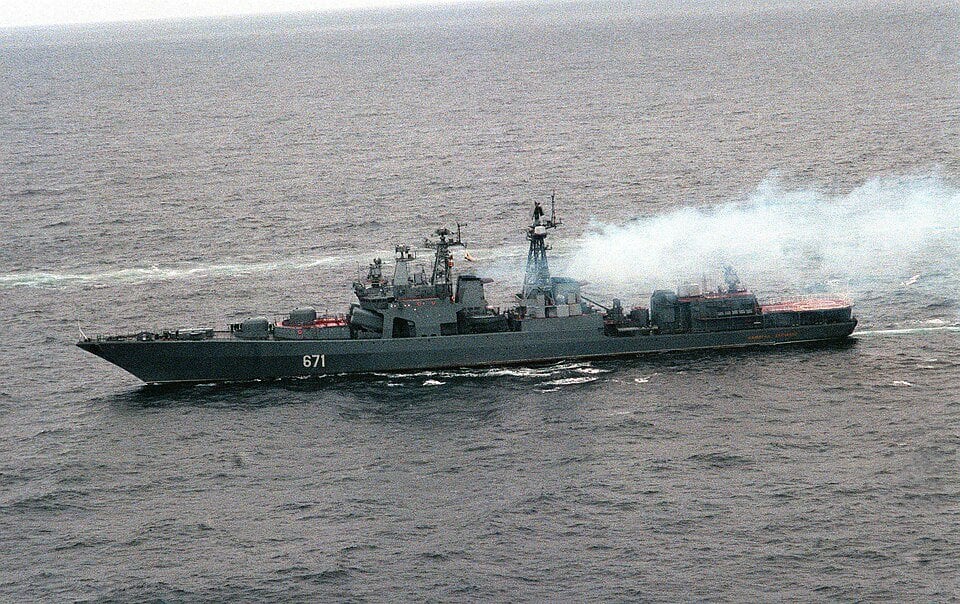
Eurasia: Hormuz Standoff Sustains US-Iran Escalation
Time window: Last 1 day · Audience: General analyst · Type: Situation report · DTG: 2026-08-29 17:07Z · Overall confidence: HIGH
BLUF
The Strait of Hormuz is likely to remain only partially usable over the next 0-14 days. US mine-clearance and escort claims have not restored normal traffic, while Iran's vessel threats and the sanctions dispute preserve a roughly even chance of another direct US-Iran military exchange.
Executive summary
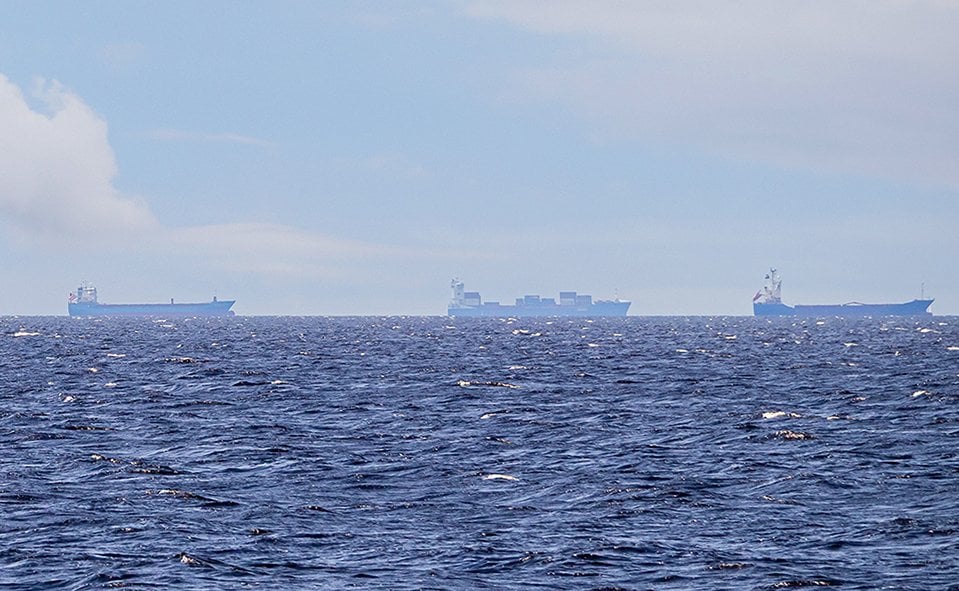
US-Iran military exchanges remain centred on the Strait of Hormuz. US commanders report extensive mine clearance and assistance to commercial vessels, but preliminary data recorded only seven commodity vessels transiting on 27 August, while up to 400 ships and about 6,000 seafarers reportedly remain unable to depart the Persian Gulf. Washington is expanding sanctions pressure, Iran is threatening consequences and maintaining military pressure, and Qatar contacts offer a narrow diplomatic channel. Conflicting accounts of maritime access, sanctions timing and military readiness make rapid normalisation unlikely.
Change from previous assessment
Since the 28 August prior brief, the assessment retains partial usability of the Strait of Hormuz, very unlikely prospects for a durable ceasefire, and a roughly even chance of another direct US-Iran exchange. New reporting strengthens the evidence for persistent maritime disruption: seven commodity vessels transited on 27 August, while up to 400 ships and about 6,000 seafarers reportedly remain unable to depart, despite US claims of extensive mine clearance and assistance to nearly 1,500 vessels. The sanctions assessment is raised from likely to very likely, with confidence raised from medium to high. Confidence in the direct-exchange judgement rises from low to medium because of additional Iranian military threats and preparation claims, but no new exchange is directly reported. The prior alternative-basing judgement is retired in this brief because the current claims provide no additional corroboration.
Key judgments
- The Strait of Hormuz is likely to remain only partially usable over the next 0-14 days, despite US claims that recognised transit routes are mine-free. Preliminary data recorded only seven commodity vessels on 27 August, the IMO reported up to 400 ships and about 6,000 seafarers unable to depart, and vessels continue to seek direct US protection. This is an assessed judgement. Official US reporting that forces cleared more than 90 per cent of Iran's estimated 8,000 stored mines and assisted nearly 1,500 vessels conflicts with accounts that cargo passages are closed or that the closure has been reinstated, supporting medium confidence. (Confidence: medium · ASSESSED)
- I&W: Confirm if shipping data continue to show single-digit commodity-vessel transits and maritime authorities continue to report up to 400 ships and about 6,000 seafarers unable to depart. (0-14 days)
- I&W: Break if shipping data show sustained traffic returning towards pre-hostilities international shipping levels, with vessels no longer seeking direct US protection. (0-14 days)
- A further direct US-Iran military exchange is roughly even chance over the next 0-14 days. Iran's threat to strike vessels, reported missile and drone attacks in Iraqi Kurdistan, and the US focus on reducing IRGC offensive capability on the Hormuz littoral sustain the risk. Iranian statements about an offensive strategy and readiness to attack US economic interests add warning, but the latter claims rely partly on local-media reporting and no new exchange is directly reported in the supplied claims. This is an assessed judgement with medium confidence. (Confidence: medium · ASSESSED)
- I&W: Confirm if US Central Command reports new combat involving IRGC positions on the Hormuz littoral or Iran attacks a vessel operating under direct US protection. (0-14 days)
- I&W: Break if Qatar-mediated contacts produce publicly accepted conditions between Washington and Tehran and Iran records no new attacks or threats for 14 consecutive days. (0-14 days)
- The United States is very likely to intensify economic pressure on Iran over the next 0-14 days, with third-country financial compliance becoming a central pressure point. Washington has announced or planned measures affecting Egypt's Banque Misr United Arab Emirates branches and has threatened secondary sanctions, while Iran has condemned the measures and argued that other states must not implement them. This is an assessed judgement. Multiple major-media reports and Iranian Foreign Ministry statements support the direction of policy, although the exact timing and scope of the measures remain contested. Confidence is high. (Confidence: high · ASSESSED)
- I&W: Confirm if Washington announces further designations or financial restrictions on institutions conducting business with Tehran, including additional measures involving Banque Misr's United Arab Emirates branches. (0-14 days)
- I&W: Break if the United States rescinds the announced restrictions or grants broad waivers that permit normal financial transactions with Iran. (0-14 days)
- The Qatar-mediated channel is likely to produce further Iranian conditions, but a durable ceasefire and fully normal shipping through the Strait of Hormuz are very unlikely over the next 0-14 days. Abbas Araqchi described talks with Qatar's prime minister as creative, and Iranian officials are preparing a list of conditions. Countervailing signals include Iran's rejection of US sanctions, warnings of severe consequences for Washington, and competing accounts of whether cargo passages are closed or partially open. This is an assessed judgement resting on a limited diplomatic record and conflicting maritime reporting, so confidence is low. (Confidence: low · ASSESSED)
- I&W: Confirm if Iran publishes its conditions and Qatar announces another round of talks without a corresponding reduction in Iranian maritime threats. (0-14 days)
- I&W: Break if Washington and Tehran announce a signed arrangement, verified military restraint follows, and daily Strait of Hormuz traffic rises materially above the seven-vessel level recorded on 27 August. (0-14 days)
- The US military is likely to face continued pressure on air-defence stocks and mission logistics over the next 1-3 months. Reporting states that 65 per cent of the US Patriot missile stockpile has been used, that large quantities of munitions have been transferred to the Middle East, and that MARAD is activating Empire State VII for a federal mission amid heightened logistics requirements linked to operations in the Middle East. This is an assessed judgement based on contested and partly single-source reporting. The White House and Pentagon deny a munitions shortage, so confidence is low. (Confidence: low · ASSESSED)
- I&W: Confirm if Empire State VII enters federal service around 1 September for the reported 170-day mission and if further US deployments or munitions transfers are announced for Middle East operations. (0-30 days)
- I&W: Break if the Pentagon publishes evidence of replenished Patriot stocks, cancels the federal activation, and reports no logistics constraints affecting current operations. (1-3 months)
Outlook & scenarios
Contained coercion with restricted Hormuz traffic (55%)
US mine-clearance and escort activity continues, but Iran maintains threats against unauthorised shipping and uses sanctions-related pressure to seek concessions. Traffic remains possible on selected routes without returning to normal levels. Qatar contacts continue without a durable settlement.
Renewed military exchange and wider regional pressure (30%)
A US action against IRGC capabilities or an Iranian attack on a protected vessel triggers another direct exchange. Iran expands pressure against Gulf infrastructure or Iraqi Kurdistan, while threats to US and UK targets in southeastern Europe widen the geographic risk. Shipping and energy disruption increase.
Conditional maritime opening (15%)
Qatar-mediated contacts produce limited Iranian conditions that Washington accepts for a trial period. US mine-clearance claims support selected transits, oil flows increase and shipping improves, but the arrangement remains fragile and falls short of a durable ceasefire.
Commercial vessel strike and broad closure wildcard (5%)
Iran acts on its threat against an unauthorised vessel, causing casualties and a rapid suspension of remaining commercial traffic. The US responds against IRGC positions, and Gulf states face intensified infrastructure and economic pressure. This is a low-probability, high-impact pathway.
Recommendations
- Maintain a daily Strait of Hormuz dashboard covering commodity-vessel transits, requests for direct US protection, reported mine-clearance activity and the number of ships and seafarers unable to depart. Escalate reporting if transits remain in single digits for three consecutive days or a commercial vessel is attacked.
- Prioritise collection on three military tripwires: US strikes against IRGC positions on the Hormuz littoral, Iranian missile or drone attacks affecting US-protected shipping, and any Iranian action against US or UK targets in southeastern Europe.
- Track sanctions implementation at the institution level. Focus on Banque Misr's United Arab Emirates branches, UAE trade with Iran and evidence that other financial institutions have stopped Tehran-related transactions.
- Separate diplomatic signalling from operational change. Record each Qatar-Iran meeting, publish Iran's stated conditions and compare those statements with verified vessel movements and attack reporting.
- Assess US force sustainability through observable measures, including Empire State VII's entry into federal service, further Middle East logistics deployments, Patriot replenishment announcements and any reported changes to support for the Peshmerga in Iraqi Kurdistan.
- Prepare analysts and decision-makers for contradictory reporting by maintaining separate confidence ratings for mine clearance, safe commercial passage, sanctions implementation and the probability of another direct exchange.
Confidence & uncertainty
Overall confidence is high because multiple high-reliability official and major-media reports corroborate the US-Iran armed confrontation, restricted shipping, US mine-clearance claims and expanded sanctions pressure. The main uncertainties concern whether reported mine clearance translates into safe commercial passage, the timing and scope of sanctions, and the reliability of prospective Iranian and US military readiness claims. These uncertainties lower confidence in individual forward-looking judgements without changing the high headline assessment.
Intelligence gaps
- [EEI 1.1 · PARTIAL] Confirmed strikes, attacks, interceptions, or casualties involving US or Iranian forces, including location, timing, and weapon systems used. Recommended collection: military reporting/open-source imagery
- [EEI 1.2 · UNCOVERED] Changes in US or Iranian force posture indicating preparation for further attacks, including aircraft dispersal, missile-unit movement, naval sortie activity, or air-defense activation. Recommended collection: satellite imagery/aviation and maritime tracking
- [EEI 1.3 · PARTIAL] Public or private warnings, ultimata, declared red lines, or force-protection directives issued by US or Iranian leadership. Recommended collection: official statements/diplomatic reporting
- [EEI 2.1 · UNCOVERED] Deployment or repositioning of Iranian ballistic missiles, cruise missiles, drones, fast-attack craft, or other strike assets within operational range of US or partner targets. Recommended collection: satellite imagery/signals intelligence
- [EEI 2.2 · PARTIAL] Orders, threats, targeting claims, or attack preparations by Iranian proxy groups in Iraq, Syria, Lebanon, Yemen, or the Gulf. Recommended collection: group statements/local reporting
- [EEI 2.4 · PARTIAL] Changes in Iranian military alert levels, command activity, weapons dispersal, or continuity-of-government measures. Recommended collection: signals intelligence/satellite imagery
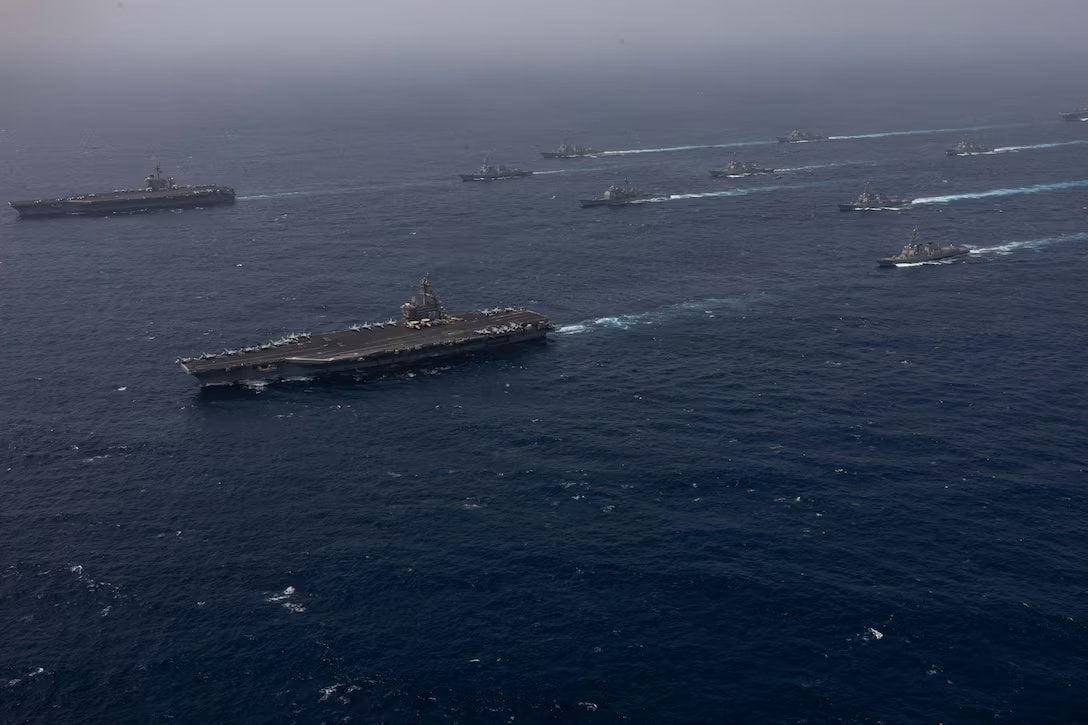
- [EEI 3.1 · PARTIAL] Arrival or departure of US carrier strike groups, bombers, air-defense units, special operations forces, or additional personnel in the region. Recommended collection: maritime and aviation tracking
- [EEI 3.2 · UNCOVERED] Changes to US force-protection conditions, base access, evacuation plans, embassy staffing, or noncombatant evacuation preparations. Recommended collection: official notices/diplomatic reporting
- [EEI 3.3 · UNCOVERED] Presidential, Pentagon, or theater-command statements describing authorized response options, expanded objectives, or revised rules of engagement. Recommended collection: official statements
- [EEI 3.4 · UNCOVERED] US or coalition kinetic actions against Iranian territory, military infrastructure, or aligned groups following new exchanges. Recommended collection: military reporting/open-source imagery
- [EEI 4.3 · UNCOVERED] Regional government decisions to close airspace or waterways, raise military readiness, expel personnel, or request additional US or allied forces. Recommended collection: official statements/aviation and maritime notices
- [EEI 4.4 · PARTIAL] Sustained movements in oil and gas prices, tanker freight rates, or reported disruptions to production and export facilities attributable to the military exchanges. Recommended collection: energy-market reporting
Cited sources
[1] gcaptain.com · Iran Urges Countries Not to Implement New U.S. Sanctions as Mediators Focus on Reopening Strait (B) · sha256:153a0115ab1b [2] maritime-executive.com · IMO: 400 Ships and 6,000 Seafarers Are Still Unable to Depart Persian Gulf (B) · sha256:3bd74a41bdbe [3] Hindustan Times · Beyond Hormuz: Strategic promise of INSTC | Hindustan Times (B) · sha256:04f3fc78fc2d [4] maritime-executive.com · Maritime Security: A War Gone Wrong (B) · sha256:9d18b88cf558 [5] inosmi.ru · Две сверхдержавы объединились. Открыта дорога к сделке с США (AgoraVox, Франция) (B) · sha256:2bdd658b932c [6] BBC · US plans to cut off military aid to key Middle East ally, BBC told (A) · sha256:285edb031228 [7] maritime-executive.com · Russian Mediterranean Flotilla Heads for Tartus After Syrian Agreement (B) · sha256:47efd4a6f5a4 [8] xn--80aegqufhcjg6b.xn--p1ai · Кто и зачем пригласил Иран в Мекканское соглашение (D) · sha256:f6cf10082419 [9] news.am · Минобороны Ирана сообщило о подготовке новых видов вооружений на случай будущей войны (A) · sha256:f58ebd077b73 [10] RBC · FT раскрыла, как США мешают связи Ирана с «единственным каналом импорта» (B) · sha256:f095e62b50ac [11] iz.ru · Плохие полгода: за шесть месяцев война США и Ирана зашла в стратегический тупик (B) · sha256:846d29b9e5ed [12] news.am · Арагчи: Иран продолжит документировать атаки США и Израиля и добиваться их рассмотрения на международном уровне (B) · sha256:df314e843118 [13] nexta.tv · Истощение запасов американских боеприпасов из‑за войны с Ираном усиливает опасения относительно способности сдерживать Китай и Россию - NEXTA (B) · sha256:7ec34c6c5bcf [14] gcaptain.com · MARAD Activates SUNY Maritime Training Ship Empire State VII for Undisclosed National Mission (B) · sha256:7a082bab975f [15] maritime-executive.com · MARAD Calls Up Training Ship Empire State for Federal Service (B) · sha256:e3a398e0c501
Source content hashes were computed at collection time; the cited text is preserved unmodified for the life of this product.
Red cell review: CONCUR WITH COMMENT
TLP:CLEAR