TLP:CLEAR · Disclosure is not limited.
Eurasia Situation Report: US-Iran Exchanges and Maritime Disruption
Time window: Last 1 day · Audience: General analyst · Type: Situation report · DTG: 2026-09-12 21:08Z · Overall confidence: HIGH
BLUF
US-Iran military exchanges are likely to continue over the next 14 days while shipping through the Strait of Hormuz remains heavily restricted. Houthi advances along Yemen's western Red Sea coast, the shutdown of Saudi Arabia's East-West Pipeline and unresolved attribution for attacks launched from Iraq raise the risk of a wider regional confrontation.
Executive summary
The security situation has widened beyond direct US-Iran exchanges. Iran's military reported strikes on eight American tankers near the Strait of Hormuz, while US authorities have limited protected commercial transits to two daily windows. Iran and Oman are preparing a temporary shipping arrangement, but Iran continues to link broader access to conditions that include sanctions relief. Ansar Allah has advanced along Yemen's western Red Sea coast, including Mokha and nearby islands, although its claim to control Bab el-Mandeb remains contested. Saudi Arabia halted the East-West Pipeline after drone attacks on 10 September, and Iraqi authorities acknowledged that the launch originated from Iraqi territory while dismissing a military commander. Diplomatic contacts have not yet offset the military and economic pressure.
Change from previous assessment
Since the 11 September brief, the assessment has shifted towards greater regional spillover risk. New reporting confirms the 10 September attack and 11 September shutdown of Saudi Arabia's East-West Pipeline, Iraqi acknowledgement that the launch originated from Iraqi territory, and an Iraqi military commander's dismissal. Houthi advances now include reported control of Yemen's western Red Sea coast, Mokha and nearby islands, although the assessment of full Bab el-Mandeb control has been qualified because government counterstrikes and conflicting control claims remain. The Iran-Oman shipping channel has moved from a prospective diplomatic effort to a reported route agreement and planned ministerial meeting, but durable de-escalation remains unlikely. The prior judgments on continued US-Iran exchanges and restricted Hormuz traffic are retained, with increased concern over energy disruption and a new low-confidence judgment on Iran-linked collection against US naval forces.
Key judgments
- Further direct US-Iran military exchanges are likely within 0-14 days. Iran's military said on 9 September that it struck eight American tankers near the Strait of Hormuz in response to US attacks, US protected transit windows were reduced to two after reported intensified Iranian attacks, and reporting says Iran has resumed ballistic missile production at underground facilities. The sequence of the reported strikes and the US response remains partly uncorroborated, which lowers confidence in the forecast. (Confidence: medium · ASSESSED)
- I&W: Iranian military or US Central Command reports another strike involving a named US vessel, Iranian vessel or military facility, with corroborating imagery or vessel tracking. (0-14 days)
- I&W: Fourteen days pass without a reported direct strike and the US restores more than two protected transit windows through the Strait of Hormuz. (0-14 days)
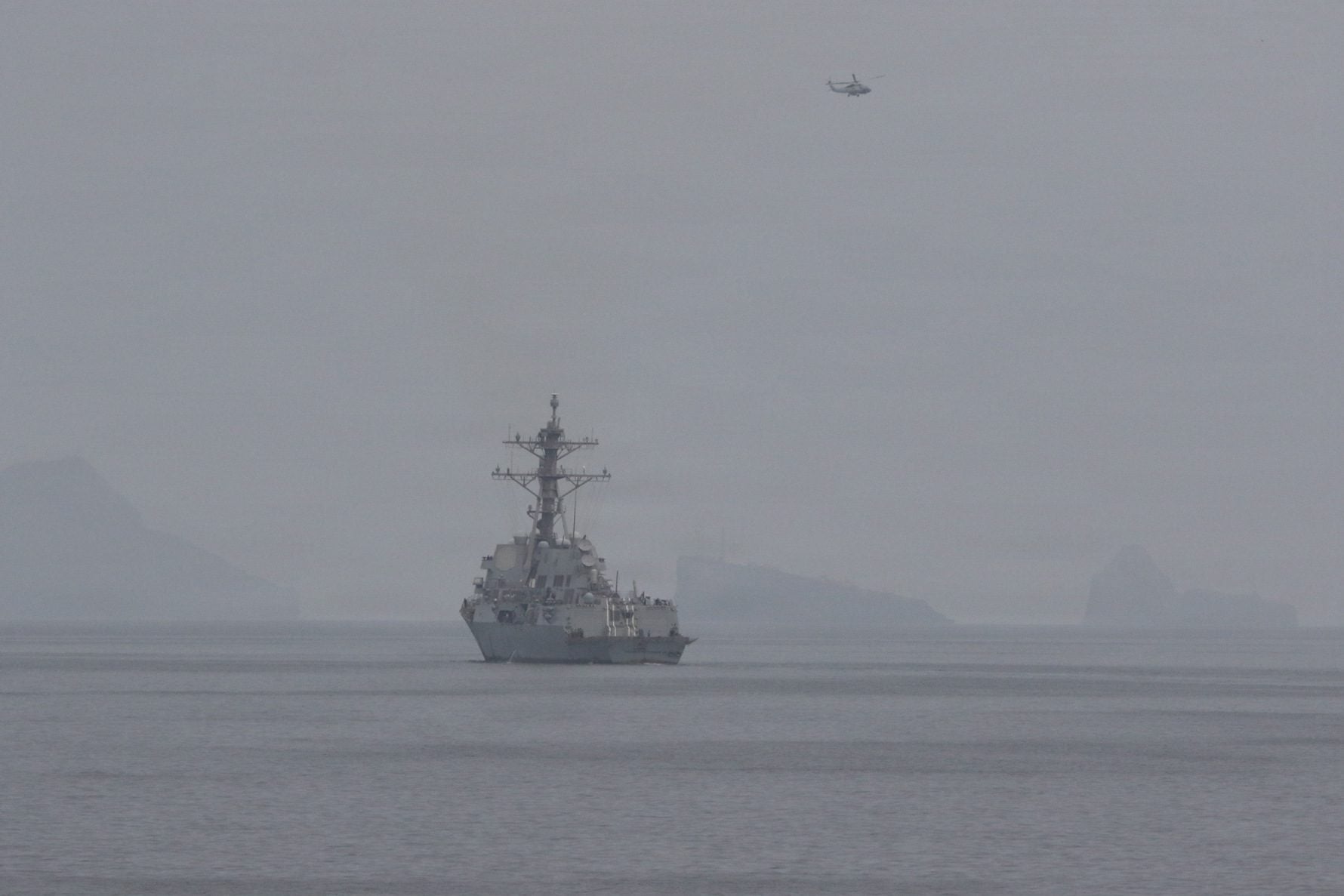
- Restricted but functioning commercial traffic through the Strait of Hormuz is very likely to persist within 0-14 days. The United States is directing tankers to transit during two protected windows and has provided air cover along Oman's coast, while Iran and Oman are preparing a temporary route arrangement. A separate report says traffic has practically stopped, so the precise volume of movement remains uncertain. (Confidence: high · ASSESSED)
- I&W: The US Naval Coordination Center continues issuing coordinates and permissions for tanker movements in both daily windows, while Iran and Oman announce the temporary route. (0-14 days)
- I&W: No commercial vessel receives a transit permission or completes a passage for 72 consecutive hours, indicating that restricted traffic has become a full halt. (0-14 days)
- The Iran-backed Houthi movement is likely to consolidate control over Yemen's western Red Sea coast and increase operational access around Bab el-Mandeb within 0-14 days, but full control of the strait is not established. Reporting places Ansar Allah in Mokha, the Hanish islands and Mayyun Island, and near Perim, while the Saudi-backed Yemeni government has reported strikes against Houthi fighters in Mokha. Houthi claims of control over Bab el-Mandeb therefore remain contested. (Confidence: medium · ASSESSED)
- I&W: Independent imagery or multiple government sources confirm continued Houthi deployments at Mokha, Hanish, Mayyun or Perim without a corresponding government withdrawal or counterattack. (0-14 days)
- I&W: Saudi-backed Yemeni forces re-enter Mokha or restore control over one of the reported islands, breaking the current pattern of Houthi consolidation. (0-14 days)
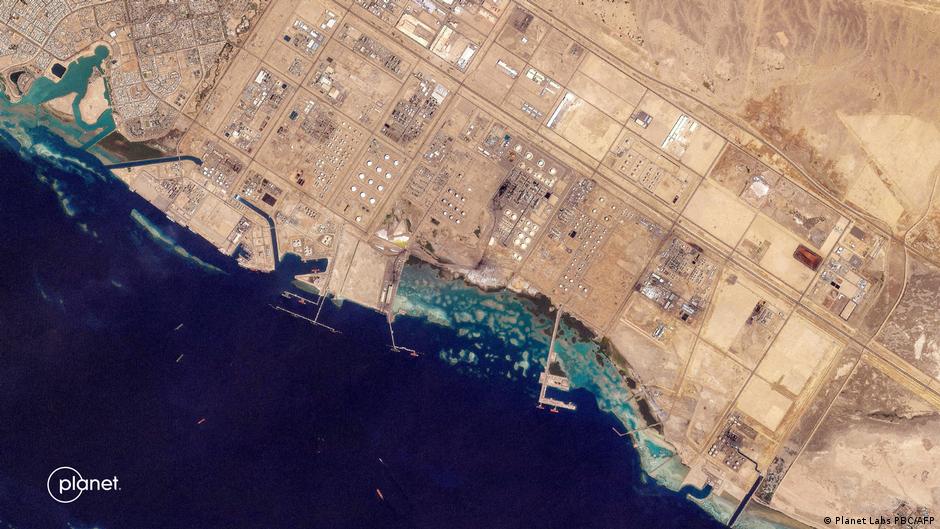
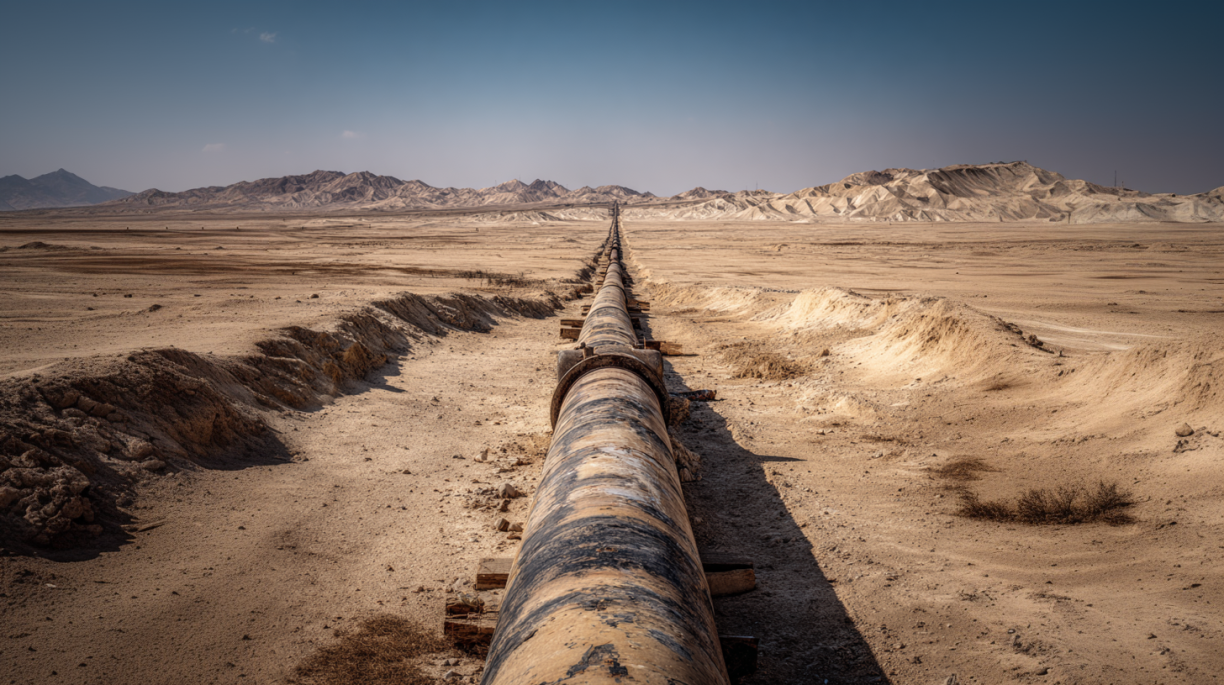
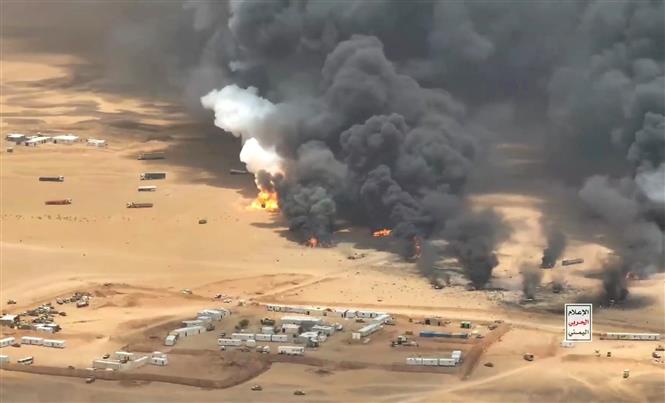
- Saudi Arabia is likely to keep the East-West Pipeline offline in the near term, while military retaliation against the Iraq-linked attackers is unlikely within 0-14 days. Multiple reports place the attacks on 10 September and the shutdown on 11 September, with satellite imagery showing nine fire sites and damage near pumping stations. Saudi officials have said the kingdom will not retaliate at this stage, although Saudi Arabia has not publicly identified the responsible group and Iraqi attribution remains politically sensitive. (Confidence: medium · ASSESSED)
- I&W: Saudi Arabia reports that the East-West Pipeline remains shut, with no restored flows and continuing repair activity at the affected pumping facilities. (0-14 days)
- I&W: Saudi Arabia announces strikes against Iraq-linked groups or moves additional forces towards Iraq after the pipeline investigation. (0-14 days)
- Energy and tanker-market stress is likely to persist for 1-3 months. Brent crude closed at $104.56 per barrel on 11 September, the East-West Pipeline had carried an estimated 4 to 5 percent of global oil supply, and Yanbu exports were about 2.5 million barrels per day in August. VLCC earnings have also reached several hundred thousand dollars per day on Gulf and long-haul routes. Conflicting reports on Brent's intraday peak and the novelty of current freight rates lower confidence in the price and freight outlook. (Confidence: medium · ASSESSED)
- I&W: Brent closes above $100 per barrel and VLCC earnings remain above $400,000 per day on Gulf of Oman or comparable routes for at least two consecutive weeks. (1-3 months)
- I&W: The East-West Pipeline resumes substantial flows and Brent closes below $100 per barrel for five consecutive trading sessions. (1-3 months)
- A temporary Iran-Oman shipping arrangement is likely within 0-14 days, but durable US-Iran de-escalation is unlikely in that period. Iran and Oman have agreed on routing through Iranian territorial waters, and Iran's Foreign Ministry spokesman said a Gulf foreign ministers' meeting would take place in Oman on safe shipping corridors. At the same time, Iran has transmitted seven conditions for reopening the strait, including sanctions relief, while an earlier Iranian list named five conditions and another report said the seven requirements had not been disclosed. The diplomatic channel is therefore real but limited and contested. (Confidence: medium · ASSESSED)
- I&W: Iran and Oman publicly announce the temporary route and Gulf foreign ministers attend the planned meeting in Oman. (0-14 days)
- I&W: The meeting is cancelled, no route is announced by the end of the period, or Iran imposes additional restrictions on commercial shipping. (0-14 days)
- An Iran-linked collection effort against US naval forces is likely to be replicated through other channels over 1-3 months despite Anthropic's disruption of one account. Anthropic reported that the actor used Claude to track naval positions, assemble targeting handbooks, collect personnel and transponder data, query commercial satellite imagery and research vulnerabilities in maritime communications and industrial control systems. The actor's identity and specific targets remain undisclosed, and the reporting comes primarily from Anthropic, so confidence is low. (Confidence: low · ASSESSED)
- I&W: A new Iran-nexus account or group produces comparable naval tracking data, targeting handbooks or vulnerability research after the Anthropic ban. (1-3 months)
- I&W: Government or independent reporting fails to validate additional activity and no comparable collection package appears during the period. (1-3 months)
Outlook & scenarios
Restricted maritime traffic with contained escalation (55%)
US-Iran exchanges continue at a controlled level, while the United States maintains two protected transit windows and Iran and Oman establish a temporary route. Saudi Arabia keeps the East-West Pipeline offline but does not retaliate militarily. Houthi forces consolidate positions along Yemen's western Red Sea coast without an independently confirmed closure of Bab el-Mandeb.
Widening regional maritime conflict (30%)
A further US-Iran strike damages a vessel or military facility, prompting additional restrictions at Hormuz. Saudi Arabia responds to another Iraq-linked attack, and Houthi forces use their positions around Mokha and the Bab el-Mandeb islands to intensify pressure on shipping. Pipeline and tanker-market disruption persists.
Short-lived diplomatic deconfliction (25%)
Iran and Oman announce a temporary corridor, Gulf foreign ministers meet in Oman and commercial transits increase modestly. The arrangement reduces immediate maritime incidents but does not produce durable US-Iran de-escalation because Iran continues to demand sanctions relief and other concessions.
Successful strike against a US naval or regional military target (10%)
An Iran-linked actor combines missile production, open-source collection and maritime targeting data to support a successful strike against a US naval or regional military target. The United States expands military protection for shipping and conducts additional operations against Iranian or aligned forces, producing a sharp regional escalation.
Recommendations
- Maintain a daily fused watch on the Strait of Hormuz that combines US Naval Coordination Center permissions, vessel movements, AIS gaps, Iranian and Omani route announcements, and reports of attacks on named commercial vessels.
- Treat Houthi control of Bab el-Mandeb as contested. Require corroboration from imagery, vessel-routing data and Yemeni government reporting before assessing that Ansar Allah controls the strait rather than positions near its approaches.
- Track the East-West Pipeline separately from broader Saudi oil exports. Prioritise confirmation of pumping-station repairs, restored flows, satellite fire signatures and Saudi decisions on retaliation against Iraq-linked actors.
- Update the energy-risk picture using Brent closing prices, Yanbu export volumes, pipeline flows and route-specific VLCC earnings. Do not use the reported $110 Brent figure or claims of unprecedented freight rates without distinguishing intraday, closing and route-specific data.
- Prioritise collection on Iran's underground ballistic missile production, the status of US protected transit windows and any new Iran-linked targeting packages that include naval positions, transponder identifiers or maritime-system vulnerabilities.
- Assess the Iran-Oman channel against concrete outputs: a published route, operating rules, attended ministerial meetings and verified commercial transits. Treat the reported seven conditions as separate from the earlier five-item list until Iran or an intermediary clarifies the distinction.
- Prepare alternative reporting for the contained, widening-conflict and diplomatic-deconfliction scenarios so that a new strike, Saudi retaliation or verified route opening can trigger an immediate reassessment.
Confidence & uncertainty
Overall confidence is high because the principal developments are supported by corroboration across major media, official Saudi, Iraqi and Iranian statements, satellite imagery and trade reporting. The strongest evidence concerns the East-West Pipeline attack and shutdown, the US restriction of protected Hormuz transits, Houthi advances along Yemen's western coast and the reported Iran-Oman shipping discussions. Main uncertainties concern the identity of the Saudi pipeline attackers, the extent of Houthi control over Bab el-Mandeb, the actual volume of Hormuz traffic and the discrepancy between Iran's reported five and seven reopening conditions. These uncertainties lower confidence in several forward-looking judgments without overturning the overall assessment.
Intelligence gaps
- [EEI 1.2 · PARTIAL] Changes in US or Iranian force posture indicating preparation for further attacks, including aircraft dispersal, missile-unit movement, naval sortie activity, or air-defense activation. Recommended collection: satellite imagery/aviation and maritime tracking
- [EEI 2.1 · PARTIAL] Deployment or repositioning of Iranian ballistic missiles, cruise missiles, drones, fast-attack craft, or other strike assets within operational range of US or partner targets. Recommended collection: satellite imagery/signals intelligence
- [EEI 2.4 · PARTIAL] Changes in Iranian military alert levels, command activity, weapons dispersal, or continuity-of-government measures. Recommended collection: signals intelligence/satellite imagery
- [EEI 3.1 · PARTIAL] Arrival or departure of US carrier strike groups, bombers, air-defense units, special operations forces, or additional personnel in the region. Recommended collection: maritime and aviation tracking
- [EEI 3.2 · PARTIAL] Changes to US force-protection conditions, base access, evacuation plans, embassy staffing, or noncombatant evacuation preparations. Recommended collection: official notices/diplomatic reporting
- [EEI 3.3 · UNCOVERED] Presidential, Pentagon, or theater-command statements describing authorized response options, expanded objectives, or revised rules of engagement. Recommended collection: official statements
- [EEI 4.3 · PARTIAL] Regional government decisions to close airspace or waterways, raise military readiness, expel personnel, or request additional US or allied forces. Recommended collection: official statements/aviation and maritime notices
TLP:CLEAR