TLP:CLEAR · Disclosure is not limited.
Eurasia: US-Iran Exchange Expands to Tanker Strikes
Time window: Last 1 day · Audience: General analyst · Type: Situation report · DTG: 2026-09-05 21:36Z · Overall confidence: HIGH
BLUF
US-Iran direct exchanges very likely intensified on 5 September 2026: the IRGC reportedly fired ballistic missiles at a US aircraft carrier and guided-missile destroyer, after which US forces reported destroying M/T Kylo, also known as Noxen, and disabling M/T Downy and M/T Stark 1. Further strikes are likely over the next 14 days, while commercial traffic through the Strait of Hormuz is very likely to remain severely constrained. The attribution and locations of the tanker attacks remain disputed.
Executive summary
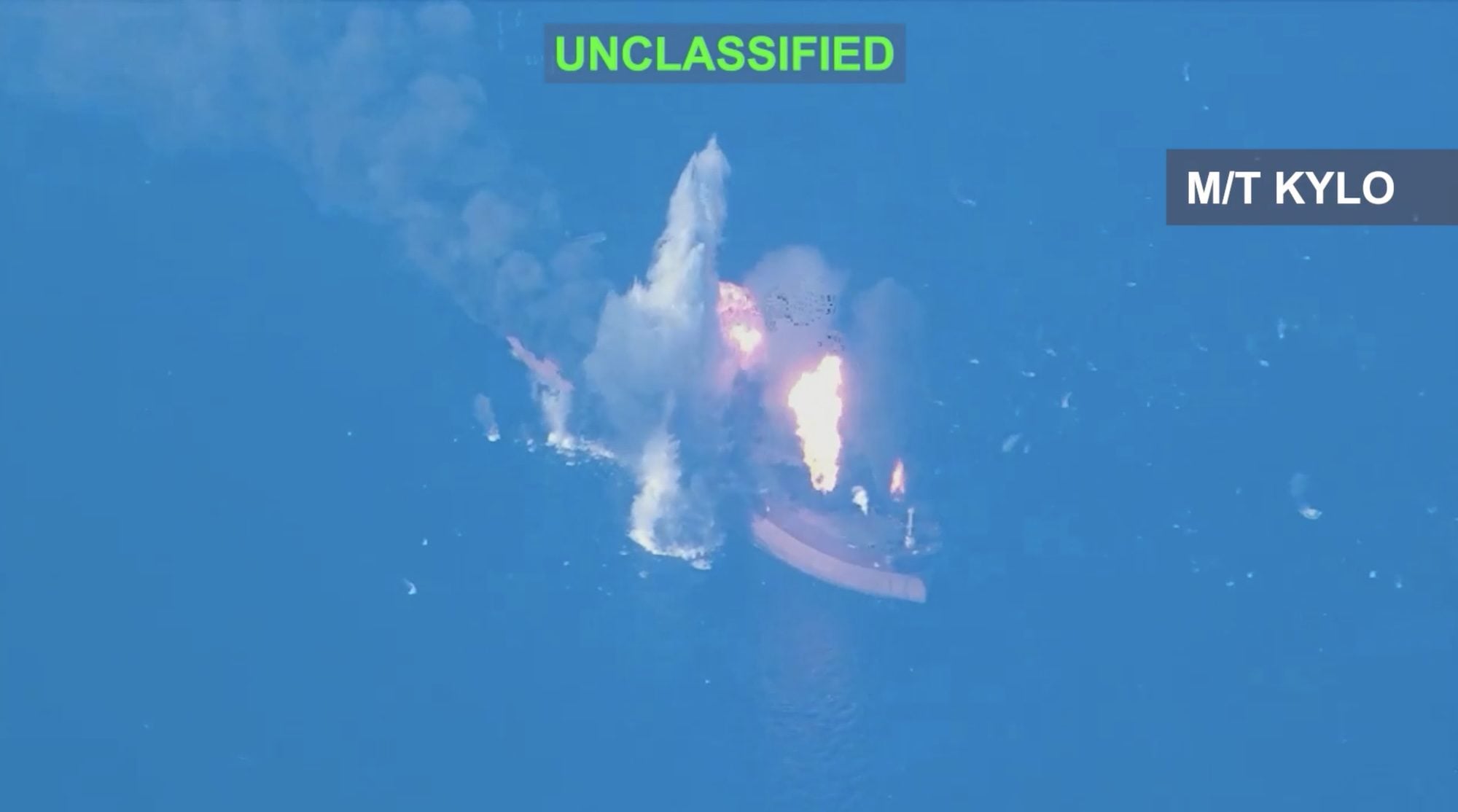
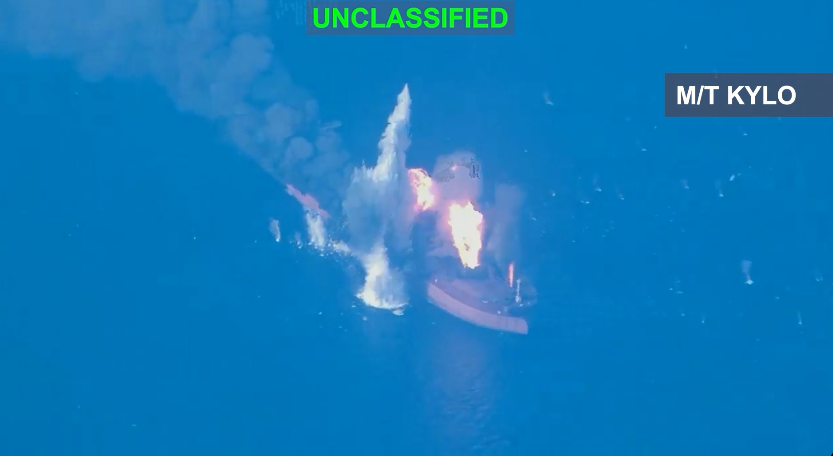
On 5 September, CENTCOM and Iranian state media reported a new exchange involving US naval forces, the IRGC and three oil tankers. US reporting described ballistic missile attacks against a US aircraft carrier and guided-missile destroyer, followed by the destruction of M/T Kylo, also known as Noxen, in the Gulf of Oman and the disabling of M/T Downy and M/T Stark 1. Iranian reporting described attacks on three US-affiliated vessels and three tankers in or near the Strait of Hormuz, claiming the action was retaliatory. US officials have threatened further attacks on Iran's oil fleet if attacks on US warships continue. The latest strikes increase pressure on Iran's oil exports and reinforce the expectation of restricted Hormuz traffic, but do not resolve conflicting accounts of the engagement sequence. Separate reporting on Russian-Iranian Project C430L indicates continued military-technology cooperation, but places the programme at an early development stage.
Change from previous assessment
Since the 4 September brief, the forecast of additional US-Iran strikes has been borne out by reported IRGC missile attacks on a US carrier and guided-missile destroyer and US action against three Iran-linked tankers. Confidence in the occurrence of direct exchanges remains high, while the near-term escalation concern has increased because US officials have publicly threatened further attacks on Iran's oil fleet. The Hormuz assessment remains medium: the new tanker strikes increase pressure on exports, but conflicting accounts still do not establish a complete closure or a single start date. This brief adds Project C430L as a low-confidence, longer-term technology watch item.
Key judgments
- US-Iran direct military exchanges are very likely to have intensified on 5 September 2026. The IRGC reportedly launched ballistic missiles at a US aircraft carrier and guided-missile destroyer in regional waters, while US forces reported destroying M/T Kylo, also known as Noxen, in the Gulf of Oman and permanently disabling M/T Downy near Kharg Island and M/T Stark 1 near Jask. CENTCOM and Iranian state media both reported attacks, but their accounts differ over the number of US-linked vessels targeted, responsibility for the tanker strikes and whether the engagements occurred in the Strait of Hormuz or farther east. (Confidence: high · REPORTED)
- I&W: Within 0-14 days, CENTCOM or independently verifiable reporting confirms another IRGC missile launch against a named US aircraft carrier or guided-missile destroyer in regional waters. (0-14 days)
- I&W: Within 0-14 days, independently verified evidence shows that the reported carrier and destroyer were not targeted and that the three tanker incidents did not occur as described, breaking the core US account. (0-14 days)
- Additional US-Iran strikes are likely during the next 14 days, while a durable ceasefire before 19 September 2026 is unlikely. Adm Brad Cooper and Defense Secretary Pete Hegseth have threatened further economic and military action against Iran's oil fleet if Tehran attacks US ships, and the IRGC has described its own attacks as retaliation. Donald Trump's 4 September characterisation of the conflict as limited and Masoud Pezeshkian's conditional willingness to return to the memorandum of understanding preserve a diplomatic alternative, but neither has produced a halt in attacks. (Confidence: medium · ASSESSED)
- I&W: A further IRGC attack on a named US warship or another US strike on an Iran-linked tanker occurs after 5 September, confirming continued escalation. (0-14 days)
- I&W: Washington and Tehran jointly announce a return to the memorandum of understanding, followed by seven consecutive days without reported attacks on US warships, Iranian tankers or commercial shipping. (0-14 days)
- Commercial traffic through the Strait of Hormuz is very likely to remain severely constrained over the next 14 days, but a complete closure and its start date remain unresolved. One account describes the strait as effectively closed since February, while another reports that Iran had gone about seven weeks without significant crude exports through Hormuz as of 2 September. The reported tanker strikes near Kharg Island and in the Gulf of Oman add pressure to Iran's export network, but the claims do not establish that all commercial traffic has stopped. (Confidence: medium · ASSESSED)
- I&W: Over the next 14 days, vessel-tracking records show no significant Iranian crude exports through Hormuz and further tanker disablements near Kharg Island, Jask or the Gulf of Oman. (0-14 days)
- I&W: At least 10 large commercial vessels transit the Strait of Hormuz per day for three consecutive days and Iran resumes significant crude exports, breaking the assessment of sustained severe constraint. (0-14 days)
- An operational Iranian supersonic cruise-missile capability derived from Project C430L is very unlikely to emerge within the next 1-3 months. Available reporting places the Russia-Iran programme at early technology transfer and development, despite continued technical planning in 2026 and reported Russian analysis of Iranian ramjet test material. This judgment rests largely on a single think-tank reporting stream and remains low confidence. (Confidence: low · ASSESSED)
- I&W: Within 1-3 months, Russian or Iranian official reporting, corroborated by imagery or test telemetry, identifies a C430L-derived supersonic cruise missile in an operational Iranian unit. (1-3 months)
- I&W: Within 1-3 months, reporting remains limited to technology transfer, engineering analysis or additional planning without an operational test or deployment announcement, confirming the early-stage assessment. (1-3 months)
Outlook & scenarios
Continued bounded exchange and constrained Hormuz traffic (60%)
The most likely path is continued reciprocal action. The IRGC launches further attacks against US naval or affiliated vessels, and the United States responds with additional strikes on Iran-linked tankers or military assets. Commercial traffic through the Strait of Hormuz remains limited, while both sides avoid attacks that cause large numbers of US or Iranian deaths.
Short diplomatic pause (25%)
Iran reiterates its conditional acceptance of the memorandum of understanding and Washington signals interest in a temporary halt. US and Iranian attacks pause for several days, but the underlying dispute over attacks on commercial shipping and the US sanctions campaign remains unresolved.
Wider maritime escalation (20%)
The IRGC strikes another commercial tanker or US warship, causing deaths or major damage. The United States then expands attacks against Iranian naval facilities, mine-laying assets or oil tankers, further reducing traffic through the Strait of Hormuz.
High-impact loss of a US warship or mass-casualty tanker incident (8%)
A successful Iranian missile attack kills US personnel aboard a carrier or guided-missile destroyer, or a tanker strike causes a mass-casualty incident. The United States conducts wider strikes inside Iran, and Iran expands attacks against US-linked facilities and commercial shipping.
Recommendations
- For the next 24 hours, maintain separate confirmed, attributed and disputed lines for the 5 September attacks. Do not merge the US account of three tanker strikes with the Iranian account of attacks on three oil tankers until vessel identities, locations and imagery are reconciled.
- Prioritise verification of M/T Downy, M/T Stark 1 and M/T Kylo, also known as Noxen, using vessel registries, maritime tracking, crew reporting and commercial imagery. Record the reported positions near Kharg Island, Jask, the Gulf of Oman and the Strait of Hormuz separately.
- Set immediate warning alerts for another IRGC missile launch against a named US carrier or destroyer, another US strike on an Iran-linked tanker, or any reported US personnel casualties. Treat any one of these events as evidence that the current exchange is moving beyond a bounded maritime exchange.
- Track Hormuz using two separate measures: movement of large commercial vessels and Iranian crude exports. Do not use an effective closure claim about one measure as proof that the other has stopped.
- Keep Project C430L as a longer-term technology watch item rather than an explanation for current Iranian operations. Require evidence of an operational test, deployed unit or combat use before assessing that the programme has produced a usable Iranian supersonic cruise-missile capability.
- Prepare separate decision notes for continued strikes, a temporary diplomatic pause and a mass-casualty maritime incident. Each note should identify the first observable trigger, likely US and Iranian responses, and the effect on commercial traffic through the Strait of Hormuz.
Confidence & uncertainty
Overall confidence is high because the core 5 September exchange is corroborated across BBC News, trade-publication reporting and statements attributed to CENTCOM and Iranian state media. Confidence is lower on the exact number of vessels targeted, the locations and attribution of the tanker strikes, the timing and scope of the Strait of Hormuz disruption, and the status of Project C430L. These uncertainties affect the scale and direction of escalation, not the assessment that direct US-Iran military exchanges occurred.
Intelligence gaps
- [EEI 1.1 · PARTIAL] Concentrations or unusual movements of IRGC-Navy fast attack craft, small boat swarms, or escort vessels within 200 km of US/allied ships, including approach distances and formation changes. Recommended collection: maritime/AIS
- [EEI 1.2 · PARTIAL] Detected pre-launch activity at coastal missile or rocket batteries (vehicle dispersal, fuel/warhead handling, radars powering up, transport erector launchers moving to firing positions). Recommended collection: imagery/signals
- [EEI 1.3 · UNCOVERED] Increased launch/arming/positioning of armed UAVs (MALE/loitering munitions) or tactical aircraft at Iranian coastal bases with sortie generation rates and munitions loadouts. Recommended collection: air/ADS-B/imagery
- [EEI 1.4 · UNCOVERED] Command-and-control indications of attack orders or elevated rules-of-engagement from IRGC/General Staff (intercepted communications, internal order messages, force-wide alert messages). Recommended collection: signals/human
- [EEI 2.1 · PARTIAL] Public statements or state-media broadcasts from Supreme Leader, President, Minister of Defense, or IRGC commanders indicating authorization, restraint, or conditions for retaliation. Recommended collection: open-source
- [EEI 2.2 · UNCOVERED] Issuance of formal orders, mobilization directives, travel restrictions, or official internal communications within IRGC/Armed Forces indicating escalation posture or stand-down. Recommended collection: human/diplomatic
- [EEI 2.3 · UNCOVERED] Directives, logistics movements, or communications from Iranian commanders to regional proxy militias (Houthis, Iraqi Shia militias, Lebanese groups) that change their threat posture or task them with specific operations. Recommended collection: signals/human
- [EEI 3.2 · UNCOVERED] Discovery or reporting of naval mines, unexploded ordnance, or damage to fixed maritime infrastructure (oil platforms, terminals, pipelines) with geolocated imagery or on-scene assessments. Recommended collection: imagery/open-source
- [EEI 3.3 · PARTIAL] Commercial indicators of disruption: sudden increases in war-risk insurance premiums for Gulf transits, vessel re-routing decisions, port throughput reductions, or charter cancellations for Gulf shipments. Recommended collection: financial/commercial
- [EEI 3.4 · UNCOVERED] Movements or posture changes of regional state navies/air forces (Saudi, UAE, Kuwait, Bahrain, UK) such as task group departures, airbase dispersals, or announced maritime patrols near choke points. Recommended collection: open-source/imagery
TLP:CLEAR