TLP:CLEAR · Disclosure is not limited.
Eurasia: US-Iran Exchanges and Hormuz Risk
Time window: Last 1 day · Audience: General analyst · Type: Situation report · DTG: 2026-08-28 16:38Z · Overall confidence: MEDIUM
BLUF
The Strait of Hormuz is likely to remain only partially usable rather than fully normalised over the next 0-14 days. Another direct US-Iran military exchange remains roughly even chance, while US sanctions pressure is likely to intensify.
Executive summary
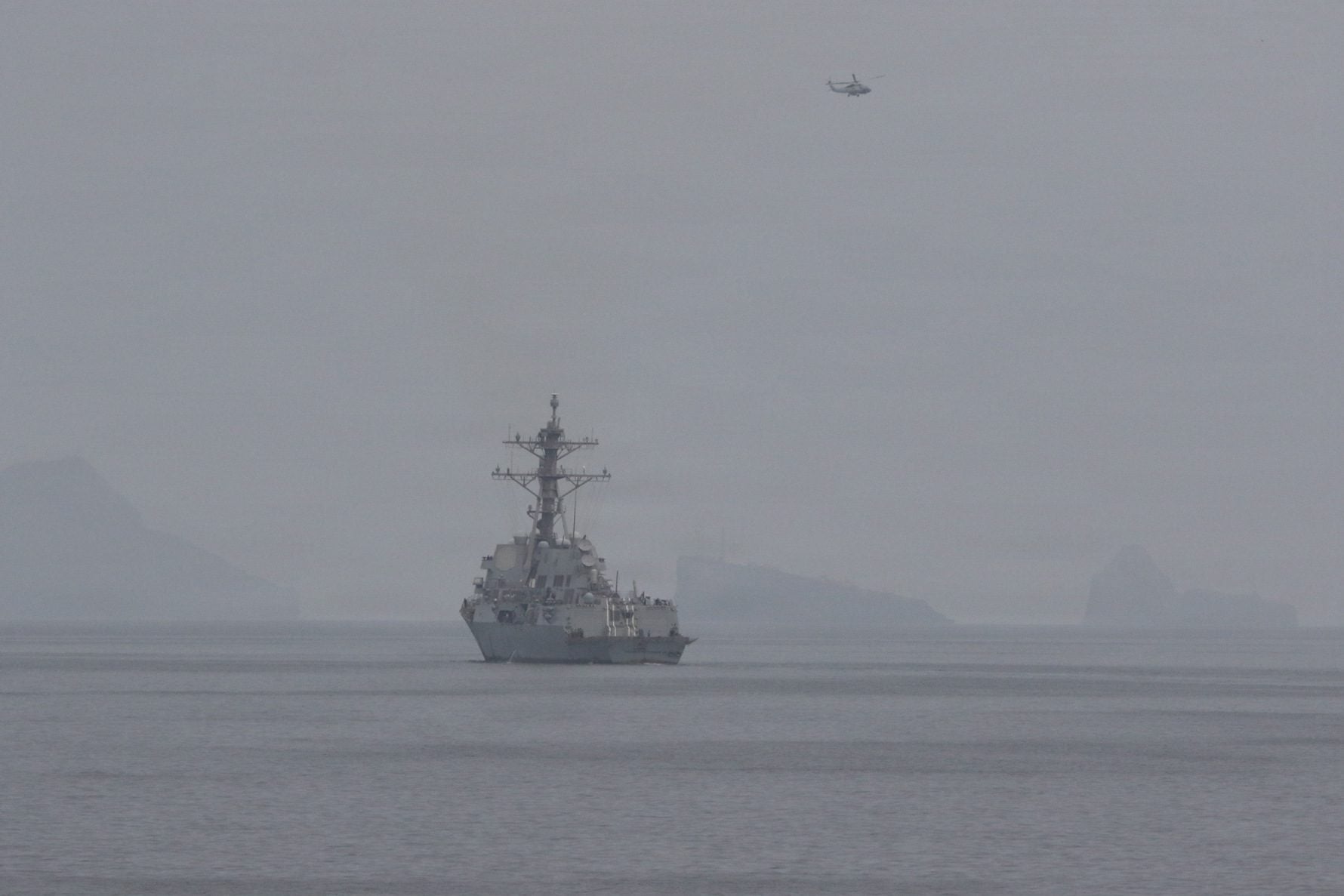
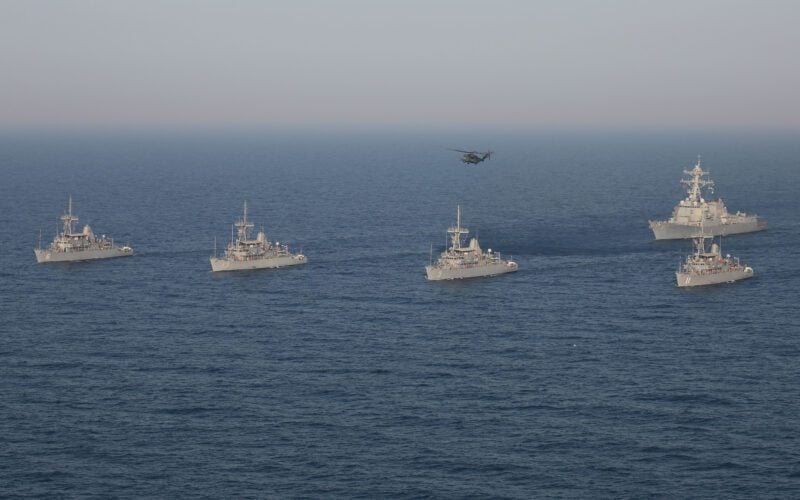
On 28 August 2026, Admiral Brad Cooper and the United States reported that American forces had cleared Iranian mines from the Strait of Hormuz, but the Joint Maritime Information Center maintained an overall threat assessment of SEVERE and warned of drifting or uncharted mines. The United States has reported partial restoration of shipping, while Iranian officials deny that assessment. Iran and Oman are pursuing a temporary navigation arrangement, although Tehran continues to attach conditions to reopening the Strait. Washington imposed new sanctions on Iran and is reported to be planning broader measures. Reports on Iranian oil exports conflict, with Iranian officials reporting a 10 percent increase in shipments from Khark Island while other reporting states that Iranian exports remain halted. The US Navy is also seeking alternative carrier port-call locations, indicating that maritime access and force sustainment remain unresolved.
Change from previous assessment
Since the 27 August 2026 brief, the assessment has shifted from a general coercive standoff towards a more clearly contested maritime picture. New reporting adds US claims of complete demining and partial shipping restoration, but the Joint Maritime Information Center retains a SEVERE assessment and US allies continue to warn of mines. The judgement that another direct exchange is roughly even chance remains unchanged, with low confidence. Confidence in the maritime-access judgement remains low because the new reporting adds detail without resolving the contradictions. The sanctions-pressure judgement is reinforced by a new US sanctions action on 28 August 2026 and reported plans for broader measures. The prior petrol-shortage judgement is not updated because this run provides no new petrol-supply figures.
Key judgments
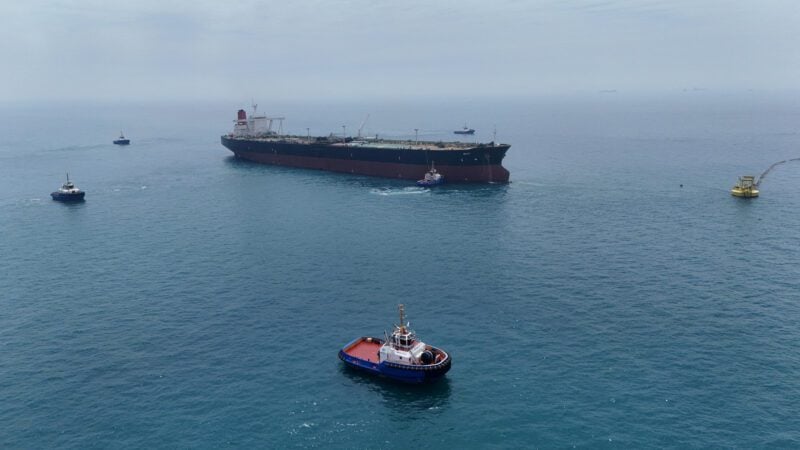
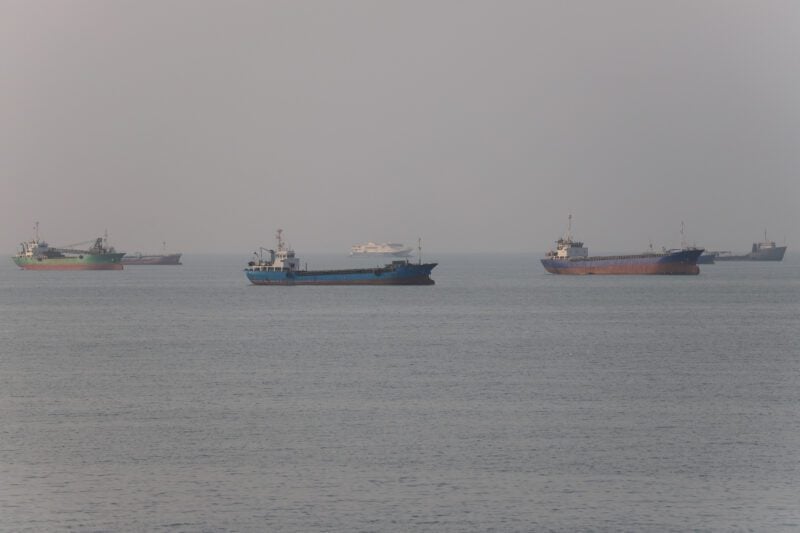
- The Strait of Hormuz is likely to remain only partially usable, with elevated navigation risk, over the next 0-14 days. Admiral Brad Cooper and the United States report complete mine clearance, and US forces report facilitating the passage of 1,500 vessels carrying about 750 million barrels of crude oil. Against this, the Joint Maritime Information Center maintains an overall threat assessment of SEVERE, warns of drifting or uncharted mines, and reports that traffic remains well below normal. This is an assessed judgement. High-reliability military and major-media reporting corroborates substantial US-facilitated transit but conflicts over whether the route is safe and fully open, supporting medium confidence. (Confidence: medium · ASSESSED)
- I&W: Confirm: The Joint Maritime Information Center keeps the overall threat assessment at SEVERE or issues a new mine-danger notice, followed by another navigation incident in or near the Strait's Traffic Separation Scheme. (0-14 days)
- I&W: Break: The Joint Maritime Information Center removes active mine-danger areas and observed commercial traffic returns to normal levels for seven consecutive days. (0-14 days)
- The United States is likely to intensify economic pressure on Iran over the next 0-14 days, but the effect on Iranian oil exports remains unresolved. Washington imposed new sanctions on 28 August 2026 and is reported to be planning 100 percent sanctions, while Iranian officials called on other countries not to join anti-Iranian measures. Reporting conflicts over Iranian exports: one claim states that Iran has exported zero oil since the US blockade was reinstated, while the Iranian Ministry of Oil reports that shipments from Khark Island increased by 10 percent and other reporting describes rising crude flows through Hormuz. This is an assessed judgement. The sanctions direction is supported by multiple reports, but the oil-export picture contains direct contradictions and medium-confidence reporting, supporting medium confidence. (Confidence: medium · ASSESSED)
- I&W: Confirm: The United States announces an additional sanctions package or direct enforcement action against Iranian oil, shipping, or financial channels. (0-14 days)
- I&W: Break: The Iranian Ministry of Oil reports rising Khark Island shipments for two consecutive reporting periods and the reported zero-export position is withdrawn. (0-14 days)
- A durable ceasefire and fully normal shipping through the Strait of Hormuz are very unlikely over the next 0-14 days. Iran and Oman have discussed or proposed a temporary demined corridor, joint navigation arrangements and revenue sharing, but Mohsen Rezaei states that Iran will not lift its blockade without meeting Iranian conditions. The United States reports partial restoration of shipping, whereas Iranian officials deny that claim. Traffic remains far below normal and the Joint Maritime Information Center maintains a SEVERE threat assessment. This is an assessed judgement. The record includes conflicting US and Iranian statements, contested ceasefire reporting, and single-source or low-confidence elements, so confidence is low. (Confidence: low · ASSESSED)
- I&W: Confirm: Iranian conditions remain attached to reopening, while the Joint Maritime Information Center retains SEVERE and traffic stays far below normal. (0-14 days)
- I&W: Break: Iran, Oman and the United States publish operating arrangements for the temporary corridor and shipping traffic reaches normal levels for seven consecutive days. (0-14 days)
- Another direct US-Iran military exchange is roughly even chance over the next 0-14 days. Iran threatens to strike vessels transiting the Strait without its authorisation and is assessed as posing a risk to US economic interests in the Middle East. Countervailing signals include the US administration discouraging Israel from striking Iran and stating an intention to replace military pressure with sanctions. This is an assessed judgement. The direct-exchange warning is largely prospective and rests on thin, single-source reporting, while US policy signals conflict with the continuing maritime threats, supporting low confidence. (Confidence: low · ASSESSED)
- I&W: Confirm: Iran strikes a vessel transiting without authorisation or a US economic interest, followed by a declared US military response. (0-14 days)
- I&W: Break: The US administration repeats a sanctions-focused policy, Iran conducts no new strike, and maritime threats remain statements only. (0-14 days)
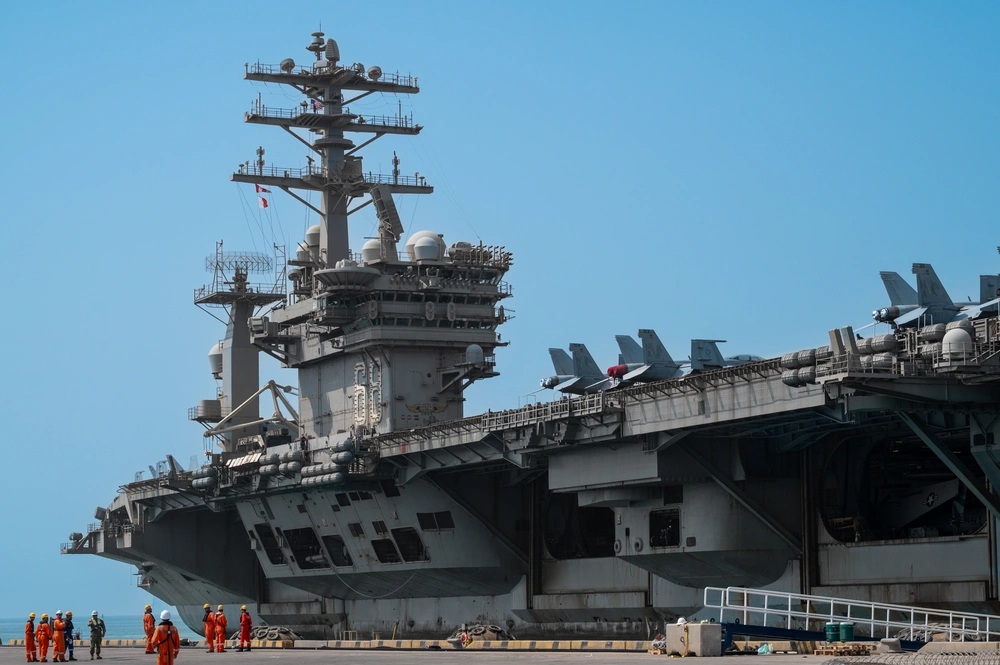
- The US Navy is likely to maintain alternative basing and port-call arrangements over the next 1-3 months rather than rely on Bahrain alone. The Navy is searching for alternative destinations around the Indian Ocean, including Kenya, Diego Garcia, India and Singapore, while senior naval officers are examining new options for carrier resupply and rest. This is an assessed judgement. Multiple major-media reports support the planning activity, but the policy direction remains prospective, supporting medium confidence. (Confidence: medium · ASSESSED)
- I&W: Confirm: The US Navy names or uses Kenya, Diego Garcia, India or Singapore for a carrier port call, or announces a formal alternative to Bahrain. (1-3 months)
- I&W: Break: The US Navy announces restored access to Bahrain as its primary regional carrier resupply and rest location and ends alternative-port planning. (1-3 months)
Outlook & scenarios
Managed partial reopening of Hormuz (45%)
A temporary Iran-Oman navigation arrangement is likely to support limited US-facilitated transit over the next 0-14 days, while the Joint Maritime Information Center retains a SEVERE assessment and traffic stays below normal. The military exchange remains contained to threats, warnings and maritime incidents.
Renewed direct exchange and sharper shipping disruption (30%)
A renewed direct exchange is unlikely over the next 0-14 days but remains plausible. An Iranian strike on a vessel or US economic interest would raise the likelihood of a US military response, interrupting the temporary corridor and pushing traffic further below normal.
Sanctions-first economic squeeze (55%)
The United States is likely to expand sanctions without an immediate direct strike. Iranian maritime exports remain constrained, while Tehran redirects more trade towards land borders and railways and Gulf producers continue using alternative ports and pipelines.
Wildcard: Israeli-Turkish confrontation (8%)
A direct Israeli-Turkish confrontation is very unlikely on current reporting, but an Israeli strike on Turkish territory or nearby that kills Turkish soldiers or civilians would change the character of the wider crisis and add a separate state-to-state confrontation.
Recommendations
- Treat the Strait of Hormuz as partially open rather than fully safe. In each update, report separately the US mine-clearance claim, the Joint Maritime Information Center threat level, active mine-danger areas and observed traffic volume.
- Establish a daily watch for new mine warnings, vessel strikes, corridor operating rules and changes in the number or routing of commercial vessels through the Strait. Escalate any confirmed strike on a commercial vessel or US economic interest for immediate review.
- Track US sanctions announcements against Iranian oil, shipping and financial channels, alongside Iranian statements on conditions for reopening Hormuz. Keep the sanctions trajectory separate from the unresolved question of actual Iranian export volumes.
- Reconcile the conflicting Iranian oil reporting by comparing Khark Island shipment figures, reported zero-export claims and aggregate crude flows through Hormuz in every collection cycle.
- Monitor US Navy port-call planning at Kenya, Diego Garcia, India, Singapore and Bahrain over the next 1-3 months. Treat a confirmed carrier visit or formal access arrangement as evidence of a lasting sustainment adjustment.
- Maintain separate analytic lines for the most likely managed maritime standoff and the lower-confidence renewed-exchange scenario. Do not treat reported mine clearance or partial shipping restoration as evidence of a durable ceasefire.
Confidence & uncertainty
Overall confidence is medium because multiple high-reliability military and major-media reports corroborate US mine-clearance claims, US-facilitated shipping, continuing maritime threats, new sanctions and alternative US Navy port-call planning. Confidence is reduced by direct contradictions over mine risk, the status of shipping, Iranian oil exports and the ceasefire, as well as by several single-source, prospective or low-confidence assessments.
Intelligence gaps
- [EEI 1.1 · PARTIAL] Confirmed strikes, attacks, interceptions, or casualties involving US or Iranian forces, including location, timing, and weapon systems used. Recommended collection: military reporting/open-source imagery
- [EEI 1.2 · UNCOVERED] Changes in US or Iranian force posture indicating preparation for further attacks, including aircraft dispersal, missile-unit movement, naval sortie activity, or air-defense activation. Recommended collection: satellite imagery/aviation and maritime tracking
- [EEI 1.4 · PARTIAL] Evidence of mobilization or operational tasking by Iranian-aligned armed groups against US personnel, bases, or partners. Recommended collection: local reporting/social media/human intelligence
- [EEI 2.1 · UNCOVERED] Deployment or repositioning of Iranian ballistic missiles, cruise missiles, drones, fast-attack craft, or other strike assets within operational range of US or partner targets. Recommended collection: satellite imagery/signals intelligence
- [EEI 2.2 · PARTIAL] Orders, threats, targeting claims, or attack preparations by Iranian proxy groups in Iraq, Syria, Lebanon, Yemen, or the Gulf. Recommended collection: group statements/local reporting
- [EEI 2.4 · UNCOVERED] Changes in Iranian military alert levels, command activity, weapons dispersal, or continuity-of-government measures. Recommended collection: signals intelligence/satellite imagery
- [EEI 3.1 · UNCOVERED] Arrival or departure of US carrier strike groups, bombers, air-defense units, special operations forces, or additional personnel in the region. Recommended collection: maritime and aviation tracking
- [EEI 3.2 · PARTIAL] Changes to US force-protection conditions, base access, evacuation plans, embassy staffing, or noncombatant evacuation preparations. Recommended collection: official notices/diplomatic reporting
- [EEI 3.3 · PARTIAL] Presidential, Pentagon, or theater-command statements describing authorized response options, expanded objectives, or revised rules of engagement. Recommended collection: official statements
- [EEI 3.4 · UNCOVERED] US or coalition kinetic actions against Iranian territory, military infrastructure, or aligned groups following new exchanges. Recommended collection: military reporting/open-source imagery
- [EEI 4.3 · PARTIAL] Regional government decisions to close airspace or waterways, raise military readiness, expel personnel, or request additional US or allied forces. Recommended collection: official statements/aviation and maritime notices
Cited sources
[1] gcaptain.com · US Commander Declares Hormuz Shipping Lanes Are Mine-Free (B) · sha256:207180f7dc2e [2] vestikavkaza.ru · Новости Ирана: свежие события сегодня, последние и срочные новости из Ирана (B) · sha256:7ca450fa8d8b [3] gcaptain.com · U.S. Military Says It Has Cleared Iran’s Mines From Strait of Hormuz Shipping Lanes (A) · sha256:dce3299a6e04 [4] gcaptain.com · Iran War Diplomacy Turns Toward Reopening Hormuz (B) · sha256:88fd0104dadf [5] gcaptain.com · Tanker Hit in Strait of Hormuz as Trump Declares ‘Mission Accomplished’ in Iran (B) · sha256:b19947dba5b6 [6] Tasnim News Agency · Иран использует своё географическое положение для противодействия новым санкциям США (B) · sha256:76f209e2ab43 [7] gcaptain.com · Hormuz Oil Flows Rising as Gulf Giants’ Ramp Up Accelerates (A) · sha256:8af12d4eb729 [8] livenews.am · Иран готовится к изменению глобального баланса сил в регионе и на планете в целом (B) · sha256:76fbc3a40b74 [9] interfax.ru · США не желают возвращаться к соблюдению условий меморандума с Ираном (B) · sha256:dd8085988de1 [10] Axios · Axios: США укрепили контроль в Ормузском проливе, Иран сдал позиции (B) · sha256:defd464dfa12 [11] maritime-executive.com · U.S. Navy is Looking for an Alternative to Bahrain for Mideast Port Calls (B) · sha256:04828c6e3b63
Source content hashes were computed at collection time; the cited text is preserved unmodified for the life of this product.
TLP:CLEAR