TLP:CLEAR · Disclosure is not limited.
Eurasia: US-Iran Exchanges Expand Across Maritime and Regional Fronts
Time window: Last 1 day · Audience: General analyst · Type: Situation report · DTG: 2026-09-09 19:38Z · Overall confidence: HIGH
BLUF
Direct US-Iran exchanges have expanded from tanker strikes to reported attacks involving a US-linked base near Al Azraq, Jordan, and commercial vessels near the Strait of Hormuz. Further exchanges are very likely within 0-14 days, while disruption to Hormuz shipping and energy markets is very likely to persist.
Executive summary
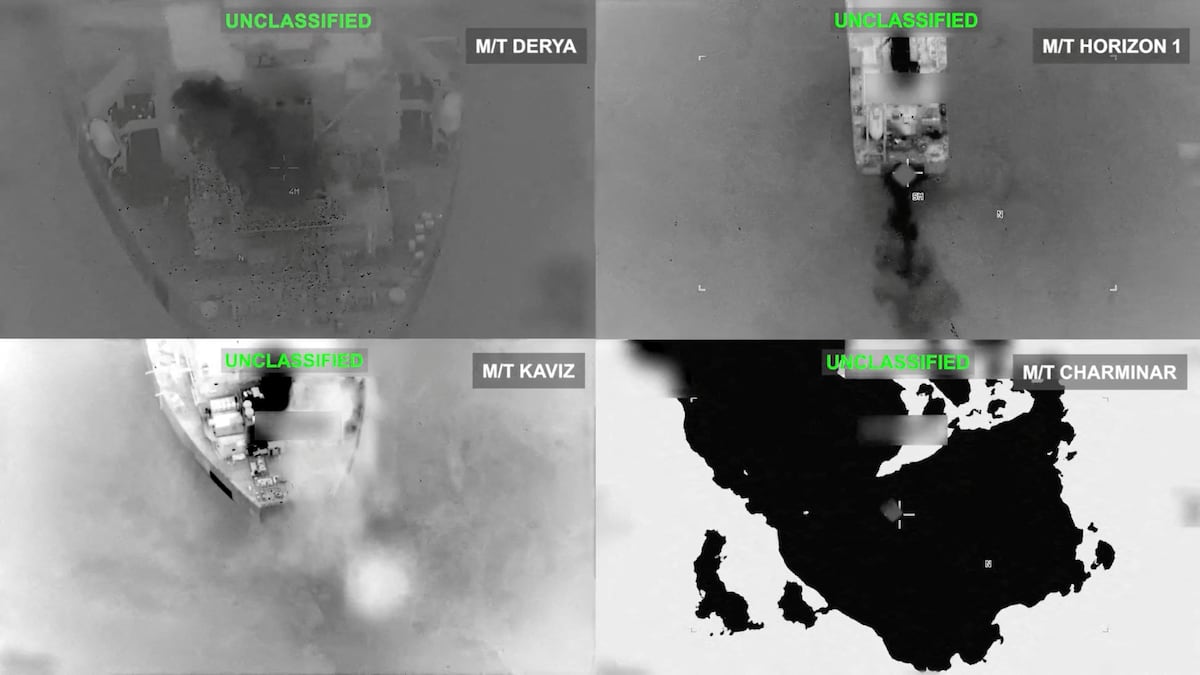
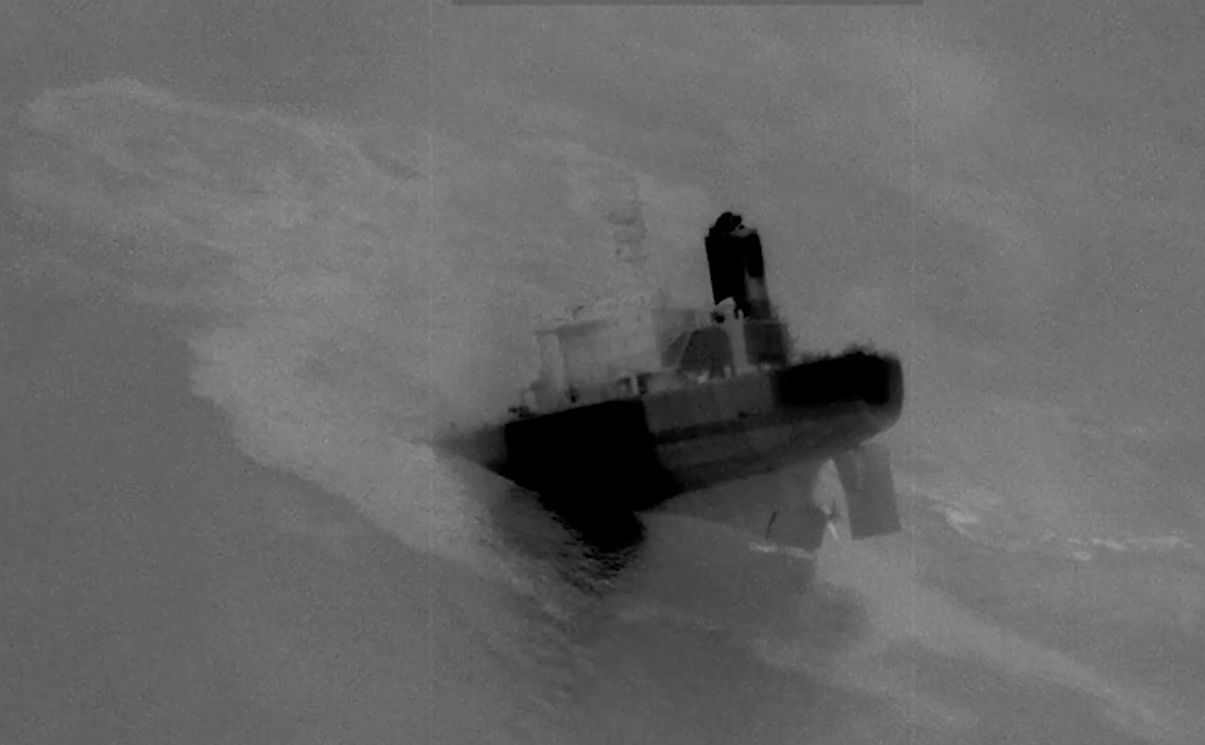
On 8-9 September 2026, US Central Command reported destroying five Iranian tankers after IRGC attacks on a US Navy warship, while Iran said it attacked 10 ships near the Strait of Hormuz. The IRGC also reported firing ballistic missiles at a US-used base near Al Azraq, although Jordan said it intercepted 18 of 20 missiles with no casualties. UKMTO and Iraqi officials confirmed that the New Andros was struck and set ablaze in Iraqi waters, while a seafarer died in an incident involving the Hercules Star off Dubai. Houthi attacks on Saudi facilities in Jazan, Abha, Khamis Mushait and Najran have added pressure on regional energy infrastructure. Reporting conflicts over the number and fate of vessels struck, the success of Iranian attacks and the exact location of some incidents.
Change from previous assessment
The assessment has shifted from a medium-confidence expectation of further maritime exchanges to a high-confidence judgment that the exchanges are already broader and more intense. New reporting documents US strikes on five Iranian tankers, Iran's reported attacks on 10 ships, an IRGC missile attack claim involving a US-linked base near Al Azraq, the New Andros and Hercules Star incidents, and Hormuz flows falling below 2 million barrels per day. The geographic-spillover judgment has been expanded to include Jordan, Iraq and the United Arab Emirates. Confidence in persistent shipping disruption remains high, energy-market confidence remains medium, and the Iran-Oman corridor assessment remains low because the reporting is still contradictory.
Key judgments
- Further direct US-Iran military exchanges around the Gulf of Oman, the Strait of Hormuz and Jordan are very likely within 0-14 days. US Central Command reported destroying five Iranian tankers after IRGC attacks on a US Navy warship, Iran reported attacks on 10 ships near the Strait of Hormuz, and the IRGC threatened to strike 20 targets for every two or three Iranian targets hit. The occurrence of the exchanges is well corroborated, but the success of Iranian attacks on US warships remains contested. (Confidence: high · ASSESSED)
- I&W: CONFIRMS if US Central Command reports another strike on a named Iranian tanker, or the IRGC reports another ballistic-missile or anti-ship attack on a US vessel. (0-14 days)
- I&W: BREAKS if no new US, IRGC or Iranian kinetic action involving a US vessel, Iranian tanker or Jordanian territory is reported through 23 September. (0-14 days)
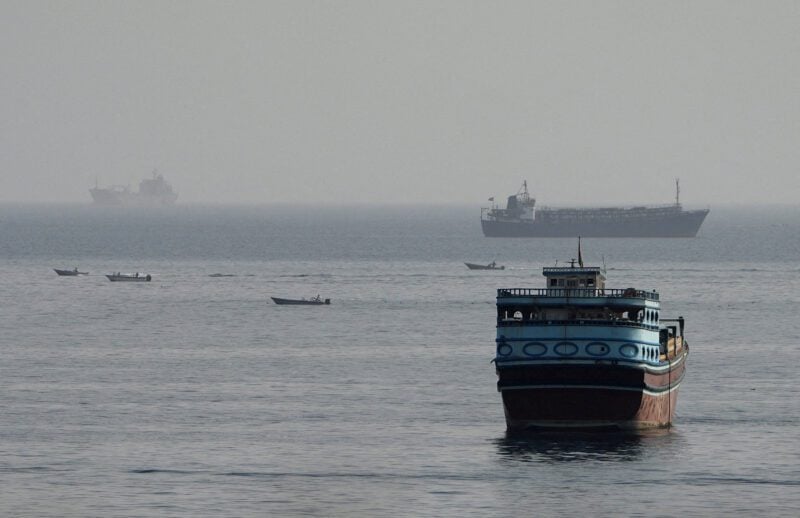
- Commercial shipping disruption around the Strait of Hormuz and the Gulf of Oman is very likely to persist within 0-14 days. Rystad Energy reported that Hormuz oil flows had fallen below 2 million barrels per day, while UKMTO reported merchant vessels hit by disabling fire, Iraqi officials and UKMTO confirmed the New Andros was struck, and US Central Command said 94 commercial vessels had been redirected. This judgment concerns sustained disruption rather than a complete closure, because public and private reporting gives conflicting assessments of navigability. (Confidence: high · ASSESSED)
- I&W: CONFIRMS if UKMTO reports additional merchant vessels hit or disabled, or Rystad Energy reports Hormuz flows remaining below 2 million barrels per day. (0-14 days)
- I&W: BREAKS if multiple merchant vessels transit the Strait of Hormuz without reported attack or disabling fire and reported flows recover above 8 million barrels per day for seven consecutive days. (0-14 days)
- Further regional spillover involving Jordan, Iraq, the United Arab Emirates and Saudi Arabia is likely within 0-14 days. The IRGC reported firing at a US-used base near Al Azraq, Jordan reported intercepting 18 of 20 missiles, the New Andros was struck and set ablaze 28 nautical miles southeast of Al-Faw, a seafarer died aboard the Hercules Star off Dubai, and Houthi forces attacked energy facilities in Jazan, Abha, Khamis Mushait and Najran. Confidence is medium because the Jordanian and Iranian accounts of the missile attack conflict, the New Andros weapon attribution remains unconfirmed, and reporting differs on the location of the Hercules Star incident. (Confidence: medium · ASSESSED)
- I&W: CONFIRMS if a new attack is reported against a US-linked site in Jordan, a tanker in Iraqi or Emirati waters, or Saudi energy infrastructure in Jazan, Abha, Khamis Mushait or Najran. (0-14 days)
- I&W: BREAKS if no additional incident is reported in Jordan, Iraq, the United Arab Emirates or Saudi Arabia and the IRGC and Houthi forces issue no new operational threat during the period. (0-14 days)
- Energy-market stress is likely to persist over 1-3 months rather than return rapidly to pre-crisis conditions. Brent crude breached $100 per barrel on 9 September, Dutch TTF natural gas traded near €79 per megawatt-hour, and Hormuz oil flows were reported below 2 million barrels per day. The outlook is medium confidence because the price observations are well corroborated, while the duration of the disruption rests on contested shipping conditions and market assessments. (Confidence: medium · ASSESSED)
- I&W: CONFIRMS if Brent closes above $100 per barrel for five trading days while Dutch TTF remains at or above €79 per megawatt-hour. (1-3 months)
- I&W: BREAKS if Brent falls below $90 per barrel and Rystad Energy reports Hormuz flows above 8 million barrels per day for seven consecutive days. (1-3 months)
- An Iran-Oman maritime corridor is unlikely to produce durable de-escalation within 0-14 days. The available reporting is a medium-confidence account of an Iranian claim that a joint middle corridor has been agreed, while other reporting describes continuing US restrictions, Iranian warnings to tanker crews near Kuwait and Bahrain, and private US advice for vessels to delay departure. This judgment rests on thin and partly contradictory reporting, so confidence is low. (Confidence: low · ASSESSED)
- I&W: CONFIRMS if Oman does not publicly validate the route and merchant vessels continue to receive warnings, face delays or report attacks. (0-14 days)
- I&W: BREAKS if Oman publicly confirms the corridor, publishes operating arrangements and multiple merchant vessels transit without reported attack or disabling fire. (0-14 days)
- US munitions-management pressure is likely to become an operational constraint over 1-3 months if the current exchange continues. CSIS estimated that US forces had fired about one-third of a 3,000-round Tomahawk stockpile and nearly 1,500 of roughly 2,300 Patriot interceptors. Confidence is low because both figures come from a single analytical source and do not establish an imminent shortage. (Confidence: low · ASSESSED)
- I&W: CONFIRMS if a further public assessment records additional Tomahawk or Patriot expenditure against the stated 3,000 and 2,300 baselines, or if US strikes visibly reduce reliance on those systems. (1-3 months)
- I&W: BREAKS if a subsequent government or independent assessment reports materially higher available stocks without a reduction in US operational tempo. (1-3 months)
Outlook & scenarios
Continued calibrated exchange and maritime pressure (55%)
This scenario is likely. The US continues striking Iranian tankers linked by Central Command to the IRGC, while Iran continues attacks or attempted attacks on US warships and commercial shipping. Hormuz traffic remains impaired, Brent stays near or above $100 per barrel, and neither side accepts the other side's account of attack outcomes.
Broader regional spillover (30%)
Iranian threats to shipping near Kuwait and Bahrain are acted on, while Houthi forces continue attacks on Saudi energy facilities. Additional incidents affect Jordan, Iraq or the United Arab Emirates, increasing pressure on US forces and commercial operators without necessarily producing a full regional war.
Limited maritime arrangement (20%)
Iran and Oman publicly validate a middle corridor and some merchant traffic resumes through the Strait of Hormuz. The arrangement remains fragile because US restrictions, Iranian warnings and conflicting guidance to shipping continue. Disruption eases temporarily but does not produce durable de-escalation.
Successful strike on a US warship or mass-casualty shipping incident (10%)
This is an unlikely but high-impact wildcard. A successful Iranian ballistic-missile or anti-ship strike on a US Navy warship, or a mass-casualty incident involving a tanker near Iraq or the United Arab Emirates, triggers US strikes beyond tanker targets and drives a sharper regional escalation.
Recommendations
- For the next 0-14 days, maintain a single incident ledger covering US Central Command, the IRGC, Jordanian armed forces, UKMTO, Iraqi officials and Houthi forces. Record local and UTC dates separately, especially for overnight events dated 8 and 9 September.
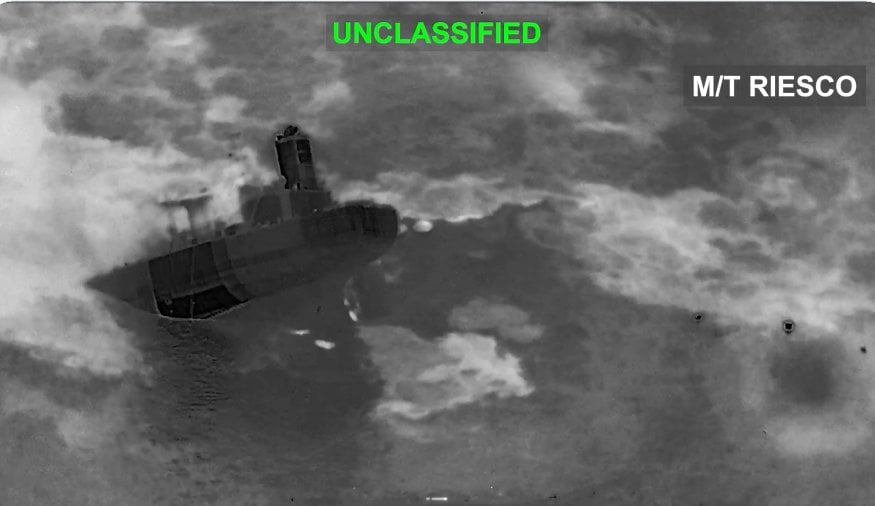
- Reconcile the tanker accounts vessel by vessel. Compare Central Command reporting and released video with the stated identities of Derya, Kaviz, Charminar, Horizon 1 and Riesco. Classify each vessel as struck, damaged, disabled or sunk rather than using a single cumulative figure.
- Track maritime disruption against three measures each day: UKMTO incident reports, the number of commercial vessels redirected from the reported baseline of 94, and reported Hormuz oil flows. Keep the US public offer of naval escorts separate from private advice for vessels to wait.
- Prioritise independent confirmation of the Al Azraq missile incident, the New Andros attack and the Hercules Star casualty report. Treat Iranian claims of successful attacks and Iraqi attribution of a drone strike as unconfirmed until additional official or commercial reporting supports them.
- Treat the Iran-Oman middle corridor as unverified until Oman confirms it and multiple merchant vessels use it without attack, disabling fire or forced delay. Do not infer de-escalation from an Iranian announcement alone.
- Monitor Brent crude, Dutch TTF gas and reported shadow-fleet activity as early signals of a prolonged disruption. Escalate analytic attention if Brent remains above $100 per barrel, TTF remains near €79 per megawatt-hour and shipping reports continue to describe vessels operating outside normal insurance and transparency frameworks.
Confidence & uncertainty
Overall confidence is high because multiple high-prior wire, trade and major-media reports corroborate the central developments, including US strikes on Iranian tankers, Iranian attacks or attempted attacks on shipping and US forces, Jordanian air-defence activity, UKMTO-confirmed maritime incidents and the rise in Brent crude. The main uncertainties concern the exact timing and locations of overnight strikes, the number and fate of tankers actually sunk or damaged, the conflicting Iranian and US accounts of attacks on US warships and the Al Azraq base, the attribution of attacks in Iraqi and Emirati waters, and the uncorroborated Iran-Oman corridor claim.
Intelligence gaps
- [EEI 1.2 · PARTIAL] Changes in US or Iranian force posture indicating preparation for further attacks, including aircraft dispersal, missile-unit movement, naval sortie activity, or air-defense activation. Recommended collection: satellite imagery/aviation and maritime tracking
- [EEI 2.1 · PARTIAL] Deployment or repositioning of Iranian ballistic missiles, cruise missiles, drones, fast-attack craft, or other strike assets within operational range of US or partner targets. Recommended collection: satellite imagery/signals intelligence
- [EEI 2.3 · UNCOVERED] Iranian diplomatic messages, intermediary contacts, or de-escalation proposals directed to the United States or regional governments. Recommended collection: diplomatic reporting/official statements
- [EEI 2.4 · UNCOVERED] Changes in Iranian military alert levels, command activity, weapons dispersal, or continuity-of-government measures. Recommended collection: signals intelligence/satellite imagery
- [EEI 3.1 · PARTIAL] Arrival or departure of US carrier strike groups, bombers, air-defense units, special operations forces, or additional personnel in the region. Recommended collection: maritime and aviation tracking
- [EEI 3.2 · UNCOVERED] Changes to US force-protection conditions, base access, evacuation plans, embassy staffing, or noncombatant evacuation preparations. Recommended collection: official notices/diplomatic reporting
- [EEI 3.3 · PARTIAL] Presidential, Pentagon, or theater-command statements describing authorized response options, expanded objectives, or revised rules of engagement. Recommended collection: official statements
- [EEI 3.4 · UNCOVERED] US or coalition kinetic actions against Iranian territory, military infrastructure, or aligned groups following new exchanges. Recommended collection: military reporting/open-source imagery
- [EEI 4.3 · PARTIAL] Regional government decisions to close airspace or waterways, raise military readiness, expel personnel, or request additional US or allied forces. Recommended collection: official statements/aviation and maritime notices
Red cell review: CONCUR WITH COMMENT
TLP:CLEAR