TLP:CLEAR · Disclosure is not limited.
Eurasia: US-Iran Exchanges Expand to Warships and Oil Tankers
Time window: Last 1 day · Audience: General analyst · Type: Situation report · DTG: 2026-09-05 18:40Z · Overall confidence: HIGH
BLUF
The US-Iran confrontation has shifted from strikes on fixed sites to direct attacks on US warships and reported US strikes against three Iranian oil tankers on 5 September. Further direct exchanges are very likely within 0-14 days, while a negotiated pause is unlikely as Iran continues attacks on shipping and Washington links further Iranian fire to additional tanker strikes.
Executive summary
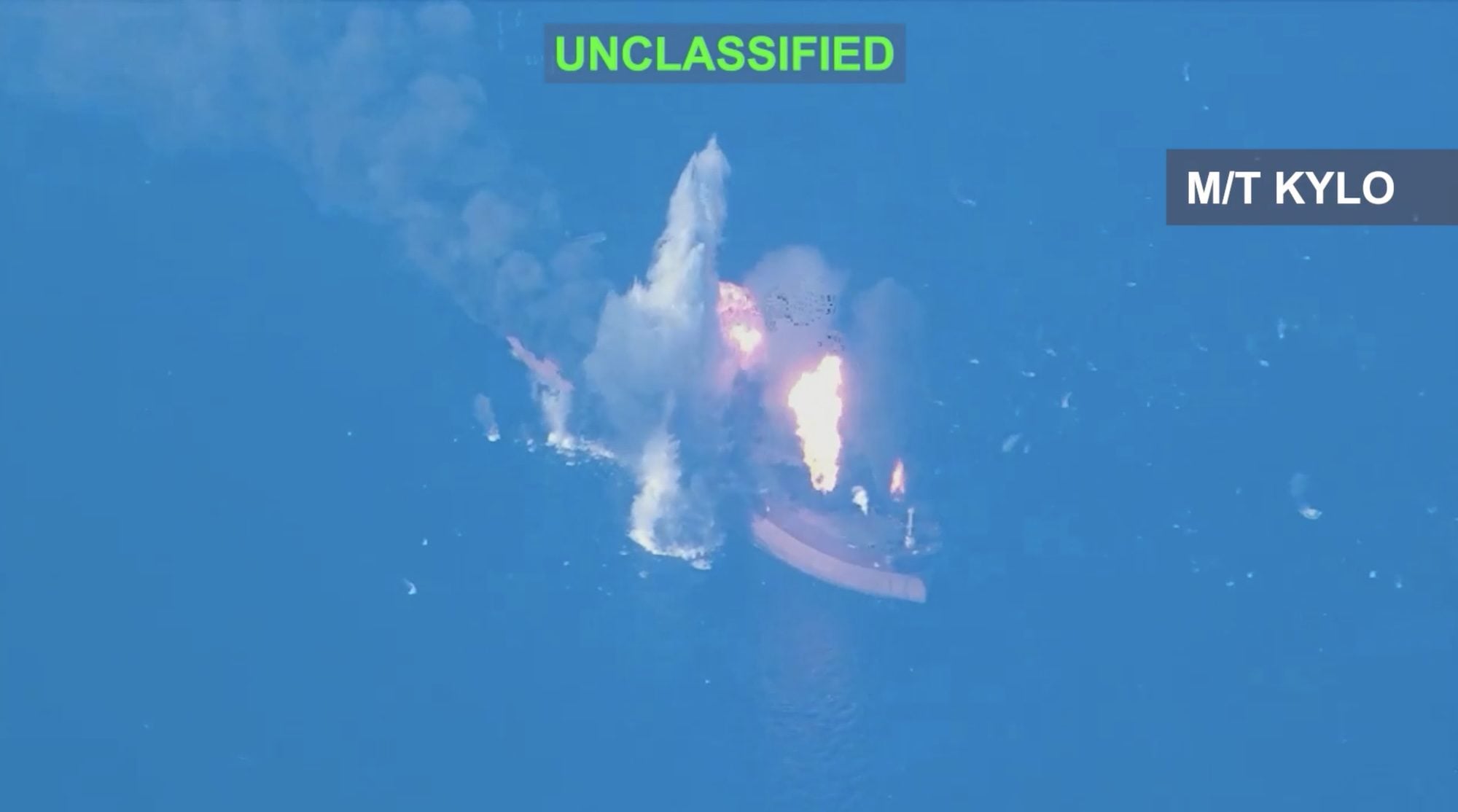
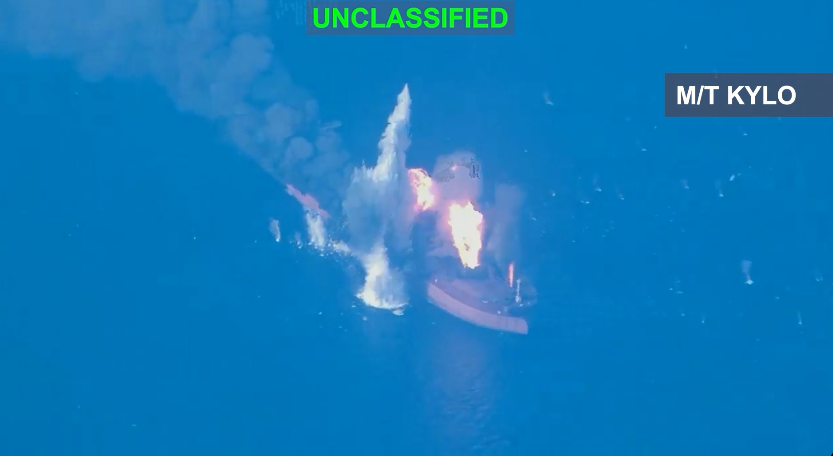
On 5 September, the IRGC reportedly fired ballistic missiles at a US aircraft carrier and a guided-missile destroyer in regional waters. US forces then reportedly disabled M/T Downy and M/T Stark 1 and destroyed M/T Kylo, also known as Noxen, in the Gulf of Oman and near Kharg Island. Reporting conflicts over the location of Stark 1, the damage to Downy and the number of missiles fired, leaving some vessel-level details unresolved. Iran's crude exports through the Strait of Hormuz remain severely constrained, while Washington is combining military action with new sanctions. Tehran has offered to honour the existing memorandum of understanding if the US returns to it, but current attacks and US statements indicate that an immediate pause remains difficult.
Change from previous assessment
Since the 4 September brief, the expected direct exchange has occurred and has expanded to attacks on a US aircraft carrier and destroyer, followed by reported US action against three Iranian tankers. Confidence in the existence of an active military exchange has risen from medium to high. A new judgment has been added on tanker strikes and the assessment now gives greater weight to maritime escalation. The assessment that a negotiated pause is unlikely remains in place, while the Strait of Hormuz judgment is now focused on the reported seven-week interruption of significant Iranian crude exports. Vessel identity, location and damage remain unresolved in the new reporting.
Key judgments
- Further direct US-Iran military exchanges are very likely within 0-14 days. The latest reported exchange involved IRGC ballistic missile attacks on a US aircraft carrier and guided-missile destroyer, followed by US strikes that reportedly disabled M/T Downy and M/T Stark 1 and destroyed M/T Kylo, also known as Noxen. The attacks followed US strikes on IRGC air-defence, radar, naval, mine-laying and communications sites inside Iran. Multiple current reports support the occurrence of the exchange, although the precise damage and vessel identities remain partly contested. (Confidence: high · ASSESSED)
- I&W: Confirmation: further IRGC missile or drone attacks against US Navy vessels, or additional US strikes against Iranian naval or oil assets. (0-14 days)
- I&W: Break: a verified joint US-Iran operational pause covering attacks on warships, tankers and fixed sites. (0-14 days)
- Iran is likely to maintain regional pressure against US facilities over 0-14 days, while a coordinated attack involving Hamas in Gaza, Hezbollah in Lebanon, Ansar Allah in Yemen and Shiite groups in Iraq remains unlikely but would have high impact. Iran has already been reported to have attacked US facilities in Jordan, Bahrain and Iraq, including the King Hussein and Al Azraq bases. Forward reporting on a new Iranian attack is thin and largely single-source, so confidence is low. (Confidence: low · ASSESSED)
- I&W: Confirmation: a new Iranian missile, drone or proxy attack against a named US facility in Jordan, Bahrain or Iraq. (0-14 days)
- I&W: Break: verified Iranian orders limiting attacks on US facilities and regional partner groups remaining inactive during a monitored pause. (0-14 days)
- Iranian crude exports through the Strait of Hormuz are very likely to remain severely constrained over 0-14 days, but the available reporting does not establish a complete closure of the waterway. Iran has reportedly gone about seven weeks without shipping significant crude exports through the strait after the US reinstated its naval blockade, and US strikes on 1 September were reported to follow Iranian attacks on commercial shipping. Confidence is medium because the duration and volume estimates rely heavily on limited reporting. (Confidence: medium · ASSESSED)
- I&W: Confirmation: reporting continues to show no significant Iranian crude exports through the Strait of Hormuz and records further attacks on vessels. (0-14 days)
- I&W: Break: independently verified resumption of significant Iranian crude shipments through the strait. (0-14 days)
- A negotiated US-Iran pause is unlikely over 0-14 days. Masoud Pezeshkian said Iran would honour the memorandum of understanding if Washington returned to it, but JD Vance said on 3 September that Iranian attacks on ships were obstructing negotiations. US officials have assessed that Tehran is not ready to make a deal, while the latest missile and tanker exchanges reduce the scope for immediate confidence-building. The conditional diplomatic opening keeps confidence at low rather than insufficient. (Confidence: low · ASSESSED)
- I&W: Confirmation: additional US strikes or Iranian attacks on ships occur without a simultaneous public negotiating channel. (0-14 days)
- I&W: Break: Washington and Tehran jointly announce a return to the memorandum of understanding with reciprocal steps covering attacks and shipping. (0-14 days)
- Washington is likely to sustain military and economic pressure on Iran over 1-3 months. The US has launched the Treasury-led Operation Economic Outcast, announced fresh secondary sanctions against financial networks linked to Iran and reported strikes against three tankers. Senior US officials have also warned that further Iranian attacks on American warships will bring additional action against Iranian oil vessels. Attribution of the tanker warnings differs between reporting on Pete Hegseth and Adm. Brad Cooper, but the policy signal is consistent. (Confidence: medium · ASSESSED)
- I&W: Confirmation: the US announces additional tanker strikes, financial designations or restrictions on Iranian oil exports. (0-3 months)
- I&W: Break: Washington suspends new sanctions and publicly links a military pause to negotiations with Tehran. (0-3 months)
- China and Russia are likely to provide Iran with diplomatic and economic cushioning over 1-3 months, but direct Chinese or Russian entry into the fighting is very unlikely. China is Iran's top trading partner, SCO officials have opposed unilateral coercive measures and military strikes against Iran, and Pezeshkian has engaged Vladimir Putin on the memorandum of understanding. The Russia-Iran strategic partnership contains no automatic mutual-defence clause, which limits the evidence for direct military intervention. (Confidence: medium · ASSESSED)
- I&W: Confirmation: China, Russia or the SCO issue new diplomatic statements or economic measures aimed at cushioning Iran from US pressure. (1-3 months)
- I&W: Break: Russian or Chinese forces conduct direct operations against US forces or publicly enter the US-Iran fighting. (1-3 months)
- An operational Iranian supersonic ramjet capability is very unlikely within 1-3 months. Project C430L remains active and involves reported Russian analysis of Iranian test material, but available evidence places the programme at an early stage of technology transfer and development. Russia's public description of military-technical cooperation with Iran focuses on air-defence systems, aviation and small arms, leaving the alleged propulsion programme unconfirmed at official level. (Confidence: medium · ASSESSED)
- I&W: Confirmation of the judgment: no reported Iranian deployment or operational use of a supersonic ramjet missile during the period. (1-3 months)
- I&W: Break: credible evidence of an Iranian flight test, deployment or combat use of a named supersonic ramjet missile. (1-3 months)
Outlook & scenarios
Repeated maritime retaliation (65%)
Over the next 0-14 days, the IRGC conducts another attack on a US warship or regional US facility, and US forces respond against Iranian naval or oil assets. Shipping through the Strait of Hormuz remains severely constrained, while Washington adds sanctions or further tanker strikes.
Conditional negotiating pause (20%)
Pezeshkian's conditional support for the memorandum of understanding becomes a channel for limited US-Iran contacts. Both sides reduce attacks for a short period while disputing the terms and sequencing of sanctions relief, shipping access and military restraint.
Regional multi-front expansion (15%)
Iran coordinates attacks by regional partners against Israel and US facilities in Jordan, Bahrain or Iraq. Israel and the US respond with wider strikes, producing a rapid increase in the geographic scope and intensity of the confrontation. This is the low-probability, high-impact wildcard.
Contained pressure campaign (35%)
The US maintains the naval blockade, tanker pressure and sanctions without another large exchange. Iran keeps crude exports through the Strait of Hormuz at low levels but avoids attacks that directly kill US personnel, preserving a narrow path to later negotiations.
Recommendations
- Maintain a 0-14 day warning tracker for IRGC missile activity, attacks on US Navy vessels, strikes on US facilities in Jordan, Bahrain and Iraq, and further US action against Iranian tankers.
- Separate vessel-level assessments for M/T Downy, M/T Stark 1 and M/T Kylo or Noxen. Do not merge the conflicting Kharg Island and Jask reporting until vessel identity, location and damage are independently verified.
- Treat Iranian acceptance of the memorandum of understanding as a conditional diplomatic signal, not evidence of an active pause. Track a joint US-Iran statement, reciprocal military restraint and any agreed shipping provisions as separate confirmation requirements.
- Monitor the Strait of Hormuz for verified changes in Iranian crude export volumes and vessel movement. Distinguish constrained Iranian exports from a complete closure of the waterway.
- Prepare a regional escalation watchlist covering Hamas in Gaza, Hezbollah in Lebanon, Ansar Allah in Yemen and Shiite groups in Iraq, with priority on observable attacks against Israel or US facilities.
- Track new US secondary sanctions, tanker designations and restrictions on Iranian oil exports, alongside Chinese and Russian diplomatic or economic responses.
- Keep Project C430L separate from assessments of current Iranian strike capability. Require evidence of a flight test, deployment or combat use before treating an Iranian supersonic ramjet capability as operational.
Confidence & uncertainty
Overall confidence is high because the 5 September exchange is supported by current reporting from US Central Command-linked accounts, maritime trade publications and major media, while the earlier US strikes and Iranian regional retaliation are reported across multiple claims. Confidence is lower for the precise location and damage of M/T Stark 1 and M/T Downy, the attribution of tanker-destruction warnings, the timing of a negotiated pause and the operational status of Project C430L. These uncertainties affect detail and forecasting, not the core assessment that direct US-Iran military exchanges have intensified.
Alternative analysis (red cell)
The evidence more securely establishes that military exchanges and economic pressure have been reported than it establishes their likely continuation on the stated timelines. Conflicting vessel locations and damage assessments in claims, and b05dfde0-ffc0-46b7-a2ae-af9cc1239996 make escalation and export-impact forecasts especially fragile. A defensible alternative is that Iran may pause or vary its responses while diplomatic and economic pressure continue, with the available record insufficient to assign stronger directional probabilities.
Intelligence gaps
- [EEI 1.2 · PARTIAL] Changes in US or Iranian force posture indicating preparation for further attacks, including aircraft dispersal, missile-unit movement, naval sortie activity, or air-defense activation. Recommended collection: satellite imagery/aviation and maritime tracking
- [EEI 1.4 · PARTIAL] Evidence of mobilization or operational tasking by Iranian-aligned armed groups against US personnel, bases, or partners. Recommended collection: local reporting/social media/human intelligence
- [EEI 2.1 · PARTIAL] Deployment or repositioning of Iranian ballistic missiles, cruise missiles, drones, fast-attack craft, or other strike assets within operational range of US or partner targets. Recommended collection: satellite imagery/signals intelligence
- [EEI 2.2 · PARTIAL] Orders, threats, targeting claims, or attack preparations by Iranian proxy groups in Iraq, Syria, Lebanon, Yemen, or the Gulf. Recommended collection: group statements/local reporting
- [EEI 2.3 · PARTIAL] Iranian diplomatic messages, intermediary contacts, or de-escalation proposals directed to the United States or regional governments. Recommended collection: diplomatic reporting/official statements
- [EEI 2.4 · UNCOVERED] Changes in Iranian military alert levels, command activity, weapons dispersal, or continuity-of-government measures. Recommended collection: signals intelligence/satellite imagery
- [EEI 3.1 · UNCOVERED] Arrival or departure of US carrier strike groups, bombers, air-defense units, special operations forces, or additional personnel in the region. Recommended collection: maritime and aviation tracking
- [EEI 3.2 · UNCOVERED] Changes to US force-protection conditions, base access, evacuation plans, embassy staffing, or noncombatant evacuation preparations. Recommended collection: official notices/diplomatic reporting
- [EEI 4.2 · PARTIAL] Changes in commercial vessel routing, port calls, AIS behavior, shipping delays, or war-risk insurance premiums in the Gulf, Strait of Hormuz, Red Sea, or adjacent waters. Recommended collection: maritime/AIS
- [EEI 4.3 · UNCOVERED] Regional government decisions to close airspace or waterways, raise military readiness, expel personnel, or request additional US or allied forces. Recommended collection: official statements/aviation and maritime notices
- [EEI 4.4 · PARTIAL] Sustained movements in oil and gas prices, tanker freight rates, or reported disruptions to production and export facilities attributable to the military exchanges. Recommended collection: energy-market reporting
Red cell review: PARTIAL DISSENT
TLP:CLEAR