TLP:CLEAR · Disclosure is not limited.
Eurasia: US-Iran Exchanges Raise Maritime and European Escalation Risks
Time window: Last 1 day · Audience: General analyst · Type: Situation report · DTG: 2026-08-20 13:11Z · Overall confidence: LOW
BLUF
US-Iran exchanges are likely to remain active and diplomatically constrained over the next 0-14 days. The immediate risks are continued pressure on shipping through the Strait of Hormuz and a limited Iranian strike against a US facility in Europe, although no such European strike is reported.
Executive summary
The US-Iran memorandum of understanding expired on 17 August, while Donald Trump has announced tougher economic measures against Iran and countries trading with it. Reporting on Iran describes offensive and defensive planning, continued threats to Gulf states supporting US forces, and consideration of US military targets in Europe, including air bases in Bulgaria and Cyprus and the Bezmer airbase. Shipping risks remain elevated, with five commercial vessels reportedly attacked in the Strait of Hormuz over the past week, although attribution for individual incidents remains unresolved. Confidence is low because the evidence combines current reporting with undated and stale material, repeated single-source accounts, conflicting dates on negotiations, and disagreement over the severity of maritime disruption.
Change from previous assessment
No material change from the 19 August brief on the core direction of the assessment. Diplomatic progress remains stalled, maritime risk remains elevated, and Iranian consideration of targets in Bulgaria, Cyprus and wider Europe remains a low-confidence expansion warning rather than evidence of execution. This brief gives greater emphasis to the distinction between announced US economic measures and their implementation, and retains all prior judgments without retiring any.
Key judgments
- The US-Iran confrontation is likely to remain militarily active and diplomatically constrained over the next 0-14 days. The US-Iran memorandum of understanding expired on 17 August, Donald Trump has announced tougher economic measures against Iran and countries doing business with it, and reporting describes Iranian offensive and defensive planning whose response depends on Washington. The assessment rests on several major-media reports, but the diplomatic picture includes lower-confidence and date-inconsistent reporting about the status of talks. (Confidence: medium · ASSESSED)
- I&W: Confirm: Within 0-14 days, the US Treasury or Donald Trump announces and implements a named new measure against an Iranian oil, shipping or financial entity while Iranian officials announce a new offensive or defensive action. (0-14 days)
- I&W: Break: US and Iranian officials publicly announce renewed direct talks or a replacement arrangement before 2 September. (0-14 days)
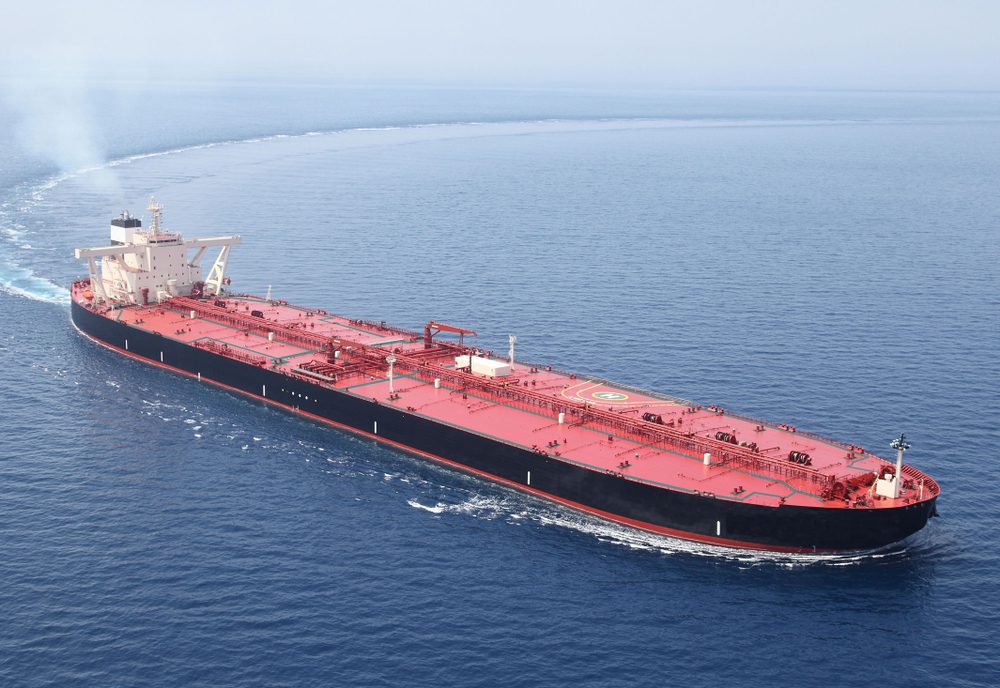
- The Strait of Hormuz is likely to remain a high-risk transit area over the next 0-14 days, with further attacks on commercial vessels more likely than a return to normal traffic. The UKMTO Operations Centre reported attacks on five commercial vessels over the past week, Iran's lead negotiator conditioned reopening Hormuz on US concessions, and reporting states that Iran has stemmed marine traffic through the strait. Attribution remains unresolved for the vessel struck off Oman, which the UK Navy described as hit by an unknown projectile and which one low-confidence report linked to the death of one seafarer. Confidence is medium because the evidence is partly undated, includes an unattributed incident, and does not establish that every reported attack was conducted by Iran. (Confidence: medium · ASSESSED)
- I&W: Confirm: The UKMTO Operations Centre reports another attack on a commercial vessel in the Strait of Hormuz, or a ship operator records a new diversion or return from the strait. (0-14 days)
- I&W: Break: Iran announces that Hormuz is reopening and commercial transits continue for 14 consecutive days without a reported attack. (0-14 days)
- Iran is likely to continue signalling an option to strike US military targets in Europe, but an actual Iranian strike on the Bezmer airbase in Bulgaria, air bases in Cyprus, or another US facility in Europe is unlikely over the next 0-14 days. Reporting identifies these locations as possible targets and describes Iranian consideration of strikes if Washington escalates, but no claim reports execution. The target reporting is repeated across major-media accounts but remains single-source in substance, so confidence is low. (Confidence: low · ASSESSED)
- I&W: Confirm: Bulgarian or Cypriot authorities, or a US European command, reports a confirmed Iranian strike, air-defence engagement or closure linked to an Iranian attack. (0-14 days)
- I&W: Break: Iranian officials publicly withdraw warnings about European targets and no target-specific military alert occurs through 2 September. (0-14 days)
- The United States is likely to place greater weight on economic coercion than on a new military operation over the next 1-3 months. Donald Trump has announced an economic operation and tougher measures against Iran and countries that support or trade with it, while the United States has previously sanctioned Iran's oil, shipping and financial sectors. Confidence is medium because several reports support the announced policy direction, but the record does not establish implementation and contains contradictory claims about whether US Middle East policy has ended or continues to rely on military presence. (Confidence: medium · ASSESSED)
- I&W: Confirm: The US Treasury publishes new sanctions or financial restrictions against named Iranian entities or against a third-country firm trading with Iran, without a concurrent announcement of a new US strike. (1-3 months)
- I&W: Break: Donald Trump announces a new US military operation against Iran or publicly resumes direct negotiations with Tehran. (1-3 months)
Outlook & scenarios
Managed coercion and maritime pressure (55%)
Over the next 0-14 days, the Trump administration sustains economic pressure, Iran maintains threats and coercive pressure around the Strait of Hormuz, and no Iranian strike occurs against a US facility in Europe. The confrontation remains active without a decisive diplomatic settlement.
Limited Iranian geographic expansion (22%)
Iran conducts a limited strike or disruptive operation against a named US-linked target in Bulgaria or Cyprus, or intensifies action against maritime infrastructure in the Strait of Hormuz. The operation remains below the level of a sustained campaign but prompts new US and allied defence measures.
Conditional diplomatic opening (18%)
Washington and Tehran re-establish a direct or mediated channel after the expiration of the memorandum of understanding. Iran links the reopening of the Strait of Hormuz to US acceptance of its stated measures, producing a temporary reduction in maritime risk.
Wildcard: direct escalation into Europe (8%)
Low probability, high impact. Iran conducts a direct attack on a US military facility in Europe while maritime attacks continue in the Strait of Hormuz. The combination triggers a wider US response, pressure on European governments over basing access, and a sharp deterioration in prospects for negotiations.
Recommendations
- For the next 14 days, maintain a single incident log for the Strait of Hormuz. Record the vessel name, flag, date, location, weapon description, casualty report and attribution source. Require two independent reports before assessing an incident as an Iranian attack.
- Create a named-target watchlist for the Bezmer airbase in Bulgaria, air bases in Cyprus and other US facilities in Europe identified in reporting. Prioritise official statements from Bulgarian, Cypriot and US authorities, and flag any reported air-defence engagement, access restriction, damage or evacuation.
- Track US Treasury and Donald Trump announcements separately from implementation. Record each new measure against Iran, its target, effective date and any effect on third-country firms or financial institutions.
- Set an alert for public statements by Iranian officials, Donald Trump and US officials on renewed talks, replacement arrangements for the expired memorandum of understanding, and conditions for reopening the Strait of Hormuz.
- Do not use undated or 2023 maritime reporting as proof of a current attack pattern without refreshed evidence. Keep the current five-vessel report, the unknown-projectile incident off Oman and older shipping-disruption claims in separate confidence categories.
- Brief decision-makers on the distinction between reported Iranian target consideration and assessed strike likelihood. Treat any confirmed incident at Bezmer, a Cypriot air base or another named US facility as an immediate reassessment trigger.
Confidence & uncertainty
Overall confidence is low because the evidence combines high-confidence reporting with medium and low-confidence claims, repeated accounts that do not provide independent corroboration, and unresolved attribution for individual maritime incidents. The record contains stale material from 2023 and conflicting dates concerning negotiations, policy status and shipping disruption. Reporting is firmer on Donald Trump's economic announcements and Iranian statements about planning than on the timing, implementation or geographic extent of future military action.
Intelligence gaps
- [EEI 1.1 · PARTIAL] Confirmed strikes, attacks, interceptions, or casualties involving US or Iranian forces, including location, timing, and weapon systems used. Recommended collection: military reporting/open-source imagery
- [EEI 1.2 · PARTIAL] Changes in US or Iranian force posture indicating preparation for further attacks, including aircraft dispersal, missile-unit movement, naval sortie activity, or air-defense activation. Recommended collection: satellite imagery/aviation and maritime tracking
- [EEI 1.3 · PARTIAL] Public or private warnings, ultimata, declared red lines, or force-protection directives issued by US or Iranian leadership. Recommended collection: official statements/diplomatic reporting
- [EEI 1.4 · PARTIAL] Evidence of mobilization or operational tasking by Iranian-aligned armed groups against US personnel, bases, or partners. Recommended collection: local reporting/social media/human intelligence
- [EEI 2.1 · UNCOVERED] Deployment or repositioning of Iranian ballistic missiles, cruise missiles, drones, fast-attack craft, or other strike assets within operational range of US or partner targets. Recommended collection: satellite imagery/signals intelligence
- [EEI 2.2 · PARTIAL] Orders, threats, targeting claims, or attack preparations by Iranian proxy groups in Iraq, Syria, Lebanon, Yemen, or the Gulf. Recommended collection: group statements/local reporting
- [EEI 2.3 · PARTIAL] Iranian diplomatic messages, intermediary contacts, or de-escalation proposals directed to the United States or regional governments. Recommended collection: diplomatic reporting/official statements
- [EEI 2.4 · PARTIAL] Changes in Iranian military alert levels, command activity, weapons dispersal, or continuity-of-government measures. Recommended collection: signals intelligence/satellite imagery
- [EEI 3.1 · UNCOVERED] Arrival or departure of US carrier strike groups, bombers, air-defense units, special operations forces, or additional personnel in the region. Recommended collection: maritime and aviation tracking
- [EEI 3.2 · UNCOVERED] Changes to US force-protection conditions, base access, evacuation plans, embassy staffing, or noncombatant evacuation preparations. Recommended collection: official notices/diplomatic reporting
- [EEI 3.3 · UNCOVERED] Presidential, Pentagon, or theater-command statements describing authorized response options, expanded objectives, or revised rules of engagement. Recommended collection: official statements
- [EEI 3.4 · PARTIAL] US or coalition kinetic actions against Iranian territory, military infrastructure, or aligned groups following new exchanges. Recommended collection: military reporting/open-source imagery
- [EEI 4.2 · PARTIAL] Changes in commercial vessel routing, port calls, AIS behavior, shipping delays, or war-risk insurance premiums in the Gulf, Strait of Hormuz, Red Sea, or adjacent waters. Recommended collection: maritime/AIS
- [EEI 4.3 · UNCOVERED] Regional government decisions to close airspace or waterways, raise military readiness, expel personnel, or request additional US or allied forces. Recommended collection: official statements/aviation and maritime notices
- [EEI 4.4 · PARTIAL] Sustained movements in oil and gas prices, tanker freight rates, or reported disruptions to production and export facilities attributable to the military exchanges. Recommended collection: energy-market reporting
Cited sources
[1] vietnam.vn · В чём особенность новой стратегии Ирана по противодействию США? (B) · sha256:c4925cab41a4 [2] Al Jazeera · Oil flows nearly tripled before US-Iran MoU expired, analysis shows (A) · sha256:61bc2ee2d802 [3] bbc.co.uk · Trump vows tougher economic measures on Iran and supporting countries (A) · sha256:c47da2b73409 [4] gcaptain.com · Three Chinese Tankers U-Turn in Hormuz as Risks Remain High (B) · sha256:aa6adb23fd93 [5] gordonua.com · Иран планирует "наступательные операции" против США – СМИ (B) · sha256:06ded25be868 [6] russian.rt.com · «Если США зайдут слишком далеко»: СМИ сообщили о возможных ударах Ирана по американским объектам в Европе (B) · sha256:61efc1a00d32 [7] Eurasia Business News · Stock Market Today: Dow, S&P 500 and Nasdaq Rise as Treasury Buybacks Lower Bond Yields (B) · sha256:ceae36cb0aa8 [8] news.ru · КСИР пригрозил США еще более мощным оружием (B) · sha256:5e152dad79e7 [9] rosbalt.ru · Трамп объявил экономическую операцию против Ирана (B) · sha256:cf29a51d0bf1 [10] dw.com · Трамп объявил Ирану масштабную экономическую войну (B) · sha256:f64004d28ee3 [11] minval.az · Foreign Affairs: США потеряли контроль над Ближним Востоком - Minval Politika (B) · sha256:3a58ac6117ba
Source content hashes were computed at collection time; the cited text is preserved unmodified for the life of this product.
Red cell review: CONCUR WITH COMMENT
TLP:CLEAR