TLP:CLEAR · Disclosure is not limited.
Eurasia: US-Iran Exchanges Strain Regional Security and Energy Flows
Time window: Last 1 day · Audience: General analyst · Type: Situation report · DTG: 2026-09-16 22:37Z · Overall confidence: HIGH
BLUF
Further Iranian attacks on US military positions are very likely within 0-14 days, while the United States faces sustained interceptor expenditure and damage across bases in Jordan, Saudi Arabia and Kuwait. Hormuz traffic is severely restricted rather than fully halted, and Houthi gains in Yemen are widening pressure on Saudi energy infrastructure and Red Sea shipping.
Executive summary
The US-Israeli war against Iran, begun on 28 February, is imposing simultaneous military, maritime, energy and political costs. Reporting released on 16 September says Iranian missiles struck US aircraft at Muwaffaq Salti Air Base in Jordan, while CBS imagery shows damage at US bases in Saudi Arabia and Camp Buehring in Kuwait. The Jordan aircraft damage and the attribution of some base damage remain disputed. US forces reportedly used up to 70 Patriot and more than 10 THAAD interceptors against one Iranian strike. Recorded Hormuz traffic fell to four vessels on 15 September, with no very large crude carriers or liquefied natural gas tankers, although laden ships continued to use the Iranian route and Saudi Aramco arranged sales and loading outside the strait. Houthi forces have made gains along Yemen's Red Sea coast and attacked Saudi oil facilities, while Chinese and Omani diplomatic channels have not yet produced a durable US-Iran de-escalation.
Change from previous assessment
Since the 15 September brief, the assessment adds stronger evidence of direct US base damage and unusually high interceptor expenditure in a single Iranian strike. The Hormuz judgement is now anchored to 15 September data showing four recorded transits, no very large crude carriers or liquefied natural gas tankers, and continued use of Iranian routes by a small number of laden vessels. The assessment adds a new judgement that Houthi territorial gains and attacks on Saudi energy infrastructure are likely to sustain Red Sea spillover. Confidence in persistent US resource pressure remains high, while confidence in the Hormuz and near-term de-escalation judgements remains medium because of preliminary shipping data, conflicting attribution and disputed diplomatic reporting. US political and consumer-cost pressure is now treated as a separate judgement after the 16 September House vote and new fuel-cost estimates.
Key judgments
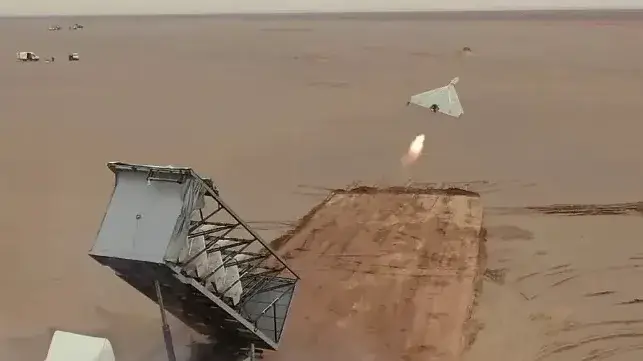
- Iranian attacks on US military positions in the Middle East are very likely to continue within 0-14 days. The reported 9 September strike on Muwaffaq Salti Air Base in Jordan hit US aircraft after air defences failed to intercept all targets, and US forces used up to 70 Patriot and more than a dozen THAAD interceptors. Separate imagery reports damage at a US airbase in Saudi Arabia and Camp Buehring in Kuwait. Attribution of some base damage remains contested because CBS reporting attributes it to Iranian strikes, while damage-specific imagery claims identify the attackers only as unknown. (Confidence: medium · ASSESSED)
- I&W: Confirm: A new Iranian missile or drone strike, or a new interception report, is recorded at a named US facility in Jordan, Kuwait, Bahrain, Saudi Arabia or the UAE. (0-14 days)
- I&W: Break: No new Iranian strike, interception or damage report is recorded at those named facilities during the next 14 days. (0-14 days)
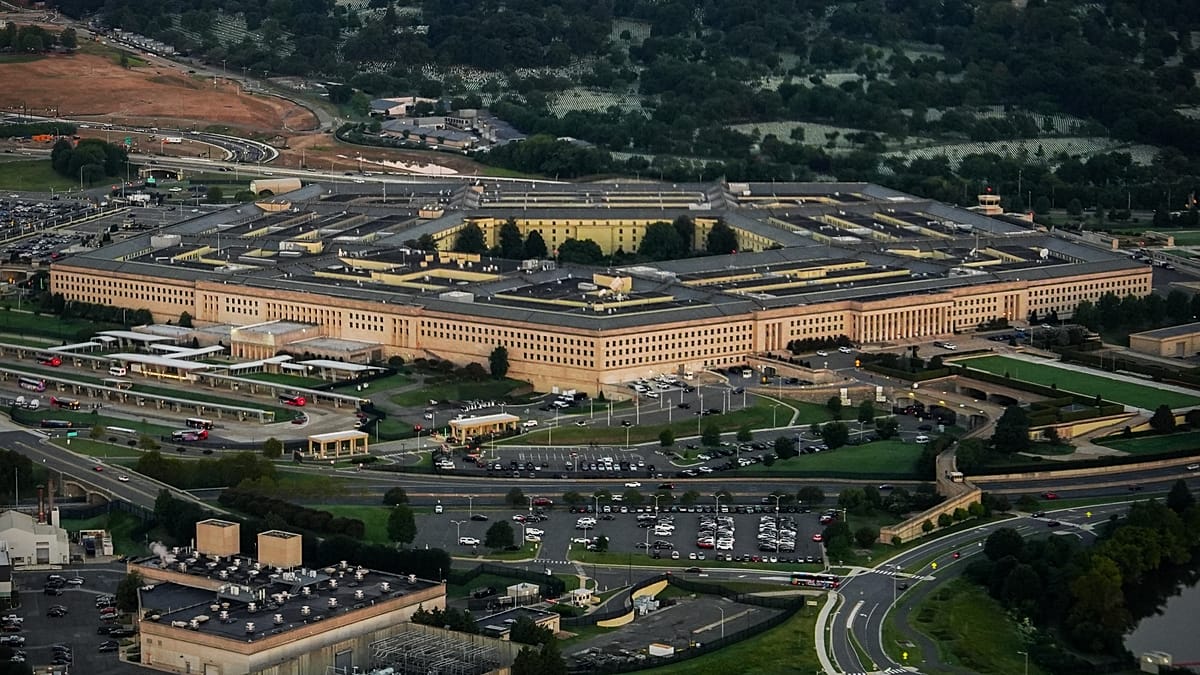
- US Patriot and THAAD inventories, along with the broader munitions replacement burden, are very likely to remain under pressure for 1-3 months. The CBO reported approximately $38 billion in combat-operation costs through 1 August, including $21.7 billion for munitions replacement. CBO assessed that the United States had expended one-half to two-thirds of its missile-defence interceptor arsenal since June 2025, while CSIS estimated more than 1,500 Patriot missiles and 200 THAAD interceptors had been expended by late July. The reported use of approximately 80 interceptors against one strike in Jordan indicates that expenditure remains operationally material. (Confidence: high · ASSESSED)
- I&W: Confirm: The CBO, Pentagon Inspector General or Department of Defence reports additional Patriot or THAAD expenditure, higher munitions replacement costs or a longer replenishment timeline. (0-3 months)
- I&W: Break: Official inventory reporting shows replenishment has restored a material share of the expended interceptor stocks without additional operational expenditure. (1-3 months)
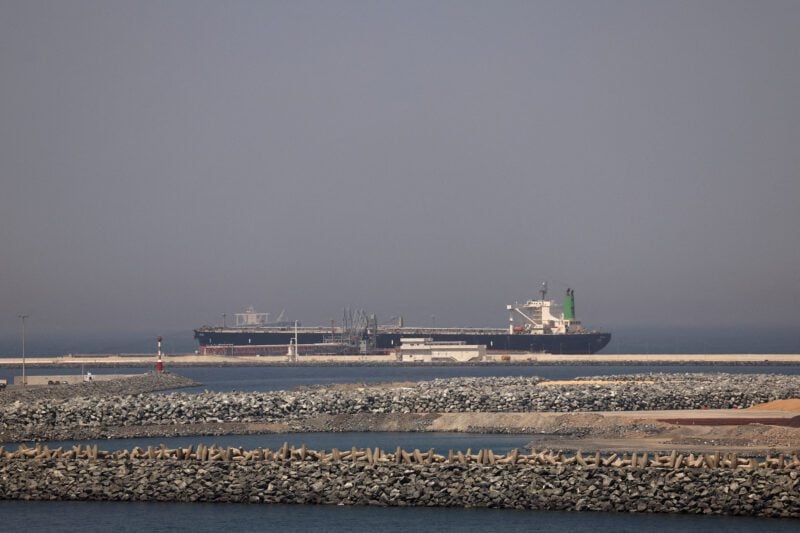
- Commercial transit through the Strait of Hormuz is very likely to remain severely restricted, but unlikely to stop completely, within 0-14 days. Preliminary data recorded four transits on 15 September, down from seven the previous day and well below the 10-day average of 18. Two vessels entered and two exited, but no very large crude carriers or liquefied natural gas tankers transited. The Salute, Nautilus and two other laden vessels nevertheless used Iranian or unidentified routes, while Saudi Aramco sold about 20 million barrels for loading outside the strait and arranged ship-to-ship loading from the Gulf of Oman. The assessment is constrained by vessels sailing with transponders off and by the incomplete status of the Iran-Oman shipping plan. (Confidence: medium · ASSESSED)
- I&W: Confirm: Recorded daily transits remain in single digits and no very large crude carriers or liquefied natural gas tankers enter or exit the strait. (0-14 days)
- I&W: Break: Recorded traffic rises towards the 18-vessel 10-day average, including repeated very large crude carrier or liquefied natural gas tanker movements, alongside implementation of the Iran-Oman shipping plan. (0-14 days)
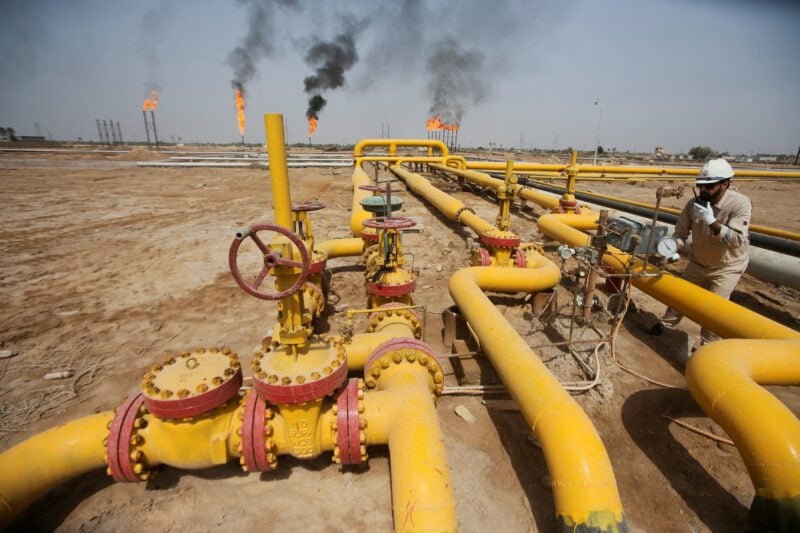
- Houthi gains in Yemen are very likely to sustain pressure on the Red Sea and Saudi energy infrastructure within 0-14 days. Reporting says Houthi forces seized effective control of Yemen's Red Sea coastline, including Mocha and Perim Island, and captured strategic territory near the Bab al-Mandab Strait. The group also attacked Saudi oil facilities with drones and missiles, while Saudi Arabia's 3.6 million-barrels-per-day East-West pipeline remained shut after a drone attack. Saudi Arabia attributes the pipeline attack to Iran-backed militias in Iraq, but another account identifies the attackers as unknown. Washington has told Riyadh it will not become directly involved in the Yemen war, which leaves Saudi Arabia managing the immediate security burden. (Confidence: medium · ASSESSED)
- I&W: Confirm: Houthi forces conduct another drone or missile attack against a Saudi oil facility, Saudi shipping or a named Red Sea port, or report further territorial gains near Mocha, Perim Island or Bab al-Mandab. (0-14 days)
- I&W: Break: The East-West pipeline resumes operations and Houthi forces publicly halt attacks on Saudi facilities and shipping without a replacement incident. (0-14 days)
- A durable US-Iran de-escalation is unlikely within 0-14 days despite active diplomatic channels. Chinese Foreign Minister Wang Yi met Iranian Foreign Minister Abbas Araghchi in Beijing on 16 September, and Araghchi said Iran still regarded the 17 June memorandum of understanding as valid. US officials also met Houthi representatives in Muscat on 13 September with Omani assistance. These openings have not ended military or economic pressure: the House resolution demanding an end to operations is non-binding, the Economic Outcast sanctions campaign remains in force, and the United States resumed major airstrikes on Iran on 8 July. The memorandum's status is contested because an Iranian deputy foreign minister previously said on 15 July that it no longer existed. (Confidence: medium · ASSESSED)
- I&W: Confirm: Iranian and US officials announce or implement a verified ceasefire that halts strikes and links to the 17 June memorandum of understanding. (0-14 days)
- I&W: Break: Iran or the United States conducts another strike while the Beijing or Muscat channels continue without a published operational agreement. (0-14 days)
- US political and consumer-cost pressure is very likely to grow over 1-3 months. The House of Representatives voted 220-204 on 16 September for a non-binding resolution demanding an end to military operations against Iran, while the White House's additional $87.6 billion emergency funding request remains unapproved. CBO put combat-operation costs at approximately $38 billion through 1 August, and Brown University calculations cited by the Wall Street Journal estimated that US consumers had spent $107 billion more on fuel during the conflict and related supply disruptions. Average US petrol reached $4.30 per gallon and diesel reached $6.27 per gallon on 15 September. The size of the costs is well reported, but the relative contribution of Iran and the Russia-Ukraine war to fuel prices remains disputed. (Confidence: medium · ASSESSED)
- I&W: Confirm: Congress takes another recorded action on war operations or emergency funding, while US petrol or diesel prices remain at or above the 16 September levels. (1-3 months)
- I&W: Break: No additional congressional action occurs and national petrol and diesel prices decline materially from the 16 September levels for at least four consecutive weeks. (1-3 months)
Outlook & scenarios
Continued attritional exchanges and constrained shipping (60%)
Iran sustains missile and drone attacks against US positions, the United States continues defensive interceptions, and Hormuz traffic remains at severely reduced levels without a formal total closure. Houthi control along Yemen's Red Sea coast continues to pressure Saudi oil infrastructure and shipping. Diplomatic contacts in Beijing and Muscat manage selected incidents but do not produce a durable US-Iran settlement.
Partial maritime deconfliction without a political settlement (30%)
Iran and Oman finalise operating procedures for the Strait of Hormuz, allowing selected commercial movements to resume, including some larger tankers. US-Iran military exchanges continue at a lower tempo, while the United States and Houthis maintain indirect contacts. The June memorandum remains politically contested and the sanctions campaign continues.
High-impact wildcard: regional widening (15%)
An unlikely but high-impact sequence combines a new Iranian strike on a US base or commercial vessel with further Houthi attacks on Saudi energy facilities. Damage, casualties or a disputed attribution triggers additional US action and drives Hormuz and Red Sea traffic below current levels. Saudi requests for direct US support intensify, while Chinese and Omani mediation fails to contain the crisis.
Recommendations
- Maintain a 0-14 day watchlist for new Iranian missile and drone activity against Muwaffaq Salti Air Base, Camp Buehring, the Saudi airbase shown in imagery, 5th Fleet headquarters in Manama and other named US facilities in the Gulf.
- Separate damage confirmation from attribution. Seek independent imagery, official damage assessments and geolocated reporting before treating Iranian responsibility for the Saudi and Kuwaiti base damage, or aircraft damage in Jordan, as established.
- Track daily Hormuz vessel counts by ship class and route. Flag any movement of very large crude carriers or liquefied natural gas tankers, changes in transponder behaviour, and implementation of the Iran-Oman shipping plan.
- Monitor Houthi activity around Mocha, Perim Island and Bab al-Mandab, alongside attacks on Saudi oil facilities and the operating status of the East-West pipeline. Treat Saudi attribution to Iran-backed Iraqi militias as an allegation until independently corroborated.
- Follow the Beijing and Muscat channels for concrete outputs rather than statements alone. Prioritise evidence of a verified ceasefire, implementation of the 17 June memorandum of understanding and a sustained halt in US and Iranian strikes.
- Use the CBO cost estimate, the reported $21.7 billion munitions replacement burden and the one-half to two-thirds interceptor depletion estimate as baseline variables in assessments of US operational endurance and future force protection.
- Track congressional action after the 220-204 House vote and the status of the $87.6 billion emergency funding request, while separating Iran-related fuel effects from the competing Russia-Ukraine attribution.
Confidence & uncertainty
Overall confidence is high in the broad assessment because 18 usable sources include CBO reporting, Pentagon Inspector General material, Reuters reporting, BBC and CBS imagery, trade publications and shipping data that independently corroborate the conflict's military, economic and maritime effects. Confidence is lower for individual attributions and forecasts. The main uncertainties concern who caused damage at US bases, whether Iranian missiles damaged aircraft at Muwaffaq Salti, the identity of vessels destroyed near the Iranian coast, the reliability of incomplete transponder data and the disputed status of the 17 June memorandum of understanding.
Intelligence gaps
- [EEI 1.2 · UNCOVERED] Changes in US or Iranian force posture indicating preparation for further attacks, including aircraft dispersal, missile-unit movement, naval sortie activity, or air-defense activation. Recommended collection: satellite imagery/aviation and maritime tracking
- [EEI 1.3 · UNCOVERED] Public or private warnings, ultimata, declared red lines, or force-protection directives issued by US or Iranian leadership. Recommended collection: official statements/diplomatic reporting
- [EEI 1.4 · UNCOVERED] Evidence of mobilization or operational tasking by Iranian-aligned armed groups against US personnel, bases, or partners. Recommended collection: local reporting/social media/human intelligence
- [EEI 2.1 · UNCOVERED] Deployment or repositioning of Iranian ballistic missiles, cruise missiles, drones, fast-attack craft, or other strike assets within operational range of US or partner targets. Recommended collection: satellite imagery/signals intelligence
- [EEI 2.2 · PARTIAL] Orders, threats, targeting claims, or attack preparations by Iranian proxy groups in Iraq, Syria, Lebanon, Yemen, or the Gulf. Recommended collection: group statements/local reporting
- [EEI 2.3 · UNCOVERED] Iranian diplomatic messages, intermediary contacts, or de-escalation proposals directed to the United States or regional governments. Recommended collection: diplomatic reporting/official statements
- [EEI 2.4 · UNCOVERED] Changes in Iranian military alert levels, command activity, weapons dispersal, or continuity-of-government measures. Recommended collection: signals intelligence/satellite imagery
- [EEI 3.1 · UNCOVERED] Arrival or departure of US carrier strike groups, bombers, air-defense units, special operations forces, or additional personnel in the region. Recommended collection: maritime and aviation tracking
- [EEI 3.2 · UNCOVERED] Changes to US force-protection conditions, base access, evacuation plans, embassy staffing, or noncombatant evacuation preparations. Recommended collection: official notices/diplomatic reporting
- [EEI 3.3 · UNCOVERED] Presidential, Pentagon, or theater-command statements describing authorized response options, expanded objectives, or revised rules of engagement. Recommended collection: official statements
- [EEI 4.3 · PARTIAL] Regional government decisions to close airspace or waterways, raise military readiness, expel personnel, or request additional US or allied forces. Recommended collection: official statements/aviation and maritime notices
Cited sources
[1] The Maritime Executive · Report: U.S. Personnel Injured in Iranian Attack on Boat Near Hormuz (C) · sha256:f47fe75932ee [2] РИА Новости · США потратили до 70 ракет для отражения одного удара Ирана (B) · Wed Sep 16 2026 08:15:00 GMT+0000 (Coordinated Universal Time) · sha256:873fd3138429 [3] BBC · Watch: Leaked photos reveal extensive damage at US bases in Gulf (A) · Wed Sep 16 2026 21:24:24 GMT+0000 (Coordinated Universal Time) · sha256:4549b1b79d29 [4] РИА Новости (RIA Novosti) · В США показали кадры разрушений на базах в ходе конфликта с Ираном (B) · Tue Sep 15 2026 23:35:00 GMT+0000 (Coordinated Universal Time) · sha256:140ff606f65a [5] Euronews (Russian edition) · Полгода войны в Иране стоили США почти 40 миллиардов (A) · Wed Sep 16 2026 09:35:11 GMT+0000 (Coordinated Universal Time) · sha256:599d1afaee13 [6] Reuters (republished by gCaptain) · Strait of Hormuz Ship Crossings Remain in Single Digits, Data Shows (A) · Wed Sep 16 2026 13:08:53 GMT+0000 (Coordinated Universal Time) · sha256:4d25aa7a14f5 [7] gCaptain (republishing Bloomberg) · Saudis Pivot to Send More Oil Via Hormuz After Pipeline Shut (B) · Wed Sep 16 2026 16:48:55 GMT+0000 (Coordinated Universal Time) · sha256:9785af74bd73 [8] Коммерсантъ (Kommersant) · "Коммерсантъ" (A) · Wed Sep 16 2026 15:36:10 GMT+0000 (Coordinated Universal Time) · sha256:48ea56645f35 [9] gCaptain (republishing a Reuters report) · U.S. Held Secret Talks With Houthis After Red Sea Offensive, Reuters Reports (C) · Wed Sep 16 2026 16:42:40 GMT+0000 (Coordinated Universal Time) · sha256:412b9fb4b71b [10] BBC · How escalating Saudi oil crisis could drive up prices everywhere (A) · Wed Sep 16 2026 16:06:50 GMT+0000 (Coordinated Universal Time) · sha256:3f7228982bee [11] TASS · US House approves resolution demanding end to Iran war (B) · Wed Sep 16 2026 03:04:31 GMT+0000 (Coordinated Universal Time) · sha256:c695e3e72a31 [12] РИА Новости · WSJ рассказала, сколько американцы переплатили за топливо из-за Ирана (B) · Wed Sep 16 2026 08:43:00 GMT+0000 (Coordinated Universal Time) · sha256:24a20690245d
Source content hashes were computed at collection time; the cited text is preserved unmodified for the life of this product.
TLP:CLEAR