TLP:CLEAR · Disclosure is not limited.
Eurasia: US-Iran Exchanges Sustain Maritime and Regional Risk
Time window: Last 1 day · Audience: General analyst · Type: Situation report · DTG: 2026-09-15 22:36Z · Overall confidence: HIGH
BLUF
Further direct US-Iran maritime exchanges are likely within 0-14 days, while commercial traffic through the Strait of Hormuz is very likely to remain severely restricted rather than fully halted. New US cost and interceptor data indicate that the operational burden is extending beyond the immediate maritime confrontation.
Executive summary
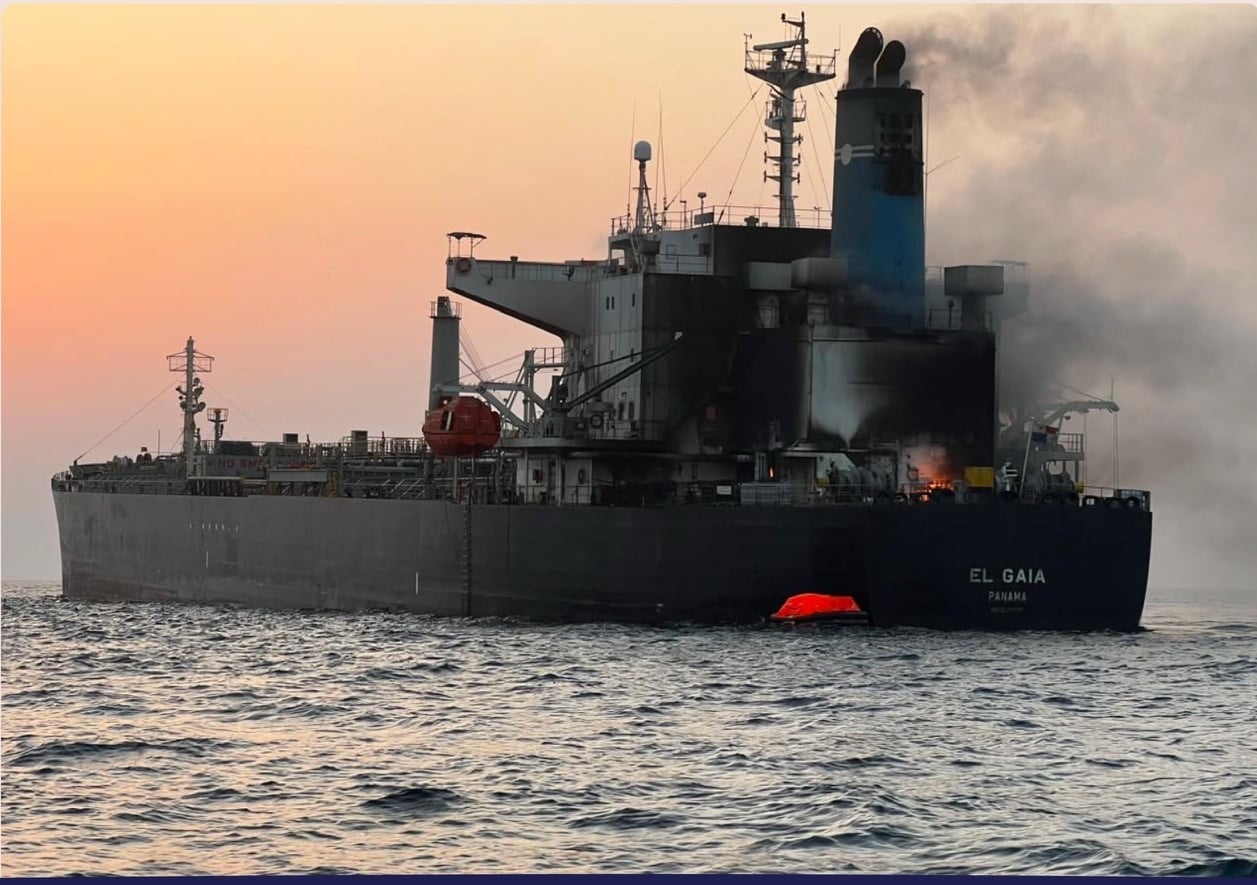
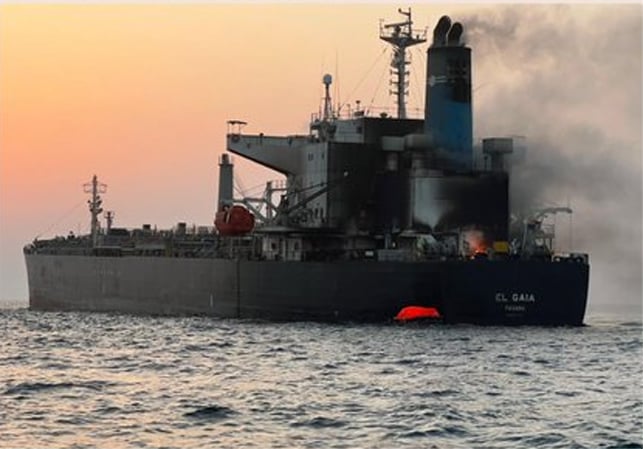
The El Gaia tanker incident near Oman has intensified the direct US-Iran maritime confrontation, but attribution remains disputed. CENTCOM attributes two Iranian attacks, involving a missile and a drone, while the IRGC says the tanker struck a naval mine. Omani authorities are towing the vessel to port, but reporting conflicts over the crew total and number missing. The Joint Maritime Information Center continues to rate the threat to commercial shipping in the Strait of Hormuz as severe. Satellite reporting nevertheless shows bi-directional daytime VLCC traffic, and Gulf producers continue exporting 7-9 million barrels per day through alternative or opaque arrangements. Saudi Arabia's East-West Pipeline and Yanbu export disruptions are adding pressure to oil markets. New CBO and Pentagon inspector general reporting shows $33.4 billion to $38 billion in US war costs, substantial interceptor depletion and a replenishment timeline of at least five years. Abbas Araghchi's planned 16 September meeting with Wang Yi provides a diplomatic channel, but current US sanctions, the naval blockade and unresolved maritime incidents limit the prospect of rapid de-escalation.
Change from previous assessment
The assessment now gives greater weight to the US operational burden and regional spillover. New CBO and Pentagon inspector general reporting adds cost figures of $33.4 billion through 29 June and approximately $38 billion through 1 August, documents depletion of one-half to two-thirds of certain interceptor stocks and places replenishment at at least five years. Soar Atlas imagery and a 3-5 week repair estimate strengthen the assessment that the Saudi East-West Pipeline disruption will persist. The Strait of Hormuz assessment has been refined from severe restriction with unresolved closure reporting to severe restriction that is unlikely to amount to a full closure, because new satellite reporting shows bi-directional VLCC traffic and Gulf exports of 7-9 million barrels per day. The durable de-escalation assessment has been adjusted from very unlikely to unlikely because Abbas Araghchi is expected to meet Wang Yi on 16 September, while US sanctions and maritime pressure remain active. The prior brief's Houthi, Yemen displacement and AI-enabled missile-capability judgements are not updated in this run because no new approved claims support them. This is the initial brief to include the new cost, interceptor, satellite-imagery and China-mediated diplomacy developments.
Key judgments
- Further direct US-Iran maritime exchanges are likely within 0-14 days. UKMTO reported a projectile strike on a vessel in the Strait of Hormuz on 14 September, while JMIC rates the threat to commercial shipping as severe and deliberate hostile action as highly likely. The Panama-flagged 48,000-dwt tanker El Gaia was reported attacked between late 12 September and 14 September near the Strait and Omani coast. CENTCOM says Iran struck the tanker first with a missile and later with a drone; the IRGC says it struck a naval mine. Omani authorities are towing El Gaia to port, but reporting conflicts over whether the vessel carried 14 or 23 crew members and whether one or two remain missing. The conflicting attribution, timing and casualty figures limit confidence in the forecast. (Confidence: medium · ASSESSED)
- I&W: Confirming indicator: UKMTO or JMIC reports another projectile strike, drone attack, mine incident, boarding or fire involving a named commercial vessel in the Strait of Hormuz or off Oman. (0-14 days)
- I&W: Breaking indicator: El Gaia reaches an Omani port without a further attack, and UKMTO and JMIC report no new hostile incident involving commercial shipping during the period. (0-14 days)
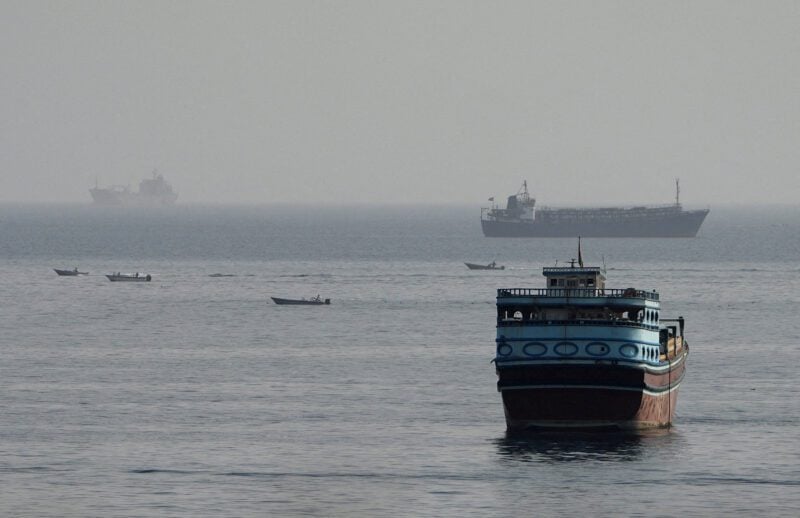
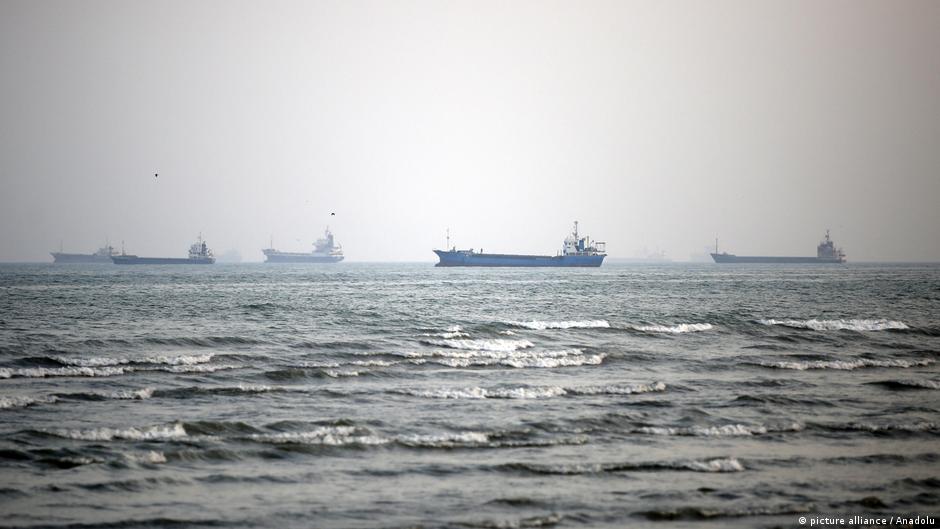
- Commercial transit through the Strait of Hormuz is very likely to remain severely restricted within 0-14 days, but the strait is unlikely to be fully closed. JMIC continues to assess the shipping threat as severe. At the same time, TankerTrackers.com reported bi-directional daytime VLCC traffic on 14 September, and Gulf oil producers were still exporting 7-9 million barrels per day, equal to 30-40 percent of pre-war volumes. A separate claim that the strait has been closed for six months is inconsistent with those observations and should not be treated as definitive. (Confidence: medium · ASSESSED)
- I&W: Confirming indicator: JMIC retains a severe threat rating while satellite reporting shows only limited, escorted or daytime VLCC movements through the Strait of Hormuz. (0-14 days)
- I&W: Breaking indicator: repeated satellite reporting shows routine, broad two-way tanker traffic across the strait and JMIC lowers its threat rating from severe. (0-14 days)
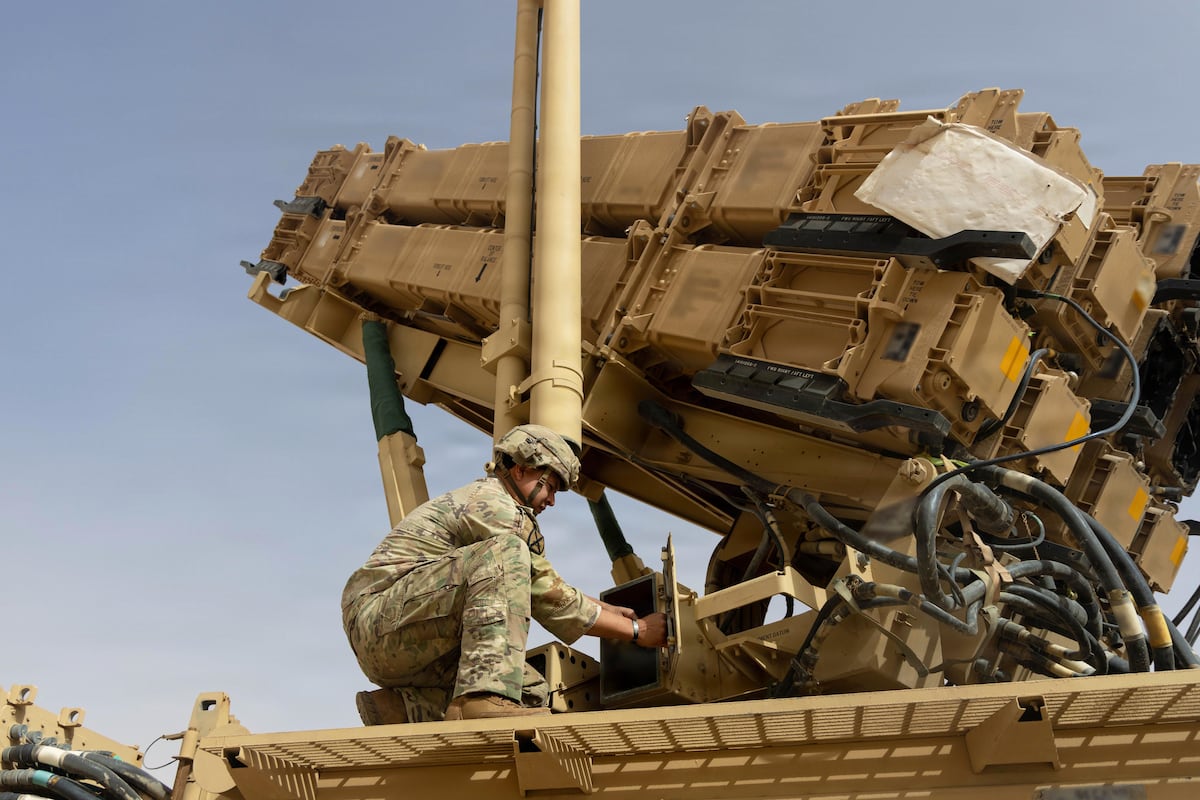
- US military resource pressure is very likely to persist for 1-3 months. CBO reported approximately $38 billion in US combat-operation costs through 1 August, while the Pentagon inspector general reported $33.4 billion through 29 June, including $22.3 billion in munitions. CBO estimates that the conflict consumed one-half to two-thirds of certain US missile-defence interceptor stocks, with $21.7 billion required to replace expended munitions and at least five years needed to rebuild stocks even if production increases. CBO also estimates an additional $2 billion to $3 billion for each month of continued low-intensity fighting. This is an assessed readiness and replenishment judgement, not a direct forecast in the source reporting. (Confidence: high · ASSESSED)
- I&W: Confirming indicator: CBO, the Pentagon inspector general or US Transportation Command reports additional monthly costs, continuing interceptor depletion or delays in replenishment during the next reporting cycle. (1-3 months)
- I&W: Breaking indicator: the Department of Defense reports that expended interceptor stocks have been restored or that operational replenishment pressure has ended. (1-3 months)
- A durable US-Iran de-escalation is unlikely within 0-14 days, although China-mediated diplomatic contact is likely. Abbas Araghchi is expected to meet Wang Yi in Beijing on 16 September, and Xi Jinping has urged BRICS members to support peacemaking in the Middle East. Russia has also stated its readiness to support mediation. These openings are offset by the US launch of Operation Economic Outcast, the reported naval blockade of Iran's southern ports, pressure for an IAEA referral and continuing maritime incidents. The judgement rests on official statements and a planned meeting, so confidence is medium. (Confidence: medium · ASSESSED)
- I&W: Confirming indicator: the Araghchi-Wang meeting occurs without a joint US-Iran shipping or ceasefire arrangement, while US sanctions and the reported naval blockade remain in force. (0-14 days)
- I&W: Breaking indicator: Iran and the United States announce direct talks, a mutually accepted maritime-security measure or a reciprocal halt to military operations. (0-14 days)
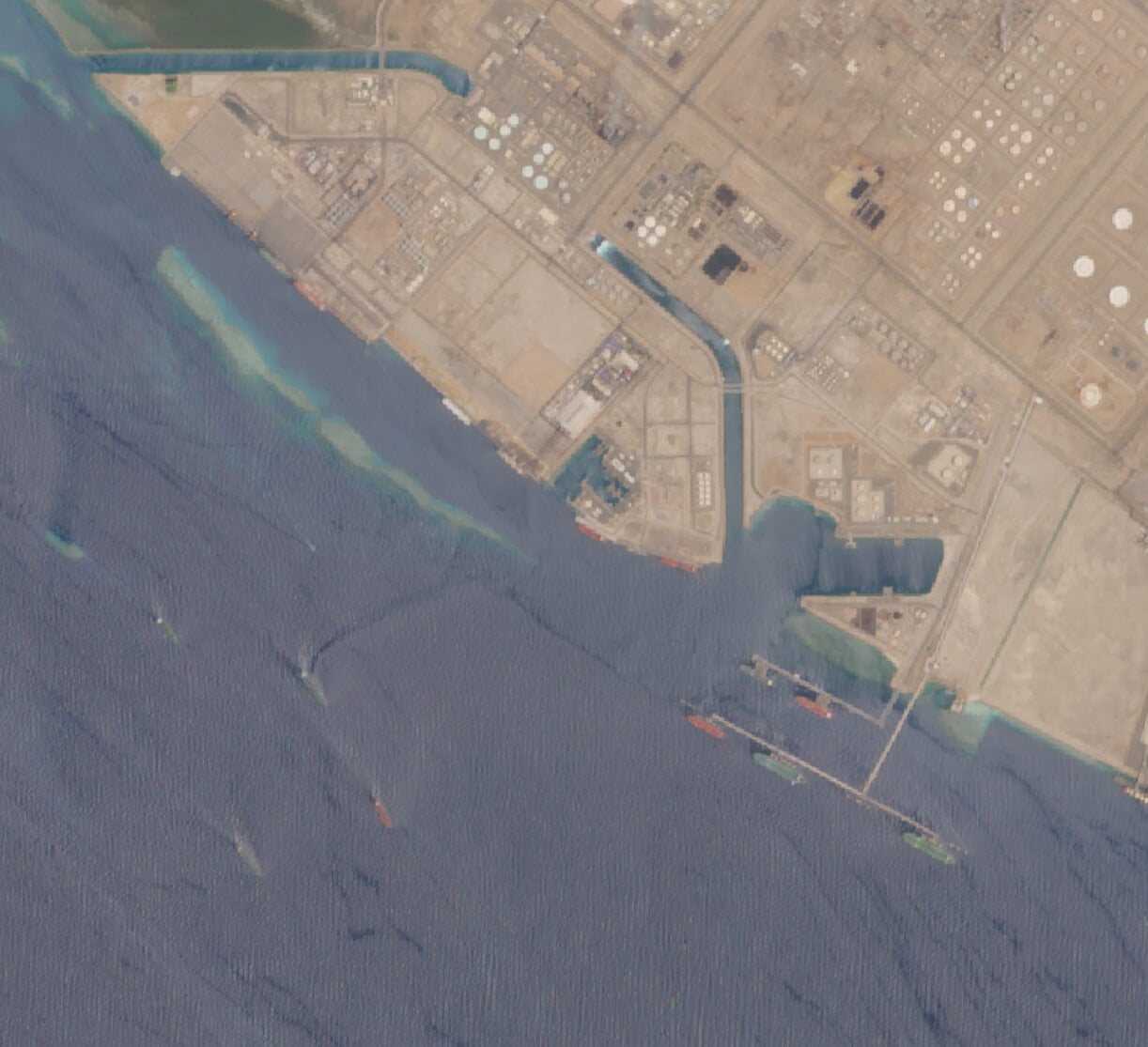
- Saudi Arabia's East-West Pipeline and Yanbu export disruptions are likely to persist for 0-14 days, with full pipeline flow unlikely before 3-5 weeks. Saudi Arabia shut the pipeline on 11 September after drone attacks, while Soar Atlas imagery appears to show damage to three pumping stations. Oil industry sources assess that full flow will not be restored for 3-5 weeks. Saudi Arabia has also suspended Yanbu loadings and cancelled some September cargoes, although it loaded 22 million barrels across 12 vessels at Ras Tanura and Juaymah during 7-13 September. The disruption is well corroborated, but responsibility remains unresolved because Saudi Arabia blames Iraqi militia while another account identifies the attackers as unknown. (Confidence: medium · ASSESSED)
- I&W: Confirming indicator: satellite imagery or Saudi Aramco reporting continues to show damage at the three pumping stations, while Yanbu remains suspended during the next loading cycle. (0-14 days)
- I&W: Breaking indicator: Saudi Arabia confirms repaired pipeline flow and resumes regular Yanbu loadings before the stated 3-5 week repair estimate. (1-3 months)
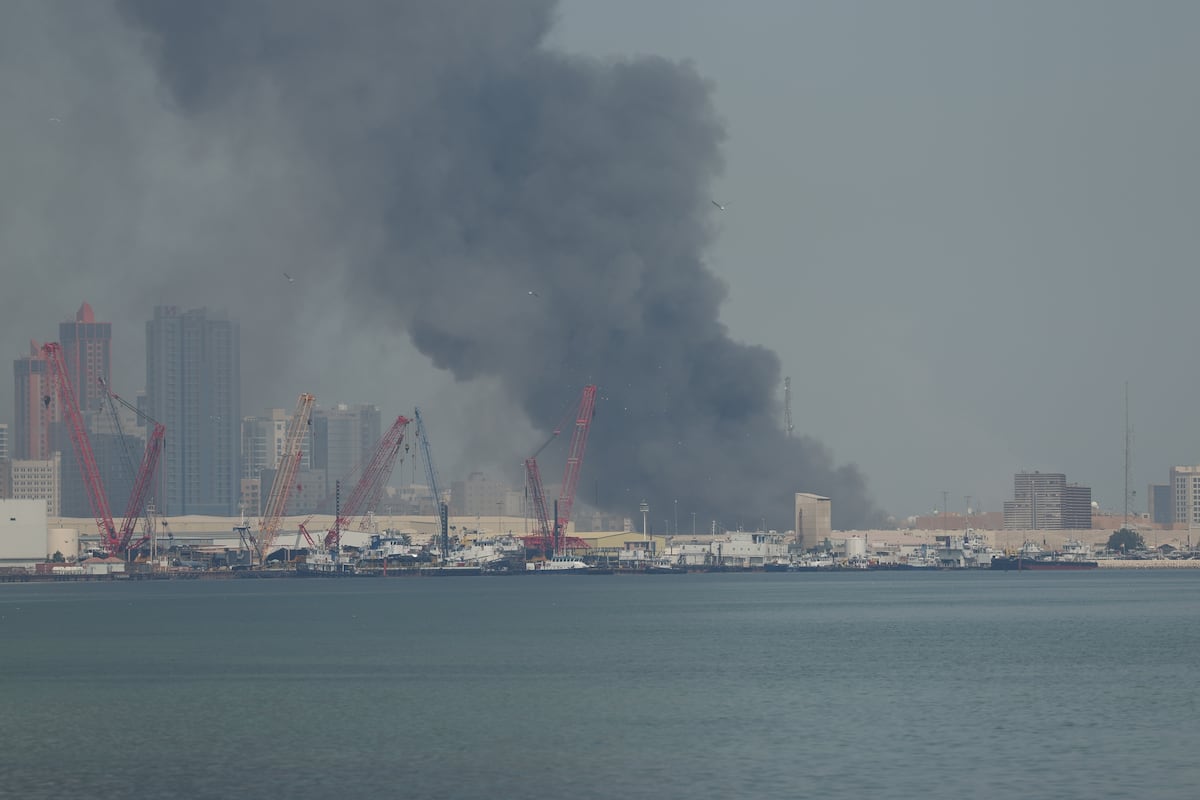
- Iranian strikes are very likely to continue generating US and regional security spillover within 0-14 days. US Central Command and the Pentagon inspector general report damage to hundreds of buildings at US bases in Kuwait, Bahrain, Qatar, the UAE, Saudi Arabia, Iraq, Oman and Jordan. The State Department reported physical damage to US diplomatic facilities in four countries, while separate reporting attributed more than 600 attacks on US diplomatic sites in Iraq and strikes on the embassies in Kuwait City and Riyadh to Iranian forces. The Wall Street Journal also reported that Iran obtained Chinese satellite imagery before an attack on a US base in Jordan that killed three American soldiers. The underlying damage reporting is corroborated, but the forecast of further attacks remains an assessment. (Confidence: medium · ASSESSED)
- I&W: Confirming indicator: US Central Command, the State Department or host governments report a new Iranian strike causing casualties or damage at a named US base, embassy or diplomatic facility in the Middle East. (0-14 days)
- I&W: Breaking indicator: no new Iranian strike, casualty or damage report emerges from the named US facilities during the period and host governments report restored security conditions. (0-14 days)
Outlook & scenarios
Constrained maritime confrontation and economic pressure (55%)
US and Iranian forces continue limited maritime exchanges around the Strait of Hormuz without a sustained attack on US territory. JMIC retains a severe threat rating, commercial traffic remains restricted but active, and Saudi Arabia's pipeline and Yanbu disruptions keep oil prices and tanker costs elevated. US spending and interceptor replenishment pressure continue to rise.
Temporary China-mediated pause (25%)
Abbas Araghchi and Wang Yi use the 16 September Beijing meeting to establish a temporary channel on maritime security. Iran reduces attacks on commercial shipping and the United States limits enforcement activity around the Strait of Hormuz, but sanctions and the underlying dispute remain unresolved. Traffic improves without returning to normal levels.
Regional widening (15%)
A new Iranian strike on a US base or diplomatic facility, or another attack on a commercial vessel near Oman, prompts a broader US response. Saudi export disruptions persist, additional regional facilities face damage and China-mediated contact fails to produce an operational pause.
Rapid de-escalation and shipping recovery (5%)
The Beijing meeting leads to direct US-Iran contacts and a reciprocal halt to attacks. Omani authorities complete the El Gaia recovery, commercial traffic through the Strait of Hormuz expands and Saudi Arabia restores pipeline flow and Yanbu loadings sooner than currently assessed. This is the low-probability, high-impact wildcard.
Recommendations
- Maintain a 0-14 day watch on UKMTO, JMIC, CENTCOM, the IRGC Navy and Oman's Maritime Security Center for another named vessel incident, changes in the El Gaia investigation and confirmation of the crew total and missing-person count.
- Separate the terms fully closed, severely restricted and limited transit in all reporting on the Strait of Hormuz. Require repeated satellite or shipping observations before using a full-closure assessment.
- Track TankerTrackers.com imagery, Gulf export volumes and JMIC threat ratings together. Treat bi-directional VLCC traffic and 7-9 million barrels per day of dark shipments as evidence of restricted transit, not normal access.
- Update US operational-cost and readiness estimates using the 29 June and 1 August reporting cut-offs separately. Track CBO, the Pentagon inspector general and US Transportation Command for monthly expenditure, interceptor replacement and airlift changes.
- Prioritise 16 September reporting on the Araghchi-Wang meeting. Record whether it produces a shipping-security measure, direct US-Iran contact or only general mediation language. Reassess after the planned Trump-Xi engagement later in September.
- Use Soar Atlas imagery and Saudi Aramco loading data to track repair progress at the three East-West Pipeline pumping stations and the resumption of Yanbu loadings. Assess separately the operational disruption and the unresolved attribution to Iraqi militia or unknown attackers.
- Monitor named US bases and diplomatic facilities in Kuwait, Bahrain, Qatar, the UAE, Saudi Arabia, Iraq, Oman and Jordan for new Iranian strike reporting. Distinguish confirmed damage from retrospective loss estimates when judging whether the conflict is widening.
Confidence & uncertainty
Overall confidence is high because the main developments are supported by multiple high-confidence official, wire-service, major-media and trade-publication reports. Omani authorities, UKMTO, JMIC, CENTCOM, CBO and the Pentagon inspector general independently corroborate the tanker disruption, severe shipping threat, US operational costs and damage to US facilities. The principal uncertainties concern El Gaia's attribution and crew figures, whether the Strait of Hormuz is fully closed or severely restricted, responsibility for the Saudi pipeline attacks, and the duration of any diplomatic effect from the Araghchi-Wang meeting. These uncertainties reduce confidence in specific attribution and forecasting judgements but do not overturn the broader situation assessment.
Intelligence gaps
- [EEI 1.2 · PARTIAL] Changes in US or Iranian force posture indicating preparation for further attacks, including aircraft dispersal, missile-unit movement, naval sortie activity, or air-defense activation. Recommended collection: satellite imagery/aviation and maritime tracking
- [EEI 1.3 · PARTIAL] Public or private warnings, ultimata, declared red lines, or force-protection directives issued by US or Iranian leadership. Recommended collection: official statements/diplomatic reporting
- [EEI 1.4 · PARTIAL] Evidence of mobilization or operational tasking by Iranian-aligned armed groups against US personnel, bases, or partners. Recommended collection: local reporting/social media/human intelligence
- [EEI 2.1 · UNCOVERED] Deployment or repositioning of Iranian ballistic missiles, cruise missiles, drones, fast-attack craft, or other strike assets within operational range of US or partner targets. Recommended collection: satellite imagery/signals intelligence
- [EEI 2.2 · PARTIAL] Orders, threats, targeting claims, or attack preparations by Iranian proxy groups in Iraq, Syria, Lebanon, Yemen, or the Gulf. Recommended collection: group statements/local reporting
- [EEI 2.3 · PARTIAL] Iranian diplomatic messages, intermediary contacts, or de-escalation proposals directed to the United States or regional governments. Recommended collection: diplomatic reporting/official statements
- [EEI 2.4 · UNCOVERED] Changes in Iranian military alert levels, command activity, weapons dispersal, or continuity-of-government measures. Recommended collection: signals intelligence/satellite imagery
- [EEI 3.1 · PARTIAL] Arrival or departure of US carrier strike groups, bombers, air-defense units, special operations forces, or additional personnel in the region. Recommended collection: maritime and aviation tracking
- [EEI 3.2 · UNCOVERED] Changes to US force-protection conditions, base access, evacuation plans, embassy staffing, or noncombatant evacuation preparations. Recommended collection: official notices/diplomatic reporting
- [EEI 3.3 · UNCOVERED] Presidential, Pentagon, or theater-command statements describing authorized response options, expanded objectives, or revised rules of engagement. Recommended collection: official statements
- [EEI 4.3 · UNCOVERED] Regional government decisions to close airspace or waterways, raise military readiness, expel personnel, or request additional US or allied forces. Recommended collection: official statements/aviation and maritime notices
Cited sources
[1] gCaptain · Oman Says 'El Gaia' Being Towed to Port; Two Crew Missing (C) · Tue Sep 15 2026 14:51:52 GMT+0000 (Coordinated Universal Time) · sha256:0a1fa8a433cc [2] The Maritime Executive · Oman Conducts SAR as US and Iran Argue Over Circumstances of Tanker Attack (C) · sha256:51c152901649 [3] Deutsche Welle (DW) · CENTCOM опроверг заявление КСИР о подрыве танкера на мине (A) · Tue Sep 15 2026 01:42:41 GMT+0000 (Coordinated Universal Time) · sha256:00f479d80ce3 [4] The Maritime Executive · Oil Prices Jump at News of Pause in Saudi Loadings at Red Sea Terminal (C) · sha256:78148e5ebfba [5] Reuters (republished by gCaptain) · Oil Prices Surge as Saudi Red Sea Loadings Halt, Libya Shuts Fields (A) · Tue Sep 15 2026 19:11:06 GMT+0000 (Coordinated Universal Time) · sha256:893b27c1d5a7 [6] Defense News · Iran war has cost $38 billion, depleted two-thirds of US missile interceptors, CBO says (A) · Tue Sep 15 2026 19:52:56 GMT+0000 (Coordinated Universal Time) · sha256:8ff034d7dfb9 [7] Interfax · Пентагон заявил о нехватке боеприпасов в США из-за конфликта с Ираном (B) · Tue Sep 15 2026 09:40:00 GMT+0000 (Coordinated Universal Time) · sha256:6cdcbb5bfd18 [8] Defense News · Iranian strikes damaged hundreds of US military buildings, dozens of aircraft (B) · Tue Sep 15 2026 19:06:38 GMT+0000 (Coordinated Universal Time) · sha256:22dfba0946d1 [9] Al Jazeera · Can China play peacemaker as Iran’s foreign minister heads to Beijing? (A) · Tue Sep 15 2026 16:15:13 GMT+0000 (Coordinated Universal Time) · sha256:a51600b0538b [10] RBC (РБК) · Лавров опроверг сообщения об идее разменов с США по Ирану и Украине (B) · Tue Sep 15 2026 10:56:23 GMT+0000 (Coordinated Universal Time) · sha256:52329afd3b18
Source content hashes were computed at collection time; the cited text is preserved unmodified for the life of this product.
TLP:CLEAR