TLP:CLEAR · Disclosure is not limited.
Eurasia: US-Iran exchanges sustain pressure on Hormuz
Time window: Last 1 day · Audience: General analyst · Type: Situation report · DTG: 2026-08-27 18:39Z · Overall confidence: LOW
BLUF
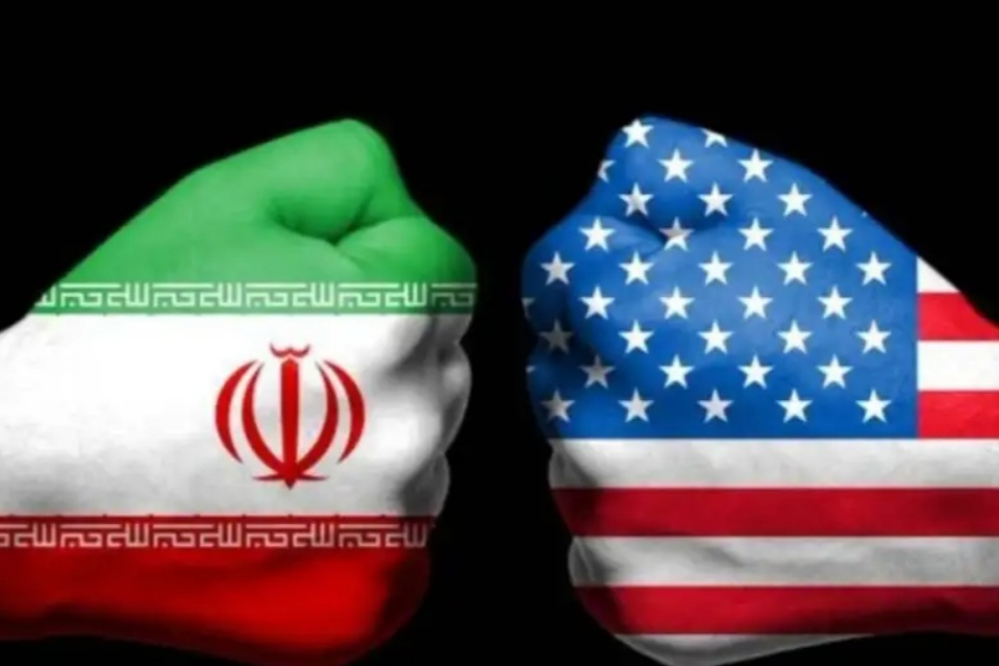
US-Iran military and economic confrontation is likely to remain elevated over the next 14 days, while commercial traffic through the Strait of Hormuz is very likely to remain below normal. Qatar-Iran and Oman-Iran diplomacy offers a potential de-escalation channel, but the absence of direct US-Iran talks and unresolved corridor terms limit prospects for rapid reopening.
Executive summary
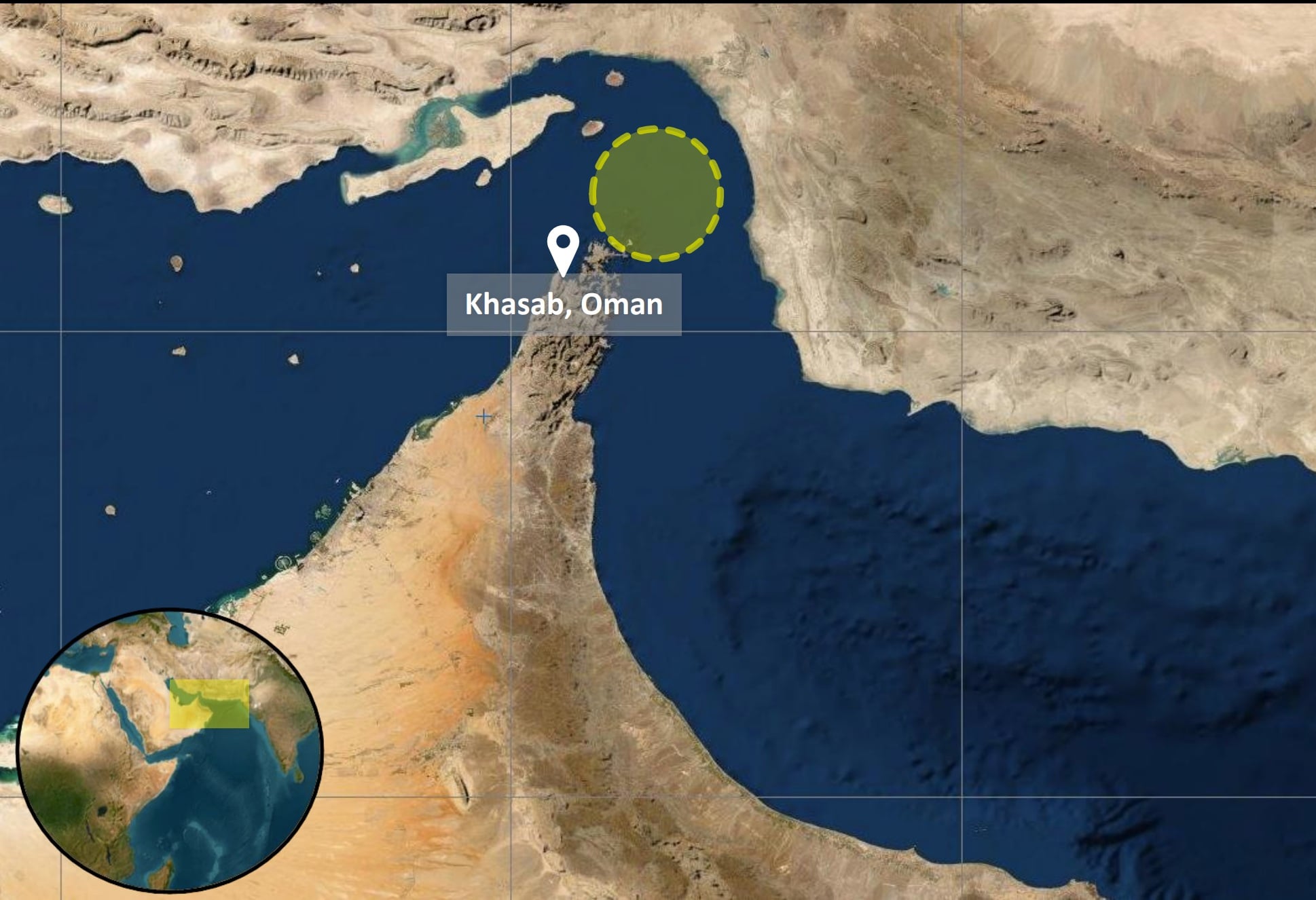
On 27 August, Qatari Prime Minister Sheikh Mohammed bin Abdulrahman Al Thani visited Tehran to discuss de-escalation and a possible revival of US-Iran negotiations. Iran and Oman were reported to have reached a preliminary arrangement for managing shipping in the Strait of Hormuz, while Qatar and Iran discussed a temporary corridor. The reported terms conflict over whether military vessels would be excluded or permitted, and Oman has not issued a corresponding statement. The White House says Washington and Tehran are not negotiating, while US sanctions and the naval blockade remain in place. A tanker was hit by an unknown projectile on 25 August, but the incident remains under investigation and the reporting contains conflicting dates.
Change from previous assessment
Since the 26 August brief, the reported diplomatic picture has broadened. Qatar's prime minister has visited Tehran, Iran and Oman are now reported to have reached a preliminary shipping arrangement, and the White House has stated that no direct US-Iran negotiations are under way. The assessment adds the US prize court initiative and Patriot interceptor pressures as new risk factors. Confidence remains low rather than rising because the reported corridor terms conflict, Oman has not confirmed the arrangement, and the tanker incident has incompatible 2023 and 2026 dates.
Key judgments
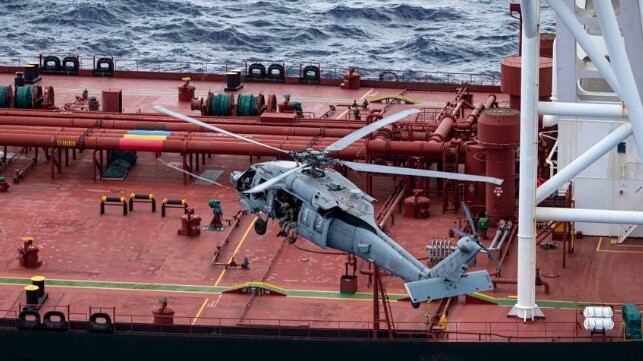
- US-Iran military and economic confrontation is likely to remain elevated over the next 14 days. Washington is continuing a naval blockade around the Strait of Hormuz and has announced sanctions targeting more than 60 individuals and organisations across five sectors. The White House says there are no negotiations with Tehran and that all options remain available. Iranian officials have warned that continued economic pressure or seizure of Iranian oil will prompt retaliation. This is an assessed, low-confidence judgement because the reporting contains incompatible conflict timelines and combines official statements with single-source reporting. (Confidence: low · ASSESSED)
- I&W: Confirming indicator: within 0-14 days, the White House repeats that no direct negotiations are under way while the US announces another sanctions measure or confirms continuation of the naval blockade. (0-14 days)
- I&W: Breaking indicator: Washington and Tehran announce direct talks with a named agenda and a simultaneous suspension or relaxation of the blockade and economic pressure. (0-14 days)
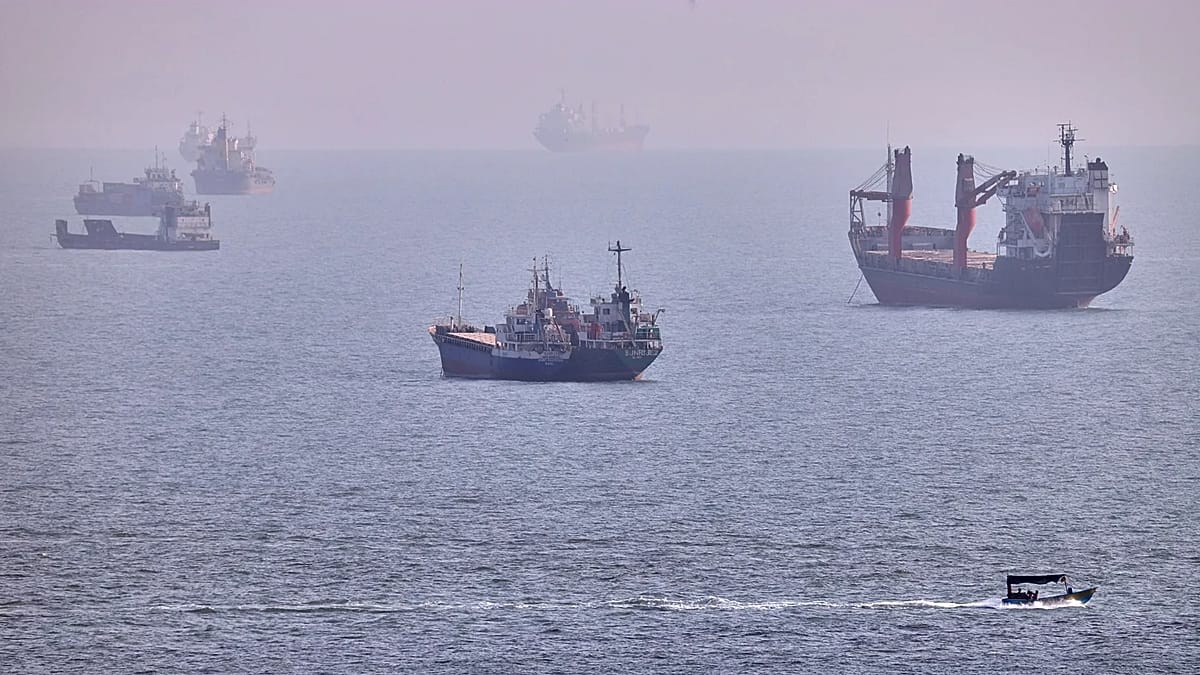
- Commercial traffic through the Strait of Hormuz is very likely to remain far below normal over the next 14 days. JMIC reports traffic well below normal, and Iran is reported to have blocked vessels using the waterway. The record also contains low-confidence claims of 10 visible commodity transits on 26 August 2023 and a slight traffic rise on 27 August 2023, which do not establish current normalisation. The 25 August 2026 tanker strike by an unknown projectile adds to navigational risk. This is an assessed, low-confidence judgement because current and historical dates are conflated and the traffic data are weakly corroborated. (Confidence: low · ASSESSED)
- I&W: Confirming indicator: JMIC or UK Maritime Trade Operations reports another tanker incident or continues to report traffic materially below normal in the Strait of Hormuz. (0-14 days)
- I&W: Breaking indicator: Kpler or AIS reporting records a sustained increase in commercial vessel transits for at least seven consecutive days without a new security incident. (0-14 days)
- Iran-Oman and Qatar-Iran engagement is likely to continue, but full and reliable reopening of the Strait of Hormuz is unlikely within the next 14 days. Qatari Prime Minister Sheikh Mohammed bin Abdulrahman Al Thani visited Tehran on 27 August, while Omani Foreign Minister Badr Albusaidi and Iranian Foreign Minister Abbas Araghchi have discussed the waterway. Iran and Oman are reported to have reached a preliminary shipping arrangement, but the reported terms conflict over military vessel access, fees and mine clearance. Oman has not issued a corresponding statement. This is an assessed, low-confidence judgement because the agreement remains preliminary and the main terms are contested. (Confidence: low · ASSESSED)
- I&W: Confirming indicator: Oman, Iran and Qatar issue a joint statement that specifies the corridor's route, vessel eligibility, fees and mine-clearance responsibility. (0-14 days)
- I&W: Breaking indicator: Oman or Iran publicly rejects the reported arrangement, or the parties fail to publish operating terms before further tanker incidents occur. (0-14 days)
- Iran is likely to sustain coercive pressure on US-linked shipping, energy, insurance, financing and infrastructure interests in the Persian Gulf, but attribution for the tanker hit reported on 25 August 2026 will remain unresolved until the investigation produces evidence. An Iranian security representative has warned that seizure of Iranian oil would trigger retaliation, stated that relevant companies are under surveillance, and Iran has published a list of 45 vessels it says violate its shipping rules. The tanker incident is attributed only to an unknown actor. This is an assessed, low-confidence judgement because the pressure indicators are largely official Iranian warnings, while the incident attribution lacks corroboration. (Confidence: low · ASSESSED)
- I&W: Confirming indicator: Iran adds named vessels to its 45-vessel list, interdicts a listed vessel, or issues a new official warning tied to US oil seizures or Gulf infrastructure. (0-14 days)
- I&W: Breaking indicator: investigators identify a non-Iranian actor for the 25 August tanker incident and no new Iranian action against listed vessels is reported for 14 days. (0-14 days)
- The US move towards reviving prize court proceedings is likely to widen legal and economic pressure on Iran if it is followed by vessel seizures, but the mechanism's operational status remains unconfirmed. The Trump administration and the Department of Justice are reported to be restoring prize court proceedings, with the Southern District of Texas involved. Iranian officials have warned of serious and swift retaliation if the United States seizes Iranian oil. This is an assessed, low-confidence judgement because the reporting describes preparatory activity rather than a completed court action or confirmed seizure. (Confidence: low · ASSESSED)
- I&W: Confirming indicator: the Department of Justice or the Southern District of Texas files a prize court case involving a seized Iranian-linked vessel. (1-3 months)
- I&W: Breaking indicator: the Department of Justice publicly abandons the prize court effort and no vessel seizure is linked to the proposed mechanism. (1-3 months)
- US and NATO Patriot interceptor availability is likely to remain strained over the next 1 to 3 months, increasing pressure to limit the duration of sustained exchanges with Iran. Reporting estimates that 65 per cent of US Patriot interceptors were expended between February and July, that missile stocks were moved from Europe to the Middle East, and that inventories in Europe are beyond critical. Ukraine is reported to be acutely affected, while NATO expects a Patriot production facility in Germany to open in September. This is an assessed, medium-confidence judgement based on multiple major-media reports and a CSIS estimate, but the precise stockpile figures and operational effect remain uncertain. (Confidence: medium · ASSESSED)
- I&W: Confirming indicator: NATO or US officials report that Patriot stocks remain below planned levels after the German production facility opens or that further interceptors are diverted from Europe to the Middle East. (1-3 months)
- I&W: Breaking indicator: the German facility opens on schedule and US or NATO officials report replenishment of European stocks without further Middle East transfers. (1-3 months)
Outlook & scenarios
Managed temporary corridor (45%)
Oman and Iran formalise a temporary civilian shipping corridor, with Qatar continuing diplomatic engagement from Tehran. Military vessel access, fees and mine clearance remain restricted or unresolved. Commercial traffic increases from current levels but remains below normal, and direct US-Iran negotiations do not begin.
Prolonged constrained passage (40%)
The reported Iran-Oman arrangement remains preliminary, Oman withholds formal endorsement, and Washington maintains sanctions and the naval blockade. Iran continues to require passage through its territorial waters and uses warnings or vessel listings to enforce its rules. Hormuz traffic remains depressed and tanker operators retain elevated security concerns.
Rapid escalation, low-probability high-impact (15%)
A new tanker incident is attributed to Iran, or the United States seizes Iranian-linked oil after advancing the prize court mechanism. Tehran acts on its warnings against US-linked shipping, energy or Gulf interests, prompting expanded US military action and the collapse of the corridor discussions.
Recommendations
- Establish a single daily Hormuz traffic picture that separates 2023-dated reporting from 2026-dated reporting. Reconcile JMIC and UK Maritime Trade Operations incident notices with Kpler and AIS data, and record whether each source confirms vessel movement, a security incident or only an official assertion.
- Treat the Iran-Oman corridor as un operationalised until Oman issues a matching statement and the parties publish the route, eligible vessel categories, fee arrangements, mine-clearance responsibility and rules for military vessels. Maintain separate reporting lines for the Iranian, Omani and Qatari positions.
- Create a 0-14 day escalation watchlist covering the 45 vessels named by Iran, any new tanker incident, Iranian warnings concerning US oil seizures, and official statements on shipping, energy, insurance or Gulf infrastructure. Escalate the alert when two of these indicators occur in the same reporting period.
- Track the Department of Justice effort in the Southern District of Texas for a first prize court filing, a seizure order or a named Iranian-linked vessel. Pair each legal development with an assessment of Iranian retaliation risk and commercial exposure.
- Prioritise monitoring of Patriot interceptor transfers between Europe and the Middle East, the reported opening of NATO's production facility in Germany in September, and any new statements on Ukraine's air-defence shortfall. Use these indicators in assessments of the US capacity for prolonged exchanges.
Confidence & uncertainty
Overall confidence is low. The reporting includes reliable official and major-media material, but the core assessment relies heavily on medium- and low-confidence claims, including single-source Iranian statements, weak traffic data and unresolved attribution for the tanker incident. The record also contains major date inconsistencies between 2023 and 2026, conflicting accounts of whether military vessels are covered by the Iran-Oman arrangement, and no corresponding Omani statement confirming the reported agreement.
Intelligence gaps
- [EEI 1.1 · UNCOVERED] Concentrations or unusual movements of IRGC-Navy fast attack craft, small boat swarms, or escort vessels within 200 km of US/allied ships, including approach distances and formation changes. Recommended collection: maritime/AIS
- [EEI 1.2 · UNCOVERED] Detected pre-launch activity at coastal missile or rocket batteries (vehicle dispersal, fuel/warhead handling, radars powering up, transport erector launchers moving to firing positions). Recommended collection: imagery/signals
- [EEI 1.3 · PARTIAL] Increased launch/arming/positioning of armed UAVs (MALE/loitering munitions) or tactical aircraft at Iranian coastal bases with sortie generation rates and munitions loadouts. Recommended collection: air/ADS-B/imagery
- [EEI 1.4 · UNCOVERED] Command-and-control indications of attack orders or elevated rules-of-engagement from IRGC/General Staff (intercepted communications, internal order messages, force-wide alert messages). Recommended collection: signals/human
- [EEI 2.2 · UNCOVERED] Issuance of formal orders, mobilization directives, travel restrictions, or official internal communications within IRGC/Armed Forces indicating escalation posture or stand-down. Recommended collection: human/diplomatic
- [EEI 2.3 · UNCOVERED] Directives, logistics movements, or communications from Iranian commanders to regional proxy militias (Houthis, Iraqi Shia militias, Lebanese groups) that change their threat posture or task them with specific operations. Recommended collection: signals/human
- [EEI 3.2 · UNCOVERED] Discovery or reporting of naval mines, unexploded ordnance, or damage to fixed maritime infrastructure (oil platforms, terminals, pipelines) with geolocated imagery or on-scene assessments. Recommended collection: imagery/open-source
- [EEI 3.3 · PARTIAL] Commercial indicators of disruption: sudden increases in war-risk insurance premiums for Gulf transits, vessel re-routing decisions, port throughput reductions, or charter cancellations for Gulf shipments. Recommended collection: financial/commercial
- [EEI 3.4 · UNCOVERED] Movements or posture changes of regional state navies/air forces (Saudi, UAE, Kuwait, Bahrain, UK) such as task group departures, airbase dispersals, or announced maritime patrols near choke points. Recommended collection: open-source/imagery
Cited sources
[1] Al Jazeera · Is Iran war diplomacy ramping up, as Qatar, Oman, Pakistan officials visit? (A) · sha256:941a2f9b50d5 [2] dw.com · البيت الأبيض: لا مفاوضات حاليا مع إيران وكل الخيارات مطروحة (A) · sha256:8fd26b22994b [3] cnn.com · ‘We will retaliate like an earthquake:’ How Iran could respond to Trump’s economic ‘D-Day’ | CNN (A) · sha256:e2532a4d79dc [4] Nournews · Иранский сотрудник службы безопасности прямо предупредил США: Если вы захватите иранскую нефть, вас ждут ответные меры (A) · sha256:fca1bd3f4a8b [5] gcaptain.com · Tanker Hit in Strait of Hormuz as Trump Declares ‘Mission Accomplished’ in Iran (B) · sha256:529fcbeeadff [6] gcaptain.com · Shipping Traffic Through Strait of Hormuz Rises Slightly, Data Shows (B) · sha256:4c7ebf23b140 [7] Associated Press · Regional powers seek off-ramp from Iran war, and other Middle East developments (A) · sha256:c291153bfc65 [8] maritime-executive.com · Tanker Hit By "Unknown Projectile" in Strait of Hormuz (B) · sha256:7019d36379fe [9] Euronews · Иран и Оман достигли соглашения о временных маршрутах в Ормузском проливе (A) · sha256:dc0e0894ea74 [10] euronews.com · No military vessels will be allowed in the Strait of Hormuz, Iran says (A) · sha256:0e8cf19defd8 [11] The Jerusalem Post · Source to 'Post': Iran, Oman still have significant gaps regarding Strait of Hormuz (B) · sha256:7f186d346477 [12] The Jerusalem Post · Iran’s Hormuz trump card is rapidly losing strategic value, expert tells 'Post' - interview (B) · sha256:c2486042b618 [13] maritime-executive.com · Trump Administration Moves to Revive Prize Courts for Vessel Seizures (B) · sha256:05f77bf19afc [14] Jerusalem Post · Iranian attacks caused billions in damages to US intelligence sites and hardware - report (B) · sha256:1057efffcbae [15] Associated Press · Exclusive: US Patriot missile stocks in Europe are 'beyond critical' due to Iran war, officials say (A) · sha256:76c40e3c746e [16] military.com · US Patriot Missile Stocks in Europe Are ‘Beyond Critical’ Due to Iran War, Officials Say (B) · sha256:2f3b74f88a66
Source content hashes were computed at collection time; the cited text is preserved unmodified for the life of this product.
TLP:CLEAR