TLP:CLEAR · Disclosure is not limited.
Eurasia: US-Iran Exchanges Widen Across the Gulf
Time window: Last 1 day · Audience: General analyst · Type: Situation report · DTG: 2026-09-03 21:35Z · Overall confidence: HIGH
BLUF
US and Iranian forces exchanged new strikes on 3 September, with Iranian missiles and drones directed at US-linked positions in Kuwait, Bahrain, Jordan and Iraq. Iran's claim that US bases in Kuwait and the United Arab Emirates were hit remains only partly corroborated. Commercial traffic through the Strait of Hormuz is very likely to remain severely constrained through 15 September, although reports of four commodity vessels on 2 September, approximately 40 oil vessels on 1 September and more than 17 million barrels on 31 August do not establish a complete closure.
Executive summary
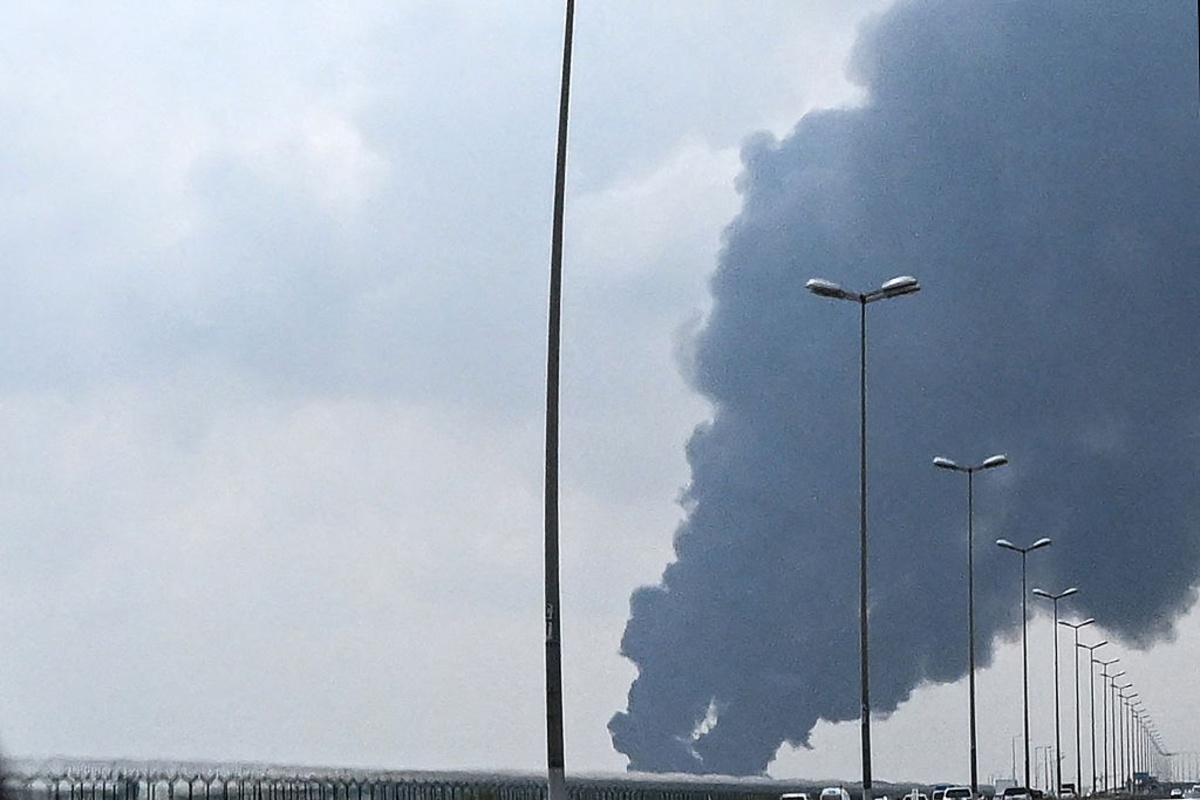
The direct US-Iran exchange has widened across the Gulf and adjacent airspace. US Central Command reported strikes on Iranian air-defence, radar and maritime assets, while Kuwait's General Staff confirmed engagements with Iranian missiles and drones, Jordan reported intercepting 10 of 13 ballistic missiles, and Bahraini and Iraqi Kurdish authorities reported interceptions. Iranian state media claimed that US bases in Kuwait were struck, but the extent of damage is disputed. Maritime risk remains acute: shipping data recorded only four commodity vessels crossing Hormuz on 2 September, while insurers reported premiums at 40 to 60 times pre-crisis levels and the International Maritime Organization recorded more than 72 ship attacks since March. Civilian casualty reporting from the alleged strike near Kuhestak, Iran, remains sharply inconsistent.
Change from previous assessment
Since the 2 September prior brief, the assessment incorporates a further reported exchange on 3 September, including Kuwait's confirmation of missile and drone engagements, Jordan's report of 10 of 13 missiles intercepted, and reports from Bahraini and Iraqi Kurdish authorities. Confidence has increased that the exchange is geographically distributed across Kuwait, Bahrain, Jordan and Iraq, while the UAE impact remains disputed. The expected duration of Hormuz disruption has extended from 15 September towards the end of 2026, based on Mitsui OSK's updated assessment. This brief adds the reported depletion of US Patriot and THAAD inventories, the spread of maritime risk to Yanbu and the Saudi Red Sea coast, and the unresolved civilian casualty reporting near Kuhestak.
Key judgments
- The US-Iran direct exchange is very likely ongoing and geographically wider than the 1 September strike cycle. On 3 September, US Central Command reported strikes on Iranian air-defence, radar and maritime assets, while Iranian forces launched missiles and drones towards US-linked targets in Kuwait, Bahrain, Jordan and Iraq. Kuwait's General Staff confirmed active engagements, Jordan reported 10 of 13 Iranian ballistic missiles intercepted, and Bahraini and Iraqi Kurdish authorities reported interceptions. Iran's claim that US bases in Kuwait and the United Arab Emirates were hit, and the exact dating of some IRGC salvos, remain unresolved. Multiple major-media reports and official statements corroborate the core exchange, despite disputes over individual impacts. (Confidence: high · ASSESSED)
- I&W: Kuwait's General Staff, Jordanian air defences, Bahrain or Iraqi Kurdish authorities report another Iranian missile or drone engagement against a named US-linked site. (0-14 days)
- I&W: No official report of an Iranian missile or drone engagement is issued by Kuwait, Bahrain, Jordan or Iraqi Kurdish authorities for 14 consecutive days. (0-14 days)
- The confrontation is very likely to remain elevated through 15 September, and additional US strikes and Iranian attacks are likely during that period. President Donald Trump warned that further action remained possible after the operation near Hormuz, while the IRGC vowed to avenge reported civilian deaths. Benjamin Netanyahu described overthrowing Iran's leadership as the central task and said the goal was within reach. These statements indicate intent rather than establish an operational timetable. The forecast therefore rests on current activity and official rhetoric, with timing still uncertain. (Confidence: medium · ASSESSED)
- I&W: US Central Command announces another strike on Iranian military assets or Iranian authorities report another salvo against a named US-linked site in Kuwait, Bahrain, Jordan or Iraq. (0-14 days)
- I&W: The US and Iran announce a halt to operations and no further strike or salvo is reported through 15 September. (0-14 days)
- Commercial transit through the Strait of Hormuz is very likely to remain severely constrained through 15 September and likely to remain disrupted through the end of 2026. Shipping data recorded four commodity vessels on 2 September, US officials reported approximately 40 oil vessels on 1 September, and the US Energy Secretary reported more than 17 million barrels of oil transiting on 31 August. The different dates and vessel categories prevent a precise traffic estimate and leave a complete closure unproven. The International Maritime Organization's record of more than 72 ship attacks, war-risk premiums at 40 to 60 times pre-crisis levels, and Mitsui OSK's expectation of disruption through year-end support a prolonged high-risk operating environment. (Confidence: medium · ASSESSED)
- I&W: Daily shipping data continues to show four or similarly few commodity vessels crossing Hormuz, while war-risk premiums remain at 40 to 60 times pre-crisis levels. (0-14 days)
- I&W: Mitsui OSK reports a formal phased resumption of Hormuz operations from October, accompanied by sustained increases in daily vessel crossings. (1-3 months)
- The civilian casualty toll from the alleged US strike near Kuhestak in southern Iran is unresolved and should be treated as unverified. Iranian officials reported 18 people killed and 108 wounded, while the Iranian Red Crescent reported four killed and dozens injured, and other Iranian authorities reported at least four killed, including a child, and 68 injured. US officials denied targeting civilians, and Vice President JD Vance said Washington was investigating while remaining sceptical of reports from Tehran. The reporting is thin, contested between Iranian sources and without independent confirmation in the available material. (Confidence: low · ASSESSED)
- I&W: An independent report or UN statement confirms the location, cause and a casualty count that reconciles the Iranian figures. (0-14 days)
- I&W: US investigative findings or independent reporting establish that the Kuhestak wedding gathering was not struck by a US operation. (0-30 days)
- US and partner air defences are likely to face sustained demand from Iranian missile and drone attacks, while reported US Patriot and THAAD inventories are already materially reduced. Kuwait's air defences have reportedly intercepted 97 ballistic missiles and 283 drones since late February. A CSIS analysis estimated that the US had expended about 65 percent of its pre-war Patriot inventory and about 38 percent of its THAAD inventory. The $58.6 billion PAC-3 Missile Segment Enhancement contract indicates a long-term replenishment effort, but the inventory estimates come from a single analytical assessment and do not establish current holdings. (Confidence: medium · ASSESSED)
- I&W: US officials or a new inventory assessment reports additional Patriot or THAAD expenditure after another Iranian salvo. (0-30 days)
- I&W: An official US inventory figure materially revises down the reported Patriot or THAAD expenditure estimates without a corresponding increase in Iranian attack volume. (1-3 months)
- Maritime risk has already extended beyond Hormuz to Yanbu and the Saudi Red Sea coast and is likely to persist over the next 1 to 3 months. The Houthis have reportedly targeted the Port of Yanbu, Saudi oil sites and Saudi-linked commercial tankers. Marine underwriters extended designated war-risk areas 800 kilometres farther up the Saudi west coast, while reinsurers imposed a blanket exclusion on vessels associated with Saudi Arabia. Saudi Arabia is routing 1.9 million barrels of crude per day through Egypt to the Mediterranean, which reduces dependence on Hormuz but does not remove exposure to attacks and insurance restrictions along Saudi-linked routes. (Confidence: medium · ASSESSED)
- I&W: The Houthis report or are credibly reported to conduct another attack against Yanbu, a Saudi oil site or a Saudi-linked tanker. (0-30 days)
- I&W: Marine underwriters extend designated war-risk areas beyond the additional 800 kilometres or retain the blanket exclusion on Saudi-associated vessels. (1-3 months)
Outlook & scenarios
Continued reciprocal strikes and constrained transit (65%)
US and Iranian forces continue reciprocal attacks through 15 September, with Iranian missiles and drones directed at US-linked sites in Kuwait, Bahrain, Jordan and Iraq. Hormuz traffic remains intermittent rather than fully stopped, with oil cargoes moving under high insurance costs and some vessels switching off transponders.
Broader regional and maritime escalation (30%)
Further Iranian attacks on named US-linked positions, combined with additional Houthi attacks on Yanbu or Saudi-linked tankers, broaden the conflict's geographic and commercial effects. Shipping through Hormuz falls further, war-risk exclusions spread along Saudi routes, and Japan's refiners increase reliance on alternative supplies and stockpiles.
Limited stabilisation and partial reopening (20%)
An unlikely stabilisation path follows if no further US or Iranian strikes occur. Mitsui OSK's previously expected phased resumption from October proceeds, although traffic remains below pre-war levels and insurers continue to price Hormuz as a high-risk route.
Leadership shock in Iran (5%)
An unlikely, high-impact leadership shock in Iran becomes the dominant driver if the reported killing of Ayatollah Ali Khamenei combines with the weakening of the Iranian regime described by Benjamin Netanyahu. Military activity, command arrangements and shipping access through Hormuz then become substantially less predictable.
Recommendations
- Maintain a daily incident matrix for Kuwait, Bahrain, Jordan, the United Arab Emirates and Erbil. Separate Iranian launch claims, confirmed interceptions, debris impacts and confirmed damage. Record the source, exact date and named facility for each entry.
- Prioritise official statements from US Central Command, Kuwait's General Staff, Jordanian air-defence authorities, Bahrain and Iraqi Kurdish authorities when assessing new attacks. Treat Iranian claims of impacts in Kuwait and the United Arab Emirates as unverified until independent reporting confirms damage.
- Reconcile Hormuz shipping data by date, vessel type and cargo. Do not combine the four-vessel, 40-vessel and 17 million-barrel figures into a single traffic trend without resolving their different counting methods.
- Track Patriot and THAAD expenditure separately from PAC-3 production. Flag any new US inventory estimate, additional Iranian salvo or change in interceptor deployment that alters the reported stockpile picture.
- Treat the Kuhestak casualty reports as disputed. Await independent confirmation of the location, casualty count and strike attribution before using the figures in assessments of civilian harm or escalation intent.
- Monitor Yanbu, Saudi oil sites and Saudi-linked tankers alongside Hormuz. Record changes in war-risk areas, the Saudi-associated vessel exclusion and crude volumes routed through Egypt to the Mediterranean.
Confidence & uncertainty
Overall confidence is high because the core military exchange is corroborated by multiple major-media reports and official statements from US Central Command, Kuwait's General Staff, Jordanian air-defence authorities, Bahrain and Iraqi Kurdish authorities. Maritime disruption is also supported by shipping data, insurer reporting, the International Maritime Organization and operator statements. The principal uncertainties concern the precise scale of Hormuz traffic, the extent of damage in Kuwait and the United Arab Emirates, the date of some IRGC salvos, and sharply conflicting Iranian casualty figures.
Intelligence gaps
- [EEI 1.1 · UNCOVERED] Concentrations or unusual movements of IRGC-Navy fast attack craft, small boat swarms, or escort vessels within 200 km of US/allied ships, including approach distances and formation changes. Recommended collection: maritime/AIS
- [EEI 1.2 · UNCOVERED] Detected pre-launch activity at coastal missile or rocket batteries (vehicle dispersal, fuel/warhead handling, radars powering up, transport erector launchers moving to firing positions). Recommended collection: imagery/signals
- [EEI 1.3 · UNCOVERED] Increased launch/arming/positioning of armed UAVs (MALE/loitering munitions) or tactical aircraft at Iranian coastal bases with sortie generation rates and munitions loadouts. Recommended collection: air/ADS-B/imagery
- [EEI 1.4 · UNCOVERED] Command-and-control indications of attack orders or elevated rules-of-engagement from IRGC/General Staff (intercepted communications, internal order messages, force-wide alert messages). Recommended collection: signals/human
- [EEI 2.2 · UNCOVERED] Issuance of formal orders, mobilization directives, travel restrictions, or official internal communications within IRGC/Armed Forces indicating escalation posture or stand-down. Recommended collection: human/diplomatic
- [EEI 2.3 · UNCOVERED] Directives, logistics movements, or communications from Iranian commanders to regional proxy militias (Houthis, Iraqi Shia militias, Lebanese groups) that change their threat posture or task them with specific operations. Recommended collection: signals/human
- [EEI 2.4 · UNCOVERED] Changes in Iran's diplomatic exchanges with key states (offers of negotiation, warnings, or coordination with Russia/China) or requests for deconfliction with maritime/naval actors. Recommended collection: diplomatic
- [EEI 3.4 · UNCOVERED] Movements or posture changes of regional state navies/air forces (Saudi, UAE, Kuwait, Bahrain, UK) such as task group departures, airbase dispersals, or announced maritime patrols near choke points. Recommended collection: open-source/imagery
TLP:CLEAR