TLP:CLEAR · Disclosure is not limited.
Eurasia: US-Iran Exchanges Widen Persian Gulf Risk
Time window: Last 1 day · Audience: General analyst · Type: Situation report · DTG: 2026-09-21 03:38Z · Overall confidence: HIGH
BLUF
US-Iran military exchanges are likely to continue over the next 14 days, with a new US strike and Iranian retaliation the main escalation risk. Iran's stated restrictions on the Strait of Hormuz, Houthi attacks on Saudi Arabia, and regional flight cancellations are sustaining maritime, aviation and energy disruption, while conflicting reporting leaves the exact US strike posture and Hormuz operating status unresolved.
Executive summary
On 21 September, Iran warned that a renewed US attack would bring retaliation against US bases and interests, while President Donald Trump said he was deciding whether to escalate and remained open to meeting President Masoud Pezeshkian at the UN General Assembly. Mohammad Bagher Ghalibaf said Iran would not reopen the Strait of Hormuz until its conditions were met. Yemen's Houthis claimed attacks on Riyadh and an Aramco facility in Yanbu, while Saudi authorities reported intercepting a ballistic missile and thwarting attacks on Bisha, Taif, Farasan and Yanbu. Air Arabia and flydubai cancelled services to Saudi Arabia, Bahrain and Kuwait. Qatar is mediating between Washington and Tehran, but the reported terms differ and neither side has demonstrated a verified military pause.
Change from previous assessment
Since the 20 September 2026 brief, reporting adds fresh Houthi claims concerning Riyadh and Yanbu, a Saudi report of a ballistic-missile interception and thwarted attacks at Bisha, Taif, Farasan and Yanbu, new flight cancellations by Air Arabia and flydubai, and a clearer public indication that Trump is weighing escalation while remaining open to talks with Pezeshkian. The assessment adds a distinct judgement on US resource and accountability pressure and raises confidence in the persistence of regional disruption. It does not resolve the prior uncertainties over the exact US strike posture, the operating status and attribution of the Strait of Hormuz restrictions, or the US casualty total.
Key judgments
- Direct US-Iran military exchanges are likely to continue over the next 14 days, and the risk of a new US strike followed by Iranian retaliation has risen since the prior brief. Donald Trump said on 20 September that he was deciding whether to escalate, while Iran's Khatam al-Anbiya Central Headquarters said Washington had decided to resume action and threatened continuous attacks on US bases and interests. The reporting conflicts over whether a US decision has been made or remains under consideration, and no supplied claim independently confirms a US strike order. This is an assessed judgement based mainly on official statements reported by major media and local media. (Confidence: medium · ASSESSED)
- I&W: Confirm: Washington announces or independently reports a new strike on Iran, followed within 72 hours by an Iranian attack on a named US base or interest. (0-14 days)
- I&W: Break: 14 days pass without a new US strike, Iranian attack on a US base or interest, or further official escalation beyond warnings. (0-14 days)
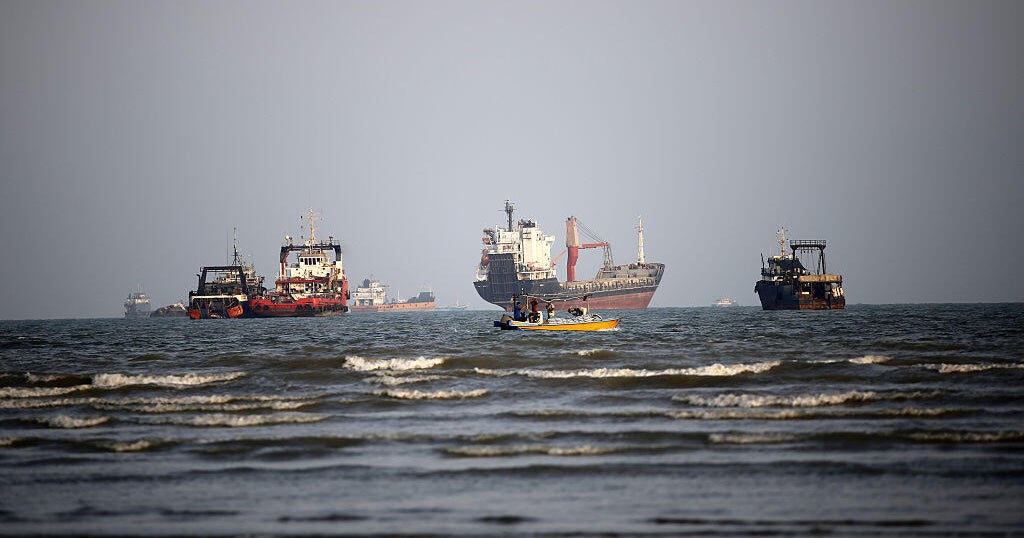
- The Strait of Hormuz is likely to remain severely restricted over the next 14 days, but there is a roughly even chance that it is not fully closed. Mohammad Bagher Ghalibaf repeatedly said Iran would not reopen the strait until its conditions were met, and reporting described most shipping as blocked. In contrast, US Central Command and Adm Brad Cooper said more than 1 billion barrels of crude had transited with US support. The actor responsible for the disruption also remains contested, with some reporting attributing it to Iran and other reporting attributing the export disruption to US and Israeli attacks. This is an assessed judgement with medium confidence because official claims conflict on both the operating status and the cause. (Confidence: medium · ASSESSED)
- I&W: Confirm: Iranian authorities reiterate that commercial passage remains barred, or repeated reporting records continued blockage around the Strait of Hormuz. (0-14 days)
- I&W: Break: Iran announces reopening and repeated shipping reports document sustained normal commercial passage through the Strait of Hormuz. (0-14 days)
- Houthi pressure on Saudi Arabia and the Bab al-Mandab Strait is likely to continue over the next 14 days. The Houthis claimed missile and drone attacks on Riyadh and an Aramco facility in Yanbu, while Saudi authorities reported intercepting a ballistic missile and thwarting attacks on Bisha, Taif, Farasan and Yanbu. Houthi forces are also reported to control or contest Mokha and Mayyun Island, also known as Perim, and to have declared an embargo on Saudi vessels in the Bab al-Mandab. Confidence is medium because several attack accounts originate with the Houthis or Saudi authorities, and reporting differs on the timing and extent of Houthi territorial control. (Confidence: medium · ASSESSED)
- I&W: Confirm: The Houthis claim or Saudi authorities report another missile or drone attack on Riyadh, Yanbu, Bisha, Taif or Farasan, or further enforcement against Saudi vessels in the Bab al-Mandab. (0-14 days)
- I&W: Break: Saudi and Houthi reporting records no further attacks and shipping reports show normal international passage through the Bab al-Mandab. (0-14 days)
- Regional transport and energy-market disruption is very likely to persist over the next 14 days. Air Arabia and flydubai cancelled services to Saudi Arabia, Bahrain and Kuwait; AAA reported US diesel above US$6.50 per gallon and regular petrol above US$4.47; Pakistan announced fuel and spending restrictions; and shipping through the Bab al-Mandab was reported to have fallen by about 60 percent. The disruption pattern is corroborated by major-media, wire, airline and AAA reporting, although the precise duration and the attribution of damage to Saudi Arabia's East-West oil pipeline remain uncertain. This is an assessed judgement with medium confidence. (Confidence: medium · ASSESSED)
- I&W: Confirm: Air Arabia or flydubai announce additional cancellations, or Pakistan extends fuel and official-spending restrictions because of Gulf conflict effects. (0-14 days)
- I&W: Break: The two airlines restore the named routes and reporting records reopened Gulf shipping corridors without new disruption measures. (0-14 days)
- Qatar-mediated US-Iran diplomatic contact is likely to continue, but an immediate ceasefire is unlikely over the next 14 days. Qatar is mediating, Trump said he was open to meeting Masoud Pezeshkian in New York, and Mohsen Rezaei said Iran had conveyed conditions to Washington. The reported conditions differ between three and seven items and vary on whether they concern reopening Hormuz or ending the war and a US naval blockade. Nearly seven months into the war, reporting also states that neither side is ready to make the major concessions required to end the fighting. Confidence is medium because the mediation is multiply reported, while the negotiating terms are partly single-source and internally inconsistent. (Confidence: medium · ASSESSED)
- I&W: Confirm: Qatar announces a formal negotiating session, or Trump and Pezeshkian meet during the UN General Assembly in New York. (0-14 days)
- I&W: Break: Washington and Tehran announce and observe a verified ceasefire covering US-Iran military activity and Strait of Hormuz restrictions. (0-14 days)
- US resource and accountability pressure is very likely to remain high over the next 14 days, while the exact American casualty total remains disputed. The Pentagon database listed 18 military deaths and more than 820 wounded, whereas five US officials cited by The Washington Post reported at least 22 deaths and a sixth reported 23; three contractors were separately reported killed. US Central Command assessed the war's cost at US$43.6 billion through 3 September. Congress has passed a symbolic measure aimed at ending the war, and Rep Jason Crow and 11 House Democrats introduced legislation on casualty data. Confidence is medium because the cost and casualty reporting is substantial but the death figures are directly contested by Defense Secretary Pete Hegseth and differ across official and unofficial counts. (Confidence: medium · ASSESSED)
- I&W: Confirm: The Pentagon publishes a higher casualty total or US Central Command issues a revised cost estimate above US$43.6 billion. (0-14 days)
- I&W: Break: The Pentagon and Defense Secretary Hegseth publish a reconciled casualty account that resolves the difference between 18 and 22 to 23 military deaths. (0-14 days)
Outlook & scenarios
Continued exchanges with constrained Gulf access (50%)
The most likely path is continued US-Iran military exchanges without a verified ceasefire. Iran maintains severe restrictions on the Strait of Hormuz, Houthi forces continue attacks affecting Riyadh, Yanbu and the Bab al-Mandab, and regional flight and fuel disruption persists.
Temporary diplomatic pause (25%)
Qatar-mediated contact produces a temporary pause or a Trump-Pezeshkian meeting in New York. The arrangement reduces direct US-Iran strikes but leaves the reported Iranian conditions, Hormuz restrictions and Houthi-Saudi confrontation unresolved.
Wider regional involvement (20%)
Further Houthi attacks on Saudi targets and Iranian threats against US regional interests prompt additional Saudi military action and stronger implementation of Pakistan's defence commitment to Saudi Arabia and Turkiye. Maritime restrictions and aviation disruption spread beyond the current routes.
High-impact strike cycle (5%)
The United States launches large-scale strikes on Iran, followed by sustained Iranian attacks against US bases, regional allies and shipping. The Strait of Hormuz and Bab al-Mandab become effectively unavailable to a large share of commercial traffic, producing a sharp regional energy and security shock.
Recommendations
- Maintain a 0-14 day warning matrix for a new US strike on Iran, Iranian attacks on named US bases or interests, and Houthi attacks on Riyadh, Yanbu, Bisha, Taif or Farasan.
- Treat the Strait of Hormuz as severely restricted for operational planning, not as confirmed fully closed. Separate Iranian, US Central Command and independent shipping accounts when assessing actual vessel movement and responsibility for the disruption.
- Track Bab al-Mandab developments around Mokha and Mayyun Island, also known as Perim, alongside Houthi statements on Saudi vessels. Require corroboration from Saudi authorities and shipping reporting before accepting territorial or maritime-control claims.
- Monitor Air Arabia and flydubai route cancellations, US fuel prices and Pakistan's austerity measures as near-term indicators of whether regional disruption is widening or easing.
- Prioritise Qatar's mediation activity, any Trump-Pezeshkian meeting at the UN General Assembly, and clarification of Mohsen Rezaei's reported negotiating conditions.
- Present American casualty figures in separate bands until the Pentagon and Defense Secretary Hegseth reconcile the difference between the public database and the higher figures attributed to US officials. Keep contractor deaths separate from military deaths.
Confidence & uncertainty
Overall confidence is high for the existence of active US-Iran confrontation, Houthi attacks affecting Saudi Arabia and the Bab al-Mandab, and associated transport and energy disruption. The assessment draws on multiple major-media reports, official US and Iranian statements, US military data, wire reporting and AAA data. The principal uncertainties concern whether Washington has authorised new strikes, whether the Strait of Hormuz is fully closed, who is responsible for particular maritime restrictions, the extent of Houthi control, and the disputed US casualty count.
Intelligence gaps
- [EEI 1.1 · UNCOVERED] Concentrations or unusual movements of IRGC-Navy fast attack craft, small boat swarms, or escort vessels within 200 km of US/allied ships, including approach distances and formation changes. Recommended collection: maritime/AIS
- [EEI 1.2 · UNCOVERED] Detected pre-launch activity at coastal missile or rocket batteries (vehicle dispersal, fuel/warhead handling, radars powering up, transport erector launchers moving to firing positions). Recommended collection: imagery/signals
- [EEI 1.3 · UNCOVERED] Increased launch/arming/positioning of armed UAVs (MALE/loitering munitions) or tactical aircraft at Iranian coastal bases with sortie generation rates and munitions loadouts. Recommended collection: air/ADS-B/imagery
- [EEI 1.4 · PARTIAL] Command-and-control indications of attack orders or elevated rules-of-engagement from IRGC/General Staff (intercepted communications, internal order messages, force-wide alert messages). Recommended collection: signals/human
- [EEI 2.2 · UNCOVERED] Issuance of formal orders, mobilization directives, travel restrictions, or official internal communications within IRGC/Armed Forces indicating escalation posture or stand-down. Recommended collection: human/diplomatic
- [EEI 2.3 · UNCOVERED] Directives, logistics movements, or communications from Iranian commanders to regional proxy militias (Houthis, Iraqi Shia militias, Lebanese groups) that change their threat posture or task them with specific operations. Recommended collection: signals/human
- [EEI 3.1 · PARTIAL] Incidents involving commercial vessels within the Strait of Hormuz or Persian Gulf: attacks, boarding attempts, near-misses, AIS spoofing or deliberate AIS outages, including vessel IDs and locations. Recommended collection: maritime/AIS
- [EEI 3.2 · PARTIAL] Discovery or reporting of naval mines, unexploded ordnance, or damage to fixed maritime infrastructure (oil platforms, terminals, pipelines) with geolocated imagery or on-scene assessments. Recommended collection: imagery/open-source
- [EEI 3.3 · PARTIAL] Commercial indicators of disruption: sudden increases in war-risk insurance premiums for Gulf transits, vessel re-routing decisions, port throughput reductions, or charter cancellations for Gulf shipments. Recommended collection: financial/commercial
- [EEI 3.4 · PARTIAL] Movements or posture changes of regional state navies/air forces (Saudi, UAE, Kuwait, Bahrain, UK) such as task group departures, airbase dispersals, or announced maritime patrols near choke points. Recommended collection: open-source/imagery
Cited sources
[1] Türkiye Today · Iranian army says US prepares to resume strikes, warns of retaliation - Türkiye Today (B) · Sun Sep 20 2026 12:05:59 GMT+0000 (Coordinated Universal Time) · sha256:07590b831133 [2] Foster's Daily Democrat (USA TODAY Network) · Trump 'deciding' whether to 'blow the entire nation up' in Iran threat (D) · Sun Sep 20 2026 19:38:40 GMT+0000 (Coordinated Universal Time) · sha256:8593bc3066ed [3] Al Jazeera · Iran war live: Tehran warns US against new strikes; fighting rages in Yemen (A) · Mon Sep 21 2026 00:00:47 GMT+0000 (Coordinated Universal Time) · sha256:9387e291d9eb [4] Gulf News · US-Iran conflict: What UAE residents need to know today (Sept. 21) (B) · Mon Sep 21 2026 03:00:10 GMT+0000 (Coordinated Universal Time) · sha256:c6ac03795971 [5] The Jerusalem Post · Iran claims US preparing to resume attacks, threatens bases, supporting regional countries (B) · Sun Sep 20 2026 13:55:23 GMT+0000 (Coordinated Universal Time) · sha256:5654830e32aa [6] EA WorldView · UPDATES: US War on Iran, Day 206 - Saudi Arabia's Conflict with Yemen's Houthis Escalates - EA WorldView (D) · Sun Sep 20 2026 03:20:42 GMT+0000 (Coordinated Universal Time) · sha256:36b3d6067160 [7] Bloomberg (republished by gCaptain) · Qatar Energy Chief Says Bessent ‘Wrong’ About Hormuz Future (A) · Sun Sep 20 2026 22:39:11 GMT+0000 (Coordinated Universal Time) · sha256:9bf7ff6ca288 [8] Gulf Times · morearticles (B) · sha256:6cfd8bc57b1f [9] CBS News · Iran War Updates: U.S. embassies across Middle East issue security alerts for Americans (A) · Fri Sep 18 2026 11:41:00 GMT+0000 (Coordinated Universal Time) · sha256:34cc273bf470 [10] Research Institute for European and American Studies (RIEAS) · [PDF] The endless war in Yemen - Rieas (C) · sha256:ebf05abef996 [11] Türkiye Today · Pentagon tells Congress Iran operations have cost $43.6B: Report - Türkiye Today (B) · Sun Sep 20 2026 08:03:46 GMT+0000 (Coordinated Universal Time) · sha256:d3ec57fefd12
Source content hashes were computed at collection time; the cited text is preserved unmodified for the life of this product.
TLP:CLEAR