TLP:CLEAR · Disclosure is not limited.
Eurasia: US-Iran Maritime Escalation Spreads Across the Gulf and Red Sea
Time window: Last 1 day · Audience: General analyst · Type: Situation report · DTG: 2026-09-08 19:38Z · Overall confidence: HIGH
BLUF
Further US-Iran maritime exchanges are likely within 0-14 days as Iran threatens tighter control of shipping and the US maintains pressure on Iranian ports. The confrontation has already widened through Houthi attacks on Saudi cities and energy facilities, raising the risk of coalition retaliation and prolonged disruption to oil and gas flows.
Executive summary
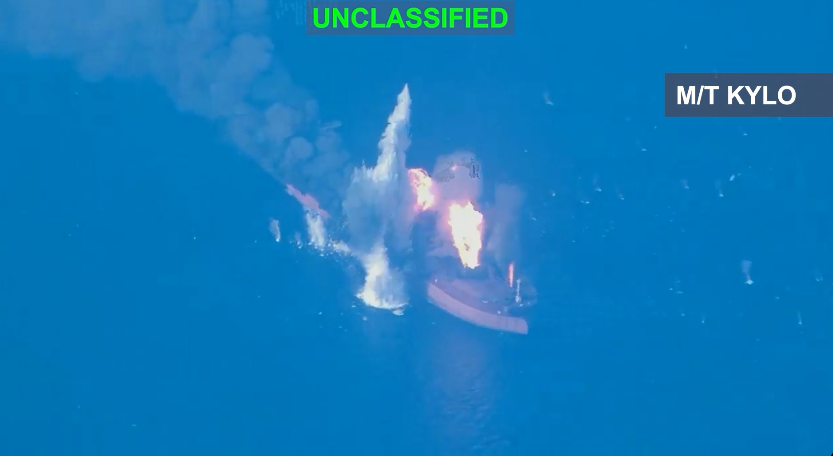
The US has imposed a naval blockade of Iranian ports and struck Iranian tankers, while Iran has announced or threatened restricted maritime zones spanning the Persian Gulf, the Strait of Hormuz and, in some reporting, the Gulf of Oman. Shipping continues through escorted movements and at-sea transfers, but oil transit through the Strait of Hormuz has reportedly fallen from about 8 million barrels per day to 4-5 million. On 8 September, Ansar Allah attacked Abha, Khamis Mushait, Jizan and Najran, injuring at least 73 people and damaging Saudi energy facilities. Saudi coalition officials have threatened a response, although Riyadh has not ruled out diplomacy. An Iran-Oman navigation arrangement remains a possible off-ramp, but reporting conflicts over its timing, conditions and likely effect. Oil, tanker and European gas prices have risen while European storage remains below seasonal norms.
Change from previous assessment
Since the 7 September brief, the assessment has widened from a primarily bilateral US-Iran maritime exchange to a regional crisis involving Ansar Allah attacks on four Saudi cities and Saudi energy facilities, with coalition retaliation now a separate near-term judgment. Confidence in persistent shipping disruption has increased from medium to high because new reporting describes at-sea oil transfers, escorted movements and sharply reduced Strait of Hormuz oil flows. The assessment now gives greater weight to a restricted zone extending beyond the strait, although its exact scope remains unresolved. The Iran-Oman arrangement remains an off-ramp but has lower confidence because its timing, conditions and escalation effects are contested. The prior cyber-activity judgment is not carried forward because no new approved claims in this reporting window address it.
Key judgments
- Further direct US-Iran maritime exchanges in and around the Strait of Hormuz are likely within 0-14 days. The reported basis is a continuing exchange of strikes, US strikes on Iranian tankers and a US naval blockade of Iranian ports. Confidence is medium because the continuing-exchange report comes from social media, while the tanker strikes and blockade are reported by trade and wire sources. (Confidence: medium · ASSESSED)
- I&W: Confirm: A US or Iranian authority reports another strike on a vessel, a vessel attack, or a new maritime blacklist designation in the Strait of Hormuz or Gulf of Oman. (0-14 days)
- I&W: Break: No further US-Iran maritime strike or vessel attack is reported by the end of the 14-day period. (0-14 days)
- Iran is likely to operationalise maritime restrictions affecting the Persian Gulf and Gulf of Oman within 0-14 days. Tehran has threatened sanctions against vessels entering without coordination, while Mohsen Rezaei has threatened to blacklist ships crossing the US Navy blockade line. The exact geography and enforcement trigger remain contested, lowering confidence to medium. (Confidence: medium · ASSESSED)
- I&W: Confirm: Iran publishes an enforcement notice naming the Persian Gulf, Strait of Hormuz or Gulf of Oman and identifies a vessel, route or category of shipping subject to sanctions or attack. (0-14 days)
- I&W: Break: Iran issues no operational notice and no vessel is publicly blacklisted or sanctioned under the proposed restrictions by the end of the period. (0-14 days)
- Ansar Allah's attacks have widened the confrontation from the US-Iran maritime exchange to Saudi territory, and Saudi-led coalition retaliation is likely within 0-14 days. The 8 September attacks struck civilian and economic facilities in Abha, Khamis Mushait, Jizan and Najran, with at least 73 people injured, while Saudi authorities reported fires and suspended work at energy facilities. Confidence is medium because the coalition has announced an intention to respond, but Faisal bin Farhan Al Saud has also said Riyadh does not rule out a diplomatic resolution. (Confidence: medium · ASSESSED)
- I&W: Confirm: Saudi-led coalition authorities announce or conduct air or missile strikes against Ansar Allah positions in Yemen. (0-14 days)
- I&W: Break: Saudi and coalition officials announce a pause in military action and begin publicly documented talks with Ansar Allah without new strikes on Saudi territory. (0-14 days)
- Commercial shipping disruption around the Strait of Hormuz is very likely to persist within 0-14 days. ADNOC's shipping division, Saudi Bahri, Kuwait Oil Tanker Company and South Korea's Sinokor are using US air cover, transferring oil at sea between the Persian Gulf and Gulf of Oman, and adapting routes to reduce Iranian attack risk. Rystad assesses that oil transit has fallen from about 8 million barrels per day to 4-5 million, although a Qatari LNG tanker has made a visible exit through the strait. Confidence is high because the disruption is supported by multiple wire, trade and shipping reports. (Confidence: high · ASSESSED)
- I&W: Confirm: Oil transit remains near 4-5 million barrels per day and the named companies continue at-sea transfers or escorted movements. (0-14 days)
- I&W: Break: Reported transit volumes return towards 8 million barrels per day and the named companies end at-sea transfers without replacement rerouting through the Red Sea. (0-14 days)
- Energy market stress is likely to persist over 1-3 months, with a further rise in crude and European gas prices more likely than a rapid return to pre-crisis conditions. Brent futures were around $97, crude-carrier earnings on the Saudi Arabia-to-China route reached $728,000 per day, Dutch gas futures reached €74.95 per megawatt-hour, and German 2027 power futures reached €126.62 per megawatt-hour. EU storage is reported at 65.6% to 67%, below the 83% seasonal norm, while German storage is around half full. Confidence is medium because price and storage figures reflect different intraday or reporting snapshots and the $120 Brent level is a worst-case forecast rather than an observed price. (Confidence: medium · ASSESSED)
- I&W: Confirm: Brent approaches $120 per barrel while crude-carrier earnings remain near $728,000 per day within 1-3 months. (1-3 months)
- I&W: Break: Brent falls below $97 per barrel and Dutch front-month gas futures remain below €74.95 per megawatt-hour while European storage moves towards the 83% seasonal norm. (1-3 months)
- An Iran-Oman navigation agreement within 0-14 days is a roughly even chance, but an arrangement that durably reduces the confrontation is unlikely without US concessions. Iran describes an imminent accord containing a temporary safe route, while other reporting says publication depends on lifting the US naval blockade and sanctions on Iranian oil exports. Jorge Leon warns that transit fees under joint management would increase escalation risk. Confidence is low because the available reporting is contradictory and partly consists of official claims or single-source analysis. (Confidence: low · ASSESSED)
- I&W: Confirm: Iran and Oman publish a signed navigation accord that specifies a temporary safe route and receives explicit US acceptance. (0-14 days)
- I&W: Break: No agreement is published, or Iran and the US publicly reject one another's conditions on the blockade, oil sanctions or transit fees. (0-14 days)
Outlook & scenarios
Continued coercion with constrained shipping (45%)
Likely. The US maintains pressure on Iranian ports while Iran enforces or threatens maritime restrictions. Selected tankers continue to move under air cover or through at-sea transfers, but transit remains below recent levels. Saudi coalition retaliation remains limited enough to avoid a wider direct US-Iran exchange.
Regional escalation through Saudi Arabia and the Red Sea (35%)
Likely. Saudi-led coalition measures follow the Ansar Allah attacks, prompting further Houthi strikes on Saudi energy, civilian or military targets. Red Sea rerouting expands, Strait of Hormuz traffic falls further and pressure on crude and European gas markets intensifies.
Conditional Iran-Oman maritime arrangement (25%)
A temporary safe route is announced after further Iran-Oman talks, but implementation remains conditional on US action over the naval blockade and Iranian oil sanctions. The arrangement reduces some shipping risk without ending the US-Iran confrontation.
Renewed Iranian strike on a Gulf US facility (10%)
Unlikely but high impact. Iran conducts another missile strike against Al Udeid in Qatar or attacks a different Gulf state, prompting direct US retaliation and ending any practical prospect of a near-term maritime arrangement. The March strike on Al Udeid demonstrates the type of escalation involved, but the available reporting does not establish that a new attack is imminent.
Recommendations
- Prioritise a 0-14 day collection watch on Iranian maritime notices, blacklists and exclusion-zone coordinates covering the Strait of Hormuz, the Persian Gulf and the Gulf of Oman. Record the stated enforcement trigger separately from the geographic scope.
- Maintain separate incident logs for direct US-Iran actions, Ansar Allah attacks on Saudi Arabia and Saudi-led coalition operations in Yemen. Require each entry to distinguish official attribution, claimed responsibility and independent confirmation.
- Track the named shipping responses of ADNOC's shipping division, Saudi Bahri, Kuwait Oil Tanker Company, Sinokor and Qatari LNG carriers. Use their route changes, at-sea transfers and Strait of Hormuz transits as early indicators of whether disruption is widening or easing.
- Monitor the Iran-Oman channel for a signed navigation accord, a specified temporary safe route and any US response on the naval blockade or Iranian oil sanctions. Do not treat an Iranian announcement alone as evidence of operational de-escalation.
- Maintain an energy stress dashboard covering Brent, tanker earnings, Dutch gas futures, German 2027 power futures and EU and German storage levels. Flag a move towards $120 Brent or continued tanker earnings near $728,000 per day as evidence of prolonged disruption.
- Prepare a separate high-impact contingency assessment for a renewed Iranian strike on Al Udeid or another Gulf state. Focus collection on official warnings, missile activity reporting and public changes in Qatar's or the UAE's security posture.
Confidence & uncertainty
Overall confidence is high for the principal reported developments because the US blockade and tanker strikes, Iranian maritime restrictions, shipping disruption, Houthi attacks on Saudi Arabia and market effects are supported by multiple wire, major-media and trade sources. Confidence is lower for forecasts about the next exchange, the extent of Saudi retaliation and the Iran-Oman agreement because the source base contains social-media reporting, single-source analysis and direct contradictions over the restricted zone's scope, the agreement's status and energy-market snapshots.
Intelligence gaps
- [EEI 1.2 · UNCOVERED] Changes in US or Iranian force posture indicating preparation for further attacks, including aircraft dispersal, missile-unit movement, naval sortie activity, or air-defense activation. Recommended collection: satellite imagery/aviation and maritime tracking
- [EEI 2.1 · PARTIAL] Deployment or repositioning of Iranian ballistic missiles, cruise missiles, drones, fast-attack craft, or other strike assets within operational range of US or partner targets. Recommended collection: satellite imagery/signals intelligence
- [EEI 2.4 · UNCOVERED] Changes in Iranian military alert levels, command activity, weapons dispersal, or continuity-of-government measures. Recommended collection: signals intelligence/satellite imagery
- [EEI 3.1 · UNCOVERED] Arrival or departure of US carrier strike groups, bombers, air-defense units, special operations forces, or additional personnel in the region. Recommended collection: maritime and aviation tracking
- [EEI 3.2 · UNCOVERED] Changes to US force-protection conditions, base access, evacuation plans, embassy staffing, or noncombatant evacuation preparations. Recommended collection: official notices/diplomatic reporting
- [EEI 3.3 · UNCOVERED] Presidential, Pentagon, or theater-command statements describing authorized response options, expanded objectives, or revised rules of engagement. Recommended collection: official statements
- [EEI 3.4 · PARTIAL] US or coalition kinetic actions against Iranian territory, military infrastructure, or aligned groups following new exchanges. Recommended collection: military reporting/open-source imagery
- [EEI 4.3 · PARTIAL] Regional government decisions to close airspace or waterways, raise military readiness, expel personnel, or request additional US or allied forces. Recommended collection: official statements/aviation and maritime notices
TLP:CLEAR