TLP:CLEAR · Disclosure is not limited.
Eurasia: US-Iran Maritime Exchanges Intensify as Hormuz Access Narrows
Time window: Last 1 day · Audience: General analyst · Type: Situation report · DTG: 2026-09-13 21:36Z · Overall confidence: HIGH
BLUF
US-Iran maritime exchanges are likely to continue over the next 14 days, while commercial transit through the Strait of Hormuz remains heavily restricted. A vessel strike, competing accounts of US retaliation against Iranian tankers, Houthi advances around Bab el-Mandeb, and the shutdown of Saudi Arabia's East-West pipeline raise the risk of further regional spillover.
Executive summary
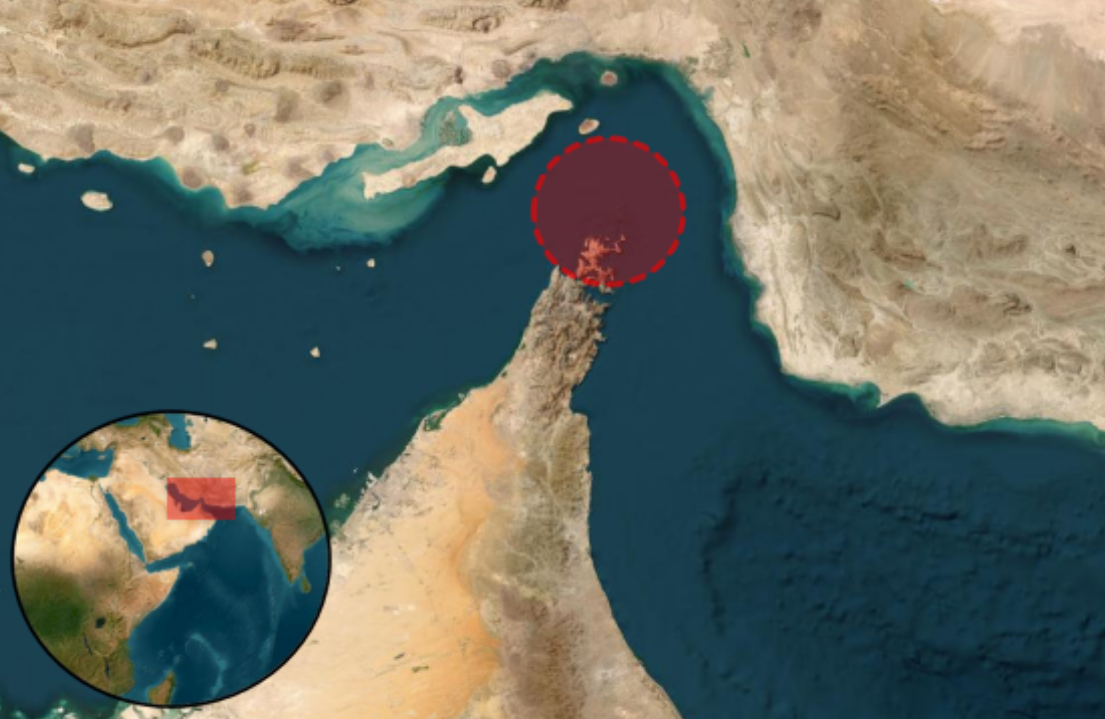
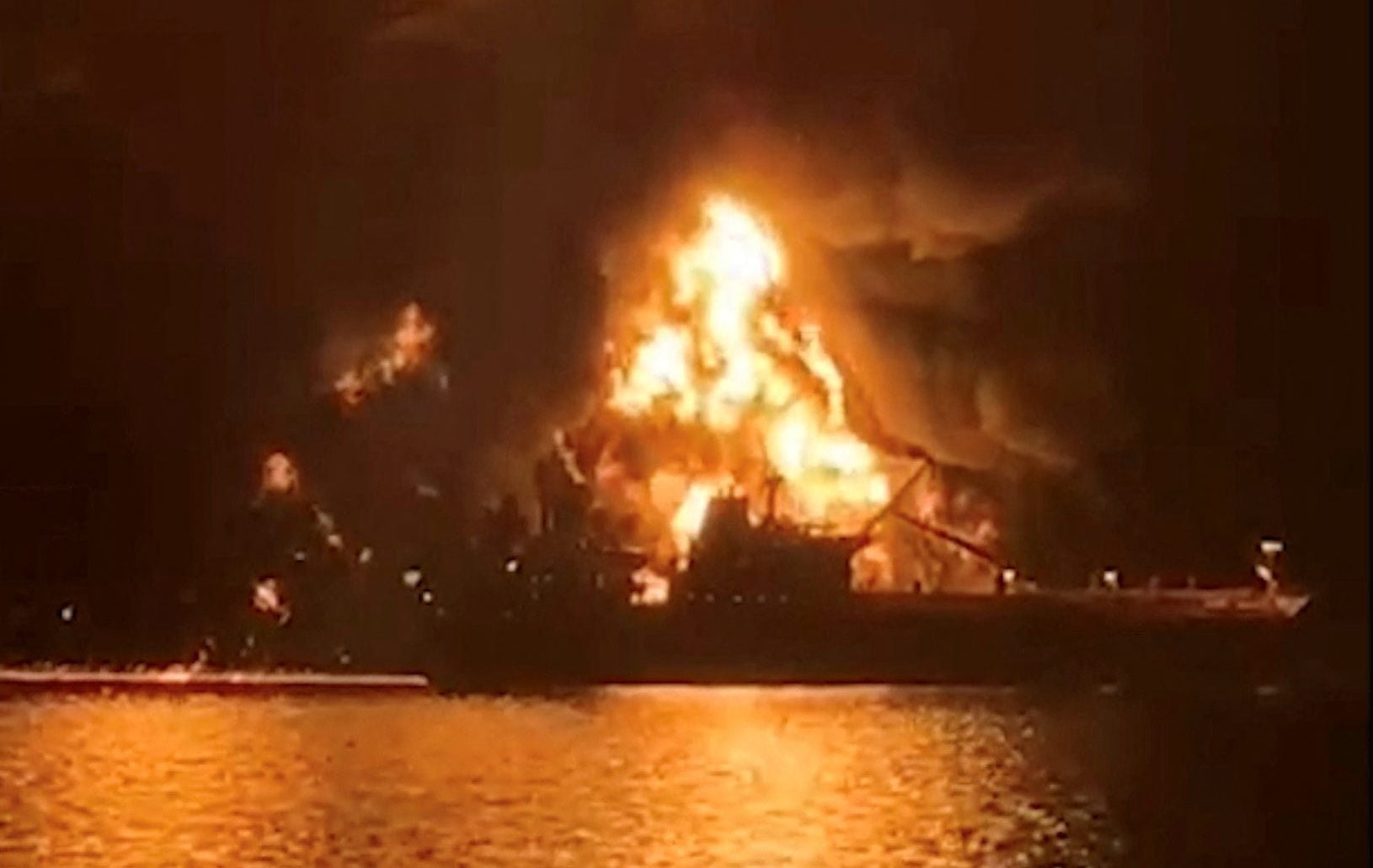
UKMTO and Ambrey reporting indicates that a vessel was struck by an unidentified projectile in the Strait of Hormuz on 13 September, causing a fire and crew evacuation. Iran has reportedly increased attacks on shipping, while the United States has limited tanker movement to two protected daily windows and maintains air cover along Oman's coast. Iran and Oman are pursuing a shipping arrangement, but Iranian statements differ on whether the framework is preliminary or near completion. The Houthis have reportedly captured Mocha and Perim Island and continued attacks on Saudi shipping and energy infrastructure. Saudi Arabia's East-West pipeline remains shut after attacks launched from Iraqi territory, although responsibility for the attack is disputed.
Change from previous assessment
Since the 12 September brief, direct maritime confrontation is more clearly evidenced by the 13 September vessel strike and additional reporting on Iranian attacks and possible US tanker retaliation, although the retaliation account remains disputed and confidence stays medium. The assessment of Houthi activity has strengthened because new reporting places Houthi forces at Mocha and Perim Island and at the Bab el-Mandeb approaches. The Saudi pipeline assessment now has a more specific reported launch location in Maysan province, while ultimate responsibility remains unresolved. The Iran-Oman diplomatic channel is more active, with a Gulf meeting expected on 14 September, but reports still disagree on whether an agreement is preliminary or near completion. The low-confidence assessment on Iran-nexus collection against US naval forces remains unchanged.
Key judgments
- A vessel was struck by an unidentified projectile in the Strait of Hormuz on 13 September, caught fire, and required crew evacuation by local authorities. UKMTO confirmed the incident, while Ambrey separately reported that a Panama-flagged tanker was hit. The perpetrator and the precise vessel identity remain unresolved. (Confidence: high · REPORTED)
- I&W: UKMTO or Ambrey publishes the vessel identity, damage assessment, or an attribution for the projectile strike. (0-7 days)
- I&W: UKMTO withdraws or materially revises the incident report, or local authorities report that no vessel fire or evacuation occurred. (0-7 days)
- Further direct US-Iran maritime exchanges are likely within 0-14 days. Multiple reports describe Iranian attacks on US warships and commercial shipping, Iranian claims of strikes on US vessels and tankers, and US strikes on Iranian tankers. A separate report says US forces did not conduct the expected tanker retaliation, so the scale and sequence of the exchange remain contested. This forecast therefore rests on corroborated evidence of maritime confrontation but includes a significant unresolved contradiction over US retaliation. (Confidence: medium · ASSESSED)
- I&W: UKMTO records another attack on a US-linked or Iranian-linked vessel, or the US military confirms a strike on an Iranian tanker. (0-14 days)
- I&W: US and Iranian authorities both report a pause in maritime attacks and no further vessel incidents are recorded for seven consecutive days. (0-14 days)
- Restricted, protected commercial transit through the Strait of Hormuz is very likely to persist within 0-14 days. The United States has asked tanker operators to sail only during specified periods, reduced protection to two daily time slots, and offered air-based defence along Oman's coast. Reports that Iran effectively closed the strait and increased attacks on night-time shipping support continued restrictions, although an Iran-Oman arrangement could widen access. (Confidence: high · ASSESSED)
- I&W: The US naval coordination centre retains two protected sailing windows or reduces them to one, while UKMTO records another vessel attack in the strait. (0-14 days)
- I&W: Iran, Oman and other Gulf states announce and implement a navigation arrangement that permits tanker movement outside the two US-protected windows. (0-14 days)
- A limited shipping arrangement involving Iran, Oman and other Gulf states is likely within 0-14 days, but durable US-Iran de-escalation is unlikely in that period. Masoud Pezeshkian said Iran and Oman had discussed a framework conditional on an end to US attacks, while Iran's Foreign Ministry expects talks with Gulf states on 14 September. Iranian reporting that an agreement on joint navigation control is at a final stage conflicts with descriptions of an emerging framework, and Pezeshkian has expressed distrust of Donald Trump's statements. (Confidence: medium · ASSESSED)
- I&W: Iran, Oman and Gulf states issue a joint statement after the 14 September meeting and specify operating rules for tanker transit. (0-14 days)
- I&W: Iranian or US officials attach new military or sanctions conditions to shipping talks, or the 14 September meeting produces no public navigation arrangement. (0-14 days)
- The Houthis are likely to sustain attacks on Saudi shipping and energy infrastructure and retain increased access around Bab el-Mandeb within 0-14 days. Multiple reports place Houthi forces in control of Mocha and Perim Island, while other reporting describes continued missile and drone attacks on Saudi Arabia and a blockade of Saudi vessels. The evidence supports increased Houthi access to the waterway but does not establish full control of Bab el-Mandeb. (Confidence: medium · ASSESSED)
- I&W: The Houthis announce or conduct another missile, drone, or maritime attack affecting Saudi shipping, Jizan, Yanbu, or a Saudi energy facility. (0-14 days)
- I&W: Houthi forces withdraw from Mocha or Perim Island and Saudi-linked shipping resumes through Bab el-Mandeb without reported attacks. (0-14 days)
- Saudi Arabia's East-West pipeline is likely to remain offline in the near term, while responsibility for the attack is unlikely to be resolved within 0-14 days. Saudi authorities reported drone attacks in the Riyadh and Madinah regions and a temporary shutdown on 11 September. Iraq's Prime Minister Ali Al-Zaidi said the attacks were launched from within Maysan province and ordered an investigation, whereas Donald Trump said Iran was probably responsible. The launch location is better supported than attribution to Tehran or a named group. (Confidence: medium · ASSESSED)
- I&W: Saudi Arabia announces that pumping through the East-West pipeline has resumed, or reports a restart date for the Riyadh and Madinah sections. (0-14 days)
- I&W: Iraq's Maysan investigation identifies the operators or sponsors of the drone launch, or another attack targets Saudi pipeline infrastructure. (0-14 days)
- Energy and tanker-market stress is likely to persist for 1-3 months. Brent crude has traded above $100 per barrel and briefly reached about $110, while tanker rates are reported at unprecedented levels and Saudi oil exports and production have fallen sharply. Confidence in the duration and scale of the shock is medium because reporting conflicts over the date of the Brent peak and whether the Saudi decline was the lowest in 13 years or since 1990. (Confidence: medium · ASSESSED)
- I&W: Brent remains above $100 per barrel and tanker rates remain elevated while Hormuz protection stays limited to two daily windows. (1-3 months)
- I&W: Brent falls below $100 per barrel, tanker rates decline, and Saudi Arabia confirms pipeline operations and higher export volumes. (1-3 months)
- An Iran-nexus collection effort against US naval forces is likely to recur through other accounts or channels over 1-3 months, but confidence is low. Anthropic reported that one actor used Claude to track naval positions, compile US personnel and transponder data, query satellite imagery, and research vulnerabilities in maritime VSAT, Cisco and industrial-control systems. Anthropic banned the account and shared threat intelligence, but did not identify the actor or any targeted US Navy ship, base, or operating area. The assessment therefore rests primarily on single-source company reporting. (Confidence: low · ASSESSED)
- I&W: Anthropic, a government authority, or a maritime operator identifies a new Iran-nexus account compiling US Navy positions, personnel rosters, transponder data, or shipboard vulnerability research. (1-3 months)
- I&W: Anthropic or government authorities report no related reuse and identify the disclosed account as an isolated incident without evidence of operational targeting. (1-3 months)
Outlook & scenarios
Continued maritime exchange under controlled escalation (65%)
Iranian attacks on shipping and US-linked maritime assets continue, with US forces responding against Iranian maritime interests. The exchange remains concentrated in the Strait of Hormuz and Persian Gulf, while tanker movement continues under two protected daily windows.
Limited Hormuz navigation arrangement (45%)
Iran, Oman and other Gulf states hold the expected 14 September discussions and establish a limited navigation arrangement. Transit expands beyond the two US-protected windows, but the US-Iran military exchange continues because the arrangement does not resolve disputes over US bases, attacks, or sanctions.
Red Sea and Gulf spillover (35%)
The Houthis use their positions at Mocha and Perim Island to sustain attacks on Saudi shipping and energy infrastructure. Additional strikes from Iraqi territory affect Saudi energy operations, increasing pressure on Riyadh and constraining shipping through both Hormuz and Bab el-Mandeb.
Low-probability, high-impact regional expansion (20%)
A further confirmed strike on a civilian vessel, an Iranian tanker, or Saudi energy infrastructure triggers a larger US-Iran maritime exchange and additional attacks by Iranian forces, Iraqi Iran-backed militias, or the Houthis. The current shipping arrangements fail, and commercial traffic through both maritime chokepoints contracts further.
Recommendations
- Maintain a 24-hour watch on UKMTO, Ambrey and US naval coordination notices for vessel strikes, changes to the two protected Hormuz windows, and any confirmed US action against Iranian tankers.
- Prioritise collection on the 14 September Iran-Oman-Gulf meeting. Record whether participants issue operating rules, identify protected routes, or attach conditions involving US attacks.
- Separate launch-origin reporting from responsibility attribution in all products on the Saudi pipeline attack. Track the Iraqi investigation in Maysan, the Shalamcheh crossing, and any Saudi confirmation of pipeline restart.
- Track Houthi activity specifically around Mocha, Perim Island, Bab el-Mandeb, Jizan and Yanbu. Treat claims of Houthi control as operationally relevant but distinguish access to the waterway from full control of the strait.
- Update energy and shipping assumptions daily using Brent prices, tanker rates, Saudi pipeline status, and the number of vessels transiting outside or within the US-protected windows.
- Ask cyber and maritime analysts to review public exposure of US Navy personnel imagery, vessel and aircraft transponder identifiers, satellite-imagery queries, maritime VSAT systems and industrial-control information.
- Do not treat the competing accounts of US retaliation against Iranian tankers or attribution of the Iranian commercial ship attack as resolved until supported by official confirmation or independent reporting from at least two reliable sources.
Confidence & uncertainty
Overall confidence is high because multiple high-reliability wire, major-media and maritime sources corroborate the vessel strike in the Strait of Hormuz, the US restriction of tanker transit, the Saudi pipeline shutdown, and Houthi advances around Mocha and Perim Island. The main uncertainties concern the identity of attackers, whether US forces struck Iranian tankers, the stage of the Iran-Oman navigation arrangement, and conflicting measures of Saudi oil output and exports. These issues lower confidence in several forward-looking judgments but do not materially weaken the core situational picture.
Intelligence gaps
- [EEI 1.2 · PARTIAL] Changes in US or Iranian force posture indicating preparation for further attacks, including aircraft dispersal, missile-unit movement, naval sortie activity, or air-defense activation. Recommended collection: satellite imagery/aviation and maritime tracking
- [EEI 1.3 · PARTIAL] Public or private warnings, ultimata, declared red lines, or force-protection directives issued by US or Iranian leadership. Recommended collection: official statements/diplomatic reporting
- [EEI 2.1 · PARTIAL] Deployment or repositioning of Iranian ballistic missiles, cruise missiles, drones, fast-attack craft, or other strike assets within operational range of US or partner targets. Recommended collection: satellite imagery/signals intelligence
- [EEI 2.4 · PARTIAL] Changes in Iranian military alert levels, command activity, weapons dispersal, or continuity-of-government measures. Recommended collection: signals intelligence/satellite imagery
- [EEI 3.1 · PARTIAL] Arrival or departure of US carrier strike groups, bombers, air-defense units, special operations forces, or additional personnel in the region. Recommended collection: maritime and aviation tracking
- [EEI 3.3 · PARTIAL] Presidential, Pentagon, or theater-command statements describing authorized response options, expanded objectives, or revised rules of engagement. Recommended collection: official statements
- [EEI 4.3 · PARTIAL] Regional government decisions to close airspace or waterways, raise military readiness, expel personnel, or request additional US or allied forces. Recommended collection: official statements/aviation and maritime notices
Cited sources
[1] Reuters (republished by gCaptain) · Crew Of Vessel Attacked In Hormuz Strait Evacuated (A) · Sun Sep 13 2026 14:46:08 GMT+0000 (Coordinated Universal Time) · sha256:b31229b45bac [2] The Maritime Executive · U.S. Shows More Restraint After Latest Iranian Tanker Strike (C) · sha256:10b7ff3bfb76 [3] Gulf News · Hormuz to Red Sea: How Iran is widening the war to gain leverage against US (B) · Sun Sep 13 2026 16:29:40 GMT+0000 (Coordinated Universal Time) · sha256:c755d0f1acca [4] Reuters (republished by gCaptain) · US Limits Air Defense Time Slots For Tankers Sailing Through Hormuz (A) · Sun Sep 13 2026 14:20:18 GMT+0000 (Coordinated Universal Time) · sha256:f4be381706cc [5] up.mk.ua (Укрінформ/regional news portal, Mykolaiv) · Пентагон сокращает сопровождение судов в Персидском заливе: танкерам указали точное время для безопасного прохода (D) · sha256:db886a99b629 [6] Deccan Herald · Iran finds escalation a fruitful path to leverage in war with US (A) · Sun Sep 13 2026 20:15:38 GMT+0000 (Coordinated Universal Time) · sha256:ff7bef4c533d [7] Mehr News Agency · Iran would not have joined NPT if had sought nuclear weapons (B) · Sun Sep 13 2026 10:43:30 GMT+0000 (Coordinated Universal Time) · sha256:f5abc8e21ec5 [8] Minval · Политика - Minval Politika (D) · sha256:83b9b261ac85 [9] IsraelInfo (news.israelinfo.co.il) · Королевство под ударом. Почему «исламское НАТО» не спасает Саудовскую Аравию от хуситов (D) · Sun Sep 13 2026 14:31:03 GMT+0000 (Coordinated Universal Time) · sha256:6db0cfffe854 [10] Bloomberg (republished by gCaptain) · Iraq Under Pressure After Drone Strikes Close Key Saudi Pipeline (A) · Sun Sep 13 2026 15:19:32 GMT+0000 (Coordinated Universal Time) · sha256:13e849f83813 [11] gCaptain · Anthropic Says Iran-Linked Actor Used Claude to Compile U.S. Navy Targeting Data (C) · Fri Sep 11 2026 21:53:03 GMT+0000 (Coordinated Universal Time) · sha256:9935aefc8840
Source content hashes were computed at collection time; the cited text is preserved unmodified for the life of this product.
TLP:CLEAR