TLP:CLEAR · Disclosure is not limited.
Eurasia: US-Iran Tensions Keep Hormuz Contested
Time window: Last 1 day · Audience: General analyst · Type: Situation report · DTG: 2026-08-30 19:37Z · Overall confidence: MEDIUM
BLUF
US-Iran military confrontation is likely to remain elevated over the next 14 days. The Strait of Hormuz remains partially active but commercially constrained, while US economic pressure and Iranian threats to Gulf oil exports sustain escalation risk. The Iran-Oman maritime understanding offers a narrow de-escalatory path, but its implementation remains unconfirmed.
Executive summary
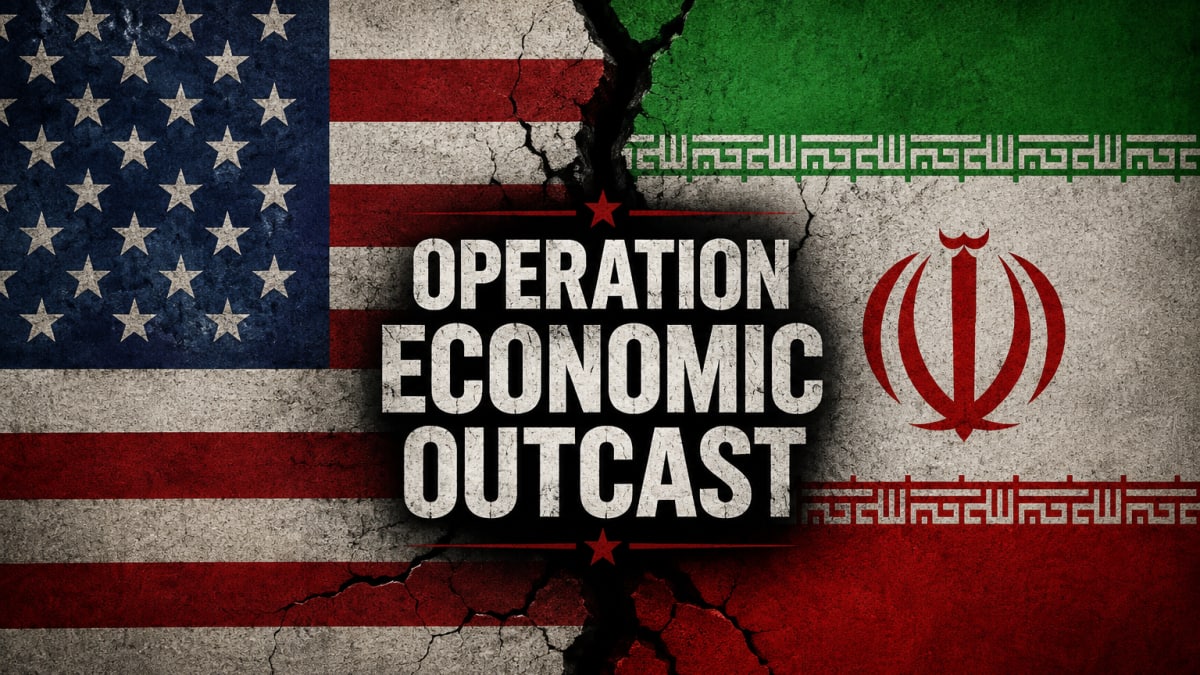
Reporting indicates that the confrontation between the United States and Iran remains sustained after direct attacks on military infrastructure in July 2026. Washington is enforcing a blockade and has launched Operation Economic Outcast, while Tehran continues to threaten commercial shipping and Gulf oil exports. Strait of Hormuz traffic has partially recovered, but reported flow estimates differ sharply and the status of the Iran-Oman transit arrangement is unresolved. Iran's inflation, currency depreciation, job losses and reduced foreign trade indicate severe economic pressure. Diplomatic efforts by Oman, Pakistan and Qatar continue, but competing US and Iranian positions limit prospects for a reliable reopening or near-term settlement.
Change from previous assessment
Since the 29 August brief, confidence has risen from low to medium that US-Iran confrontation is sustained, because the current record dates direct attacks on military infrastructure to July 2026 and identifies the 24 August launch of Operation Economic Outcast. The maritime assessment remains medium, but the competing 8-10 million and 15-16 million barrel-per-day estimates make the degree of recovery more contested. The Iran-Oman arrangement remains unlikely to produce a full reopening, while the economic-pressure judgement has moved from low to medium confidence because the record now includes an official 89 per cent inflation report and a new rial low. The unresolved contradiction over the condition of Iran's navy has been added as a separate judgement.
Key judgments
- US-Iran military confrontation is likely to remain elevated over the next 14 days. The available reporting records direct attacks on US and Iranian military infrastructure in July 2026, an Iranian attack on commercial ships in the Strait of Hormuz that produced a tit-for-tat exchange, and a US objective of enforcing the blockade while facilitating commercial traffic. No claim dates a new direct exchange to 28-30 August, so confidence in an immediate further exchange is lower than confidence in sustained confrontation. (Confidence: medium · ASSESSED)
- I&W: Confirm: Within 0-14 days, US or Iranian authorities report a new strike on the other side's military infrastructure in the Persian Gulf region, or Iran again targets a commercial ship in the Strait of Hormuz. (0-14 days)
- I&W: Break: Through 13 September, reporting records no new US-Iran attack on military infrastructure and no Iranian attack on commercial shipping in the Strait of Hormuz. (0-14 days)
- The Strait of Hormuz is likely to remain hazardous and commercially constrained over the next 14 days while continuing to carry some traffic. Estimates of 8-10 million barrels per day through the Strait and traffic below normal conflict with estimates of 15-16 million barrels per day for broader Gulf flows and Bloomberg's report of recovery to two-thirds of pre-war levels. US forces reportedly assisted nearly 1,500 vessels, and Iran says it reached an understanding with Oman, indicating partial activity rather than a settled reopening. The exact recovery level remains uncertain because the measures have different scopes and are not independently reconciled. (Confidence: medium · ASSESSED)
- I&W: Confirm: Within 0-14 days, tanker tracking records Hormuz throughput below normal while vessels continue to transit, or a new attack on a commercial vessel is reported. (0-14 days)
- I&W: Break: Within 0-14 days, Iran and Oman publish operating procedures and independent traffic data show a return to pre-war levels without a new attack. (0-14 days)
- US economic pressure is likely to intensify Iran's economic stress over the next 1-3 months, while immediate Iranian political concessions to Washington are unlikely. Reporting describes a US blockade and oil sanctions since mid-July, followed by Scott Bessent's 24 August launch of Operation Economic Outcast against Iran's oil, shipping, technology and financial networks. Iran's reported 89 per cent year-on-year inflation for Mordad, food inflation above 127 per cent, a rial exchange rate of 2.06 million per US dollar, and a 35 per cent fall in foreign trade indicate acute pressure. This is an assessed judgement resting on multiple major-media reports but with unresolved economic discrepancies, including the separate report of 66 per cent annual inflation in July. Abbas Araghchi's claim that sanctions pressure will fail and Mohsen Rezaei's threat to halt Gulf oil exports indicate continued resistance rather than near-term accommodation. (Confidence: medium · ASSESSED)
- I&W: Confirm: Within 1-3 months, the US Treasury names additional countries or entities facilitating Iranian oil transactions, or Iran implements the planned petrol price increase after reducing personal-vehicle fuel quotas. (1-3 months)
- I&W: Break: Within 1-3 months, Washington and Tehran announce and implement an agreement that eases the blockade, oil sanctions or Iranian restrictions on Hormuz. (1-3 months)
- An Iran-Oman maritime arrangement is unlikely to deliver a full and reliable reopening of the Strait of Hormuz within 14 days. Iran says it reached an understanding with Oman, and Oman, Pakistan and Qatar are pursuing mediation, but the US administration reportedly favours full and unrestricted reopening and opposes the arrangement. No claim confirms operating procedures or sustained commercial use. This is a low-confidence assessed judgement based on preliminary reporting and a direct policy disagreement. (Confidence: low · ASSESSED)
- I&W: Confirm: By 13 September, Iran and Oman have not published route procedures and tanker tracking shows no sustained increase in commercial transits. (0-14 days)
- I&W: Break: Within 0-14 days, Iran and Oman publish operating procedures and tracking shows seven consecutive days of increased commercial transits without a new attack. (0-14 days)
- The operational status of Iran's navy is unresolved, and available reporting is insufficient to determine whether it retains meaningful capability. Donald Trump has repeatedly claimed that all Iranian naval ships were destroyed, while Iranian navy commander Shahram Irani said Iran's navy is alive and well. These directly opposing assertions lack independent operational evidence in the record. (Confidence: insufficient · REPORTED)
- I&W: Break uncertainty towards retained capability: Within 0-14 days, independently corroborated imagery or maritime tracking identifies a named Iranian naval vessel conducting a sortie in the Persian Gulf. (0-14 days)
- I&W: Break uncertainty towards severe degradation: Within 0-14 days, independent imagery or operational records verify the destruction or non-operation of named Iranian naval vessels. (0-14 days)
Outlook & scenarios
Sustained pressure and constrained shipping (55%)
Likely over the next 14 days. The United States continues blockade enforcement and economic pressure, while Iran sustains coercive signalling against commercial shipping and Gulf oil exports. Some Hormuz traffic continues below normal levels. The Iran-Oman understanding remains limited or unimplemented.
Partial maritime accommodation (30%)
Less likely. Iran and Oman implement a limited transit arrangement, producing a measurable increase in commercial traffic and a pause in attacks on shipping. Full reopening remains unlikely because Washington favours unrestricted access and Tehran retains the ability to use maritime restrictions as leverage.
Renewed regional escalation (20%)
Less likely but dangerous. Iran again targets commercial shipping in the Strait of Hormuz, or the Houthis target commerce through the Red Sea and Bab Al Mandeb. US military activity then expands to protect commercial traffic and regional infrastructure.
Broad maritime closure and regional economic shock (8%)
Very unlikely, high impact. Iran acts on Mohsen Rezaei's warning that no oil should leave the Arabian Gulf, while attacks on Persian Gulf military or economic infrastructure increase. Oil flows fall sharply, maritime commerce contracts and economic pressure on GCC states intensifies.
Recommendations
- Maintain a two-track Hormuz assessment. Report Strait throughput separately from broader Gulf flows, and do not merge the 8-10 million barrels per day and 15-16 million barrels per day estimates until their measurement scope is reconciled.
- Prioritise daily collection on three indicators: implementation of the Iran-Oman route, verified commercial vessel transits through Hormuz, and new attacks on shipping or military infrastructure.
- Track US Treasury actions against countries and entities facilitating Iranian oil transactions, alongside Iranian fuel quota and petrol-price measures, to assess whether economic pressure is intensifying.
- Treat China's response as a priority collection requirement. Monitor whether Chinese refineries continue absorbing more than 80 per cent of Iran's seaborne crude exports and whether that behaviour changes after Operation Economic Outcast.
- Do not use the Gulf Strikes Tracker as a sole source for operational or safety judgements. Corroborate its alerts with official statements, maritime tracking, imagery and reporting from major-media sources.
- Maintain separate warning lines for a limited Hormuz accommodation and a regionalised escalation involving the Houthis, Iranian attacks on GCC infrastructure or a sharp reduction in Gulf oil flows.
Confidence & uncertainty
Overall confidence is medium. Multiple major-media reports, official statements attributed to CENTCOM, the International Monetary Fund, the Statistical Center of Iran and Iranian officials, plus a supporting think-tank assessment, corroborate the core pattern of sustained confrontation, economic pressure and maritime disruption. Confidence is lower on the immediate operational picture because most claims lack precise publication or event dates, reported Hormuz flow levels differ materially, the Iran-Oman route has not been independently confirmed, and public claims about the condition of Iran's navy directly conflict. The Gulf Strikes Tracker is low reliability and should not materially drive the assessment.
Intelligence gaps
- [EEI 1.1 · UNCOVERED] Concentrations or unusual movements of IRGC-Navy fast attack craft, small boat swarms, or escort vessels within 200 km of US/allied ships, including approach distances and formation changes. Recommended collection: maritime/AIS
- [EEI 1.2 · UNCOVERED] Detected pre-launch activity at coastal missile or rocket batteries (vehicle dispersal, fuel/warhead handling, radars powering up, transport erector launchers moving to firing positions). Recommended collection: imagery/signals
- [EEI 1.3 · PARTIAL] Increased launch/arming/positioning of armed UAVs (MALE/loitering munitions) or tactical aircraft at Iranian coastal bases with sortie generation rates and munitions loadouts. Recommended collection: air/ADS-B/imagery
- [EEI 1.4 · UNCOVERED] Command-and-control indications of attack orders or elevated rules-of-engagement from IRGC/General Staff (intercepted communications, internal order messages, force-wide alert messages). Recommended collection: signals/human
- [EEI 2.2 · UNCOVERED] Issuance of formal orders, mobilization directives, travel restrictions, or official internal communications within IRGC/Armed Forces indicating escalation posture or stand-down. Recommended collection: human/diplomatic
- [EEI 2.3 · PARTIAL] Directives, logistics movements, or communications from Iranian commanders to regional proxy militias (Houthis, Iraqi Shia militias, Lebanese groups) that change their threat posture or task them with specific operations. Recommended collection: signals/human
- [EEI 3.1 · PARTIAL] Incidents involving commercial vessels within the Strait of Hormuz or Persian Gulf: attacks, boarding attempts, near-misses, AIS spoofing or deliberate AIS outages, including vessel IDs and locations. Recommended collection: maritime/AIS
- [EEI 3.2 · UNCOVERED] Discovery or reporting of naval mines, unexploded ordnance, or damage to fixed maritime infrastructure (oil platforms, terminals, pipelines) with geolocated imagery or on-scene assessments. Recommended collection: imagery/open-source
- [EEI 3.4 · UNCOVERED] Movements or posture changes of regional state navies/air forces (Saudi, UAE, Kuwait, Bahrain, UK) such as task group departures, airbase dispersals, or announced maritime patrols near choke points. Recommended collection: open-source/imagery
Cited sources
[1] London Dialogue · Regionalising the Costs of War: Iran, the US Military Infrastructure, and the Persian Gulf - londondialogue.com (C) · sha256:48eb98e2e559 [2] Egypt Independent · No, Iran is not winning: In Act IV of the war, it’s losing its leverage in Hormuz (B) · sha256:361553468a1d [3] The Times of India · Iran war at 6 months: Who gained, who lost the most economically (B) · sha256:8a98774983c2 [4] Gulf News · Iran’s Hormuz weapon is slipping away. What’s Tehran’s next move? (B) · sha256:9da6264788e7 [5] Al Jazeera · How has life changed for Iranians six months into the war? (A) · sha256:8804b9d4e33a [6] Firstpost · Word of the Week is Operation Economic Outcast: Inside America’s campaign to turn Iran into a pariah (B) · sha256:b1b38a3dfa77 [7] Al Jazeera · Iran war live: Iran says navy ‘alive and well’ after Trump’s claims (A) · sha256:1eda1f5ad1e3
Source content hashes were computed at collection time; the cited text is preserved unmodified for the life of this product.
TLP:CLEAR