TLP:CLEAR · Disclosure is not limited.
Europe: Escalating Russia‑Linked Hybrid Activity and Eastern Flank Provocation Risk
Time window: Last 1 day · Audience: General analyst · Type: Situation report · DTG: 2026-07-07 09:44Z · Overall confidence: LOW
BLUF
Hybrid operations attributed to Russia are intensifying across Europe, using drones, sabotage, cyber activity and maritime harassment to test NATO cohesion and resilience. There is a roughly even chance of a limited provocation on the eastern flank designed to sow political discord rather than seize territory.
Executive summary
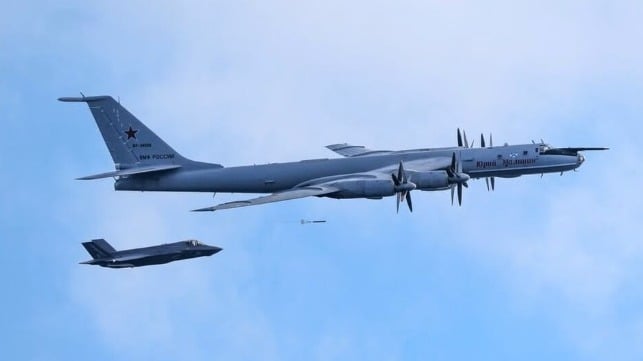
European governments and NATO reporting point to an active, diversified hybrid campaign linked to Russia. Across 2024-26, authorities recorded drone reconnaissance near sensitive military and nuclear sites in Germany, France, Belgium, the Netherlands, the UK and Denmark, forced airspace closures in Denmark, and more than 100 sabotage incidents, alongside a marked uptick in Russian covert maritime activity near UK waters and harassment of a Royal Navy carrier. Member states publicly accuse Moscow of orchestrating destabilisation, NATO flags increasing hybrid threats, and Poland and Baltic services warn of possible provocations via Belarus. The picture is of pressure applied below the threshold of war to fracture allied decision making, exploit defence‑spending splits, and probe critical infrastructure resilience.
Change from previous assessment
Initial assessment of this topic.
Key judgments
- Russia‑linked hybrid operations are ongoing and intensifying across Europe, combining drone reconnaissance of sensitive sites, airport disruptions, sabotage activity and covert maritime presence near subsea infrastructure. (Confidence: high · ASSESSED)
- I&W: Further temporary airport closures or airspace restrictions in Denmark, the Netherlands or Belgium attributed to unidentified drones. (0-14 days)
- I&W: Public reporting or arrests linking sabotage attempts in Germany or the Nordics to Russian services or cut‑outs. (1-3 months)
- Allied authorities very likely view Russia as the principal driver of current hybrid pressure against NATO, including cyber and disinformation activity aimed at destabilising member states. (Confidence: high · ASSESSED)
- I&W: Coordinated NATO or EU attributions naming Russian units or proxies for specific cyber or influence operations. (1-3 months)
- I&W: Member‑state expulsions or sanctions citing Russian hybrid activity targeting domestic stability. (1-3 months)
- There is a roughly even chance Russia will mount a limited provocation against Poland or the Baltic states in the coming months, likely via Belarus‑linked assets or deniable actors to trigger political discord within NATO rather than hold territory. (Confidence: medium · ASSESSED)
- I&W: Increased sightings of unidentified armed men or irregulars near Estonian, Latvian or Polish border sectors, especially adjacent to Belarus. (0-60 days)
- I&W: Poland or Baltic governments raise border alert levels citing concrete Russian or Belarusian involvement in cross‑border incidents. (0-60 days)
- Maritime and air harassment of NATO assets near UK and Norwegian waters is likely to continue, and presents persistent risk to subsea cables and other offshore infrastructure. (Confidence: medium · ASSESSED)
- I&W: Fresh close passes by Russian patrol aircraft on Royal Navy or allied vessels, or renewed sightings of the spy ship Yantar near cable crossings. (0-90 days)
- I&W: Unexplained subsea cable or offshore energy link outages in the North Sea accompanied by allied attribution to Russian activity. (1-3 months)
- Cyber operations disrupting UK business operations and allied information spaces are likely to persist as part of the hybrid campaign. (Confidence: medium · ASSESSED)
- I&W: UK or EU cyber authorities report waves of disruptive incidents against logistics, energy or media firms with technical ties to known Russian TTPs. (0-60 days)
- I&W: Coordinated disinformation narratives targeting NATO unity or defence‑spending debates trend across European platforms traced to Russia‑aligned networks. (0-60 days)
Outlook & scenarios
Drip‑feed hybrid pressure across Northern and Western Europe (60%)
Russia sustains a pattern of deniable actions: drone overflights near sensitive sites in Germany, the Netherlands, Belgium and Denmark, episodic airport disruptions in Denmark, and continued covert maritime presence near UK waters. Member states keep publicising attributions and hardening critical infrastructure, but incidents continue below the threshold of overt escalation.
Limited eastern‑flank provocation to test NATO (40%)
A deniable incident targets Poland or a Baltic border segment, potentially involving Belarus‑linked actors. The objective is a political shock to strain allied unity, not territorial control. Warsaw and Baltic capitals seek swift NATO consultations while Moscow frames the event as a local security matter.
Subsea infrastructure incident in the North Sea (20%)
Russian covert naval activity around UK and Norwegian waters coincides with a subsea cable or offshore energy disruption. Attributions focus on Russian intelligence vessels and maritime patrol patterns. NATO increases maritime domain awareness and undersea patrols, and insurers adjust risk pricing for offshore assets.
Exposure and disruption of Russian networks reduces incident tempo (20%)
Coordinated UK and EU counter‑intelligence actions, supported by public disclosures on Russian units’ roles, lead to arrests and expulsions. Drone overflights and sabotage attempts decline temporarily as networks reconstitute, while cyber and influence activity adapts to lower‑risk vectors.
Recommendations
- Establish a standing indicator watchlist with host‑nation feeds for drone incursions near military, energy and telecom nodes in Germany, the Netherlands, Belgium, Denmark and the UK; fuse airport NOTAMs and air policing logs to flag repeat patterns within hours.
- Prioritise OSINT and liaison collection on Belarus‑based actors, border guard movements and irregular groups along Polish, Lithuanian and Latvian sectors; rehearse fast attribution and messaging options to pre‑empt Russian narratives in the first 24-48 hours of any incident.
- Task maritime domain awareness to track Russian intelligence platforms such as Yantar and maritime patrol flightpaths near North Sea cable crossings; pre‑position undersea survey and rapid repair capability and coordinate with operators on anomaly reporting standards.
- Coordinate with national cyber centres to map recent UK business shutdowns caused by cyberattacks, compare TTPs with known Russia‑aligned clusters, and brief vulnerable sectors on immediate controls and incident reporting thresholds.
- Prepare a public‑facing attribution playbook aligned with NATO messaging that links hybrid tactics to specific Russian units when evidence allows, drawing on the UK dossier on GRU cyber and hybrid activity to raise the cost of deniability.
- Engage NATO summit staffs and defence ministries on the information space: forecast Russian narratives targeting spending commitments and allied splits, and propose rapid rebuttal cells tied to measurable audience reach.
Confidence & uncertainty
Overall confidence is low because several judgments rest on a mix of major‑media and think‑tank reporting, with some items single‑sourced and time‑staggered. While multiple claims independently describe drones near sensitive sites, sabotage cases in Germany, and covert maritime activity near UK waters, formal attributions to specific Russian units are limited in open sources. Warning claims about a likely provocation against Poland or the Baltics derive from policy and analytical assessments rather than corroborated operational intelligence. Contradictions in allied defence‑spending commitments also illustrate reporting variance that complicates context.
Alternative analysis (red cell)
The reporting base shows elevated hybrid activity and allied concern, but much of the evidence is episodic, medium-grade, or analytic caution rather than definitive operational indicators. In particular, warnings and preparedness (Poland/Latvia/US items) appear consistent with prudent contingency planning rather than clear evidence of an imminent, state-directed provocation; similarly, maritime/air encounters documented do not yet substantiate a focused campaign against subsea infrastructure.
Intelligence gaps
- [EEI 1.2 · PARTIAL] Observed reconnaissance activity around critical sites indicative of attack planning (unauthorised drone flights, repeated surveillance visits, loitering vehicles, mapping/photography of assets). Recommended collection: open-source/media
- [EEI 1.3 · UNCOVERED] Law-enforcement or customs seizures, arrests or interdictions of persons or shipments carrying explosives, sabotage tools, specialty cutting/electrical equipment, or covert comms gear destined for/near critical infrastructure. Recommended collection: law enforcement
- [EEI 2.1 · UNCOVERED] Emergence or amplification of coordinated social-media networks (sets of accounts, pages, channels) pushing identical narratives or hashtags across multiple platforms, including bot-like activity metrics and origin IP/common management indicators. Recommended collection: social-media/OSINT
- [EEI 2.2 · UNCOVERED] Publication or internal guidance from state-run media, proxy outlets, or identified influence platforms distributing talking points, pre-scripted messaging, or translated content targeted at specific EU countries/communities. Recommended collection: open-source/media
- [EEI 2.3 · UNCOVERED] Distribution of manipulated multimedia (deepfakes), targeted phishing/whaling campaigns, or localized false narratives timed to political events (elections, protests, court rulings) with tracked reach and engagement metrics. Recommended collection: cyber/forensic
- [EEI 3.1 · UNCOVERED] Unusual financial transactions: wire transfers, crypto conversions, or payments to shell companies, NGOs or individuals exceeding typical baselines that link to known proxies or front organisations. Recommended collection: financial
- [EEI 3.2 · PARTIAL] Travel and movement indicators for suspected operatives: repeated border crossings, chartered/irregular flights, booking patterns or mobile/location data placing identified individuals in staging areas shortly before incidents. Recommended collection: border/immigration
- [EEI 3.3 · UNCOVERED] Cargo, freight or maritime movements with discrepancies (concealed/dual-use equipment, false manifests, unusual routing) detected at ports, rail hubs or via AIS that correspond to deliveries of material used in sabotage or influence operations. Recommended collection: customs/ports
- [EEI 3.4 · UNCOVERED] Intercepted or otherwise-obtained communications showing tasking, coordination, or payment instructions between Russian agencies/handlers and proxy groups, including identified command-and-control servers or encrypted group identifiers. Recommended collection: signals-intel/SIGINT
Cited sources
[1] foxnews.com · Report warns Russia using shadow fleet to probe NATO drone defenses (B) · sha256:0e5ed38d1636 [2] cnn.com · As NATO meets, Putin is weighing his options in Ukraine, and further afield | CNN (A) · sha256:1e1170a156f2 [3] Al Jazeera · 100 يورو وسيارة معطلة. الحرب السرية للاستخبارات الروسية في أوروبا (A) · sha256:b605740b18ec [4] maritime-executive.com · Russian Patrol Plane Harasses Royal Navy Aircraft Carrier With Sonobuoys (B) · sha256:6a11b0d18fec [5] Deutsche Welle · Как Россия меняет суть НАТО, а Украина - его будущее (A) · sha256:b9246d59d04c [6] youm7.com · الناتو على مفترق طرق. 5 جبهات مفتوحة تهدد مستقبل الحلف. أوروبا تتحدى ترامب وتتسلح بسرعة في قمة أنقرة وتعلن استعدادها لملء الفراغ الدفاعي حال رحيل واشنطن. 32 دولة تجتمع فى العاصمة التركية لمناقشة مستقبل الأمن (B) · sha256:3f12e789165e [7] المركز الأوروبي لدراسات مكافحة الإرهاب والاستخبارات · الدفاع والأمن الأوروبي ـ كيف تستعد روسيا لاختبار تماسك الناتو وأوروبا؟ - المركز الأوروبي لدراسات مكافحة الإرهاب والاستخبارات (C) · sha256:3739c0362fe8 [8] Kyiv Post · ‘Putin Is Desperate’ as ‘Ukraine Changes Battlefield Dynamics,’ Rutte Says at Ankara NATO Summit (A) · sha256:3d94a0e684ad [9] UK Government · Britain’s place in the new world order: Foreign Secretary's Chatham House essay (A) · sha256:874f51290e47
Source content hashes were computed at collection time; the cited text is preserved unmodified for the life of this product.
Red cell review: PARTIAL DISSENT
TLP:CLEAR