TLP:CLEAR · Disclosure is not limited.
Europe: Heightened Hybrid Threat Posture Amid Russian Planning Signals and Maritime Narratives
Time window: Last 1 day · Audience: General analyst · Type: Situation report · DTG: 2026-07-15 12:15Z · Overall confidence: MEDIUM
BLUF
Lithuania’s intelligence warning that Russia is planning attacks on infrastructure, combined with UK statements that Moscow is a direct homeland threat and London’s public preparedness push, indicates a likely uptick in Russia-linked hybrid activity in Europe in the near term. Concurrent Russian narratives labelling Ukraine a ‘terrorist’ actor against civilian shipping are very likely to intensify information pressure on European audiences.
Executive summary
Recent European signals point to elevated hybrid risk linked to Russia. Lithuania reports intelligence that Russia is planning attacks on infrastructure, while the UK armed forces minister characterises Russia as a direct threat to the UK homeland and Downing Street urges the public to prepare for potential crises including cyber-attacks. In parallel, Moscow is shaping the information space by accusing Ukraine of terrorism over attacks on shipping in the Sea of Azov. On Europe’s south-eastern flank, Russian strikes on Black Sea port infrastructure around Odesa continue, sustaining a volatile environment that Moscow can pair with disinformation to pressure European audiences and decision-makers.
Change from previous assessment
Relative to the prior brief, this update pivots from EU-UK actions against named Russia-linked cyber elements to fresh warning signals: Lithuania’s report of Russian planning against infrastructure and the UK’s public preparedness messaging. It adds Moscow’s current ‘terrorism’ narrative on Sea of Azov shipping and confirms continued Russian strikes on Odesa-area ports. There is no new reporting in this cycle on FSB Center 16 or on specific EU infrastructure incidents; confidence is held at medium given strong official statements but limited technical detail. Initial assessment of this topic’s maritime information component is included.
Key judgments
- Russia is very likely preparing or facilitating hybrid operations against European critical infrastructure in the near term, signalled by Lithuania’s intelligence warning and the UK minister’s framing of Russia as a direct homeland threat. (Confidence: medium · ASSESSED)
- I&W: Baltic or Nordic authorities issue public advisories or announce arrests citing Russian-linked surveillance or sabotage near energy or telecom nodes. (0-14 days)
- I&W: Coordinated statements from multiple EU security services downplaying imminent infrastructure threats attributed to Russia. (0-14 days)
- European governments are likely to tighten civil preparedness and cyber defences over the next 1-3 months, with the United Kingdom already issuing public readiness guidance and planning the largest national home-defence exercise. (Confidence: medium · ASSESSED)
- I&W: Additional EU capitals roll out public preparedness campaigns or civil resilience exercises modelled on the UK approach. (1-3 months)
- I&W: The UK launches the national public awareness campaign on emergency preparedness as trailed by ministers. (1-3 months)
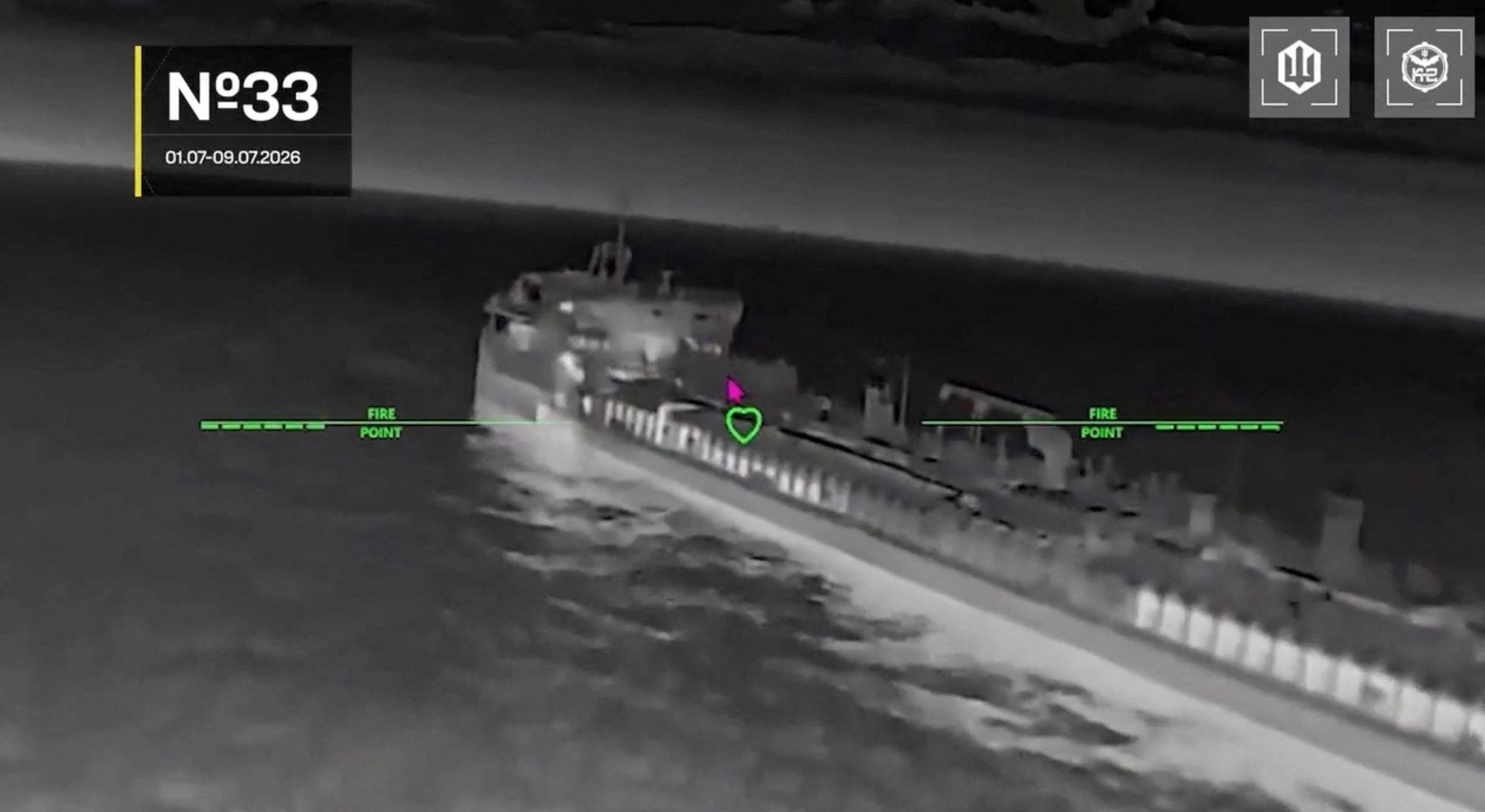
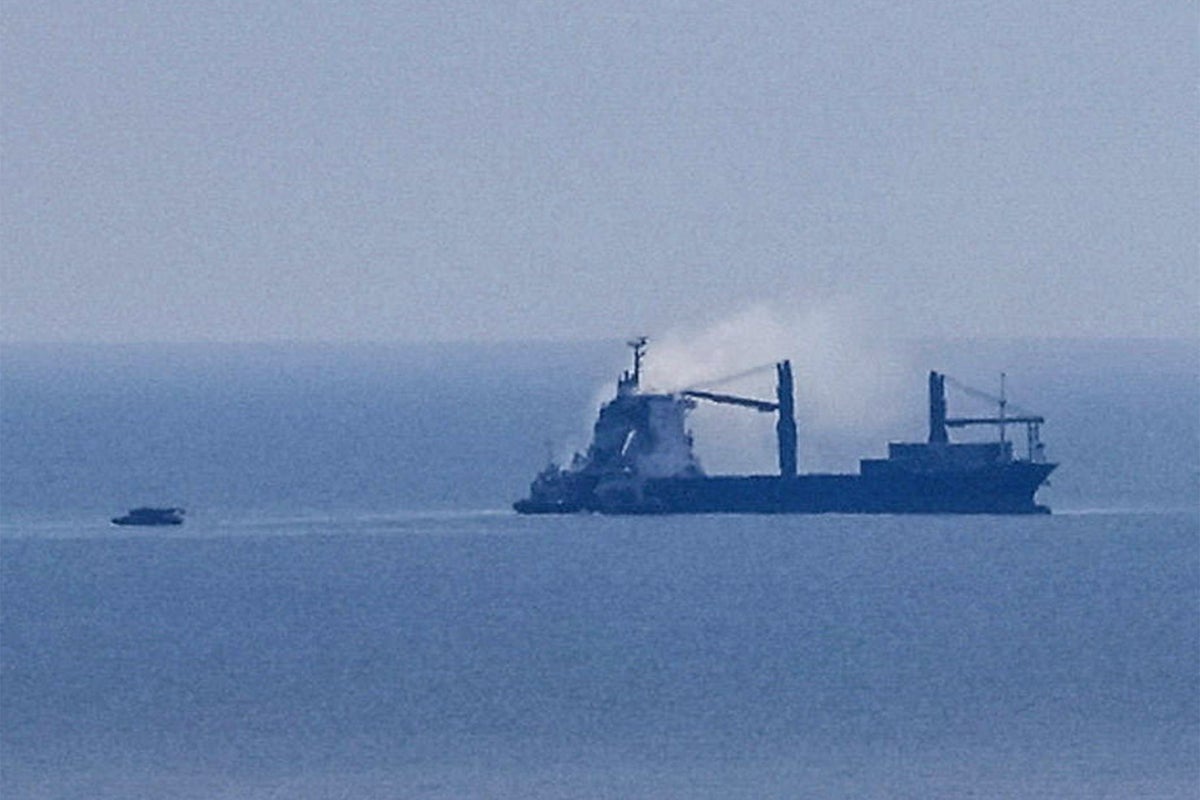
- Moscow is very likely to intensify information operations portraying Ukraine as a terrorist actor against civilian shipping in the Sea of Azov to shape international perceptions and complicate EU support to Kyiv. (Confidence: medium · ASSESSED)
- I&W: Uptick in Russian MFA communiqués and state media content using ‘terrorism’ and ‘civilian shipping’ framing at multilateral fora and in EU languages. (0-14 days)
- I&W: Russian official narratives shift away from civilian-shipping accusations toward exclusively military targeting language. (1-3 months)
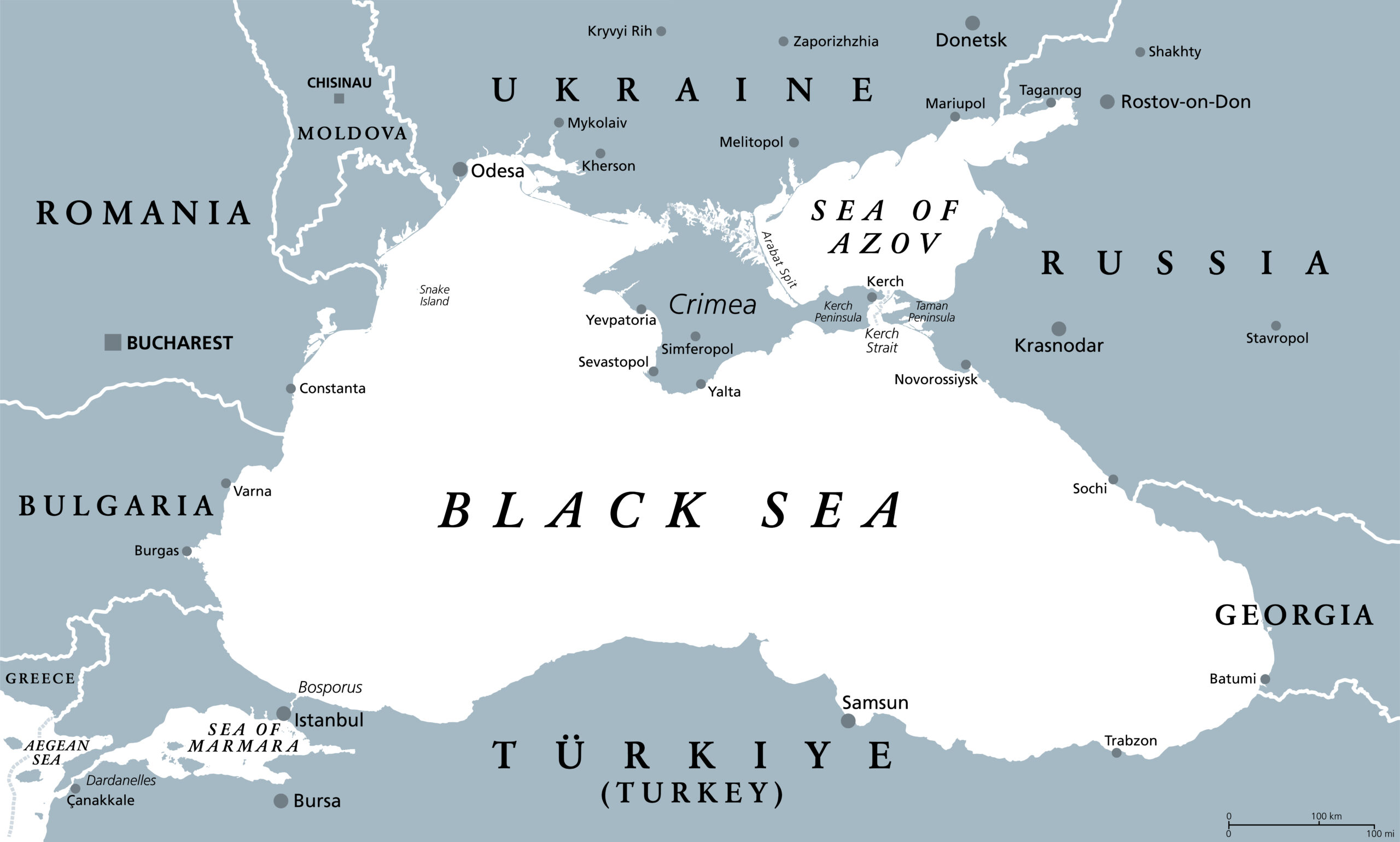
- Russian strikes on Ukraine’s Black Sea ports in the Greater Odesa area are likely to persist in the short term, sustaining pressure on Ukraine’s wartime economy and keeping Europe’s south-eastern maritime flank volatile. (Confidence: high · ASSESSED)
- I&W: Further Russian MoD communiqués naming Odesa or Chornomorsk port infrastructure as targets and claims of successful strikes. (0-14 days)
- I&W: Noticeable lull in Russian strikes on Black Sea ports paired with official statements signalling an operational pause. (0-14 days)
Outlook & scenarios
Baltic infrastructure sabotage wave (35%)
Small-scale but coordinated incidents in one or more Baltic states, such as fires at logistics depots, fibre cuts, or rail signalling disruptions, are attributed to Russia-linked actors. Public advisories and arrests follow, and several EU members heighten physical and cyber security around energy and telecom nodes. This aligns with Lithuania’s warning of planned Russian attacks on infrastructure and would validate a sustained hybrid campaign.
Narrative offensive on maritime ‘terrorism’ claims (50%)
Russian officials and state media amplify accusations that Ukraine targets civilian shipping in the Sea of Azov, pressing the theme at multilateral fora and in European languages. The objective is to erode European public support for Ukraine and to justify Russian countermeasures. EU institutions face increased information-management demands and rebuttal needs as the narrative circulates.
Cyber-enabled service disruption in the UK and one EU state (30%)
Drawing on the risk environment highlighted by UK officials, a Russia-linked campaign targets local government or utility networks, prompting short-lived outages and public warnings. The attacks are opportunistic, leverage readily available access vectors, and are accompanied by online disinformation to magnify perceived impact.
Recommendations
- Task analytic teams to fuse Lithuanian threat reporting with national indicators: map priority infrastructure nodes in the Baltics and Nordics and establish 24/7 alerting for physical-sabotage precursors and anomalous network activity.
- Stand up a rapid-response information cell to track, fact-check and pre-bunk Russian ‘civilian shipping terrorism’ narratives in EU languages; pre-brief spokespeople with evidence packs and coordinated lines to take.
- Engage UK counterparts on civil preparedness best practice: adapt public guidance templates and exercise injects for use by EU partners within the next quarter.
- Direct maritime and port security stakeholders to validate incident reporting chains and liaison with national authorities for the Black Sea area; ensure real-time deconfliction between security, insurers and operators.
- Prioritise red-teaming and patch management for water, power and municipal IT systems, with emphasis on remote access pathways and supplier accounts that present low-cost entry for hybrid actors.
- Expand open-source collection on Russian MFA and state media outputs tied to Sea of Azov narratives; implement keyword and network analysis to flag escalation or targeting of specific EU audiences.
Confidence & uncertainty
Overall confidence is medium. The assessment rests on high-confidence reporting that Lithuania has intelligence on planned Russian infrastructure attacks and a UK minister’s statement that Russia is a direct homeland threat, alongside documented Russian statements accusing Ukraine of ‘terrorism’ against shipping. These are reliable and mutually reinforcing for warning, but specifics of plots, timing and targeting are not disclosed, and several judgments involve forward-looking inference. Reporting on continued strikes around Odesa is well attested, though exact casualty figures vary across sources. The mix of solid indicators and unresolved gaps supports a medium rather than high confidence call.
Alternative analysis (red cell)
Lithuania’s warning (claim a93bb921) and the UK minister’s framing (claim 7f92efaa) warrant heightened vigilance but do not, on the present evidence, constitute strong proof of imminent hybrid operations against European infrastructure; single-source B1 reporting and high-level political messaging are insufficient to make a 'very likely' operational forecast. Likewise, Russian accusations about Ukrainian attacks (claim d7e3ea59) and Lavrov’s statements (claim 068cdb9a) document rhetoric that could be reactive or justificatory rather than proof of a coordinated intensification of information operations; multi-source IO indicators and tasking evidence are needed to distinguish routine propaganda from an escalatory campaign.
Intelligence gaps
- [EEI 1.1 · UNCOVERED] Reports, operator notifications, CCTV or satellite imagery showing unexplained physical damage or operational outages at critical infrastructure sites (power substations, gas pipelines/compressor stations, water treatment plants, railway signaling centers, major telecom exchanges). Recommended collection: satellite/imagery
- [EEI 1.2 · UNCOVERED] Observed reconnaissance activity around critical sites indicative of attack planning (unauthorised drone flights, repeated surveillance visits, loitering vehicles, mapping/photography of assets). Recommended collection: open-source/media
- [EEI 1.3 · UNCOVERED] Law-enforcement or customs seizures, arrests or interdictions of persons or shipments carrying explosives, sabotage tools, specialty cutting/electrical equipment, or covert comms gear destined for/near critical infrastructure. Recommended collection: law enforcement
- [EEI 2.1 · UNCOVERED] Emergence or amplification of coordinated social-media networks (sets of accounts, pages, channels) pushing identical narratives or hashtags across multiple platforms, including bot-like activity metrics and origin IP/common management indicators. Recommended collection: social-media/OSINT
- [EEI 2.2 · UNCOVERED] Publication or internal guidance from state-run media, proxy outlets, or identified influence platforms distributing talking points, pre-scripted messaging, or translated content targeted at specific EU countries/communities. Recommended collection: open-source/media
- [EEI 2.3 · UNCOVERED] Distribution of manipulated multimedia (deepfakes), targeted phishing/whaling campaigns, or localized false narratives timed to political events (elections, protests, court rulings) with tracked reach and engagement metrics. Recommended collection: cyber/forensic
- [EEI 3.1 · UNCOVERED] Unusual financial transactions: wire transfers, crypto conversions, or payments to shell companies, NGOs or individuals exceeding typical baselines that link to known proxies or front organisations. Recommended collection: financial
- [EEI 3.2 · UNCOVERED] Travel and movement indicators for suspected operatives: repeated border crossings, chartered/irregular flights, booking patterns or mobile/location data placing identified individuals in staging areas shortly before incidents. Recommended collection: border/immigration
- [EEI 3.3 · UNCOVERED] Cargo, freight or maritime movements with discrepancies (concealed/dual-use equipment, false manifests, unusual routing) detected at ports, rail hubs or via AIS that correspond to deliveries of material used in sabotage or influence operations. Recommended collection: customs/ports
- [EEI 3.4 · UNCOVERED] Intercepted or otherwise-obtained communications showing tasking, coordination, or payment instructions between Russian agencies/handlers and proxy groups, including identified command-and-control servers or encrypted group identifiers. Recommended collection: signals-intel/SIGINT
Cited sources
[1] The Independent · Ukraine-Russia war latest: Kyiv says more than 100 Russian ships in Azov hit in nine days (B) · sha256:39567153307a [2] theguardian.com · Britons urged to take ‘small steps’ to prepare for potential national crises (A) · sha256:2feba54928a5 [3] insurancejournal.com · Russia Accuses Ukraine of Terrorism in Sea of Azov as Kyiv Opens New Front in War (A) · sha256:3456e041be52 [4] gcaptain.com · Ukraine Claims 116 Russian Ships Hit in Nine Days in Sea of Azov (B) · sha256:0d51ec8ed375 [5] aljazeera.com · Russian attack on Odesa kills three as Ukraine targets vessels in Black Sea (A) · sha256:bca821530102 [6] bbc.co.uk · Three killed as Russian bombing of Odesa continues (A) · sha256:8f221e211ef2
Source content hashes were computed at collection time; the cited text is preserved unmodified for the life of this product.
Red cell review: PARTIAL DISSENT
TLP:CLEAR