TLP:CLEAR · Disclosure is not limited.
Europe: Hybrid Pressure and Germany-Russia Escalation
Time window: Last 1 day · Audience: General analyst · Type: Situation report · DTG: 2026-09-07 22:36Z · Overall confidence: HIGH
BLUF
Europe's hybrid threat picture is worsening in political and operational terms, with the 4 August Leipzig/Halle Airport operation, the Server Killers campaign against Norwegian government services and Russian threats tied to US missile sites in Norway driving the latest escalation. Germany and Russia are very likely to continue reciprocal administrative and diplomatic measures, while a deliberate Russian attack on NATO territory remains very unlikely over the next 1-3 months. Attribution of the Leipzig operation and the scale of the wider campaign remain contested.
Executive summary
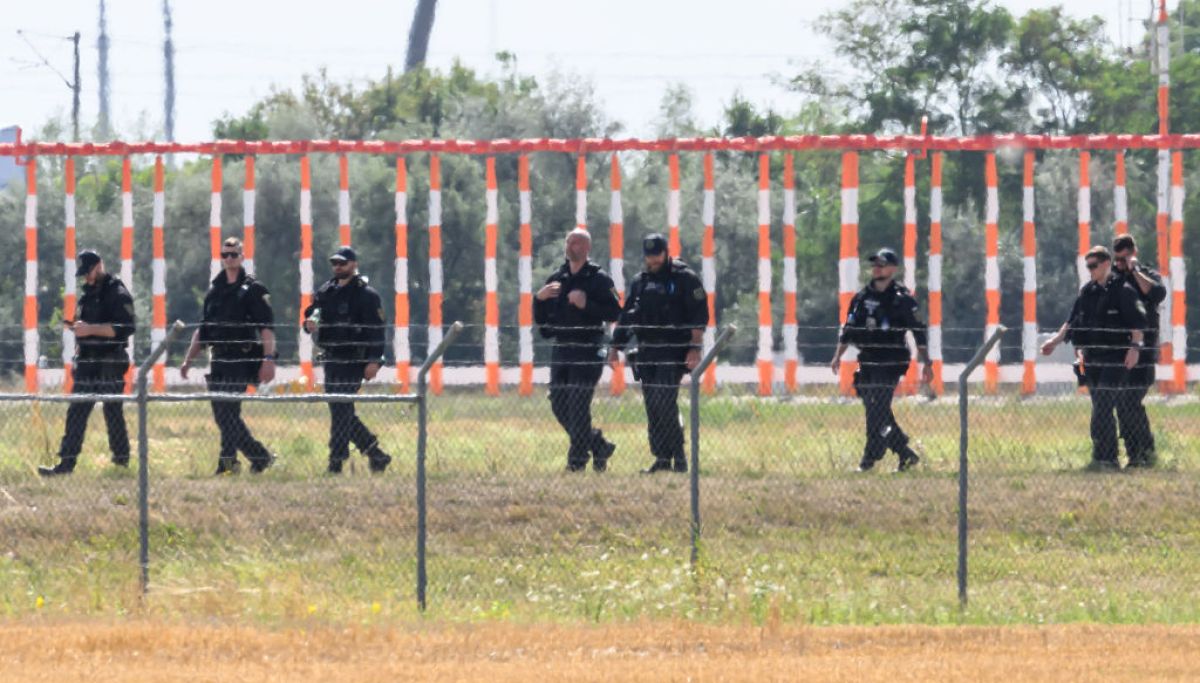
Germany formally attributed the 4 August Leipzig/Halle Airport drone operation to Russia after authorities found an explosive-equipped drone near Ukrainian cargo aircraft and investigators reported that up to three drones were involved. NATO Secretary-General Mark Rutte and EU foreign policy chief Kaja Kallas backed Berlin's position, while Moscow denied responsibility and accused Germany of fabricating evidence. Germany has closed Russian diplomatic and cultural facilities, imposed tighter entry controls on Russian citizens and announced specialised Federal Police protection for critical infrastructure. Russia has ordered the closure of Germany's consulate in St Petersburg by 18 September, expelled Goethe-Institut staff and threatened consequences. Separately, the pro-Russian Server Killers group claimed DDoS attacks against Norwegian government services, while Russia's Foreign Ministry identified US missile sites in Norway as potential targets in a military conflict. The core incident and policy reporting is well corroborated, but attribution of Leipzig and the evidence for some wider information operations remain less certain.
Change from previous assessment
Since the 6 September prior brief, the assessment has strengthened on the immediacy of the Germany-Russia confrontation. New developments include wider European and NATO backing for Germany's Leipzig attribution, Russia's order to close the German consulate in St Petersburg by 18 September, Moscow's closure of Goethe-Institut branches, the Server Killers claim of attacks on Norwegian government services and explicit Russian threats against US missile sites in Norway. The assessment retains the prior judgement that a deliberate Russian attack on NATO territory is very unlikely, but it adds a specific warning that signalling around Norway raises miscalculation risk. The assessment also lowers confidence in the information-operation component because the France-specific reporting is single-source and low-confidence.
Key judgments
- It is likely that Russian-linked hybrid pressure will persist across Europe over the next 1-3 months, with Germany and Norway as the clearest current pressure points. Germany attributes the 4 August Leipzig/Halle Airport operation to Russia after authorities found an explosive-equipped drone near Ukrainian cargo aircraft and investigators reported that as many as three drones were deployed. The pro-Russian Server Killers group claimed DDoS attacks on Norwegian government digital services. Moscow contests the Leipzig attribution, and the evidence for the wider pattern is uneven. (Confidence: medium · ASSESSED)
- I&W: Confirm: within 0-14 days, German or Norwegian authorities report a further explosive-drone, sabotage or DDoS incident and attribute it to Russia or Server Killers. (0-14 days)
- I&W: Break: within 1-3 months, German authorities materially withdraw or qualify the Russian attribution for Leipzig and no further named Russian-linked incident is reported in Germany or Norway. (1-3 months)
- It is very likely that Germany will broaden domestic security and administrative measures over the next 1-3 months. Interior Minister Alexander Dobrindt has announced specialised Federal Police units for airports, railway stations and government facilities; German authorities have imposed stricter entry controls on Russian citizens; and the government has ordered the closure of Russia's Consulate General in Bonn and the Russian House in Berlin. (Confidence: high · ASSESSED)
- I&W: Confirm: within 0-14 days, the German Interior Ministry publishes deployment locations or operating details for the specialised Federal Police units and adds further restrictions on Russian-linked activity. (0-14 days)
- I&W: Break: within 1-3 months, the announced police deployment remains only a plan and Germany introduces no further security or administrative measures beyond the closures and entry controls already reported. (1-3 months)
- It is very likely that Berlin-Moscow confrontation will intensify through reciprocal diplomatic closures, expulsions and coercive rhetoric over the next 1-3 months. Germany has closed Russian facilities in Bonn and Berlin, while Russia has ordered the German consulate in St Petersburg to cease operations by 18 September, closed Goethe-Institut branches and described Germany's measures as the start of a real war. (Confidence: high · ASSESSED)
- I&W: Confirm: by 18 September, Russia closes the German consulate in St Petersburg and completes the departure of its diplomats, followed by new expulsions or facility closures. (0-14 days)
- I&W: Break: within 1-3 months, Berlin and Moscow suspend announced closures, restore diplomatic staffing or announce a formal de-escalation channel. (1-3 months)
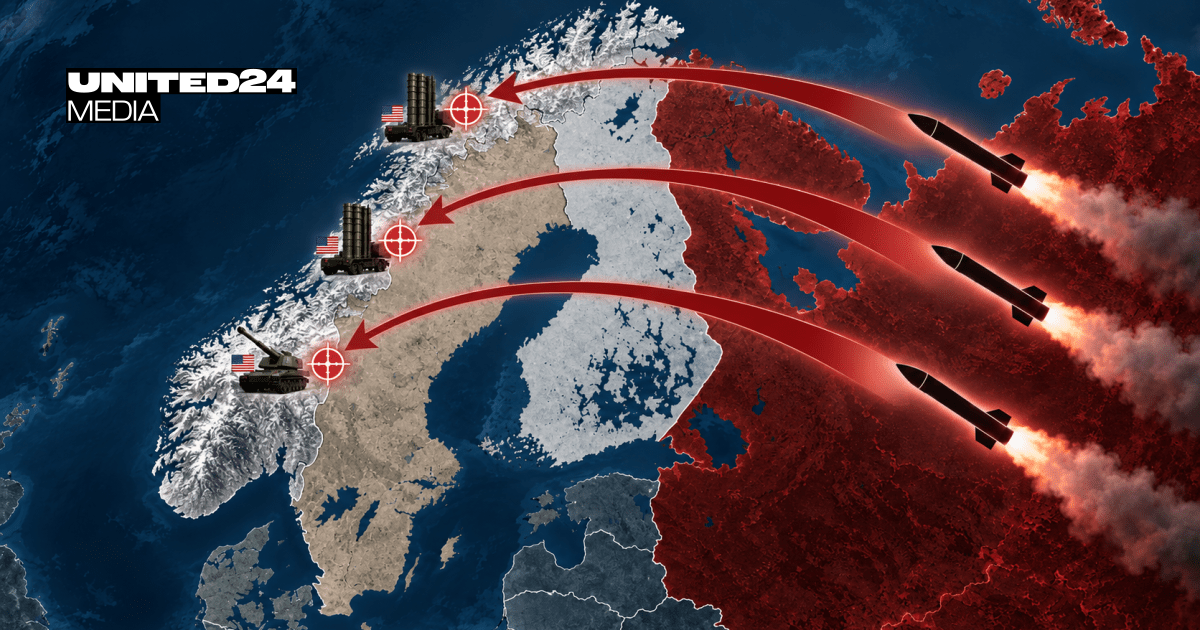
- A deliberate Russian kinetic attack on NATO territory remains very unlikely over the next 1-3 months, but the risk of dangerous signalling and miscalculation around Norway is rising. Russia's Foreign Ministry has identified US missile deployment sites and command-and-control centres in Norway as potential targets in a military conflict, while European security officials warn that weak sanctions and NATO cohesion could tempt Moscow to attack inside NATO. These warnings conflict with Donald Trump's assessment that Russia will not attack NATO territory, lowering confidence in the judgement. (Confidence: medium · ASSESSED)
- I&W: Confirm: within 0-14 days, Russia repeats threats against the Norwegian missile sites or announces military countermeasures explicitly linked to them, without conducting a kinetic strike on NATO territory. (0-14 days)
- I&W: Break: within 1-3 months, Russian forces conduct a confirmed missile, drone or other kinetic strike on Norway, Romania, Estonia or another NATO member. (1-3 months)
- It is likely that European governments will strengthen institutional counter-disinformation measures, but it is unlikely that the supplied reporting alone establishes a continent-wide Russian information campaign at high confidence. The European Centre for Democratic Resilience and France's 2026-2030 strategy provide evidence of institutional expansion, while the Bulgaria analysis identifies both domestic and foreign messaging sources. The France-specific reporting on Russian-sponsored operations targeting Edouard Philippe, Raphaël Glucksmann and Gabriel Attal is low-confidence, single-source reporting. (Confidence: low · ASSESSED)
- I&W: Confirm: within 1-3 months, the European Centre for Democratic Resilience or French authorities publish a new, independently corroborated attribution of a named Russian information network targeting a European election or politician. (1-3 months)
- I&W: Break: within 1-3 months, independent review reclassifies the France reporting as unsupported or finds that the principal activity was domestic rather than Russian-sponsored. (1-3 months)
Outlook & scenarios
Managed escalation and tighter European defences (60%)
Germany implements the announced Federal Police protection for airports, railway stations and government facilities, while the closures of Russian and German diplomatic facilities proceed. The European Commission and NATO chiefs meet in Brussels on 9 September and co-ordinate further resilience measures. Russia continues hostile rhetoric and cyber pressure but avoids a direct kinetic strike on NATO territory.
Additional kinetic hybrid incident (22%)
A further drone, sabotage or cyber incident affects German critical infrastructure, Norwegian government services or another named European pressure point. The incident produces additional sanctions, expulsions and public demands for a stronger European response. Attribution remains disputed, allowing Moscow to deny responsibility while European governments cite a continuing Russian-linked campaign.
Strategic confrontation centred on Norway (12%)
Russia sustains public threats against US missile sites in Norway and links the deployment to the breakdown of strategic stability discussions. Norway expands its defensive posture around the Finnmark brigade and planned long-range rocket systems, while the US and NATO issue further reassurance. The confrontation remains below the threshold of a deliberate attack on NATO territory.
NATO territory strike or serious miscalculation (6%)
A Russian missile or drone strike, or an incident involving the US missile deployment in Norway, causes casualties or major damage on NATO territory. Germany, Norway and other Allies treat the event as a direct attack rather than a deniable hybrid operation. This low-probability scenario would sharply compress decision time and raise pressure for a collective military response.
Recommendations
- Maintain a single incident chronology for Leipzig/Halle Airport. Separate confirmed facts from German attribution, Russian denial and unresolved details about the incident date, the number of drones and whether an aircraft was struck.
- Prioritise reporting on implementation of Germany's Federal Police deployment, the new entry controls on Russian citizens and the operational effect of closing the Russian consulate in Bonn and the Russian House in Berlin.
- Track the 9 September European Commission and NATO talks for decisions on joint attribution, critical-infrastructure protection, cyber co-operation and support to Germany.
- Monitor the 18 September deadline for the closure of Germany's consulate in St Petersburg. Treat further expulsions, diplomatic closures or sanctions as escalation markers.
- Create a dedicated Norway watchlist covering Russian Foreign Ministry statements about the US missile system, activity around the named deployment and command-and-control sites, Norwegian force-protection measures and any reported drone or cyber incidents.
- Assess information-operation claims separately from policy responses. Give greater weight to official or independently corroborated findings than to the low-confidence France reporting or single-source social-media material.
- Use the absence of a confirmed kinetic strike on NATO territory as a standing discriminator between continued hybrid pressure and a shift towards direct military confrontation.
Confidence & uncertainty
Overall confidence is high because the central developments are supported by multiple major-media accounts and official statements, including the Leipzig/Halle incident, Germany's attribution and security response, reciprocal diplomatic measures, the Server Killers claim against Norwegian services and Russia's statements about US missile sites in Norway. Confidence is lower for individual Russian attributions, the precise sequence and scale of the Leipzig operation, and the France-specific information-operation reporting. These unresolved issues affect the assessment of responsibility and intent, not the broader finding that European governments are responding to a worsening hybrid-threat picture.
Intelligence gaps
- [EEI 1.2 · UNCOVERED] Observed reconnaissance activity around critical sites indicative of attack planning (unauthorised drone flights, repeated surveillance visits, loitering vehicles, mapping/photography of assets). Recommended collection: open-source/media
- [EEI 1.3 · UNCOVERED] Law-enforcement or customs seizures, arrests or interdictions of persons or shipments carrying explosives, sabotage tools, specialty cutting/electrical equipment, or covert comms gear destined for/near critical infrastructure. Recommended collection: law enforcement
- [EEI 2.1 · UNCOVERED] Emergence or amplification of coordinated social-media networks (sets of accounts, pages, channels) pushing identical narratives or hashtags across multiple platforms, including bot-like activity metrics and origin IP/common management indicators. Recommended collection: social-media/OSINT
- [EEI 2.2 · UNCOVERED] Publication or internal guidance from state-run media, proxy outlets, or identified influence platforms distributing talking points, pre-scripted messaging, or translated content targeted at specific EU countries/communities. Recommended collection: open-source/media
- [EEI 3.1 · UNCOVERED] Unusual financial transactions: wire transfers, crypto conversions, or payments to shell companies, NGOs or individuals exceeding typical baselines that link to known proxies or front organisations. Recommended collection: financial
- [EEI 3.2 · UNCOVERED] Travel and movement indicators for suspected operatives: repeated border crossings, chartered/irregular flights, booking patterns or mobile/location data placing identified individuals in staging areas shortly before incidents. Recommended collection: border/immigration
- [EEI 3.3 · UNCOVERED] Cargo, freight or maritime movements with discrepancies (concealed/dual-use equipment, false manifests, unusual routing) detected at ports, rail hubs or via AIS that correspond to deliveries of material used in sabotage or influence operations. Recommended collection: customs/ports
- [EEI 3.4 · UNCOVERED] Intercepted or otherwise-obtained communications showing tasking, coordination, or payment instructions between Russian agencies/handlers and proxy groups, including identified command-and-control servers or encrypted group identifiers. Recommended collection: signals-intel/SIGINT
TLP:CLEAR