TLP:CLEAR · Disclosure is not limited.
Europe: Hybrid Pressure Intensifies Around NATO Territory
Time window: Last 1 day · Audience: General analyst · Type: Situation report · DTG: 2026-09-16 01:36Z · Overall confidence: HIGH
BLUF
Russia-linked hybrid pressure against Europe is very likely to persist, with the immediate risk concentrated in drone incursions, unsafe military encounters and sabotage affecting transport and critical infrastructure. The 15 September drone shootdown in Lithuania and the 14 September flare incident involving a Russian frigate and a Danish helicopter increase the risk of miscalculation, but neither incident has established a Russian intent to trigger open conflict with NATO.
Executive summary
The reporting indicates a higher-tempo European security picture than in the previous brief. On 15 September, an Italian NATO fighter shot down a drone near Pratkūnai in Lithuania after it entered from the direction of Belarus and remained in Lithuanian airspace for about 30 minutes. Lithuanian authorities had not established its operator, while Italy's defence minister assessed that it most probably came from Russia. On 14 September, a Russian frigate fired two flares towards a Danish Fennec helicopter conducting routine photography in international waters off Denmark. Denmark summoned Russia's ambassador but said it would not seek Article 5 consultations. Separate reporting describes deliberate interference at more than 30 Dutch railway locations and a drone search near a German Bundeswehr airbase. European political responses are hardening, with a European Parliament vote on a hybrid warfare resolution scheduled for 16 September and new EU restrictions and sanctions under discussion.
Change from previous assessment
Since the prior brief, the assessment has shifted from a broad warning about persistent hybrid pressure to a higher-tempo immediate picture. New developments are the 15 September NATO shootdown near Pratkūnai, the 14 September Russian frigate flare incident involving a Danish Fennec, reported deliberate rail sabotage at more than 30 Dutch locations and a German search for drone debris near Lake Steinhude. The assessment now gives greater weight to near-term miscalculation risk around NATO airspace and the Baltic Sea. Confidence in the persistence of regional pressure remains medium because the new incidents are well reported but attribution remains contested. The earlier low-confidence concern over maritime and undersea infrastructure is retained.
Key judgments
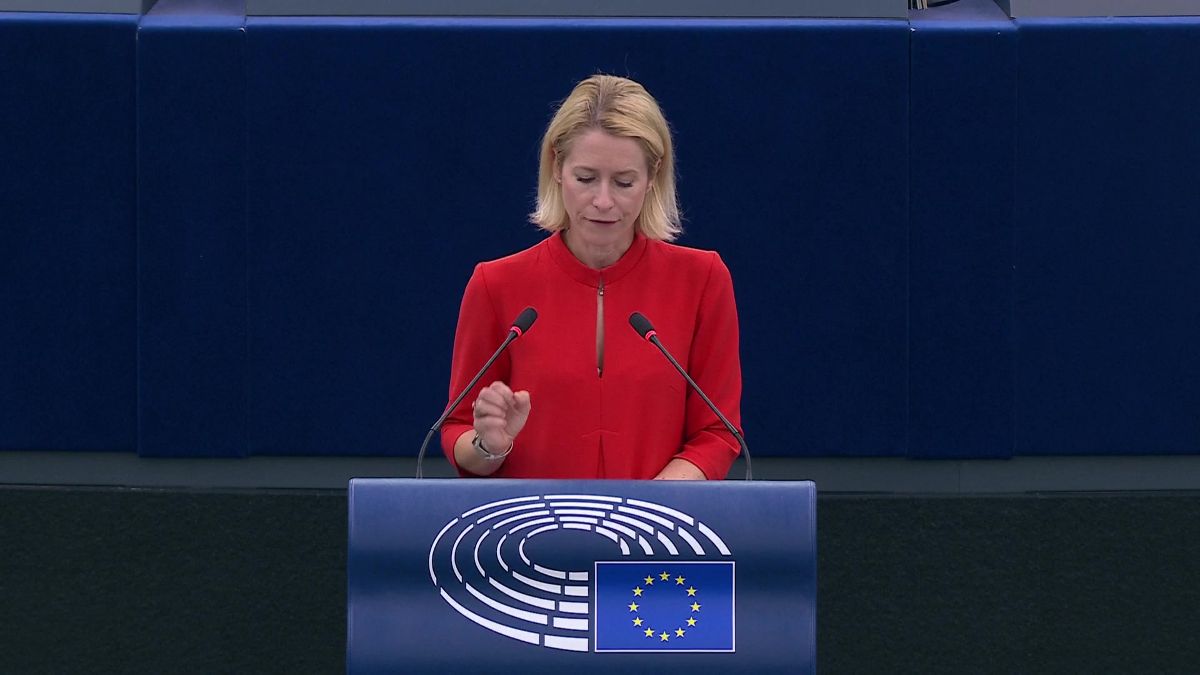
- It is very likely that Russia-linked hybrid pressure against Europe will persist across drone activity, cyber operations, sabotage and transport disruption, while attribution of individual incidents will remain uneven. The reported regional pattern is supported by Kaja Kallas's statement that hybrid attacks have increased since 2022, the European Parliament's 15 September debate, Rasa Juknevičienė's report of daily sabotage attempts and drone incursions, the reported attachment of steel pipes to railway tracks at more than 30 locations in the Netherlands, and the German search for drone debris near Lake Steinhude. The Dutch perpetrators and the German drone operator remain unestablished in the supplied reporting. Confidence is medium because the pattern is corroborated by multilateral and major-media reporting, but several case-level attributions remain single-source or unresolved. (Confidence: medium · ASSESSED)
- I&W: Confirmation: within 0-14 days, a European government attributes a new sabotage, drone or cyber incident to a Russian state body and publishes supporting forensic or technical evidence. (0-14 days)
- I&W: Break: within 1-3 months, Dutch, German and Lithuanian investigations attribute the current incidents to non-Russian actors and no additional Russia-linked incident is reported. (1-3 months)
- It is likely that Russian military activity will continue to generate dangerous incidents near NATO territory over the next 1-3 months, while an open Russia-NATO kinetic conflict remains unlikely. On 15 September, an Italian NATO fighter shot down a drone that Lithuanian officials said entered from Belarus, remained in Lithuanian airspace for about 30 minutes and carried an explosive device according to Lithuania's defence minister. Italy's defence minister said the threat most probably came from Russia, while Lithuanian authorities said the operator and origin were not formally established. On 14 September, a Russian frigate fired two flares towards a Danish Fennec helicopter during routine photography near Gedser. Denmark summoned the Russian ambassador but said it would not seek Article 5 consultations. Confidence is medium because the incidents are corroborated by major-media reporting, while the Lithuanian drone's origin and the dates of some related drone reports remain contested. (Confidence: medium · ASSESSED)
- I&W: Confirmation: within 0-14 days, another drone from Belarus or the Ukrainian theatre enters Lithuania, Poland, Latvia or Estonia and prompts NATO aircraft to intercept or use weapons. (0-14 days)
- I&W: Break: within 0-14 days, Denmark or another NATO government seeks Article 5 consultations over a new incident, or a Russia-NATO encounter causes casualties. (0-14 days)
- It is very likely that European governments will sustain a harder political and protective response to Russia-linked incidents, but coordination will remain conditional on attribution and national risk tolerance. The European Parliament held a debate on 15 September and scheduled a vote on 16 September. The EPP Group is calling for faster Eastern Flank Watch implementation, wider sanctions covering the Russian shadow fleet, more resources against disinformation and stronger protection of critical infrastructure. The EU sanctioned nine individuals and four entities linked to Russian cyber operations in July and is discussing further restrictions on Russian diplomats, visas and the Russian economy. Denmark's decision to summon the Russian ambassador while declining Article 5 consultations illustrates the limits of collective escalation. Confidence is high because the policy direction is supported by multilateral statements, major-media reporting and established EU action, although the outcome of the scheduled vote and the scope of future measures remain pending. (Confidence: high · ASSESSED)
- I&W: Confirmation: the European Parliament adopts the hybrid warfare resolution on 16 September and the EU announces an additional sanction, diplomatic restriction or critical-infrastructure measure within 30 days. (0-30 days)
- I&W: Break: the scheduled vote fails to produce a resolution and EU member states publicly suspend the proposed restrictions after a confirmed Russia-linked incident. (0-3 months)
- It is likely that Russia-linked maritime and undersea activity will remain a recurring European security concern, but specific Russian responsibility for cable damage remains unconfirmed. Windward reported at least 11 Baltic Sea undersea cables damaged or severed between October 2023 and the end of 2025. British, Norwegian and US forces reportedly tracked Russian submarines near Svalbard during an exercise involving technology designed to disable undersea cables, and two Western officials attributed the operation to GUGI. The submarines did not complete the exercise and no cables near Svalbard were damaged. Confidence is low because the operational reporting relies heavily on a Reuters account citing two Western officials, the cable pattern comes from a maritime risk intelligence company, and the supplied claims do not establish a completed Russian sabotage operation. (Confidence: low · ASSESSED)
- I&W: Confirmation: within 1-3 months, a Baltic or Arctic cable incident is officially attributed to a Russian vessel, submarine or GUGI-linked operation using forensic or operational evidence. (1-3 months)
- I&W: Break: within 1-3 months, Norwegian, British or Danish investigations reject Russian involvement in the reported cable pattern and no new cable incident occurs. (1-3 months)
Outlook & scenarios
Persistent grey-zone pressure with managed responses (55%)
Over the next 1-3 months, drone incursions, cyber activity, rail disruption and unsafe encounters at sea recur without a confirmed deliberate attack causing NATO casualties. European governments continue sanctions, diplomatic protests and air-defence measures, while avoiding Article 5 consultations.
Attribution hardens and European countermeasures expand (25%)
Forensic examination links the Lithuanian drone or another incident to Russia, while a second European government attributes sabotage or cyber activity to a Russian state body. The European Parliament vote is followed by additional EU sanctions, restrictions on Russian diplomats and stronger critical-infrastructure protection.
Attribution weakens and tensions stabilise (25%)
Investigations determine that the Lithuanian drone was not Russian or was an unintended spillover, while the Dutch rail and German drone incidents remain unattributed. Denmark and Russia contain the flare dispute through diplomatic channels, and NATO states limit their response to monitoring and defensive deployments.
High-impact NATO-Russia miscalculation (10%)
A further air or maritime encounter causes casualties, or a confirmed deliberate strike damages infrastructure on NATO territory. The affected government seeks Article 5 consultations, European sanctions escalate sharply and military activity around the Baltic increases.
Recommendations
- Maintain a separate attribution matrix for the Lithuanian drone. Record the entry route from Belarus, flight duration, weapon status, debris findings and operator attribution as distinct fields. Do not treat the Italian defence minister's assessment as equivalent to Lithuania's formal forensic findings.
- Prioritise primary-source follow-up within 24 hours on the 16 September European Parliament vote, Lithuanian debris examination, the Danish investigation into the flare incident and the Dutch AIVD investigation into railway sabotage.
- Fuse reporting on the Pratkūnai drone, the Gedser flare incident, the Dutch railway disruption and the Lake Steinhude drone search in a single incident timeline. Flag disputed dates and locations before using them to infer a coordinated campaign.
- Monitor for specific escalation tripwires: another NATO weapons engagement against a drone, a Russian military encounter causing casualties, an Article 5 consultation, or a confirmed attack on Baltic or Arctic undersea infrastructure.
- Assess Russian intent towards high-profile Western travellers separately from the confirmed train damage. Treat claims that the attack targeted the Boris Johnson and Carl Bildt train as unconfirmed until corroborated by Ukrainian rail authorities or independent operational reporting.
- Track whether the EU converts political commitments into measures with implementation dates, particularly Eastern Flank Watch, restrictions on Russian diplomats, sanctions against the shadow fleet and protection of critical infrastructure.
Confidence & uncertainty
Overall confidence is high because the main developments are corroborated across high-reliability major-media, multilateral and official reporting. The Lithuanian shootdown, Danish flare incident, European Parliament debate and EU sanctions activity each have multiple supporting accounts. The principal uncertainties concern Russian attribution, the precise dates of some related drone incidents, the intent behind the train attack and the extent of any Russian role in undersea cable activity.
Intelligence gaps
- [EEI 1.2 · PARTIAL] Observed reconnaissance activity around critical sites indicative of attack planning (unauthorised drone flights, repeated surveillance visits, loitering vehicles, mapping/photography of assets). Recommended collection: open-source/media
- [EEI 1.3 · UNCOVERED] Law-enforcement or customs seizures, arrests or interdictions of persons or shipments carrying explosives, sabotage tools, specialty cutting/electrical equipment, or covert comms gear destined for/near critical infrastructure. Recommended collection: law enforcement
- [EEI 2.1 · UNCOVERED] Emergence or amplification of coordinated social-media networks (sets of accounts, pages, channels) pushing identical narratives or hashtags across multiple platforms, including bot-like activity metrics and origin IP/common management indicators. Recommended collection: social-media/OSINT
- [EEI 2.2 · UNCOVERED] Publication or internal guidance from state-run media, proxy outlets, or identified influence platforms distributing talking points, pre-scripted messaging, or translated content targeted at specific EU countries/communities. Recommended collection: open-source/media
- [EEI 2.3 · UNCOVERED] Distribution of manipulated multimedia (deepfakes), targeted phishing/whaling campaigns, or localized false narratives timed to political events (elections, protests, court rulings) with tracked reach and engagement metrics. Recommended collection: cyber/forensic
- [EEI 3.1 · UNCOVERED] Unusual financial transactions: wire transfers, crypto conversions, or payments to shell companies, NGOs or individuals exceeding typical baselines that link to known proxies or front organisations. Recommended collection: financial
- [EEI 3.2 · UNCOVERED] Travel and movement indicators for suspected operatives: repeated border crossings, chartered/irregular flights, booking patterns or mobile/location data placing identified individuals in staging areas shortly before incidents. Recommended collection: border/immigration
- [EEI 3.3 · UNCOVERED] Cargo, freight or maritime movements with discrepancies (concealed/dual-use equipment, false manifests, unusual routing) detected at ports, rail hubs or via AIS that correspond to deliveries of material used in sabotage or influence operations. Recommended collection: customs/ports
- [EEI 3.4 · UNCOVERED] Intercepted or otherwise-obtained communications showing tasking, coordination, or payment instructions between Russian agencies/handlers and proxy groups, including identified command-and-control servers or encrypted group identifiers. Recommended collection: signals-intel/SIGINT
Cited sources
[1] eutoday.net · EU weighs tougher response to Russian hybrid attacks as Parliament prepares vote - https://eutoday.net (E) · Tue Sep 15 2026 21:20:09 GMT+0000 (Coordinated Universal Time) · sha256:4ff9c2cc5f3e [2] Ukrinform · EU fear of escalation only encourages Russia to test new limits — MEP (B) · Tue Sep 15 2026 17:21:00 GMT+0000 (Coordinated Universal Time) · sha256:ff3e9df21d75 [3] EPP Group (European People's Party Group in the European Parliament) · Europe: don't fear Russian threats, tackle them (A) · sha256:7a55b5a26d92 [4] The Guardian · Russian warship fires flares at Danish helicopter as Nato jets shoot down drone over Lithuania (A) · Tue Sep 15 2026 15:18:19 GMT+0000 (Coordinated Universal Time) · sha256:bfee32e6b28a [5] European External Action Service (EEAS) · Statement by High Representative/Vice-President Kaja Kallas to the European Parliament for the Joint Debate on Russia’s hybrid attacks against Member States: strengthening the EU’s coordinated response and protecting European security and democracy (A) · sha256:25dc96ab926e [6] CBC News · NATO fighter jet shoots down drone over Lithuania (A) · Tue Sep 15 2026 10:07:12 GMT+0000 (Coordinated Universal Time) · sha256:e3d65aa063a9 [7] Al Jazeera · NATO jet shoots down suspected Russian drone over Lithuania (A) · Tue Sep 15 2026 19:59:00 GMT+0000 (Coordinated Universal Time) · sha256:4bb64bbd792b [8] Al Jazeera · Russia warns Denmark after near miss in Baltic Sea (A) · Tue Sep 15 2026 14:51:22 GMT+0000 (Coordinated Universal Time) · sha256:6506616fc929 [9] Escudo Digital · We are already in a hybrid world war III – there will be no conventional one, at least with Russia (D) · Tue Sep 15 2026 05:00:02 GMT+0000 (Coordinated Universal Time) · sha256:614178d2445c [10] BBC · Denmark says Russian warship fired flares at military helicopter (A) · Tue Sep 15 2026 10:12:49 GMT+0000 (Coordinated Universal Time) · sha256:aae5abfc8335 [11] Ynetnews · Report: NATO confronted Russian submarines testing secret weapon aimed at undersea cables (B) · Thu Sep 10 2026 19:16:09 GMT+0000 (Coordinated Universal Time) · sha256:570b96d3082e
Source content hashes were computed at collection time; the cited text is preserved unmodified for the life of this product.
TLP:CLEAR