TLP:CLEAR · Disclosure is not limited.
Europe Hybrid Risk: Baltic Incidents Remain Unlinked
Time window: Last 1 day · Audience: General analyst · Type: Situation report · DTG: 2026-11-22 18:45Z · Overall confidence: HIGH
BLUF
Finnish defence forces assess that Ukraine likely struck the Russian cargo ship Sparta II in the Gulf of Finland; the ship later drifted into Finnish territorial waters. New reporting on Kaliningrad and Estonia adds to Baltic security concerns, but does not establish a single Russian-directed campaign linking these incidents to the alleged Denmark plot.
Executive summary
Reporting on 22 November adds detail to several separate security episodes. Finnish authorities place the 21 November strike on the Sparta II in international waters west of Gogland and assess that Ukraine was likely responsible, although Kyiv has not independently confirmed responsibility. In Kaliningrad, an air alert and online claims about a drone from Lithuania prompted an official Lithuanian denial; Lithuania said its air force detected no drones. Estonia’s 21 November drone warning was lifted without a reported airspace violation. Danish reporting describes police stopping three men with weapons in Hellerup on 25 September and relays Denmark’s suspicion of Russian intelligence involvement in a plot against Kyivstoner. The alleged Russian direction of that plot remains uncorroborated in the supplied reporting.
Change from previous assessment
Since the 21 November brief, reporting has added Finland’s assessment that Ukraine was likely responsible for the Sparta II strike, a Finnish location for the strike that differs from the Russian governor’s account, and details of the ship’s movement into Finnish waters. New reporting also describes the Kaliningrad alert and online claims implicating Lithuania, plus an Estonian drone warning that was lifted without a reported airspace violation. The prior assessment that the Sparta II incident was likely attributable to Ukraine and that the separate cases do not establish one centrally directed campaign remains unchanged. The Denmark reporting adds details about the police stop and weapons, but does not resolve the allegation of Russian intelligence direction.
Key judgments
- It is unlikely that the supplied reporting establishes a single Russian-directed campaign linking the alleged Denmark plot, the Kaliningrad alert, Estonia’s drone warning and the Sparta II strike. Reported: Denmark suspects Russian intelligence involvement in a plot against Ukrainian-American performer Kyivstoner; Lithuanian officials denied involvement in the Kaliningrad incident; Finnish defence forces assessed Ukraine was likely behind the strike on Sparta II; and Estonia lifted its warning without reporting an airspace violation. Assessment: the episodes have different attribution status, and the reporting provides no evidence of common tasking. (Confidence: medium · ASSESSED)
- I&W: A Danish, Finnish, Estonian or Lithuanian investigation publicly identifies a common handler or shared tasking across the named incidents. (0-3 months)
- I&W: Investigators publish separate findings identifying different origins for the incidents, with no common handler or operational link. (0-3 months)
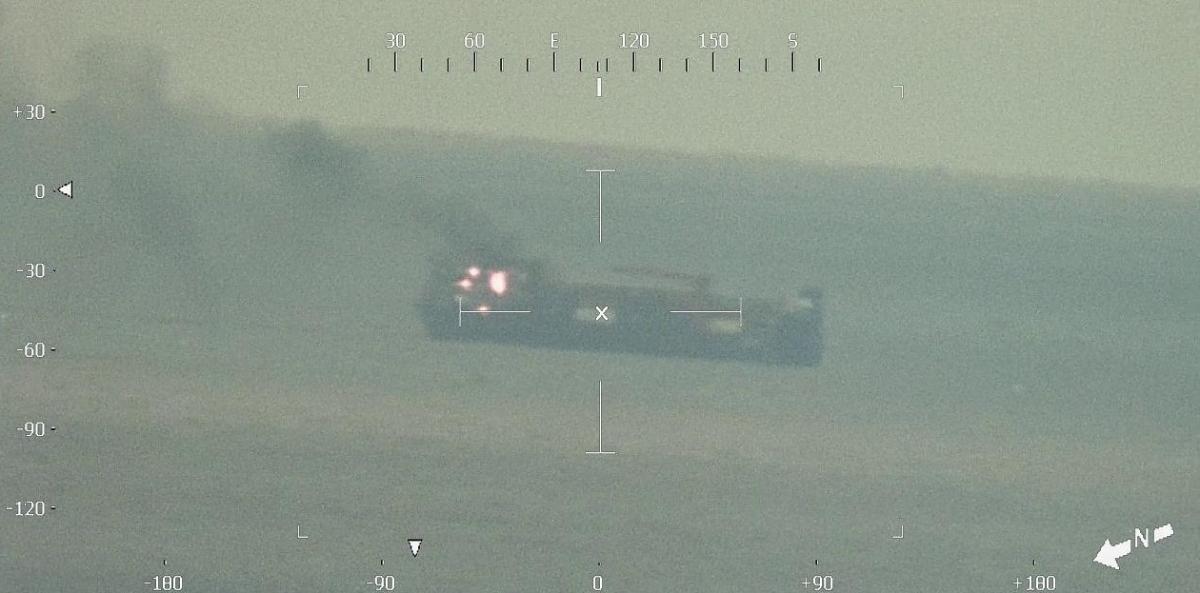
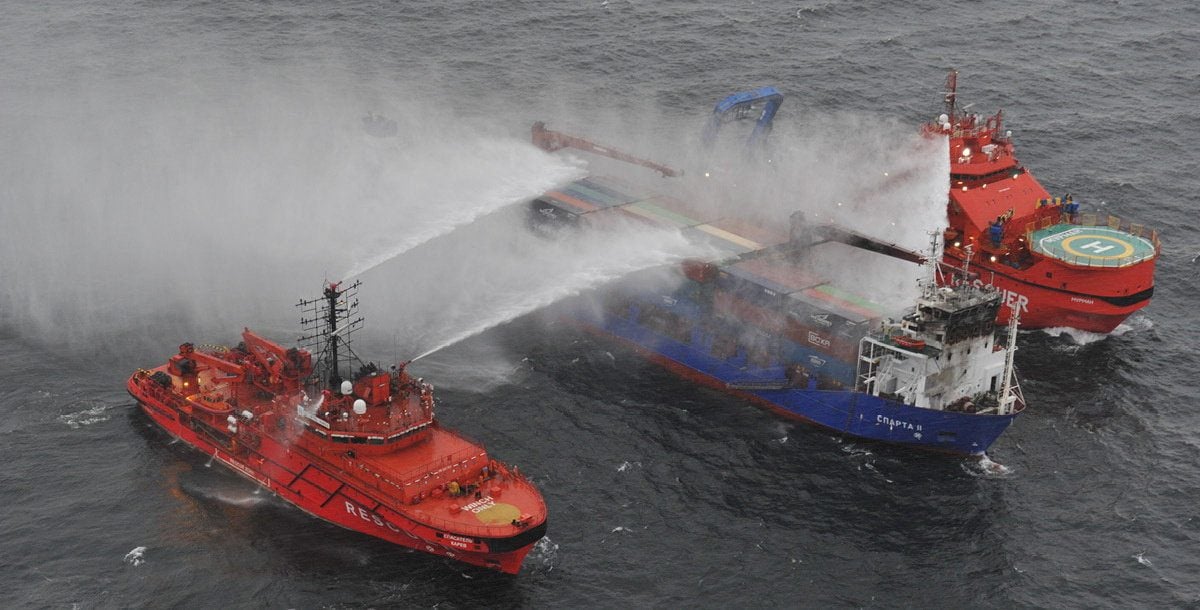
- Ukraine is likely responsible for the 21 November drone strike on Sparta II. Finnish Defence Forces placed the strike in international waters roughly 50 kilometres west of Gogland; the damaged ship later drifted into Finnish territorial waters. Finnish officials attributed the attack to Ukraine, but the supplied reporting says Kyiv has not independently confirmed responsibility. Russian Governor Alexander Drozdenko gave a different strike location, three nautical miles from the Russian border, so the precise location remains contested. (Confidence: medium · ASSESSED)
- I&W: Finnish authorities release forensic findings or a public attribution that identifies a Ukrainian launch unit. (0-14 days)
- I&W: Finnish authorities revise their attribution or publish evidence that identifies a different origin for the drones. (0-14 days)
- The Kaliningrad alert does not establish Lithuanian or NATO involvement. Governor Aleksey Besprozvannykh said a suspicious object came from the direction of Lithuania, and Russian Telegram channels claimed a drone was approaching from Lithuania. Lithuania’s National Crisis Management Centre said its air force detected no drones, while Foreign Minister Kęstutis Budrys denied that Lithuania allowed its airspace to be used for attacks. Lithuanian officials interpreted the online posts as an effort to create a false impression of Lithuanian or NATO involvement; the supplied reporting provides no independently verified track identifying the object. (Confidence: medium · ASSESSED)
- I&W: Radar data, recovered debris or an official investigation identifies a drone route from Lithuanian territory. (0-14 days)
- I&W: Kaliningrad authorities withdraw the claim that the alert was triggered by an object from Lithuania, or publish evidence that the object was not a drone. (0-14 days)
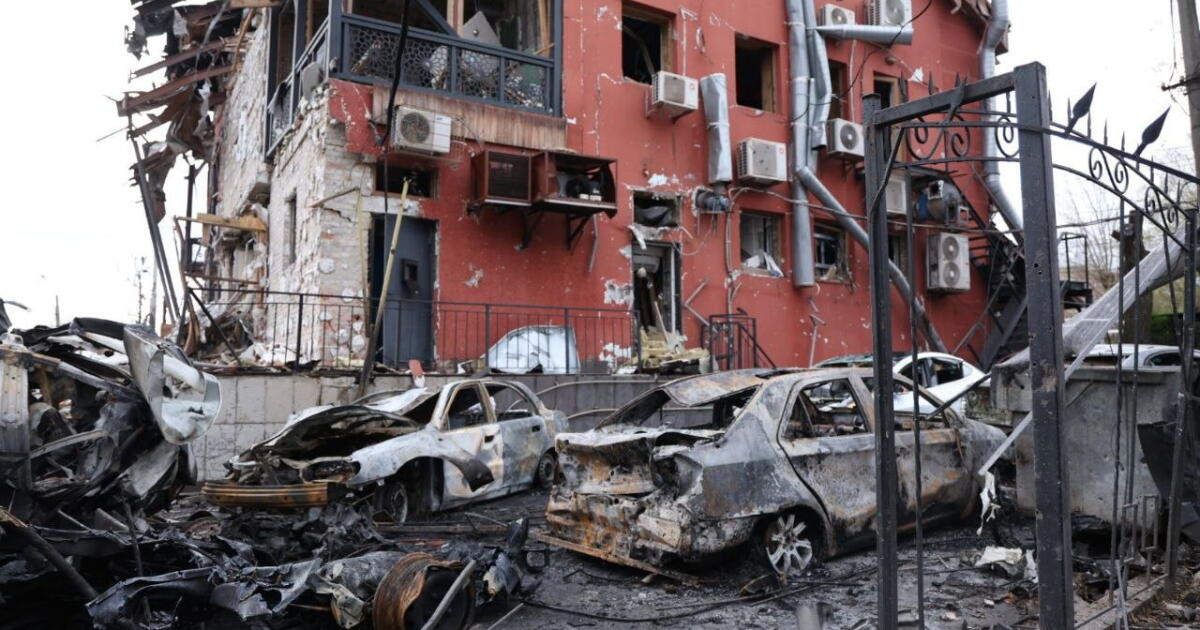
- It is unlikely that the supplied reporting independently establishes Russian intelligence tasking in the Denmark case. Danish police reportedly stopped three men aged 18 to 22 in Hellerup on 25 September and found two loaded pistols and two knives. The same reporting says Kyivstoner was due to perform at Skovriderkroen in Charlottenlund and that Denmark suspects Russian intelligence planned an attempt to kill him. The weapons and police stop are reported, but the Russian direction remains an allegation in the supplied material. (Confidence: low · ASSESSED)
- I&W: Danish prosecutors or police publish charging documents or findings that identify a Russian intelligence handler or tasking. (0-3 months)
- I&W: A court record or official Danish statement rejects the Russian intelligence allegation or identifies another motive. (0-3 months)
- The 21 November Estonian drone warning was very likely precautionary rather than evidence of a confirmed airspace incursion. The Estonian Armed Forces issued the warning at 04:42 and lifted it at 06:49; ERR reported that no Estonian airspace violation had been reported. NATO aircraft, including Turkish fighter jets, were airborne during the warning. (Confidence: medium · ASSESSED)
- I&W: Estonian authorities report a new drone warning and confirm a detected airspace crossing or recover debris linked to one. (0-14 days)
- I&W: Estonian authorities report no further warning and confirm that review of the 21 November alert found no airspace violation. (0-14 days)
Outlook & scenarios
Separate incidents, managed responses (65%)
Over the next three months, Finland, Estonia and Lithuania are likely to maintain heightened monitoring while the Sparta II incident and Kaliningrad alert remain separate cases. The supplied reporting is unlikely to produce evidence of a shared Russian handler linking the Denmark allegation to the Baltic incidents.
Further Baltic disruption (27%)
A new drone warning or shipping incident in the Gulf of Finland is an unlikely but plausible development. Finland could renew temporary restrictions on shipping or aviation, while Estonia and Lithuania issue additional alerts or denials as authorities establish the origin of any detected objects.
High-impact spillover (8%)
A drone or aircraft incident causes casualties or a sustained interruption to Baltic shipping or aviation, prompting direct NATO consultations with Finland or Estonia. This outcome is very unlikely, but the Sparta II strike, the vessel’s entry into Finnish waters and recent Estonian warning show how operations near the Baltic states can create immediate cross-border risks.
Recommendations
- Track Finnish Defence Forces and Finnish Border Guard updates on Sparta II, separating the reported strike location west of Gogland from the vessel’s later drift into Finnish territorial waters. Keep Ukrainian responsibility qualified unless Finnish findings or other corroborated evidence strengthen the attribution.
- Compare statements from Lithuania’s National Crisis Management Centre and Foreign Ministry with Kaliningrad Governor Aleksey Besprozvannykh’s account. Record the timing and original content of Russian Telegram posts before repeating claims about Lithuania or NATO involvement.
- Seek Danish police or prosecutor updates on the Hellerup stop, weapons seizure and alleged plot against Kyivstoner. Keep the reported police facts distinct from the allegation of Russian intelligence tasking.
- Maintain separate incident records for Denmark, Kaliningrad, Estonia and the Gulf of Finland. Reassess whether the cases are linked only when investigators identify a common handler, communications or operational evidence.
Confidence & uncertainty
Confidence is high in the core event picture because Finnish authorities, wire reporting and major media converge on the Sparta II strike, fire, crew evacuation and subsequent drift into Finnish waters. Official Estonian and Lithuanian statements also establish what those governments reported about the alerts and airspace monitoring. Attribution remains less certain: Finnish officials assess Ukraine was likely responsible for the ship strike, while the Denmark allegation rests on limited reporting and the Kaliningrad object has not been independently identified.
Intelligence gaps
- [EEI 1.1 · PARTIAL] Reports, operator notifications, CCTV or satellite imagery showing unexplained physical damage or operational outages at critical infrastructure sites (power substations, gas pipelines/compressor stations, water treatment plants, railway signaling centers, major telecom exchanges). Recommended collection: satellite/imagery
- [EEI 1.2 · UNCOVERED] Observed reconnaissance activity around critical sites indicative of attack planning (unauthorised drone flights, repeated surveillance visits, loitering vehicles, mapping/photography of assets). Recommended collection: open-source/media
- [EEI 1.3 · UNCOVERED] Law-enforcement or customs seizures, arrests or interdictions of persons or shipments carrying explosives, sabotage tools, specialty cutting/electrical equipment, or covert comms gear destined for/near critical infrastructure. Recommended collection: law enforcement
- [EEI 2.1 · PARTIAL] Emergence or amplification of coordinated social-media networks (sets of accounts, pages, channels) pushing identical narratives or hashtags across multiple platforms, including bot-like activity metrics and origin IP/common management indicators. Recommended collection: social-media/OSINT
- [EEI 2.2 · PARTIAL] Publication or internal guidance from state-run media, proxy outlets, or identified influence platforms distributing talking points, pre-scripted messaging, or translated content targeted at specific EU countries/communities. Recommended collection: open-source/media
- [EEI 2.3 · PARTIAL] Distribution of manipulated multimedia (deepfakes), targeted phishing/whaling campaigns, or localized false narratives timed to political events (elections, protests, court rulings) with tracked reach and engagement metrics. Recommended collection: cyber/forensic
- [EEI 3.1 · UNCOVERED] Unusual financial transactions: wire transfers, crypto conversions, or payments to shell companies, NGOs or individuals exceeding typical baselines that link to known proxies or front organisations. Recommended collection: financial
- [EEI 3.2 · UNCOVERED] Travel and movement indicators for suspected operatives: repeated border crossings, chartered/irregular flights, booking patterns or mobile/location data placing identified individuals in staging areas shortly before incidents. Recommended collection: border/immigration
- [EEI 3.3 · UNCOVERED] Cargo, freight or maritime movements with discrepancies (concealed/dual-use equipment, false manifests, unusual routing) detected at ports, rail hubs or via AIS that correspond to deliveries of material used in sabotage or influence operations. Recommended collection: customs/ports
- [EEI 3.4 · UNCOVERED] Intercepted or otherwise-obtained communications showing tasking, coordination, or payment instructions between Russian agencies/handlers and proxy groups, including identified command-and-control servers or encrypted group identifiers. Recommended collection: signals-intel/SIGINT
Red cell review: CONCUR WITH COMMENT
TLP:CLEAR