TLP:CLEAR · Disclosure is not limited.
Europe Hybrid Threats: Attribution and Escalation Risks
Time window: Last 1 day · Audience: General analyst · Type: Situation report · DTG: 2026-11-23 19:10Z · Overall confidence: MEDIUM
BLUF
Reporting describes persistent sabotage, recruitment and influence threats in Europe, but does not establish one Russian-directed campaign linking the incidents. Estonia’s attribution of a defence-industry sabotage attempt to the GRU is a notable new signal; the school bomb threats and claims of election interference in Spain remain unattributed or weakly corroborated. Moscow’s warnings after attacks on Russian vessels add a separate risk of retaliatory signalling.
Executive summary
New reporting adds Estonia’s account of an attempted arson against a defence-industry site near Tallinn, including its claim that the GRU ordered the act, and reports that eight suspects were detained. Other accounts describe arson incidents involving Starlink infrastructure in Poland, Lithuania and Bulgaria, alongside recruitment offers on Discord that Ukrainian Defence Intelligence attributes to Russian services. Separately, police reported bomb threats affecting 450 schools in Germany, schools in Denmark and more than 10 schools in Spain; German authorities said the threats did not present a concrete danger. Reporting about Operation Matrioska ahead of Spain’s 29 November election remains uncertain in reach and attribution. Ukraine claimed strikes on Russian vessels near Benghazi, while Finnish defence forces assessed that Ukraine likely struck Sparta II in the Gulf of Finland. The Kremlin warned Ukraine of painful consequences, but the reporting does not identify a specific Russian response plan.
Change from previous assessment
Since the 22 November brief, reporting adds Estonia’s attribution of a defence-industry sabotage attempt to the GRU and reports eight detentions near Tallinn. It also adds Ukraine’s claimed strikes on Russian vessels near Benghazi and a Kremlin warning of painful consequences. These developments increase attention to the possibility of retaliatory signalling, but do not change the prior assessment that the supplied reporting does not establish one Russian-directed campaign linking the separate incidents. The Sparta II attribution remains a Finnish military assessment, not a public Ukrainian claim. No settled prior forecast outcomes were supplied for calibration.
Key judgments
- Russian intelligence-linked recruitment and sabotage activity is likely occurring in parts of Central and Eastern Europe, but the reporting does not establish a shared handler or a single coordinated campaign. Ukraine’s Defence Intelligence says Russian secret services use Discord, Telegram and WhatsApp to recruit people in EU countries, including young people aged 18 to 25, and that task payments range from US$1,500 to US$3,000. Separate reports describe arson incidents at a Starlink ground station in Wola Krobowska, Poland, at equipment in Vilnius, Lithuania, and at the Plana Teleport Facility near Sofia, Bulgaria. Estonia attributes an attempted arson at a defence-industry site near Tallinn to the GRU; separate reporting says eight suspects were detained. The recruitment and several incident attributions rely on Ukrainian or local reporting, so confidence in Russian direction is low. (Confidence: low · ASSESSED)
- I&W: Poland, Germany, Lithuania and Bulgaria’s prosecutors establish the reported joint investigative team and identify shared communications, payments or a common handler across the Starlink cases. (0 to 14 days)
- I&W: Court filings or official investigative statements identify separate perpetrators and find no common handler or substantiated GRU direction across the reported incidents. (1 to 3 months)
- The reported school bomb threats across Germany, Denmark and Spain are unlikely to be a sound basis for attributing one Russian-directed operation. German police said 450 schools were affected, including schools in Baden-Württemberg, Thuringia, Saxony-Anhalt and Rhineland-Palatinate; threats were also reported across Bornholm, Funen, Jutland and Herning in Denmark, and more than 10 Spanish schools were evacuated. German authorities assessed the threats as not serious, and Danish police said there was no danger. The perpetrators and any links between the incidents remain unidentified in the supplied reporting. (Confidence: medium · ASSESSED)
- I&W: Police in Germany, Denmark or Spain publish forensic findings linking the threats to common infrastructure and to a Russian intelligence service. (0 to 14 days)
- I&W: Police identify unrelated hoax perpetrators or close the investigations without evidence of shared infrastructure or foreign tasking. (0 to 30 days)
- There is a roughly even chance that the reported Operation Matrioska represents a coordinated pro-Russian effort to influence Spain’s 29 November general election; its reach and material effect are not established. One report says the effort seeks to discourage voting and promote messages against sanctions on Russia and funding for Ukraine. Maldita.es separately reported a disinformation campaign in Spain with very limited reach, and the reporting does not establish that it was Operation Matrioska. Spain has activated preventive measures to secure electoral IT infrastructure, but that action does not confirm the campaign’s attribution or impact. (Confidence: low · ASSESSED)
- I&W: Before or immediately after the election, Spain’s National Security Department, CCN-CERT or INCIBE publicly identifies coordinated Operation Matrioska accounts, infrastructure or measurable reach. (0 to 14 days)
- I&W: Spanish authorities report no election disruption and investigators find no verifiable link between Operation Matrioska and the low-reach campaign detected by Maldita.es. (0 to 30 days)
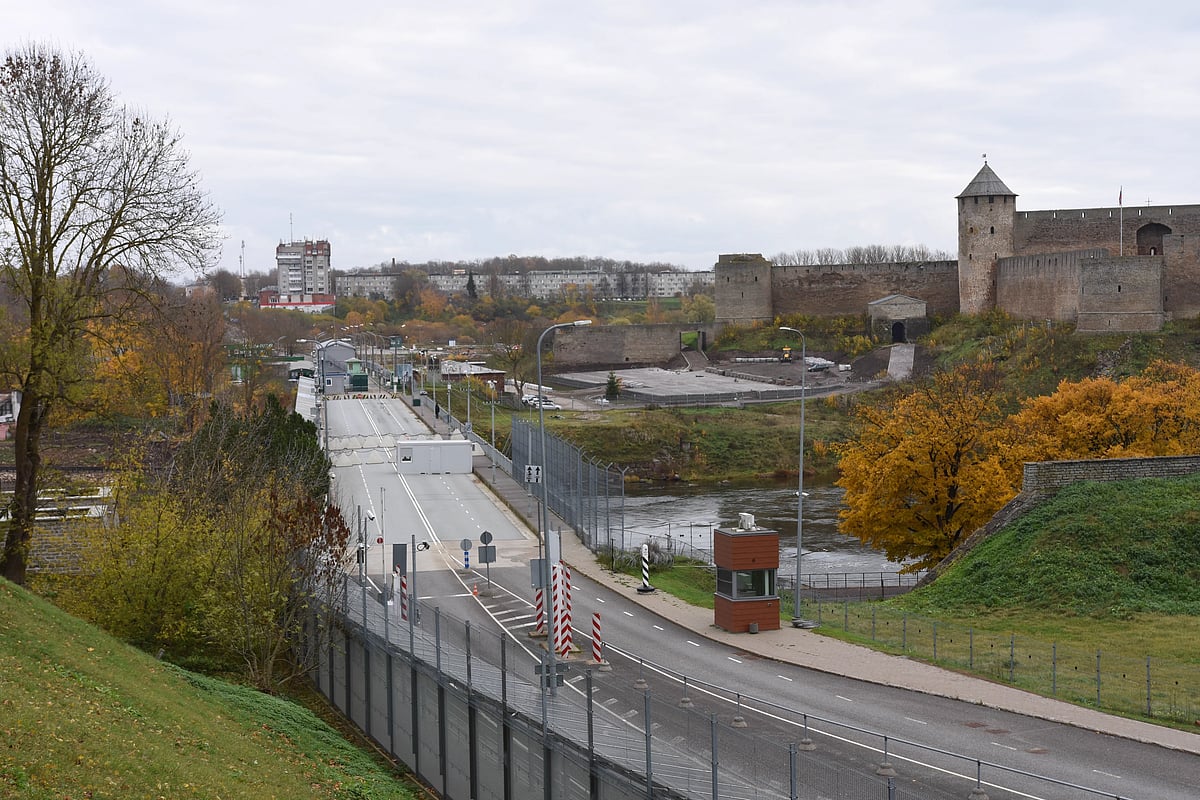
- Russian-Estonian tensions are likely to remain elevated as Estonia’s planned border restrictions approach on 1 December. Estonia says the restrictions follow evidence that the GRU ordered sabotage against a defence-industry company. Reports differ on the closure’s scope: one describes all road crossings closed for at least six months, while another says five road crossings will close and rail traffic will remain unaffected. Russia has denied involvement in sabotage, protested Estonia’s border decision, accused Estonia of allowing Ukrainian use of its airspace and warned that Estonia’s actions could lead to open war. The scope of the closure and the airspace allegation remain unresolved. (Confidence: medium · ASSESSED)
- I&W: Estonia implements the announced road-crossing restrictions on 1 December and Russia issues a further formal protest or announces a related border measure. (0 to 14 days)
- I&W: Estonia clarifies or postpones the restrictions, and Russia takes no new diplomatic or border measure through mid-December. (0 to 30 days)
- An immediate Russian military response beyond public warnings is unlikely on the reporting available. Ukraine claimed that seven Ukrainian-made naval drones sank the Russian corvette Merkury and struck the cargo vessel MV Angara near Benghazi on 22 November. BBC-verified footage showed a ship ablaze at Benghazi port, and satellite imagery showed most of Merkury capsized and sunk; reports differ on whether the corvette was struck at the naval base or offshore. Finnish defence forces assessed that Ukraine likely struck Sparta II in the Gulf of Finland on 21 November, while Kyiv has not publicly claimed responsibility. Dmitry Peskov warned Ukraine of painful consequences, but no specific Russian response plan is reported. (Confidence: low · ASSESSED)
- I&W: The Kremlin or Russian Ministry of Defence announces a specific operation or measure explicitly tied to the strikes on Merkury, MV Angara or Sparta II. (0 to 14 days)
- I&W: Russian statements remain verbal and no Russian operation explicitly linked to the vessel strikes is reported. (0 to 30 days)
Outlook & scenarios
Separate investigations, limited escalation (55%)
Over the next 1 to 3 months, police and prosecutors pursue the sabotage and bomb-threat cases separately. Spanish authorities continue to secure election systems, while the reach and attribution of Operation Matrioska remain unsettled. Russia-Estonia tensions persist through the border changes, but public warnings do not lead to a reported military response.
Evidence links some sabotage cases (30%)
Investigators identify shared communications, payments or a common handler across some Starlink incidents or recruitment efforts. Estonia proceeds with road-crossing restrictions, and Moscow answers with further formal protests or military signalling. This would strengthen the case for an organised effort in specific cases, but would not by itself establish that all reported European incidents share one direction.
A serious incident triggers a miscalculation (15%)
A confirmed attack causing casualties at a defence, energy or military site, or a disputed drone event near the Baltic frontier, prompts rapid public attribution and reciprocal measures before investigators establish responsibility. This is a low-probability, high-impact wildcard, not the baseline outlook.
Recommendations
- Keep a case-by-case incident ledger that distinguishes confirmed events, official attributions, intelligence claims and unverified allegations. Do not combine separate incidents into a single Russian-directed campaign without evidence of shared tasking.
- Track the planned early-December meeting of prosecutors from Poland, Germany, Lithuania and Bulgaria. Request updates on forensic links between the Wola Krobowska, Vilnius and Plana Teleport Facility cases, and keep the Estonia arrests and GRU attribution analytically separate until investigators establish a connection.
- Before and after Spain’s 29 November election, monitor verified reach and distribution of Operation Matrioska content. Coordinate reporting on electoral IT security with Spain’s National Security Department, CCN-CERT and INCIBE; distinguish that effort from the low-reach campaign reported by Maldita.es.
- Verify the scope of Estonia’s 1 December border restrictions before describing them as a full border closure. Monitor official notices on affected road crossings, rail traffic and Russian diplomatic responses.
- Track Russian actions following the vessel strikes separately from Kremlin rhetoric. Treat a specific announced measure or verified operation as an escalation indicator, and do not infer a threat to a European state from warnings directed at Ukraine.
Confidence & uncertainty
Overall confidence is medium because multiple major-media reports and official statements corroborate several incidents, including the school threats, vessel strikes and Estonia’s border decision. Confidence in Russian attribution is lower: some claims rely on Ukrainian intelligence or local reporting, the Spanish election-operation account has limited corroboration, and reporting conflicts on the scope of Estonia’s border restrictions and the precise location of the Merkury strike. The available reporting does not establish common direction across the incidents.
Alternative analysis (red cell)
The supplied evidence supports a broader range of possibilities than the brief assigns. Operation Matrioska may be a low-reach, loosely related information activity rather than a coordinated election operation, while the absence of a disclosed Russian response plan does not materially reduce the possibility of a delayed or covert response after the vessel attacks. Accordingly, the evidence supports uncertainty about both attribution and escalation risk rather than a roughly even chance for the Spanish operation or a specific expectation that Russia will refrain from military action.
Intelligence gaps
- [EEI 1.1 · PARTIAL] Reports, operator notifications, CCTV or satellite imagery showing unexplained physical damage or operational outages at critical infrastructure sites (power substations, gas pipelines/compressor stations, water treatment plants, railway signaling centers, major telecom exchanges). Recommended collection: satellite/imagery
- [EEI 1.2 · PARTIAL] Observed reconnaissance activity around critical sites indicative of attack planning (unauthorised drone flights, repeated surveillance visits, loitering vehicles, mapping/photography of assets). Recommended collection: open-source/media
- [EEI 1.3 · PARTIAL] Law-enforcement or customs seizures, arrests or interdictions of persons or shipments carrying explosives, sabotage tools, specialty cutting/electrical equipment, or covert comms gear destined for/near critical infrastructure. Recommended collection: law enforcement
- [EEI 2.1 · PARTIAL] Emergence or amplification of coordinated social-media networks (sets of accounts, pages, channels) pushing identical narratives or hashtags across multiple platforms, including bot-like activity metrics and origin IP/common management indicators. Recommended collection: social-media/OSINT
- [EEI 2.2 · PARTIAL] Publication or internal guidance from state-run media, proxy outlets, or identified influence platforms distributing talking points, pre-scripted messaging, or translated content targeted at specific EU countries/communities. Recommended collection: open-source/media
- [EEI 2.3 · PARTIAL] Distribution of manipulated multimedia (deepfakes), targeted phishing/whaling campaigns, or localized false narratives timed to political events (elections, protests, court rulings) with tracked reach and engagement metrics. Recommended collection: cyber/forensic
- [EEI 3.1 · UNCOVERED] Unusual financial transactions: wire transfers, crypto conversions, or payments to shell companies, NGOs or individuals exceeding typical baselines that link to known proxies or front organisations. Recommended collection: financial
- [EEI 3.2 · UNCOVERED] Travel and movement indicators for suspected operatives: repeated border crossings, chartered/irregular flights, booking patterns or mobile/location data placing identified individuals in staging areas shortly before incidents. Recommended collection: border/immigration
- [EEI 3.3 · UNCOVERED] Cargo, freight or maritime movements with discrepancies (concealed/dual-use equipment, false manifests, unusual routing) detected at ports, rail hubs or via AIS that correspond to deliveries of material used in sabotage or influence operations. Recommended collection: customs/ports
- [EEI 3.4 · UNCOVERED] Intercepted or otherwise-obtained communications showing tasking, coordination, or payment instructions between Russian agencies/handlers and proxy groups, including identified command-and-control servers or encrypted group identifiers. Recommended collection: signals-intel/SIGINT
Red cell review: PARTIAL DISSENT
TLP:CLEAR