TLP:CLEAR · Disclosure is not limited.
Europe Hybrid Threats: Disruption Confirmed, Russian Attribution Unresolved
Time window: Last 1 day · Audience: General analyst · Type: Situation report · DTG: 2026-11-05 16:50Z · Overall confidence: HIGH
BLUF
Bomb threats on 5 November disrupted commercial flights across Europe, but public reporting does not establish Russian direction. Polish authorities’ detention of six people suspected of acting for Russian intelligence and Finland’s convictions in the Fitburg cable sabotage case add evidence of security activity, but neither establishes a link to the aviation threats or supermarket cyberattacks.
Executive summary
Bomb threats affected flights in at least 14 European countries on 5 November. Published totals range from at least 15 to at least 25 affected flights, reflecting differing tallies of threats, diversions, searches and fighter escorts. No explosives were reported, and EU officials said it was too early to determine whether incidents were connected. Polish authorities announced the detention of six people suspected of acting for Russian intelligence. Separately, the Helsinki District Court convicted two Fitburg crew members of aggravated sabotage over damage to undersea cables in 2025. The court case establishes the verdict against the crew, not Russian state direction. A UK government statement also challenged the evidentiary basis of Russian claims presented at the OSCE. Public reporting still does not establish a common Russian-directed campaign linking these events.
Change from previous assessment
Since the 4 November brief, reporting has added a broader wave of bomb threats on 5 November, with published totals ranging from at least 15 to at least 25 affected flights, and confirmation that the EU aviation information-sharing mechanism was activated. Polish authorities have now announced six detentions over suspected activity for Russian intelligence, and the Helsinki District Court has convicted two Fitburg crew members over deliberate cable damage. These developments raise confidence in the scale of reported security activity, but they do not change the prior assessment that Russian direction of the aviation and supermarket cyber incidents has not been established. This brief also adds reporting on the evidentiary basis of Russia’s OSCE claims.
Key judgments
- The 5 November bomb threats almost certainly caused a broad, multi-country aviation disruption, although the exact number of affected flights remains unsettled. Reports describe threats involving flights between 14 European countries and put the affected total between at least 15 and at least 25; police searches in Prague and Copenhagen found no devices, and the EU activated an aviation security information-sharing mechanism. Several major-media reports and official statements corroborate the disruption, while the count varies by source and counting method. (Confidence: high · REPORTED)
- I&W: Airport or civil aviation authorities publish reconciled logs confirming threats across the reported routes and separate counts for diversions, escorts and searches. (0-14 days)
- I&W: Authorities correct the incident log to show that most listed flights were duplicates or were not affected by threats. (0-14 days)
- It is unlikely that public reporting establishes Russian state direction of the aviation threats or the supermarket refrigeration and French blood-bank cyberattacks. The EU Transport Commissioner said it was too early to determine whether the aviation incidents were connected, and no responsibility has been officially attributed to Russia. Analysts have raised a Russian-linked hybrid campaign as a hypothesis, while the Kremlin has denied responsibility for the refrigeration attacks. The attribution remains unresolved; the expert assessment is speculative, and the Kremlin denial is an interested-party statement. (Confidence: medium · ASSESSED)
- I&W: Investigators publish independently verifiable technical evidence linking the aviation threat messages or cyber incidents to Russian state tasking. (0-3 months)
- I&W: Investigators establish distinct senders and motives for the aviation and cyber incidents, with no shared infrastructure. (1-3 months)
- Poland’s 5 November detentions are likely evidence of an active counter-intelligence investigation, but they do not prove that the six suspects acted on Russian state orders. Polish authorities said the group included five Polish citizens aged 25 to 52 and a 37-year-old Russian citizen; Poland’s Internal Security Agency reported that four suspects were remanded in custody on espionage charges. The account rests on Polish official statements reported by media, and the allegations have not been adjudicated. (Confidence: medium · ASSESSED)
- I&W: ABW or prosecutors file charges and disclose evidence that substantiates the alleged espionage or supply activity. (0-3 months)
- I&W: A court dismisses the charges or Polish authorities withdraw the allegations against the six suspects. (1-3 months)
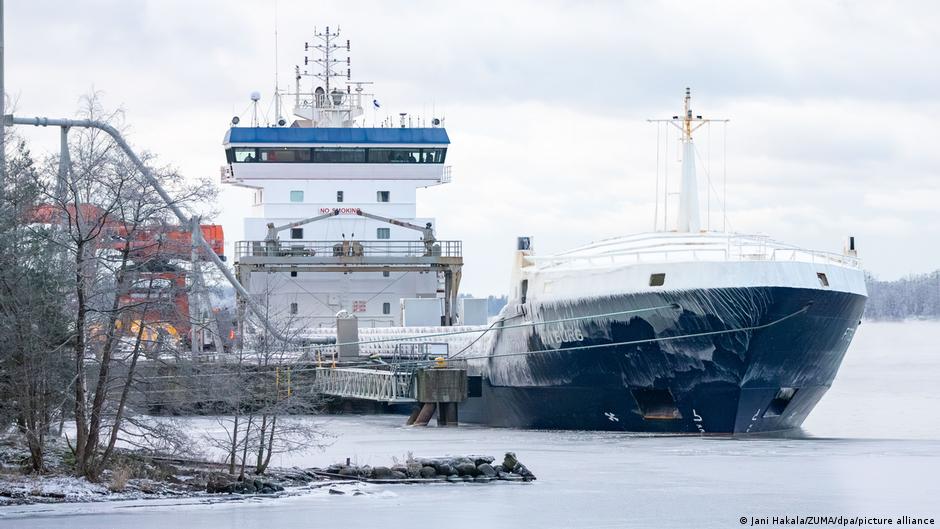
- The Helsinki District Court’s 5 November verdict establishes that it convicted Fitburg captain Andrei Maksimenko and bosun Vusal Medjidov of aggravated sabotage over undersea cable damage in the Gulf of Finland. The court found that anchor equipment dragged about 130 kilometres, damaging two cables and endangering seven others. Multiple major-media accounts report the verdict and its findings; the case does not establish Russian state direction. (Confidence: high · REPORTED)
- I&W: A written judgment or appeal ruling upholds the court’s finding of deliberate anchor dragging and cable damage. (1-3 months)
- I&W: An appeal court overturns the convictions or finds that the anchor dragging was accidental. (1-3 months)
- The public evidence described by the UK government is unlikely to substantiate Russia’s OSCE allegations about Ukrainian attacks. The UK said a Russian presentation on 30 September included images without incident-specific dates, recovery locations, provenance or chain of custody; it also described a 12-slide presentation in the week before 5 November that blamed Ukraine without explaining how responsibility was established. This is a single UK government account, so confidence is low. It supports a finding of weakly documented messaging, not proof of a centrally directed disinformation campaign. (Confidence: low · ASSESSED)
- I&W: Russia provides dated originals, recovery locations, provenance and chain-of-custody records for the material, and the ICRC confirms the finding attributed to it. (0-3 months)
- I&W: A subsequent Russian OSCE presentation repeats the allegations without auditable source material. (1-3 months)
Outlook & scenarios
Repeated low-cost disruption without public attribution (62%)
Likely, Europe will face further episodic aviation threats over the next month while authorities investigate the 5 November wave. Diversions, escorts and airport searches will remain the reported effects, with no common perpetrator established.
Investigators link a subset of incidents (25%)
Unlikely, investigators will identify a common sender or network behind some of the 2-5 November aviation threats. A link among a subset would not by itself establish Russian state direction or connect the threats to the supermarket and blood-bank cyberattacks.
Low-probability, high-impact strike against a European state (5%)
Very unlikely, but high impact: Donald Tusk’s reported intelligence-based warning is borne out and a drone or missile strike targets a European country supporting Ukraine, followed by a Russian claim that the strike was accidental. The available reporting contains the warning, not independent evidence of an impending attack.
Recommendations
- Maintain separate attribution tracks for the aviation threats, supermarket refrigeration attacks and French blood-bank incidents. Do not treat them as one Russia-directed campaign without a shared technical or investigative link.
- Reconcile the flight totals by distinguishing threats received, aircraft searched, diversions, emergency landings and fighter escorts. Record the differing published totals as source-specific counts until authorities provide a common tally.
- Track ABW and prosecutorial filings in Poland alongside any appeal in the Fitburg case. Distinguish official suspicion, court findings and evidence of state direction.
- For Russian claims made at the OSCE, assess whether underlying material includes dates, recovery locations, provenance, chain of custody and independent verification by the organisation cited.
- Update the assessment when investigators publish attribution findings; until then, keep the aviation and cyber incidents separate from the Fitburg verdict and the Polish espionage investigation.
Confidence & uncertainty
Overall confidence is high for the occurrence of the aviation disruption and the Fitburg verdict, which are supported by multiple major-media reports and official statements or court reporting. Confidence is lower on the flight total because reports use different counting methods. Public reporting does not establish Russian direction of the aviation or cyber incidents; the Poland case remains an official allegation under investigation, and the OSCE evidence assessment rests on a single UK government account.
Intelligence gaps
- [EEI 1.3 · PARTIAL] Law-enforcement or customs seizures, arrests or interdictions of persons or shipments carrying explosives, sabotage tools, specialty cutting/electrical equipment, or covert comms gear destined for/near critical infrastructure. Recommended collection: law enforcement
- [EEI 2.1 · UNCOVERED] Emergence or amplification of coordinated social-media networks (sets of accounts, pages, channels) pushing identical narratives or hashtags across multiple platforms, including bot-like activity metrics and origin IP/common management indicators. Recommended collection: social-media/OSINT
- [EEI 2.2 · PARTIAL] Publication or internal guidance from state-run media, proxy outlets, or identified influence platforms distributing talking points, pre-scripted messaging, or translated content targeted at specific EU countries/communities. Recommended collection: open-source/media
- [EEI 2.3 · UNCOVERED] Distribution of manipulated multimedia (deepfakes), targeted phishing/whaling campaigns, or localized false narratives timed to political events (elections, protests, court rulings) with tracked reach and engagement metrics. Recommended collection: cyber/forensic
- [EEI 3.1 · PARTIAL] Unusual financial transactions: wire transfers, crypto conversions, or payments to shell companies, NGOs or individuals exceeding typical baselines that link to known proxies or front organisations. Recommended collection: financial
- [EEI 3.3 · PARTIAL] Cargo, freight or maritime movements with discrepancies (concealed/dual-use equipment, false manifests, unusual routing) detected at ports, rail hubs or via AIS that correspond to deliveries of material used in sabotage or influence operations. Recommended collection: customs/ports
- [EEI 3.4 · UNCOVERED] Intercepted or otherwise-obtained communications showing tasking, coordination, or payment instructions between Russian agencies/handlers and proxy groups, including identified command-and-control servers or encrypted group identifiers. Recommended collection: signals-intel/SIGINT
Red cell review: CONCUR WITH COMMENT
TLP:CLEAR