TLP:CLEAR · Disclosure is not limited.
Europe Hybrid Threats: Disruption Widens, Attribution Remains Unsettled
Time window: Last 1 day · Audience: General analyst · Type: Situation report · DTG: 2026-11-12 22:28Z · Overall confidence: HIGH
BLUF
Europe has seen further cross-border disruption from bomb threats, alongside a new Baltic airspace incident. The reporting supports concern about repeated hybrid-style activity, but does not establish that Russia directed the anonymous threat campaigns or that the incidents form one coordinated operation.
Executive summary
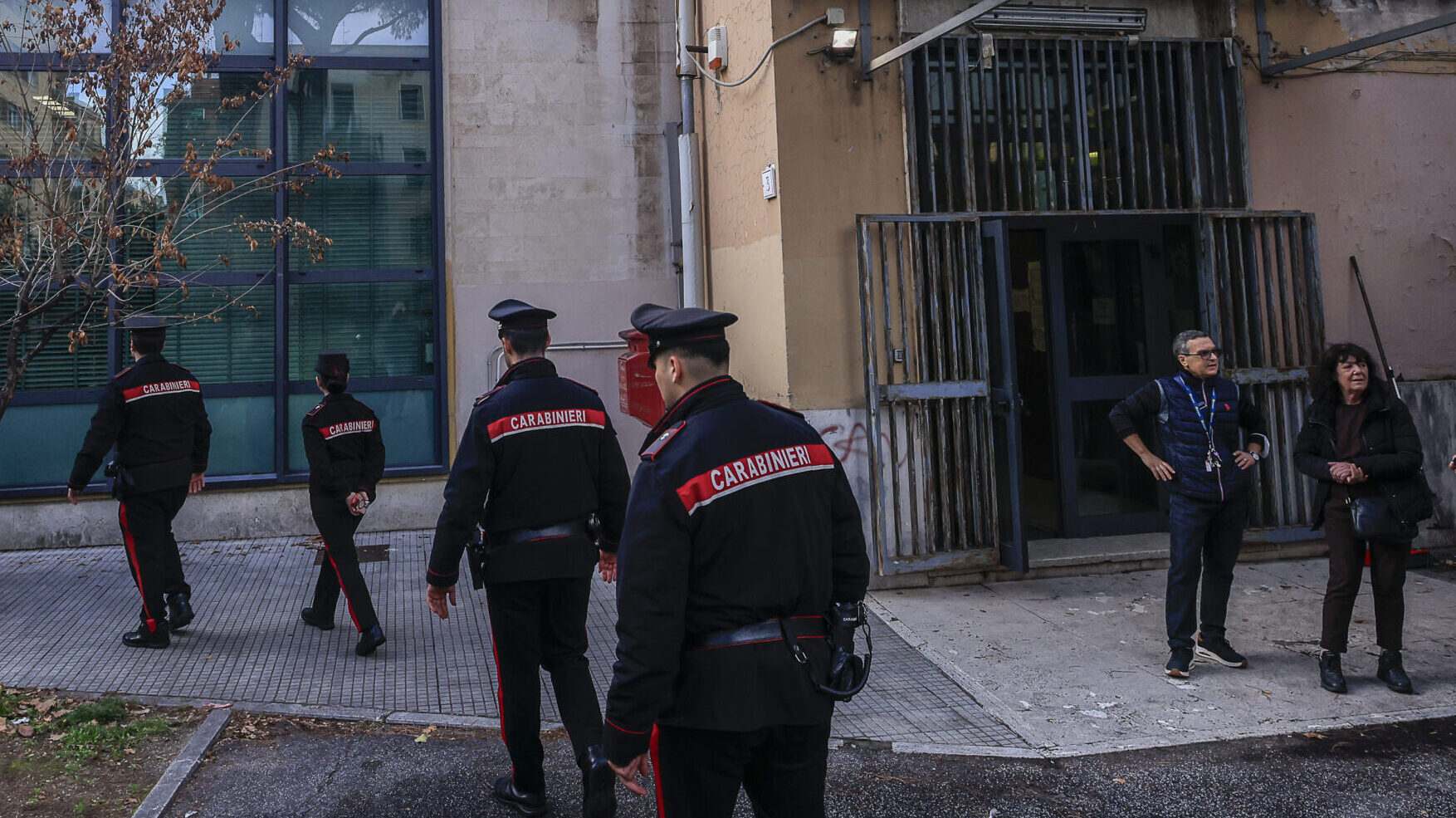
Reporting since the prior brief adds threats affecting European flights and newsrooms, further bomb warnings to Italian schools on 12 November, and an account from European intelligence officials that Russia is the most likely origin of the threatening email campaign. That assessment remains unconfirmed, and Moscow denies involvement. Separately, Estonian and Finnish officials reported Ukrainian drone activity near Estonia, a brief entry into Estonian airspace, and a strike on the Russian warship Naro-Fominsk in the Gulf of Finland. European leaders met in Dublin with hybrid attacks high on the agenda, but the supplied reporting records discussion of a possible envoy rather than an adopted common response. French officials attribute the October supermarket refrigeration cyberattacks to Iran's IRGC-linked Shahid Kaveh unit, not Russia.
Change from previous assessment
Compared with the prior brief on 12 November, this assessment adds reporting on threats to at least 35 passenger flights, threat messages to Irish and Bulgarian newsrooms, a further wave affecting Italian schools on 12 November, and European intelligence officials' view that Russia is the most likely origin of the threatening email campaign. That view raises the salience of a Russian link but does not establish it. The reported Ukrainian drone incursion into Estonian airspace and strike on Naro-Fominsk add a separate Baltic spillover risk, not evidence of Russian hybrid action. The assessment that the supplied reporting does not establish one Russia-directed operation across the incidents remains unchanged.
Key judgments
- Europe is very likely experiencing repeated cross-border disruption from hoax threats and cyberattacks, but the reported incidents are not established as one Russia-directed campaign. One account reports at least 35 passenger flights targeted between 3 and 6 November, while another counts nearly 30 affected by 5 November, so the totals are not directly reconcilable. An Aer Lingus flight from Dublin to Rome was diverted to a French military airbase on 5 November. Threats also prompted evacuations or security responses at newsrooms and schools. Reports put the number of Italian schools threatened on 11 November at about 6,000 to 6,300, with more than 3,700 receiving warnings on 12 November; the figures should not be combined into a campaign total. French officials separately attributed the October supermarket refrigeration attacks to Iran's Shahid Kaveh unit. (Confidence: high · REPORTED)
- I&W: Confirm continued disruption if Italian, Irish, or British authorities report new evacuations or flight diversions linked to matching threat messages; break the recurring-campaign assessment if authorities establish that the incidents were isolated and unrelated. (0-14 days)
- I&W: Confirm the reported scale if authorities publish dated school and flight counts that match the separate incident reports; revise the scale downward if they correct the figures or identify substantial duplicate counting. (0-30 days)
- It is unlikely that current reporting establishes Russian direction of the anonymous flight and school threat campaigns. Some European intelligence officials reportedly consider Russia the most likely origin, citing motive, method and precedent, but they warn that firm attribution may never be possible; Moscow denies involvement. Germany has separately attributed a drone attack on Leipzig airport to Russia, while another account describes the operator as unknown and notes Russia's denial. These separate allegations do not establish a common Russian operation. (Confidence: low · ASSESSED)
- I&W: Confirm Russian direction if investigators publish forensic evidence linking the threat messages, their infrastructure, or identified senders to a Russian state service or its tasking. (1-3 months)
- I&W: Break the Russian-direction assessment if investigators identify an unrelated sender or infrastructure and publicly rule out state involvement. (1-3 months)
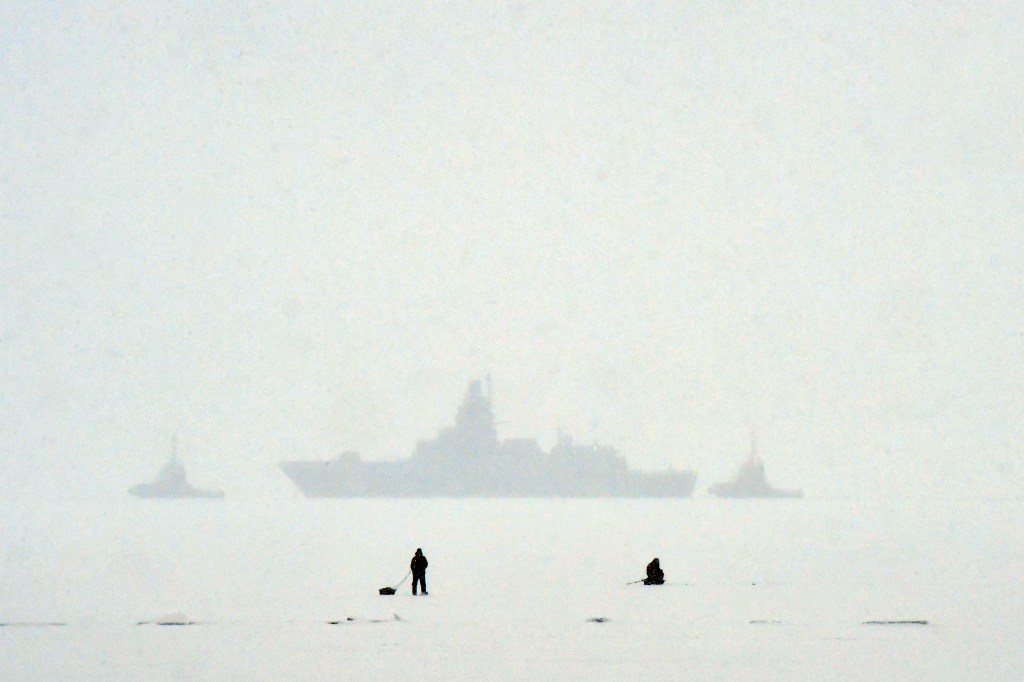
- The 11 November Ukrainian drone operation near Ust-Luga is likely to produce further Baltic airspace alerts if similar activity recurs, but it is not evidence of Russian hybrid action against NATO. Estonian Defence Minister Martin Herem said Ukrainian drones attacked the Ust-Luga area from midnight to about 06:00 and that one briefly entered Estonian airspace from Latvia. Estonia, Latvia and Lithuania issued shelter warnings, and NATO aircraft were scrambled. Finnish officials detected a strike on the Russian warship Naro-Fominsk in the Gulf of Finland; Ukraine's SBU said it targeted the ship as part of the wider operation. Finland said the area remained stable and that it faced no immediate military threat. (Confidence: medium · ASSESSED)
- I&W: Confirm the near-term alert risk if Estonian, Latvian or Lithuanian authorities report another drone airspace incursion, shelter warning, or NATO aircraft response. (0-14 days)
- I&W: Break the assessment of recurring near-term alerts if the three Baltic governments report no further incursions or related warnings and Finnish officials continue to describe the Gulf of Finland situation as stable. (0-30 days)
- European leaders are likely to pursue further coordination on hybrid threats after the Dublin summit, but the reporting shows discussion rather than an agreed common response. Leaders from more than 40 European countries gathered on 12 November as hybrid attacks dominated the agenda. Irish Prime Minister Micheal Martin described the attackers' aim as creating confusion and weakening confidence in democratic systems. European Council President Antonio Costa promised to discuss creating an envoy, but the supplied reporting does not confirm that one was appointed. (Confidence: medium · ASSESSED)
- I&W: Confirm follow-through if European Council or European Political Community records announce an envoy, joint incident-sharing process, or shared investigative arrangement. (1-3 months)
- I&W: Break the expectation of increased coordination if leaders formally drop the envoy discussion and publish no follow-up mechanism at their next relevant meeting. (1-3 months)
Outlook & scenarios
Repeated disruption, attribution remains unresolved (55%)
Further hoax threats and disruption affect schools, transport or media organisations across Europe. Authorities respond to individual incidents, while the sender identity and any connection to Russia remain unconfirmed. This is the most likely near-term course because repeated threats are reported but firm attribution is absent.
Evidence supports a Russian link (25%)
Investigators identify evidence connecting one or more threat campaigns to Russian state direction or a Russian-linked network. European governments then make more specific public attributions and coordinate investigative or protective measures. This scenario remains less likely than continued uncertainty because current reporting offers an anonymous intelligence assessment, not conclusive public evidence.
Separate actors and incidents remain the better explanation (15%)
Investigations find that the school, flight and newsroom threats had separate senders or motives, while cyber incidents continue to involve different actors. The French supermarket case remains attributed by French officials to Iran's Shahid Kaveh unit, illustrating why distinct incidents should not be treated as one Russia-led campaign.
Fatal cross-border drone incident triggers a wider crisis (5%)
A drone incursion or interception near Estonia, Latvia or Finland causes casualties or damage and prompts a sharp Russia-NATO confrontation. This is a very unlikely, high-impact wildcard; the reported 11 November episode involved a brief Estonian airspace entry, while Finnish officials said the regional situation remained stable.
Recommendations
- Maintain separate incident records for the flight, school and newsroom threats, the French supermarket cyberattacks, and the Ukrainian drone operation near Ust-Luga. Record incident occurrence, operational impact and attribution as separate fields.
- Reconcile the Italian school counts and overlapping flight totals with dated statements from Italian authorities, aviation authorities and police before using any cumulative figure.
- Preserve and compare the original threat emails, including headers, sender infrastructure, wording and signatures. In particular, check whether the newsroom messages and school threats share verifiable technical indicators before treating them as one campaign.
- Track public investigative findings on the anonymous threats and the Leipzig airport drone allegation separately. Record what evidence is disclosed, who makes each attribution, and whether Russia's denial is addressed.
- Monitor official updates from Estonia, Latvia, Lithuania and Finland for new airspace incursions, shelter warnings, NATO aircraft responses, or changes to their assessments of the Gulf of Finland security situation.
- Follow up on Costa's proposed discussion of a European envoy and any published European process for sharing incident data or coordinating investigations.
Confidence & uncertainty
Confidence is high that the reported threats, flight disruption, school responses, newsroom evacuation and Baltic drone incident occurred. Reporting from major media, wire services and named government officials corroborates key events. Confidence is lower on Russian responsibility for the anonymous threat campaigns, and reported school and flight totals are inconsistent. The high headline confidence applies to the occurrence and impact of incidents, not to attribution.
Alternative analysis (red cell)
The Ust-Luga episode is better assessed as a potentially significant conflict spillover event than as evidence that can cleanly exclude Russian hybrid action. The Ukrainian attribution in 06a0a580-f30a-4294-8d32-56deed30116a is medium confidence, while the same reporting stream documents regional airspace alerts and NATO scrambling in 20a16331-3dfd-43b4-b2a7-f2c82d7e22f5. On the available evidence, the operator and strategic significance remain unresolved; further Baltic alerts are plausible if similar incursions recur, but the basis for forecasting their frequency is limited.
Intelligence gaps
- [EEI 1.2 · UNCOVERED] Observed reconnaissance activity around critical sites indicative of attack planning (unauthorised drone flights, repeated surveillance visits, loitering vehicles, mapping/photography of assets). Recommended collection: open-source/media
- [EEI 1.3 · UNCOVERED] Law-enforcement or customs seizures, arrests or interdictions of persons or shipments carrying explosives, sabotage tools, specialty cutting/electrical equipment, or covert comms gear destined for/near critical infrastructure. Recommended collection: law enforcement
- [EEI 2.1 · UNCOVERED] Emergence or amplification of coordinated social-media networks (sets of accounts, pages, channels) pushing identical narratives or hashtags across multiple platforms, including bot-like activity metrics and origin IP/common management indicators. Recommended collection: social-media/OSINT
- [EEI 2.2 · UNCOVERED] Publication or internal guidance from state-run media, proxy outlets, or identified influence platforms distributing talking points, pre-scripted messaging, or translated content targeted at specific EU countries/communities. Recommended collection: open-source/media
- [EEI 2.3 · UNCOVERED] Distribution of manipulated multimedia (deepfakes), targeted phishing/whaling campaigns, or localized false narratives timed to political events (elections, protests, court rulings) with tracked reach and engagement metrics. Recommended collection: cyber/forensic
- [EEI 3.1 · UNCOVERED] Unusual financial transactions: wire transfers, crypto conversions, or payments to shell companies, NGOs or individuals exceeding typical baselines that link to known proxies or front organisations. Recommended collection: financial
- [EEI 3.2 · UNCOVERED] Travel and movement indicators for suspected operatives: repeated border crossings, chartered/irregular flights, booking patterns or mobile/location data placing identified individuals in staging areas shortly before incidents. Recommended collection: border/immigration
- [EEI 3.3 · UNCOVERED] Cargo, freight or maritime movements with discrepancies (concealed/dual-use equipment, false manifests, unusual routing) detected at ports, rail hubs or via AIS that correspond to deliveries of material used in sabotage or influence operations. Recommended collection: customs/ports
- [EEI 3.4 · UNCOVERED] Intercepted or otherwise-obtained communications showing tasking, coordination, or payment instructions between Russian agencies/handlers and proxy groups, including identified command-and-control servers or encrypted group identifiers. Recommended collection: signals-intel/SIGINT
Red cell review: PARTIAL DISSENT
TLP:CLEAR