TLP:CLEAR · Disclosure is not limited.
Europe Hybrid Threats: German and Finnish Reporting, Kaliningrad Signals
Time window: Last 1 day · Audience: General analyst · Type: Situation report · DTG: 2026-10-05 09:09Z · Overall confidence: MEDIUM
BLUF
German and Finnish officials are reporting continued Russian-linked pressure on infrastructure and information systems, but the current material does not independently verify individual incidents or attribution. Russia’s warnings over Kaliningrad raise the risk of miscalculation, but do not establish imminent military action against NATO.
Executive summary
Recent reporting adds German claims of near-daily attacks on data centres, airspace violations and Russian disinformation, alongside Finnish diplomatic warnings about submarine cables, drones and cyberattacks. These accounts point to continued hybrid pressure, but incident-level evidence and Russian attribution remain limited in the material reviewed. Moscow has issued warnings about defending Kaliningrad, including nuclear language; Vladimir Putin also said Russia did not intend to attack European countries, while NATO Secretary General Mark Rutte rejected the threats and described nuclear use against the Baltic states as not a real risk. Germany and Ukraine announced agreements worth more than €8.5 billion, including joint drone countermeasures. The Leipzig Airport reporting refers to an attempted attack dated 4 August, not a newly established October incident.
Change from previous assessment
Since the 23 September brief, reporting adds German claims of near-daily data-centre attacks and systematic disinformation, Finnish warnings about submarine cables, drones and cyberattacks, and explicit Russian nuclear warnings concerning Kaliningrad. The broad hybrid-campaign assessment is retained, but confidence in these newly reported Germany and Finland incidents is medium, below the prior brief’s high confidence in the wider campaign, because current details and attribution are not independently corroborated here. The assessment now gives greater weight to Kaliningrad signalling and to the gap between national measures and EU-wide plans.
Key judgments
- Russia is likely sustaining hybrid pressure on Germany and Finland, but the current reporting does not independently establish Russian responsibility for each cited incident. German Chancellor Friedrich Merz reported daily airspace violations, near-daily attacks on data centres and systematic disinformation; Finnish diplomatic sources described threats to Baltic submarine cables, drone incidents and cyberattacks. These are official statements carried by media, not independently corroborated incident records, and Russia denies European accusations of escalating hybrid activity. (Confidence: medium · ASSESSED)
- I&W: Confirm: German authorities publish a dated account of another intrusion at a named data centre and identify a Russian-linked operator. (0-30 days)
- I&W: Break: Finnish authorities withdraw the Russian attribution for the reported submarine-cable, drone or cyber activity. (0-30 days)
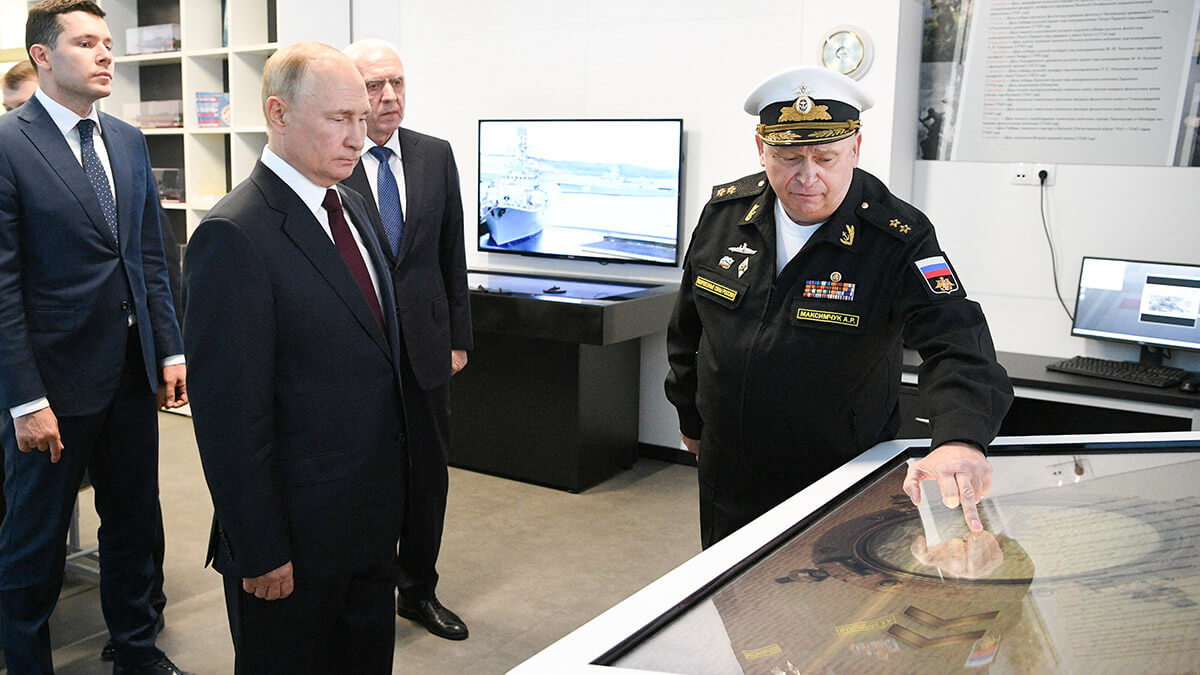
- Russia is likely using warnings over Kaliningrad to deter NATO and shape alliance debate, rather than signalling an imminent nuclear strike. Reporting describes a Russian note warning of use of its full arsenal, Vladimir Putin’s 1 October statement about defending Kaliningrad, and Russian warnings about strikes on NATO decision-making centres. Putin also said Russia did not intend to attack European countries. The reports do not resolve whether his statement and the diplomatic note were separate warnings; Mark Rutte demanded an end to nuclear threats but also said the risk of nuclear use against the Baltic states was not real. (Confidence: medium · ASSESSED)
- I&W: Confirm: The Kremlin or Russian Foreign Ministry issues a new written warning linking nuclear use to a named NATO exercise or an attempt to isolate Kaliningrad. (0-30 days)
- I&W: Break: The Kremlin formally withdraws or clarifies the nuclear wording in the September note and Putin’s 1 October statement. (0-30 days)
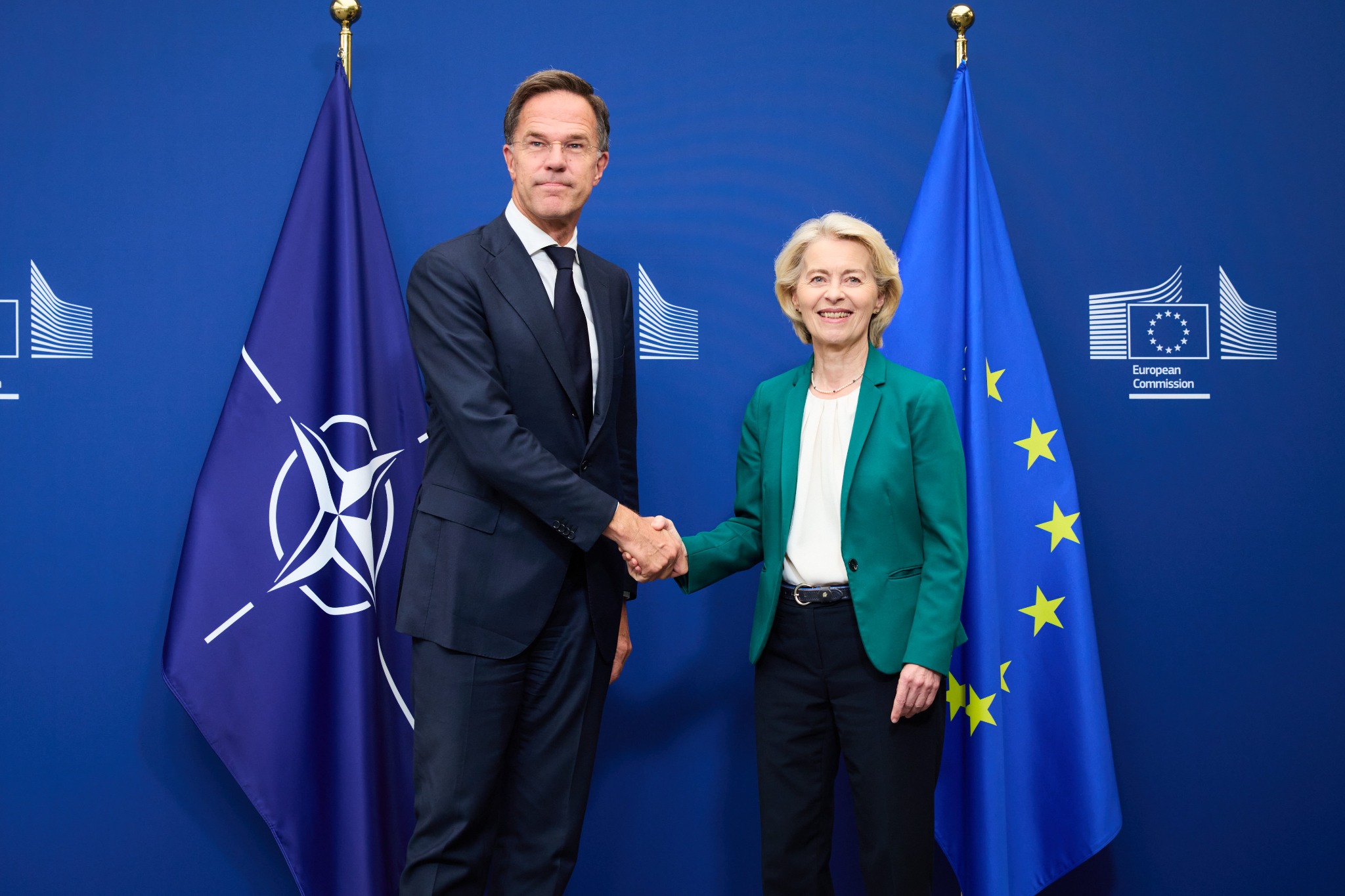
- European governments are likely to expand national and bilateral counter-hybrid measures ahead of a fully coordinated EU framework. Ursula von der Leyen has called for a counter-hybrid playbook, while plans for a European Security Council remain plans. Germany and Ukraine announced 15 agreements worth more than €8.5 billion, including joint drone countermeasures, and Friedrich Merz said Germany had taken measures in response to airspace violations and hybrid attacks. EU unanimity requirements remain a constraint on collective action. (Confidence: medium · ASSESSED)
- I&W: Confirm: Germany and Ukraine publish an implementation plan or operational milestone for their announced joint drone countermeasures before an EU-wide playbook is adopted. (1-3 months)
- I&W: Break: EU institutions adopt and fund a common counter-hybrid playbook with published implementation milestones. (1-3 months)
Outlook & scenarios
Continued hybrid pressure, managed responses (65%)
Russia sustains cyber, information and infrastructure pressure as reported by German and Finnish sources. European governments continue national and bilateral protective measures, while EU-wide coordination remains at the proposal or planning stage. The current reporting establishes neither independent attribution for each incident nor a Russian plan for direct attack on NATO.
A documented infrastructure incident sharpens attribution (27%)
A new, publicly documented intrusion affecting a German data centre or an incident involving a Baltic submarine cable prompts authorities to publish technical details and assess Russian responsibility. Clear incident evidence increases pressure for joint European action and tests whether the announced German-Ukrainian measures and EU proposals move into implementation.
Kaliningrad warning cycle produces a dangerous incident (8%)
A NATO activity or dispute concerning access to Kaliningrad prompts another Russian warning, followed by an incident involving NATO forces in the Baltic area. This is a low-probability, high-impact wildcard; the current reporting shows escalatory rhetoric, not evidence of imminent nuclear use.
Recommendations
- Maintain an incident log for German data-centre and airspace reports. Record dates, locations, affected systems, forensic findings and the basis for any Russian attribution; distinguish Merz’s public statements from independently verified incident details.
- Seek incident-level updates from Finnish authorities on the reported submarine-cable, drone and cyber threats. Separate evidence of surveillance or mapping from evidence of damage or disruption.
- Reconcile the date and wording of the September Kaliningrad note with Putin’s 1 October statement before treating them as separate escalatory events. Track any new Russian warning tied to a named NATO exercise or Kaliningrad access.
- Track implementation, not announcements, for the Germany-Ukraine drone countermeasures and the proposed EU counter-hybrid playbook. Report which measures receive funding, responsible agencies and delivery milestones.
- Keep Russian strikes on Ukrainian bridges and other targets analytically separate from incidents directed at European infrastructure. Assess any link to activity in Germany or Finland only when incident evidence supports it.
Confidence & uncertainty
Overall confidence is medium because the reporting draws on major media, official statements and multiple European actors, but the central Germany and Finland claims lack independent incident-level corroboration in the material reviewed. Attribution is uncertain, and Russian statements about Kaliningrad are framed differently by Putin and NATO Secretary General Mark Rutte. The available reporting supports concern about continued pressure, but not a conclusion that a specific new attack is imminent.
Intelligence gaps
- [EEI 1.2 · PARTIAL] Observed reconnaissance activity around critical sites indicative of attack planning (unauthorised drone flights, repeated surveillance visits, loitering vehicles, mapping/photography of assets). Recommended collection: open-source/media
- [EEI 1.3 · UNCOVERED] Law-enforcement or customs seizures, arrests or interdictions of persons or shipments carrying explosives, sabotage tools, specialty cutting/electrical equipment, or covert comms gear destined for/near critical infrastructure. Recommended collection: law enforcement
- [EEI 2.1 · UNCOVERED] Emergence or amplification of coordinated social-media networks (sets of accounts, pages, channels) pushing identical narratives or hashtags across multiple platforms, including bot-like activity metrics and origin IP/common management indicators. Recommended collection: social-media/OSINT
- [EEI 2.2 · PARTIAL] Publication or internal guidance from state-run media, proxy outlets, or identified influence platforms distributing talking points, pre-scripted messaging, or translated content targeted at specific EU countries/communities. Recommended collection: open-source/media
- [EEI 2.3 · PARTIAL] Distribution of manipulated multimedia (deepfakes), targeted phishing/whaling campaigns, or localized false narratives timed to political events (elections, protests, court rulings) with tracked reach and engagement metrics. Recommended collection: cyber/forensic
- [EEI 3.1 · UNCOVERED] Unusual financial transactions: wire transfers, crypto conversions, or payments to shell companies, NGOs or individuals exceeding typical baselines that link to known proxies or front organisations. Recommended collection: financial
- [EEI 3.2 · UNCOVERED] Travel and movement indicators for suspected operatives: repeated border crossings, chartered/irregular flights, booking patterns or mobile/location data placing identified individuals in staging areas shortly before incidents. Recommended collection: border/immigration
- [EEI 3.3 · UNCOVERED] Cargo, freight or maritime movements with discrepancies (concealed/dual-use equipment, false manifests, unusual routing) detected at ports, rail hubs or via AIS that correspond to deliveries of material used in sabotage or influence operations. Recommended collection: customs/ports
- [EEI 3.4 · UNCOVERED] Intercepted or otherwise-obtained communications showing tasking, coordination, or payment instructions between Russian agencies/handlers and proxy groups, including identified command-and-control servers or encrypted group identifiers. Recommended collection: signals-intel/SIGINT
Cited sources
[1] shelter.in.ua · Merz spoke at a press briefing: Russia's hybrid attacks, threats from Moscow, and an escalation of terror (D) · Sun Oct 04 2026 14:08:42 GMT+0000 (Coordinated Universal Time) · sha256:25c4c4be941d [2] Mundo America (El Mundo) · The Kings of Spain travel to Finland to raise awareness about the southern border of NATO and visit military bases for the first time (B) · Mon Oct 05 2026 08:47:21 GMT+0000 (Coordinated Universal Time) · sha256:79b7dce1ba55 [3] West Hawaii Today (reprinting Reuters reporting) · Russia sends nuclear warning to NATO as tensions rise in the Baltic (D) · Sun Oct 04 2026 10:05:00 GMT+0000 (Coordinated Universal Time) · sha256:47578fb71174 [4] Atalayar · Kaliningrad, the enclave that could turn the Baltic into the most dangerous theater in Europe (B) · Sun Oct 04 2026 10:53:14 GMT+0000 (Coordinated Universal Time) · sha256:f97db5bb7d0a [5] Atlantic Council · Europe needs a new strategy for Russian gray zone aggression (C) · Tue Sep 29 2026 20:07:42 GMT+0000 (Coordinated Universal Time) · sha256:38f526956919
Source content hashes were computed at collection time; the cited text is preserved unmodified for the life of this product.
Red cell review: CONCUR WITH COMMENT
TLP:CLEAR