TLP:CLEAR · Disclosure is not limited.
Europe Hybrid Threats: German Disinformation Reporting and Black Sea Attacks
Time window: Last 1 day · Audience: General analyst · Type: Situation report · DTG: 2026-10-20 14:13Z · Overall confidence: MEDIUM
BLUF
New reporting identifies a German intelligence-attributed fabricated-video campaign about Friedrich Merz and a Black Sea shipping crisis that has prompted a Bulgarian NATO assistance request and US P-8A patrols from Varna. The reporting does not establish Russian responsibility for the ship attacks or a common command linking these cases, so attribution should remain provisional while analysts prioritise verification and maritime monitoring.
Executive summary
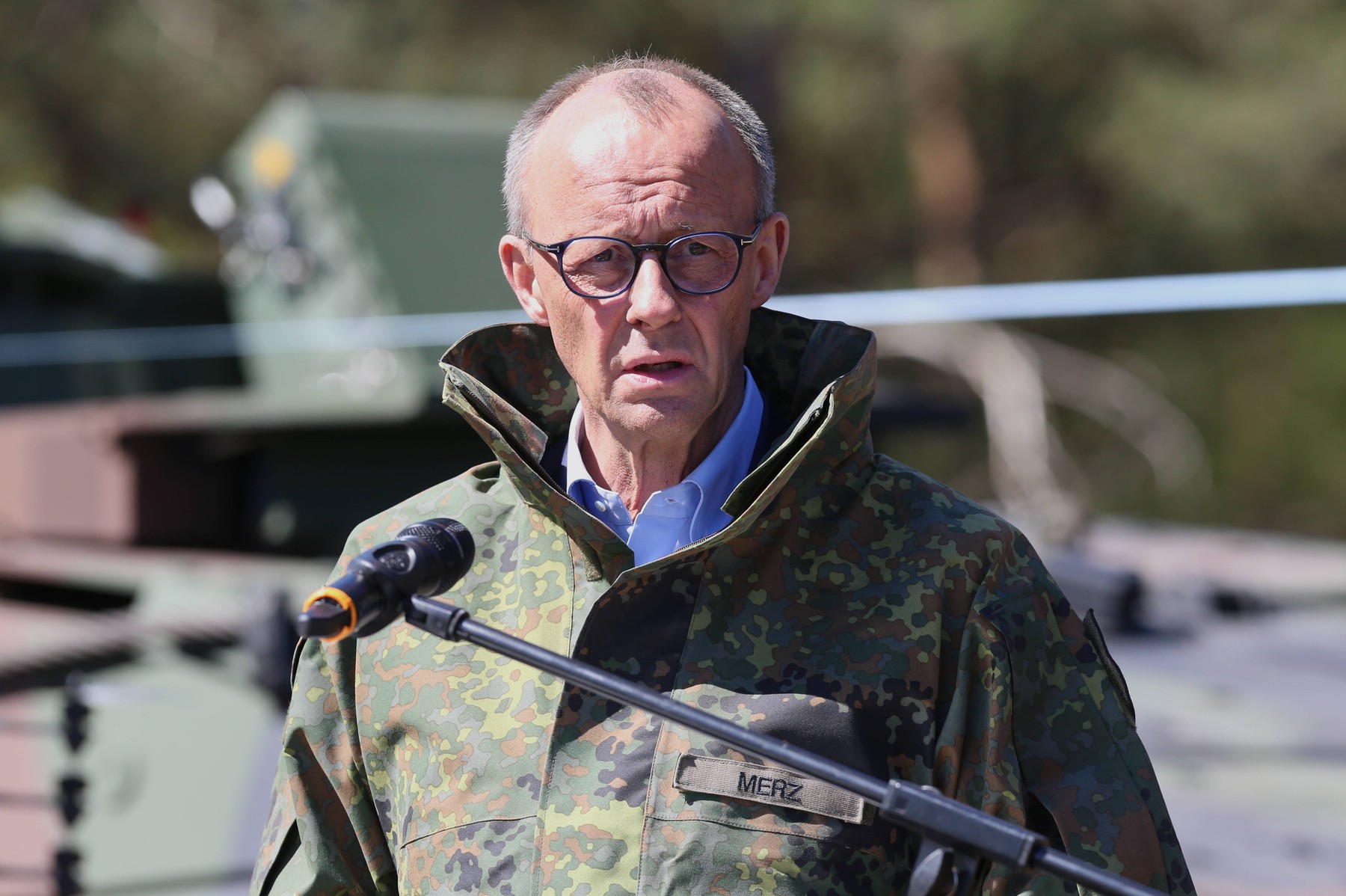
German intelligence services reportedly assess that fabricated videos about Chancellor Friedrich Merz are part of intensifying Russia-attributed disinformation on X and other social networks. Separately, seven commercial ships have reportedly been attacked off Bulgaria and Romania since 5 October, leaving at least two sailors dead, 28 missing and three vessels sunk. Bulgaria requested NATO assistance and a US P-8A has operated from Varna, but Sofia has not formally accused Moscow and says material evidence is lacking. Polish Prime Minister Donald Tusk, Merz and BND head Martin Jaeger have warned about Russian hybrid activity; NATO Secretary General Mark Rutte has said there is no immediate military threat to NATO territory. Reporting on a Russian satellite's approach to ICEYE-X36 is also inconsistent on distance and timing.
Change from previous assessment
Since the 19 October brief, reporting has added a German intelligence-attributed fabricated-video campaign about Friedrich Merz and a Black Sea shipping crisis accompanied by Bulgaria's NATO request and US P-8A patrols from Varna. Confidence that German authorities are assessing a specific current disinformation activity has increased from the prior brief's finding that no such European operation was specifically identified. The prior conclusion that reporting did not establish Russian direction or a common command structure remains unchanged; new reporting does not link the German, maritime, satellite or prior Starlink incidents. The prior drone-incursion outlook is not reassessed because this run supplies no new reporting on those incidents.
Key judgments
- German intelligence services are reporting an intensification of fabricated-video disinformation about Chancellor Friedrich Merz, attributed to Russia and distributed mainly on X and other social networks. Separately, the German government has linked the Storm-1516 campaign to Russia after alleged influence on debate during the February 2025 national election. The supplied reporting does not establish common operators or provide the underlying attribution evidence. Confidence is medium because the claims are carried in local-media reporting and the underlying technical evidence is not supplied. (Confidence: medium · REPORTED)
- I&W: German intelligence services publish examples of the Merz videos or account-network analysis supporting attribution to Russia. (0-30 days)
- I&W: German authorities withdraw the Russian attribution or identify evidence that the videos originated from non-Russian actors. (0-30 days)
- It is likely Rybar's circulation of a map of protests in France, Belgium, Spain and Italy functioned as narrative amplification; it is not evidence that Russian actors organised those protests. The map aggregated demonstrations, arrests and injuries, while an analysis of its circulation explicitly cautions that distribution does not establish orchestration. Confidence is low because the interpretation rests on think-tank reporting without independent engagement or reach data. (Confidence: low · ASSESSED)
- I&W: Rybar republishes protest material with a common instability narrative on Telegram and other platforms. (0-30 days)
- I&W: A content comparison finds the map reproduced local protest reporting without added claims linking the events or portraying them as evidence of European instability. (0-30 days)
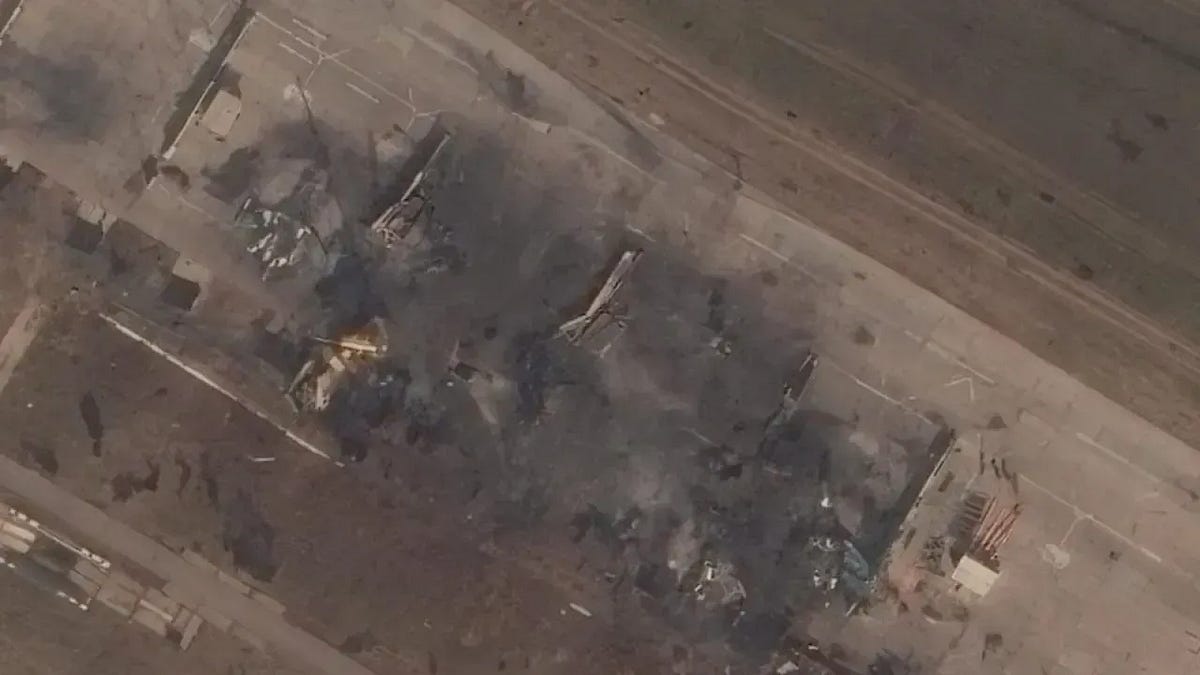
- It is likely the seven reported attacks on commercial ships off Bulgaria and Romania since 5 October have prompted a sustained surveillance response. Bulgaria requested NATO fighter jets, anti-drone equipment and anti-aircraft missiles on 16 October; a US P-8A arrived at Varna from Sigonella on 18 October, and Bulgaria's Ministry of Defence confirmed its Black Sea patrols without specifying how long it will remain. Bulgaria has suggested Russian responsibility but has not formally accused Moscow, citing the absence of material evidence; a think-tank account describes the attacks as direct Russian strikes. Confidence is medium because official reporting supports the request and patrols, while attribution remains contested. (Confidence: medium · ASSESSED)
- I&W: Bulgaria confirms an extension of the P-8A patrols or NATO deploys the fighter jets and counter-drone equipment requested by Sofia. (0-14 days)
- I&W: Sofia issues a formal attribution backed by material evidence, or publicly rules out Russian responsibility for the ship attacks. (0-30 days)
- It is likely that Cosmos 2612 approached ICEYE-X36, but the supplied reporting does not establish the closest separation, whether the May and October references describe separate events, or hostile intent. Accounts report a separation within metres, about 500 metres, or about 4.8 kilometres. Confidence is low because the reported distances and timing conflict, and the tracking figures are relayed through media rather than presented as a reconciled dataset. (Confidence: low · REPORTED)
- I&W: Independent orbital-tracking data confirm the date and closest separation of Cosmos 2612 and ICEYE-X36. (0-30 days)
- I&W: Revised tracking data show no close approach, or establish that the May and October reports refer to separate events. (0-30 days)
Outlook & scenarios
Surveillance continues, attribution remains provisional (55%)
The likely near-term course is continued US and Bulgarian maritime surveillance around Varna, with no formal Bulgarian attribution of the ship attacks. German authorities continue to report Russia-attributed activity about Merz but provide limited public evidence linking the fabricated videos to specific operators. The cases remain separate in the absence of evidence connecting them.
Hybrid pressure broadens (35%)
Further attacks on commercial vessels or fresh fabricated-video activity about Merz prompt NATO Allies to extend maritime surveillance and German authorities to publish more attribution evidence. Bulgaria moves from a request for assistance to a formal position on responsibility. This scenario would increase pressure for coordinated responses, but would not by itself establish a common command across incidents.
Attribution crisis (10%)
A low-probability, high-impact wildcard is a NATO government publicly attributing a ship attack or sabotage incident to Moscow, followed by Russian threats. Sergei Lavrov previously called Berlin's accusation over the Leipzig-Halle drone attack the beginning of a real war, although the supplied reporting says there was no further escalation. A new exchange of threats after a formal attribution would raise the risk of a wider diplomatic or military confrontation.
Recommendations
- Seek the underlying German intelligence evidence on the Merz videos, including preserved examples, account-network analysis and the basis for attributing the activity to Russia. Keep the Merz reporting distinct from the Storm-1516 assessment unless evidence links them.
- Reconcile the Black Sea ship-attack count, casualty figures and vessel identities through Bulgarian and Romanian official reporting. Track whether NATO fulfils Bulgaria's 16 October request and whether the US P-8A remains at Varna.
- Keep Russian responsibility for the Black Sea attacks unconfirmed in analytic products until Sofia provides material evidence or independent reporting identifies the operators. Do not merge the ship attacks with the German disinformation or prior Starlink incidents without evidence of coordination.
- Request a reconciled orbital-tracking account for Cosmos 2612 and ICEYE-X36. Record the reported distances and dates as disputed until tracking data establish whether the May and October references concern one approach or separate events.
- When briefing risk, distinguish hybrid activity and government warnings from conventional military threat assessments. Include Rutte's statement that NATO territory faces no immediate military threat alongside the German and Polish warnings.
Confidence & uncertainty
Overall confidence is medium. The reporting base includes major-media and official-source accounts, and the Bulgarian Ministry of Defence confirms that the P-8A patrols over the Black Sea. Corroboration is less firm for the German disinformation attribution, while Bulgaria has not formally accused Russia over the ship attacks and the reported satellite distances conflict. The 47 usable sources in the run do not provide a single, independently corroborated account linking these developments into one campaign.
Alternative analysis (red cell)
The Rybar evidence supports circulation of a protest-related narrative but does not by itself demonstrate that the circulation functioned as amplification in any operationally meaningful sense. The map may have been opportunistic aggregation with unknown reach and no established effect on protest perceptions or behaviour. Accordingly, the stronger conclusion is that Russian-linked media activity was present, while its amplification function remains unproven.
Intelligence gaps
- [EEI 1.2 · UNCOVERED] Observed reconnaissance activity around critical sites indicative of attack planning (unauthorised drone flights, repeated surveillance visits, loitering vehicles, mapping/photography of assets). Recommended collection: open-source/media
- [EEI 1.3 · UNCOVERED] Law-enforcement or customs seizures, arrests or interdictions of persons or shipments carrying explosives, sabotage tools, specialty cutting/electrical equipment, or covert comms gear destined for/near critical infrastructure. Recommended collection: law enforcement
- [EEI 2.1 · PARTIAL] Emergence or amplification of coordinated social-media networks (sets of accounts, pages, channels) pushing identical narratives or hashtags across multiple platforms, including bot-like activity metrics and origin IP/common management indicators. Recommended collection: social-media/OSINT
- [EEI 2.2 · PARTIAL] Publication or internal guidance from state-run media, proxy outlets, or identified influence platforms distributing talking points, pre-scripted messaging, or translated content targeted at specific EU countries/communities. Recommended collection: open-source/media
- [EEI 2.3 · PARTIAL] Distribution of manipulated multimedia (deepfakes), targeted phishing/whaling campaigns, or localized false narratives timed to political events (elections, protests, court rulings) with tracked reach and engagement metrics. Recommended collection: cyber/forensic
- [EEI 3.1 · UNCOVERED] Unusual financial transactions: wire transfers, crypto conversions, or payments to shell companies, NGOs or individuals exceeding typical baselines that link to known proxies or front organisations. Recommended collection: financial
- [EEI 3.2 · UNCOVERED] Travel and movement indicators for suspected operatives: repeated border crossings, chartered/irregular flights, booking patterns or mobile/location data placing identified individuals in staging areas shortly before incidents. Recommended collection: border/immigration
- [EEI 3.3 · UNCOVERED] Cargo, freight or maritime movements with discrepancies (concealed/dual-use equipment, false manifests, unusual routing) detected at ports, rail hubs or via AIS that correspond to deliveries of material used in sabotage or influence operations. Recommended collection: customs/ports
- [EEI 3.4 · UNCOVERED] Intercepted or otherwise-obtained communications showing tasking, coordination, or payment instructions between Russian agencies/handlers and proxy groups, including identified command-and-control servers or encrypted group identifiers. Recommended collection: signals-intel/SIGINT
Red cell review: PARTIAL DISSENT
TLP:CLEAR