TLP:CLEAR · Disclosure is not limited.
Europe Hybrid Threats: New Attributions, Coordination Unproven
Time window: Last 1 day · Audience: General analyst · Type: Situation report · DTG: 2026-11-21 18:11Z · Overall confidence: HIGH
BLUF
Poland, Denmark and Estonia reported security developments that have prompted heightened alert and diplomatic action. The new reporting strengthens the picture of separate Russia-linked allegations, but does not establish one centrally directed campaign across Europe.
Executive summary
On 20 November, Polish authorities reported two missiles and a suspected jet-powered drone on Polish territory during a large Russian attack on Ukraine. Poland and NATO have raised their readiness, while Polish and US leaders gave conflicting accounts of whether the incursion was deliberate. Denmark has announced the expulsion of Russia’s defence attaché and proposed tighter EU travel restrictions after PET attributed an alleged plot against US-Ukrainian rapper Kyivstoner to Russian intelligence. Estonia’s Internal Security Service attributed an attempted arson attack on drone-maker Threod Systems in Viimsi to the GRU; eight Latvian citizens were detained, and Estonia plans to close road crossings with Russia from 1 December. Russia denies the allegations. Separately, Finnish authorities said a 21 November drone strike on the Russian-linked vessel Sparta II in the Gulf of Finland was likely carried out by Ukraine. That incident adds to regional security friction, but is not evidence of Russian hybrid activity.
Change from previous assessment
Since the 20 November brief, Denmark has announced the expulsion of Russia’s defence attaché and proposed EU travel restrictions; Estonia’s GRU attribution and the detention of eight Latvian citizens are now reported in greater detail; Poland is seeking additional support under Eastern Sentry, with a NATO North Atlantic Council meeting scheduled for 23 November; and the Sparta II strike adds a separate Gulf of Finland incident. The central assessment is unchanged: the reporting does not establish a single coordinated campaign. Prior settled forecasts on this topic resolved yes at probabilities of 0.30 to 0.80, including the EU identifying a Russian disinformation operation, a Romanian drone incursion and Polish charges. These outcomes caution against complacency about discrete events, but do not measure the likelihood of a shared campaign or its command structure.
Key judgments
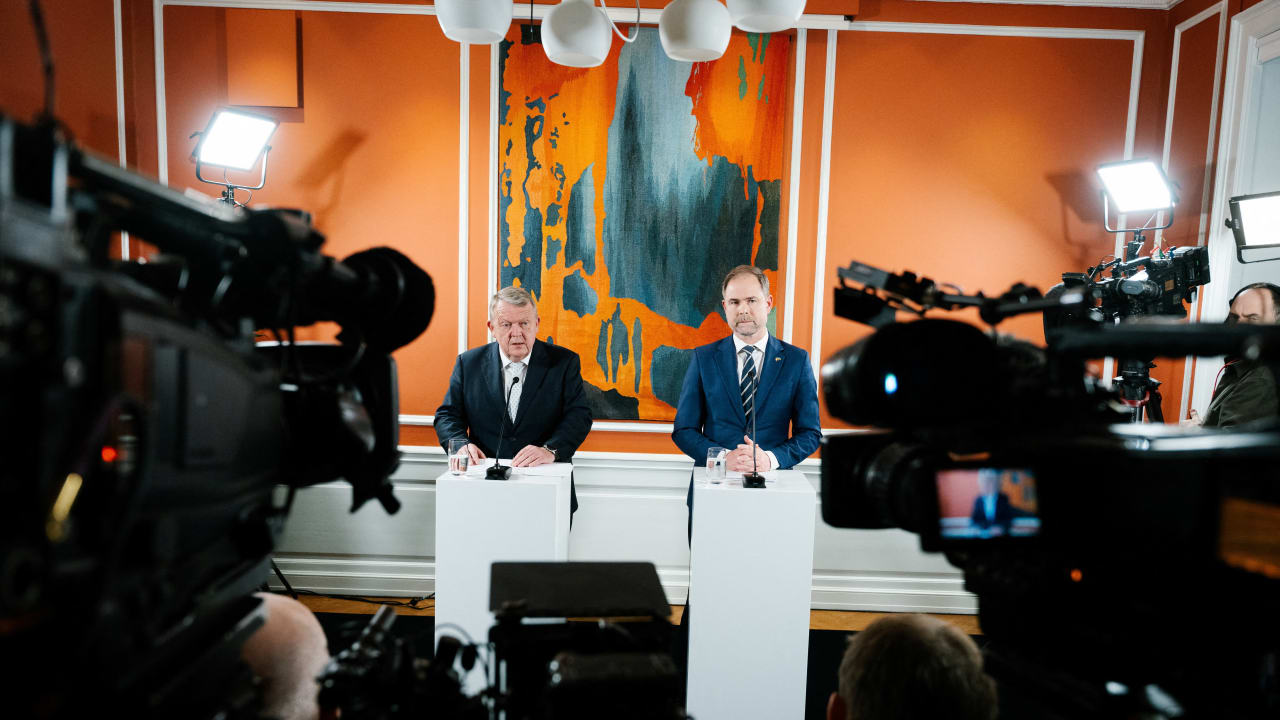
- Russian direction of the Denmark and Estonia cases remains an official allegation, not independently established in the supplied reporting. PET chief Rasmus Kieffer-Kristensen said Russian intelligence planned the alleged attempt to kill Kyivstoner before a concert near Copenhagen on 25 September; two people were charged with attempted murder and assisting a foreign intelligence service. Estonia’s Internal Security Service attributed the attempted arson at Threod Systems in Viimsi to the GRU and said eight Latvian citizens were detained. Russia rejected both countries’ accusations. Danish reporting conflicts on plea status: one account says the defendants denied wrongdoing, while another says they pleaded guilty. The Threod incident is reported as occurring on 14 November, though another account places it on the night of 13 November. (Confidence: medium · REPORTED)
- I&W: Confirmation: Danish court filings or Estonian indictments disclose a shared handler, payment channel or communications linking the cases. Break: court records establish independent motives and no foreign direction. (1-6 months)
- Polish and NATO readiness is likely to remain elevated over the next 14 days. Poland reported two missiles and a suspected jet-powered drone at Nowy Lipowiec, Rudnik nad Sanem and Molodycz during Russia’s 20 November attack on Ukraine, which involved more than 400 drones and at least 110 missiles. NATO scrambled aircraft, and Poland is seeking more support under Eastern Sentry without invoking Article 4. Intent remains contested: Prime Minister Donald Tusk described a deliberate provocation, while President Donald Trump said the incursions happened by mistake; Polish Foreign Minister Radosław Sikorski said missile guidance systems made accidental deviation very unlikely. The reported distance from the military exercise also differs, with accounts giving about 35 km and about 100 km. (Confidence: medium · ASSESSED)
- I&W: Confirmation: NATO’s North Atlantic Council announces additional Eastern Sentry air-defence or surveillance assets after its 23 November meeting. Break: Poland and NATO publicly end the heightened posture and withdraw the added response measures. (0-14 days)
- I&W: A Polish forensic or flight-path assessment identifies missile origin and trajectory, either strengthening the deliberate-incursion case or establishing an accidental crossing. (0-30 days)
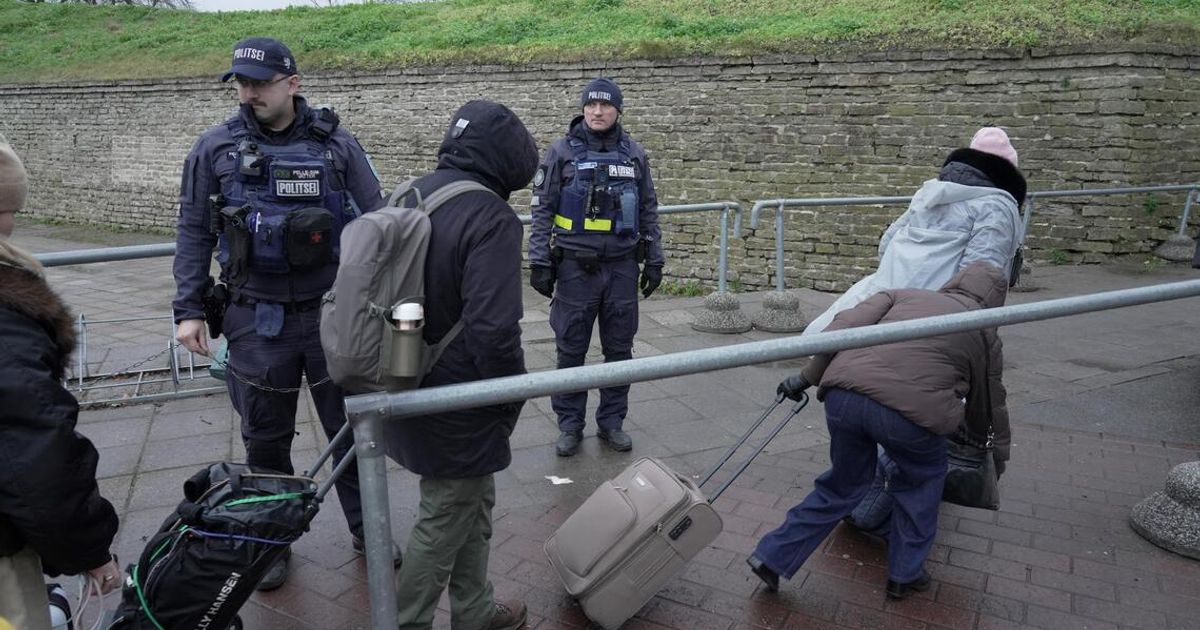
- Estonia’s announced road-crossing closure is likely to increase friction with Russia over the next three months. Estonia says the closure will begin on 1 December and last six months; five checkpoints are named, but another report says three will close. Annual crossings reportedly fell from more than four million before 2022 to about 760,000 in 2026. Moscow has threatened political and diplomatic countermeasures. Rail freight is not included in the announced road closure. (Confidence: medium · ASSESSED)
- I&W: Confirmation: all five named road checkpoints stop vehicle traffic on 1 December. Break: the closure is delayed, limited to fewer checkpoints or does not take effect. (0-14 days)
- I&W: Confirmation: Moscow announces a specific diplomatic or political measure against Estonia in response to the closure. Break: Russian officials withdraw the threatened response or the closure proceeds without a further announced measure. (0-3 months)
- It is unlikely that the available reporting establishes a centrally directed Russian campaign linking the Denmark plot, the Threod Systems arson attempt and the Polish airspace incursion. PET and Estonia’s Internal Security Service made separate attributions, while Polish and US leaders dispute the Polish incident’s intent; the supplied reporting identifies no common handler, tasking or operational link. Claims of a Polish disinformation operation come from social-media reporting and conflict on whether Russia acted alone or alongside US and Israeli networks. (Confidence: medium · ASSESSED)
- I&W: Confirmation: court or investigative records identify a shared Russian handler, communications or financing across at least two of the Denmark, Estonia and Poland cases. Break: case records establish separate actors and no shared direction. (1-6 months)
- The 21 November drone strike on Sparta II in the Gulf of Finland is likely attributable to Ukraine, not Russia, on the reporting available. Finland’s Defence Forces said the strike was likely carried out by Ukraine; Finnish authorities said the vessel had links to Russia’s armed forces and later drifted into Finnish territorial waters. Reports differ on the attack’s position, and the Finnish Border Guard said the fire aboard posed no danger to maritime traffic or people. (Confidence: medium · REPORTED)
- I&W: Confirmation: Finnish authorities publish evidence supporting Ukrainian attribution. Break: Finland’s Defence Forces retract that assessment or identify another actor. (0-30 days)
Outlook & scenarios
Contained hardening (55%)
Poland sustains heightened readiness and seeks added NATO support. Estonia closes its road checkpoints on schedule, while Denmark presses its proposals in Brussels. No shared operational link among the cases is established.
More isolated cases and reciprocal measures (30%)
Further arrests, public attributions or attempted acts against Ukraine-linked people and organisations prompt additional expulsions, travel restrictions or border measures. The cases remain separate, with no verified common command structure.
Diplomatic containment (10%)
Polish and NATO readiness returns towards its previous level after technical assessments. Denmark’s travel proposals do not gain broad EU support, and Estonia’s closure proceeds without a further Russian measure.
Cross-border incident triggers a sharper crisis (5%)
A further missile, drone or maritime incident causes casualties or prompts a direct NATO response. The incident produces rapid diplomatic and military escalation, even if evidence still fails to establish a coordinated campaign.
Recommendations
- Keep separate evidence tracks for incident occurrence, state direction and cross-case coordination. Do not treat the Denmark and Estonia cases as one operation unless court, forensic or communications evidence links them.
- For the Polish incursion, prioritise debris provenance, missile guidance data, flight paths and NATO air-surveillance records. Use these to assess intent before characterising the event as deliberate or accidental.
- Track the 23 November North Atlantic Council meeting and Poland’s request under Eastern Sentry. Record deployed assets and changes to readiness, not statements alone.
- Monitor Danish court filings and Estonia’s investigation of the eight Latvian detainees. Reconcile the conflicting Danish plea reports and the differing Threod incident dates against primary records.
- Verify which Estonian checkpoints close on 1 December, whether rail freight remains unaffected and whether Moscow announces a specific response. Track effects on Narva residents and businesses.
- Keep the Sparta II strike separate from Russian-attributed activity until Finnish or Ukrainian authorities provide further attribution evidence.
- Treat claims of a Polish disinformation operation as unverified until independent reporting corroborates both the activity and the actors responsible.
Confidence & uncertainty
Overall confidence is high for the occurrence of the reported incidents and the governments’ announced responses: named officials and multiple major-media and wire accounts corroborate the public statements, arrests and policy steps. That corroboration does not independently prove Russian direction. Confidence is lower on the underlying attribution of the Denmark and Estonia cases, intent behind the Polish incursion and any link among the incidents. The reporting also contains conflicting details on Danish plea status, Polish exercise distance, Estonia’s checkpoint count and the Sparta II attack location.
Alternative analysis (red cell)
The supplied reporting does not rule out a nascent, centrally directed Russian campaign linking the Denmark and Estonia cases with the Polish incident. Separate official attributions in 9cd1c7d9-ee9e-4416-9f7f-d573882d3205 and 482a9a98-2d26-4037-bf17-2c506ec4f716, together with the disputed but potentially deliberate Polish incursion described in 18781f33-1e8f-44ce-8602-5b3823b1ee36, are consistent with a broader pattern even absent an identified handler. The lack of a common link in the available reporting is an intelligence gap rather than dispositive evidence against coordination.
Intelligence gaps
- [EEI 1.2 · UNCOVERED] Observed reconnaissance activity around critical sites indicative of attack planning (unauthorised drone flights, repeated surveillance visits, loitering vehicles, mapping/photography of assets). Recommended collection: open-source/media
- [EEI 1.3 · PARTIAL] Law-enforcement or customs seizures, arrests or interdictions of persons or shipments carrying explosives, sabotage tools, specialty cutting/electrical equipment, or covert comms gear destined for/near critical infrastructure. Recommended collection: law enforcement
- [EEI 2.1 · UNCOVERED] Emergence or amplification of coordinated social-media networks (sets of accounts, pages, channels) pushing identical narratives or hashtags across multiple platforms, including bot-like activity metrics and origin IP/common management indicators. Recommended collection: social-media/OSINT
- [EEI 2.2 · UNCOVERED] Publication or internal guidance from state-run media, proxy outlets, or identified influence platforms distributing talking points, pre-scripted messaging, or translated content targeted at specific EU countries/communities. Recommended collection: open-source/media
- [EEI 2.3 · UNCOVERED] Distribution of manipulated multimedia (deepfakes), targeted phishing/whaling campaigns, or localized false narratives timed to political events (elections, protests, court rulings) with tracked reach and engagement metrics. Recommended collection: cyber/forensic
- [EEI 3.1 · UNCOVERED] Unusual financial transactions: wire transfers, crypto conversions, or payments to shell companies, NGOs or individuals exceeding typical baselines that link to known proxies or front organisations. Recommended collection: financial
- [EEI 3.2 · UNCOVERED] Travel and movement indicators for suspected operatives: repeated border crossings, chartered/irregular flights, booking patterns or mobile/location data placing identified individuals in staging areas shortly before incidents. Recommended collection: border/immigration
- [EEI 3.3 · UNCOVERED] Cargo, freight or maritime movements with discrepancies (concealed/dual-use equipment, false manifests, unusual routing) detected at ports, rail hubs or via AIS that correspond to deliveries of material used in sabotage or influence operations. Recommended collection: customs/ports
- [EEI 3.4 · UNCOVERED] Intercepted or otherwise-obtained communications showing tasking, coordination, or payment instructions between Russian agencies/handlers and proxy groups, including identified command-and-control servers or encrypted group identifiers. Recommended collection: signals-intel/SIGINT
Red cell review: PARTIAL DISSENT
TLP:CLEAR